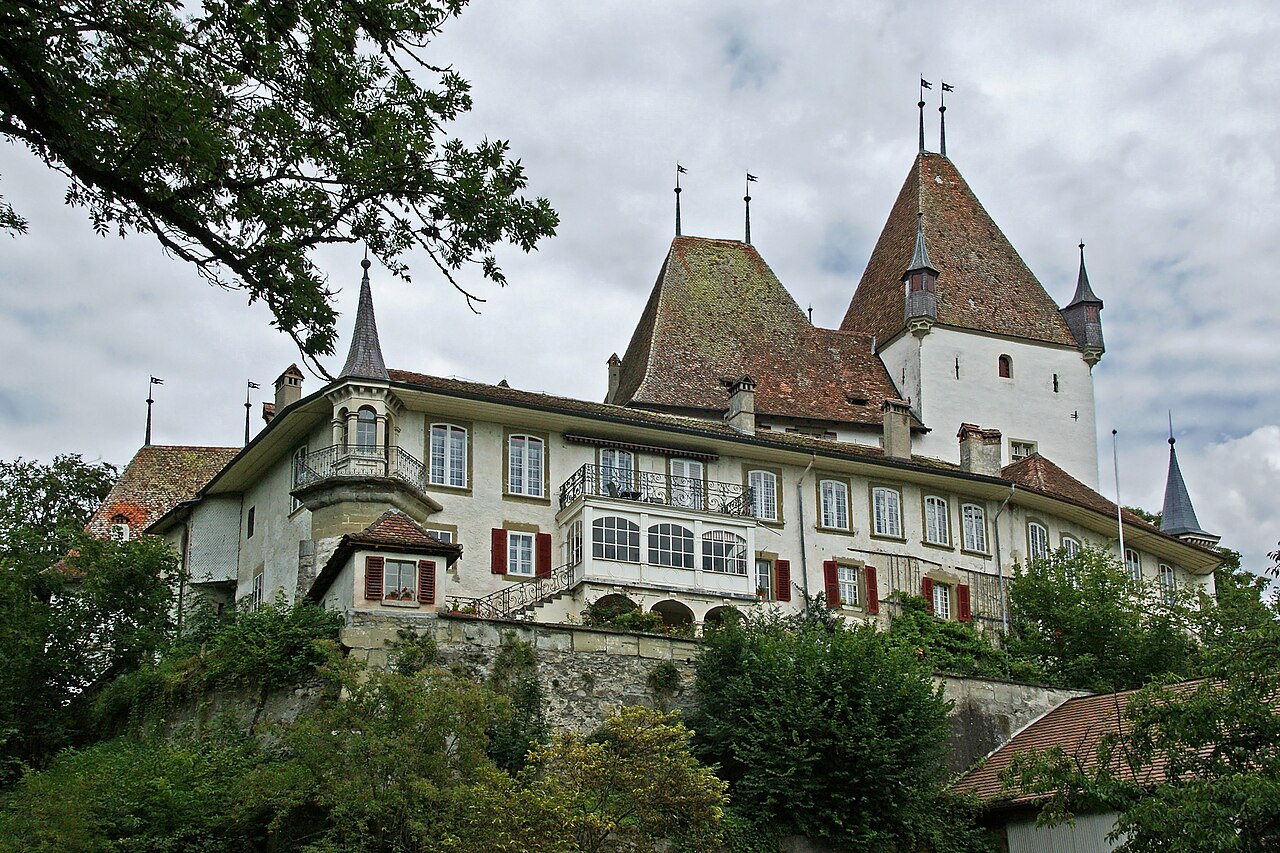
Alt-Signau Castle Ruins

Alt-signau castle ruins in signau, switzerland
Signau, Bern, Switzerland
High Medieval (11th–13th c.)
Ruins

Alt-Signau Castle stands as a significant relic of the high medieval period in Switzerland, dating back to the 12th century. This castle was the ancestral home of the Barons of Signau, a noble family first recorded in 1130 with Werner von Signau. Strategically positioned, the castle controlled the vital road connecting the Emmental valley to the Aare river, serving as both a defensive stronghold and a symbol of feudal power in the region.

Historical context and significance

The construction of Alt-Signau Castle during the high medieval era reflects the period's typical feudal dynamics and territorial disputes. Castles like Alt-Signau were often erected to oversee trade routes and assert control over surrounding lands. The Barons of Signau leveraged this position to influence regional politics and economics, securing their status among the Swiss nobility.

By the mid-14th century, the family relocated to Neu-Signau Castle, situated on a hill across the valley, leading to the abandonment of Alt-Signau. This move likely reflected changing defensive needs and the desire for a more modern or strategically advantageous residence, a common trend among noble families as military technology and political landscapes evolved.

Architectural features and layout

Alt-Signau Castle was designed as a hill castle, utilizing the natural elevation to enhance its defensive capabilities. The site includes remnants of stone walls and foundational structures that outline the castle's original footprint. Although now in ruins, the remains reveal a compact layout typical of high medieval fortifications, with a central keep or donjon likely serving as the main residential and defensive structure.

The castle's position allowed for surveillance over the road between the Emmental and Aare, a critical factor in its defensive role. Defensive features probably included a curtain wall with battlements, a gatehouse controlling access, and possibly a moat or ditch, although such features are less evident today due to the ruinous state.

Construction materials and techniques

The castle was primarily built from local stone, a common material in Swiss medieval fortifications, providing durability and resistance against siege weaponry of the time. Masonry techniques from the 12th century emphasized thick walls and small, narrow windows to minimize vulnerabilities while allowing archers to defend the castle effectively.

The decline and preservation of the ruins

After the Barons of Signau moved to Neu-Signau Castle in the 14th century, Alt-Signau was gradually abandoned. Over the centuries, the site fell into ruin but remained relatively well preserved compared to other castles of similar age. The preservation of stone walls and foundational elements offers valuable insights into medieval castle construction and feudal life in the region.

Today, Alt-Signau Castle Ruins are accessible to visitors interested in Swiss medieval history and castle architecture. The site provides a tangible connection to the feudal past and the strategic importance of controlling key transit routes in the Swiss landscape.

Visiting alt-signau castle ruins

The ruins are located near the village of Signau in the canton of Bern, Switzerland. Visitors can explore the site on foot, enjoying views of the surrounding valley and the location of Neu-Signau Castle across the valley. The site is open year-round, though facilities are minimal, reflecting its status as a historic ruin rather than a fully restored castle.

Visitors interested in medieval architecture and Swiss history will find the ruins a compelling destination. Informational signage at the site helps contextualize the castle's historical role and architectural features.

Frequently asked questions (FAQ)

How do I get to Alt-Signau Castle Ruins?
To reach Alt-Signau Castle Ruins, you can take a train to the nearest station in Signau and then walk approximately 30 minutes to the site. There are also local buses available that can get you closer to the castle. Be sure to check the public transport schedules for convenience.
What is the historical significance of Alt-Signau Castle Ruins?
Alt-Signau Castle Ruins date back to the 13th century and played a crucial role in regional power dynamics during the Middle Ages. The castle was an important defensive structure for the local nobility, and its ruins reflect the architectural style of the period. Today, it stands as a testament to Switzerland's rich history.
When was Alt-Signau Castle built?
Alt-Signau Castle was constructed in the early 13th century, around 1230. It served as a stronghold for the lords of Signau and has witnessed centuries of history. The ruins you see today provide insight into the architectural evolution of medieval fortifications.
Can I visit Alt-Signau Castle Ruins year-round?
Yes, Alt-Signau Castle Ruins are open to visitors year-round, but it's essential to check weather conditions before your visit. The site can be slippery and less accessible during winter months due to snow and ice. Spring and summer provide the best conditions for exploration and enjoy the surrounding scenery.
Why is Alt-Signau Castle Ruins a popular tourist destination?
Alt-Signau Castle Ruins attract visitors due to their historical significance and stunning panoramic views of the surrounding landscape. The site offers a unique glimpse into Switzerland's medieval history and is perfect for photography and hiking enthusiasts. Its tranquil setting makes it a favorite spot for nature lovers and history buffs alike.
Is it possible to have guided tours at Alt-Signau Castle Ruins?
While there are no official guided tours available, visitors often find informational signs throughout the ruins that provide context about the site. You can also join local hiking groups or historical societies that occasionally organize tours. It's a great way to learn more about the castle's history and architecture.
What are the opening hours for Alt-Signau Castle Ruins?
Alt-Signau Castle Ruins are generally accessible to the public at all hours, but daylight visiting is recommended for safety and a better experience. There are no specific opening and closing times, allowing you to explore the site at your convenience. Always plan your visit during daylight hours to fully appreciate the area.
Are there any nearby attractions to visit after Alt-Signau Castle Ruins?
Yes, there are several nearby attractions worth exploring, including the picturesque village of Signau and the beautiful countryside surrounding the area. You can also visit the historic church of St. Peter and Paul nearby, which provides a glimpse into local architecture. The region is ideal for hiking, offering scenic trails that connect to other historical sites.
What are the ticket prices for visiting Alt-Signau Castle Ruins?
Entry to Alt-Signau Castle Ruins is free, making it an excellent option for budget-conscious travelers. However, donations to help with the maintenance and preservation of the site are appreciated. This allows everyone to enjoy the historical significance without any financial burden.

Information

Hill Castle

Loading map...

Visitor reviews

No reviews yet. Been here? Write the first review and help other travelers!

Write the first review

Visited this castle? Share your experience

Your review helps other travelers and adds first-hand knowledge to our encyclopedia.

Write a review

(5/5)

0/2000 characters

Your review will be visible after admin approval

Nearby castles

7.4 km

Wartenstein Castle

Lauperswil, Switzerland

Wartenstein Castle stands as a compelling example of a high medieval hill castle located in the municipality of Lauperswil, Switzerland. Perched on a wooded hill above the village, the castle's ruins overlook the surrounding landscape, embodying centuries of regional history, feudal power struggles, and architectural evolution. Its origins trace back to the 13th century, a period marked by territorial consolidation and the rise of noble families asserting control through fortified residences. The origins and early history of Wartenstein Castle The castle was constructed on a narrow ridge carved into three terraces, a strategic location chosen for its natural defensive advantages. The earliest known resident was the knight Swaro von Wartenstein, documented in 1228, indicating the castle's establishment by the early 13th century. This aligns with the broader pattern of castle-building in the high medieval period across the Swiss plateau, where fortifications served both military and administrative functions. Initially, the area was part of the Freiherrschaft of Signau and controlled by the lords of Ruoderswilare until the 12th century. By the 13th century, Wartenstein Castle replaced an earlier castle southwest of Rüderswil, marking a shift in regional power centers. Ownership passed through notable families, including the Schweinsberg family, who held significant influence and also owned Attinghausen Castle in Uri. The castle's connection to Werner von Attinghausen, an important figure in the early Swiss Confederacy, highlights its role within the broader political landscape of medieval Switzerland. Architectural features and layout The castle's design reflects typical medieval military architecture adapted to the local topography. The main castle was situated on the southern terrace and included a tower, courtyard, and a great hall. The northern terrace possibly contained a bailey, although its existence remains uncertain due to limited archaeological evidence. The castle well, located on the eastern slope, was essential for sustaining inhabitants during sieges. Constructed primarily of stone, the castle's walls were robust, designed to withstand assaults. The main tower likely served as both a residence and a last line of defense, with living quarters on the upper floors featuring window niches and smoke vents indicative of fireplaces. The castle's layout on hand-carved terraces demonstrates advanced medieval engineering to maximize defensive capabilities while accommodating residential needs. Historical events and decline Wartenstein Castle witnessed significant historical events, including its capture and destruction during the Burgdorferkrieg in 1383 by Bernese troops. This conflict was part of the territorial disputes that shaped the power dynamics in the region. After the castle was burned, it passed through various hands, including Ulrich von Balmoos and later Wilhelm Hug von Sulz, who constructed a manor house in the valley, signaling a shift from fortified hilltop residences to more comfortable valley estates. The castle's decline was gradual, exacerbated by changing military technology and political structures. By the 15th century, the castle was largely in ruins, and the surrounding Herrschaft was dissolved, integrating Lauperswil into the Vogtei of Trachselwald. Local legends, such as the tale of the last lord and his daughter perishing during their escape, add a layer of cultural mystique to the site. In the 20th century, efforts were made to excavate and stabilize the remaining walls, preserving the ruins as a cultural heritage site. Today, visitors can access the castle via a steep trail from Blindenbach, experiencing firsthand the dramatic setting and remnants of a once formidable medieval fortress. Wartenstein Castle in the context of Swiss medieval fortifications Wartenstein exemplifies the strategic use of natural terrain in medieval Swiss castle construction. Its location on a narrow ridge with terraces allowed defenders to control key routes and maintain oversight of the surrounding valleys. The castle's history reflects the complex feudal relationships and territorial conflicts characteristic of the Swiss plateau during the Middle Ages. The castle's architectural evolution, from its initial construction through phases of destruction and partial rebuilding, mirrors broader trends in castle design, including the transition from simple fortifications to more complex structures with baileys, zwingers, and improved defensive features. Visiting Wartenstein Castle today Today, Wartenstein Castle remains a site of historical interest and natural beauty. The ruins, though heavily weathered, retain enough structural elements to convey the castle's original form and function. The site offers a glimpse into medieval life, feudal power, and the architectural ingenuity of the period. Visitors should prepare for a moderately challenging hike along a marked trail beginning in Blindenbach, which takes approximately 20 minutes to reach the ruins. The wooded hilltop location provides scenic views of the surrounding countryside and an evocative atmosphere for exploring the remains of this high medieval hill castle.

High Medieval (11th–13th c.)
Details
8.7 km

Wil Castle

Schlosswil, Switzerland

Wil Castle, located in Schlosswil, Switzerland, is a historical fortress with origins dating back to the 12th century. Constructed during the high medieval period, it initially served as the seat of the Herrschaft of Schlosswil, governed by the noble Freiherren von Wiler. The castle's imposing square tower, with walls rising 38 meters tall and a total height of 43.5 meters to the roof peak, is a remarkable example of medieval defensive architecture. Medieval origins and noble lineage The first documented mention of the von Wiler family dates to 1146. This family held the castle and its surrounding lands until their extinction around 1300. Subsequently, the estate passed through several noble houses, including the Freiherren von Signau and the Senn von Münsingen family. Over time, the territory was divided and transferred among various Bernese patrician families, reflecting the complex feudal dynamics of the region. In 1514, Burkhard von Erlach reunited the divided lands, consolidating control over the castle and its domain. Destruction and reconstruction In 1546, the original medieval castle was devastated by a fire, necessitating a major rebuilding effort. The reconstruction was overseen by master builder Niklaus von Wattenwyl-May, who expanded the castle's footprint and updated its design to meet contemporary needs while retaining its fortress character. This phase marked a significant transformation, blending medieval fortification elements with Renaissance influences in the layout and structure. Baroque renovation and architectural evolution The castle's current external appearance largely stems from a 1780 renovation that introduced a Baroque architectural style. This update softened the fortress's austere medieval look, adding decorative elements typical of the Baroque period such as ornate window frames and a more refined roofline, while preserving the castle's robust defensive features. The renovation reflects the changing function of the castle from purely military to a noble residence and administrative center. Role during political upheaval and later uses After the 1798 French invasion and the establishment of the Helvetic Republic, the castle's noble owners lost much of their political power and property. By 1812, ownership transferred to the Canton of Bern. The castle tower was repurposed in 1818 as the sole granary for the district of Konolfingen, playing a critical role during the famine years of 1816-17 by storing grain supplies. Prison and administrative functions In 1847, the tower was converted into a prison, a function it maintained until 1881. Even after the prison's closure, Wil Castle continued to serve as a center for district administration and judicial activities. This long period of civic use illustrates the castle's adaptability and importance in local governance. Modern era and preservation The dissolution of the District of Konolfingen in 2010 ended the castle's role as a government office. In 2011, the castle was acquired by Matthias Steinmann, who established the Steinmann Foundation to manage and preserve the site. Today, Wil Castle stands as a well-preserved high medieval fortress with significant architectural layers reflecting its evolution from a medieval stronghold to a Baroque residence and administrative center. Architectural features and significance The castle's original square tower remains the dominant feature, showcasing high medieval defensive architecture characterized by thick stone walls and a commanding height that provided both protection and status. The later Baroque additions provide a contrasting elegance, demonstrating the castle's transition through centuries of architectural styles and functions. Wil Castle is a valuable cultural landmark in the Bern region, illustrating the region's feudal history, architectural development, and adaptation to changing political and social conditions over nearly a millennium.

High Medieval (11th–13th c.)
Details
12.2 km
Worb Castle — Switzerland castle

Worb Castle

Worb, Switzerland

Worb Castle is a historic hill castle located in the municipality of Worb in the Canton of Bern, Switzerland. Dating back to the 12th century, it stands as a significant example of medieval Swiss castle architecture and has undergone several important renovations and expansions over the centuries. The castle is recognized as a Swiss heritage site of national significance, reflecting its cultural and historical importance. The origins and early history of Worb Castle The earliest known mention of the castle's ruling family, the Freiherr de Worvo, dates to 1127, slightly preceding the first recorded mention of the village of Worb itself. The castle's core structures, including the keep, great hall, and knight's house, were constructed before 1130, marking Worb Castle as a notable example of early medieval fortification in the region. This initial design reflected the typical hill castle layout, strategically placed for defense and control over the surrounding lands. By the latter half of the 13th century, ownership passed to the Freiherr von Kien family, who inherited the village, surrounding lands, and the castle itself. The von Kien family maintained control of the Worb Herrschaft until 1336, when they became citizens of Bern, resulting in the territory coming under the authority of the expanding Bernese state. Architectural developments and renovations Throughout the medieval period, Worb Castle saw several renovations and expansions reflecting changing architectural styles and residential needs. Notably, in 1469 and again in 1594, the castle underwent significant repairs and updates. These works likely included reinforcement of defensive structures and modernization of living quarters, adapting the fortress to evolving military and domestic requirements. In 1643, a new residential wing was added, marking a shift towards more comfortable and stately living spaces within the castle complex. This addition reflects the transition of many medieval castles from purely military fortresses to noble residences. The construction of Neuworb (New Castle) and later ownership changes In 1734, a new manor house, often referred to as Neuworb or the Neuschloss (New Castle), was constructed near the original castle. This estate was commissioned by Franz Ludwig von Graffenried, son of Christoph von Graffenried, a prominent Bernese noble family. The new manor reflected the architectural tastes of the 18th century, emphasizing elegance and comfort over military defense. Over the following centuries, ownership of both the old and new estates changed hands multiple times. In 1846, the Goumoëns-Sinner family acquired both properties. Later, the old castle was purchased by the Seelhofer family in 1964, while the New Castle returned to the von Graffenried family in 1985. Architectural features and significance Worb Castle exemplifies the evolution of Swiss castle architecture from the High Medieval period through the early modern era. The original keep and great hall demonstrate typical defensive and residential features of 12th-century hill castles, including thick stone walls and limited access points designed for protection. The later additions, such as the residential wing and the Neuworb manor house, illustrate the changing function of castles from military strongholds to noble estates focused on comfort and status. The Neuworb manor, built in the 18th century, likely incorporates elements of baroque or classical architecture, common among Swiss noble residences of that period. The castle's location on a hill provided strategic advantages for surveillance and defense, controlling the surrounding lands and trade routes. Its continuous occupation and adaptation over nearly a millennium reflect the shifting political and social landscape of the Bern region. Worb Castle today and cultural importance Today, Worb Castle remains a well-preserved example of Swiss medieval architecture with significant later modifications. It is recognized as a heritage site of national significance, highlighting its importance in Swiss history and culture. Although privately owned, the castle contributes to the historical identity of the municipality of Worb and serves as a tangible link to the region's feudal past. The castle's preservation allows for study and appreciation of medieval construction techniques, noble residence development, and the historical narrative of Bernese nobility. Its dual estates, the original castle and the Neuworb manor, provide insight into architectural and social transitions from the Middle Ages through the early modern period. Visiting and accessibility While Worb Castle is privately owned and not generally open to the public, its exterior and surrounding landscape can be appreciated by visitors to the region. The castle's prominent hilltop position makes it a notable landmark visible from various points in the municipality. Legacy of the von Graffenried family The von Graffenried family played a significant role in the castle's history, commissioning the construction of the New Castle in the 18th century and maintaining ties to the estate into the late 20th century. Their influence reflects the intertwined nature of Bernese nobility and regional governance during this period.

High Medieval (11th–13th c.)
Details