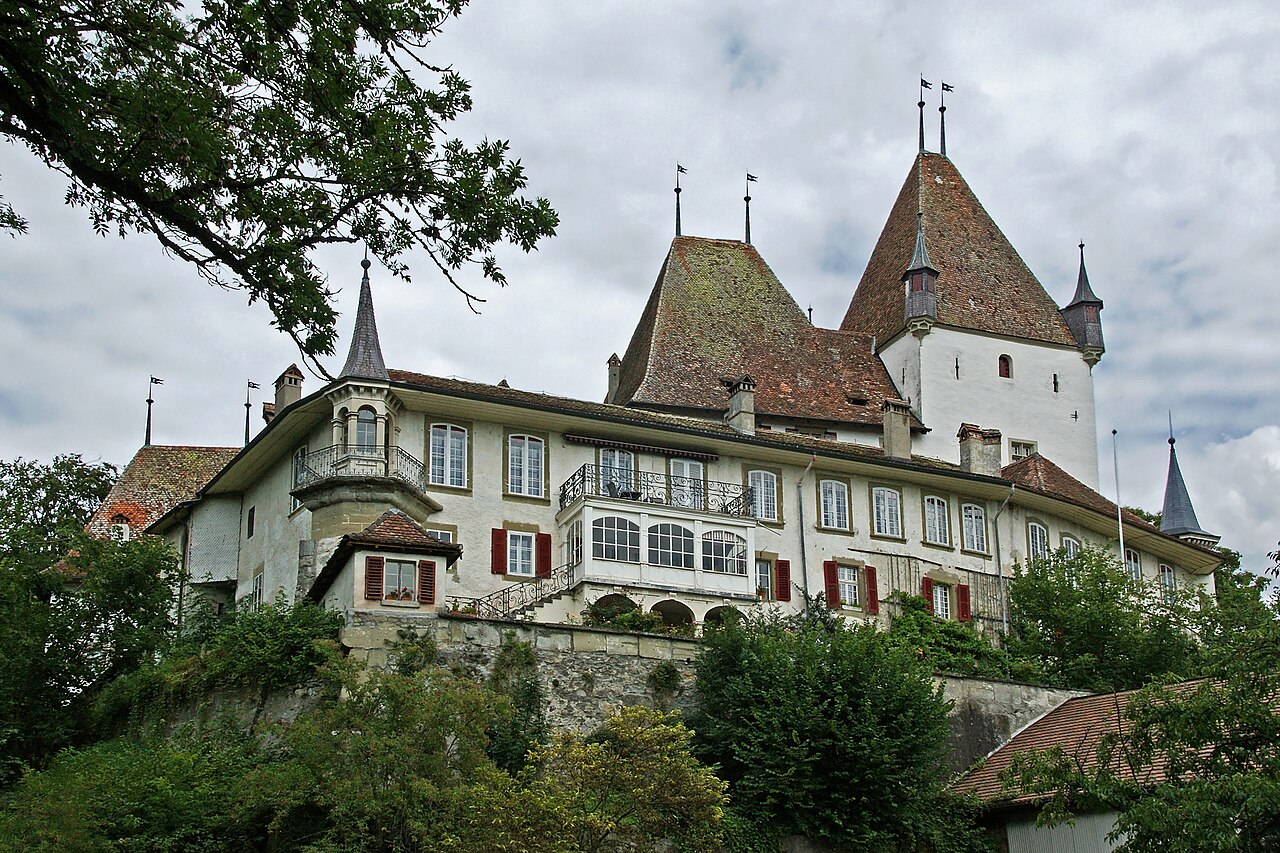
Wil Castle, located in Schlosswil, Switzerland, is a historical fortress with origins dating back to the 12th century. Constructed during the high medieval period, it initially served as the seat of the Herrschaft of Schlosswil, governed by the noble Freiherren von Wiler. The castle's imposing square tower, with walls rising 38 meters tall and a total height of 43.5 meters to the roof peak, is a remarkable example of medieval defensive architecture.
Medieval origins and noble lineage
The first documented mention of the von Wiler family dates to 1146. This family held the castle and its surrounding lands until their extinction around 1300. Subsequently, the estate passed through several noble houses, including the Freiherren von Signau and the Senn von Münsingen family. Over time, the territory was divided and transferred among various Bernese patrician families, reflecting the complex feudal dynamics of the region. In 1514, Burkhard von Erlach reunited the divided lands, consolidating control over the castle and its domain.
Destruction and reconstruction
In 1546, the original medieval castle was devastated by a fire, necessitating a major rebuilding effort. The reconstruction was overseen by master builder Niklaus von Wattenwyl-May, who expanded the castle's footprint and updated its design to meet contemporary needs while retaining its fortress character. This phase marked a significant transformation, blending medieval fortification elements with Renaissance influences in the layout and structure.
Baroque renovation and architectural evolution
The castle's current external appearance largely stems from a 1780 renovation that introduced a Baroque architectural style. This update softened the fortress's austere medieval look, adding decorative elements typical of the Baroque period such as ornate window frames and a more refined roofline, while preserving the castle's robust defensive features. The renovation reflects the changing function of the castle from purely military to a noble residence and administrative center.
Role during political upheaval and later uses
After the 1798 French invasion and the establishment of the Helvetic Republic, the castle's noble owners lost much of their political power and property. By 1812, ownership transferred to the Canton of Bern. The castle tower was repurposed in 1818 as the sole granary for the district of Konolfingen, playing a critical role during the famine years of 1816-17 by storing grain supplies.
Prison and administrative functions
In 1847, the tower was converted into a prison, a function it maintained until 1881. Even after the prison's closure, Wil Castle continued to serve as a center for district administration and judicial activities. This long period of civic use illustrates the castle's adaptability and importance in local governance.
Modern era and preservation
The dissolution of the District of Konolfingen in 2010 ended the castle's role as a government office. In 2011, the castle was acquired by Matthias Steinmann, who established the Steinmann Foundation to manage and preserve the site. Today, Wil Castle stands as a well-preserved high medieval fortress with significant architectural layers reflecting its evolution from a medieval stronghold to a Baroque residence and administrative center.
Architectural features and significance
The castle's original square tower remains the dominant feature, showcasing high medieval defensive architecture characterized by thick stone walls and a commanding height that provided both protection and status. The later Baroque additions provide a contrasting elegance, demonstrating the castle's transition through centuries of architectural styles and functions.
Wil Castle is a valuable cultural landmark in the Bern region, illustrating the region's feudal history, architectural development, and adaptation to changing political and social conditions over nearly a millennium.
Frequently asked questions (FAQ)
- How do I get to Wil Castle?
- Wil Castle is located in Schlosswil, Switzerland, and is easily accessible by public transportation. Visitors can take a train to the nearest station and then use local buses or taxis to reach the castle.
- What is the historical significance of Wil Castle?
- Wil Castle dates back to the 12th century and has been a crucial site in Swiss history, serving as a residence for nobility and a strategic military stronghold. Its well-preserved architecture reflects the evolution of medieval fortifications and is a testament to the region's rich heritage.
- When was Wil Castle built?
- Construction of Wil Castle began in the early 12th century, with significant modifications made in the following centuries. The castle's design showcases various architectural styles that have evolved over time, making it a fascinating study for history enthusiasts.
- Can I visit Wil Castle during the winter?
- Yes, Wil Castle is open to visitors year-round, including winter. However, it's advisable to check the castle's official website for any seasonal changes in opening hours or special winter events.
- Why is Wil Castle a popular tourist destination?
- Wil Castle attracts visitors for its stunning architecture, rich history, and picturesque surroundings. Its strategic location also offers beautiful views of the Swiss countryside, making it a perfect spot for photography and exploration.
- Is it possible to tour the inside of Wil Castle?
- Yes, guided tours of the interior of Wil Castle are available, providing visitors with insights into its history and architectural features. Tours are led by knowledgeable guides who share fascinating stories about the castle and its former inhabitants.
- What are the opening hours for Wil Castle?
- Wil Castle typically opens its doors to visitors from 10 AM to 5 PM, but hours may vary depending on the season or special events. It is recommended to check the castle's website before planning your visit.
- What are the ticket prices for Wil Castle?
- Ticket prices for Wil Castle are generally affordable, with discounts available for children, students, and seniors. Family packages may also be offered, making it accessible for groups looking to explore this historical site.
- What nearby attractions can I visit while at Wil Castle?
- While visiting Wil Castle, you can explore nearby attractions such as the beautiful gardens surrounding the castle and local museums that showcase the region's history. Additionally, hiking trails in the vicinity offer stunning views and a chance to enjoy the natural beauty of Switzerland.
Loading map...
Visitor reviews
No reviews yet. Been here? Write the first review and help other travelers!
Write the first reviewVisited this castle? Share your experience
Your review helps other travelers and adds first-hand knowledge to our encyclopedia.