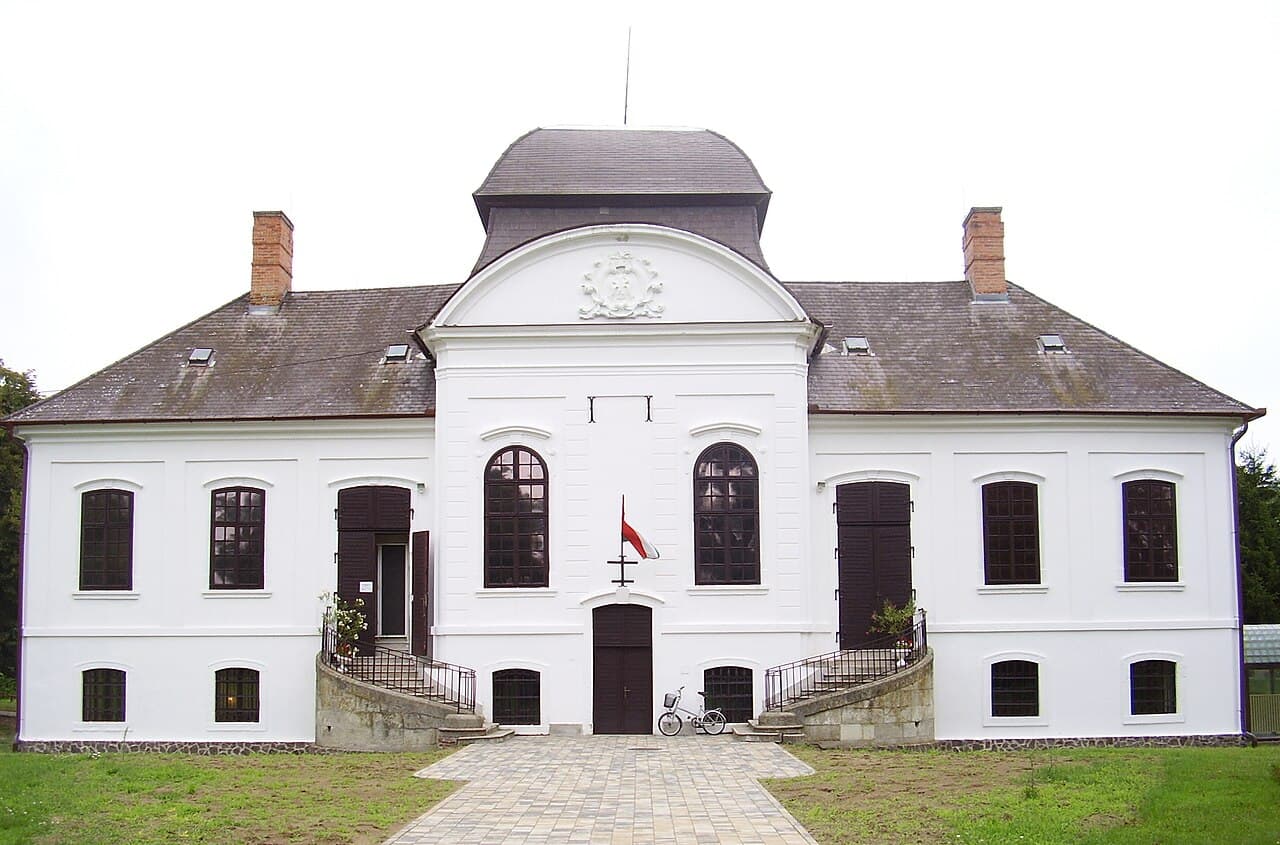
Almásy Mansion, Tarnaméra — Hungary castle

Almásy Mansion, Tarnaméra

Almásy mansion, tarnaméra

The Almásy Mansion in Tarnaméra, Hungary, is a notable example of a hill castle that reflects the architectural and historical heritage of the region. Although detailed records about the mansion's construction date and architectural style are limited, its classification as a hill castle suggests a strategic location, typically on elevated terrain, which was common for defensive residences of nobility or prominent families in Hungary.

Historical context and significance

The mansion is associated with the Almásy family, a noble lineage with roots in Hungarian history. The family's estates often included fortified residences or mansions that served both as homes and administrative centers for their lands. While not a medieval fortress in the traditional sense, the mansion likely incorporated defensive features typical of hill castles, such as elevated positioning and possibly fortified walls or towers, to protect against local conflicts or raids.

Architectural features and layout

As a hill castle, the Almásy Mansion would have been constructed to take advantage of the natural topography, providing commanding views of the surrounding landscape. This strategic placement was essential for surveillance and defense. The mansion's architecture may blend residential comfort with elements of fortification, including thick walls and possibly a gatehouse or tower structure, although specific details are scarce.

Building materials and style

The construction materials likely included local stone and timber, common in Hungarian rural noble estates. The architectural style might exhibit influences from regional trends prevalent during its period of construction, which could range from late medieval to early modern styles, depending on the exact era. However, without precise dating, the style remains broadly categorized within traditional Hungarian noble architecture.

Preservation and current condition

The current condition of Almásy Mansion is not well documented publicly, but as a historic structure, it may be in a state ranging from partially preserved to restored. Many such estates in Hungary have undergone various degrees of restoration to maintain their cultural heritage and accommodate tourism or local use.

Location and accessibility

Situated in Tarnaméra, the mansion's exact address and visiting information are not widely published, which suggests it may be privately owned or less accessible to the general public. Tarnaméra is a village in Hungary, and the mansion contributes to the local historical landscape, attracting interest from historians and castle enthusiasts.

Comparative significance

While Almásy Mansion may not be as widely known as Hungary's larger castles and fortresses, it represents the typical noble residences that played a role in regional governance and defense. Its hilltop location aligns it with other hill castles across Europe, which combined residential and defensive functions in a single estate.

Further research and archaeological study could provide more detailed insights into the mansion's construction phases, architectural evolution, and the role it played within the Almásy family's estates and Hungarian history.

Frequently asked questions (FAQ)

What is the historical significance of Almásy Mansion in Tarnaméra?
Almásy Mansion is linked to the noble Almásy family and reflects the typical architecture of Hungarian hill castles used for residence and defense.
Can visitors tour Almásy Mansion?
The mansion's accessibility is limited, and it may be privately owned, so public tours might not be regularly available.
What architectural features characterize Almásy Mansion?
As a hill castle, it likely features elevated positioning, thick walls, and possibly towers or gatehouses typical of noble residences in Hungary.

Photo gallery

Almásy Mansion, Tarnaméra
Click to view

Photo by User:Crimea•CC BY-SA 4.0

1 photo • Click any image to view in full screen

Information

Hill Castle

Loading map...

Visitor reviews

No reviews yet. Been here? Write the first review and help other travelers!

Write the first review

Visited this castle? Share your experience

Your review helps other travelers and adds first-hand knowledge to our encyclopedia.
Write a review

(5/5)

0/2000 characters

Your review will be visible after admin approval

Nearby castles

22.2 km
Kisnána Castle Ruins — Hungary castle

Kisnána Castle Ruins

Kisnána, Hungary

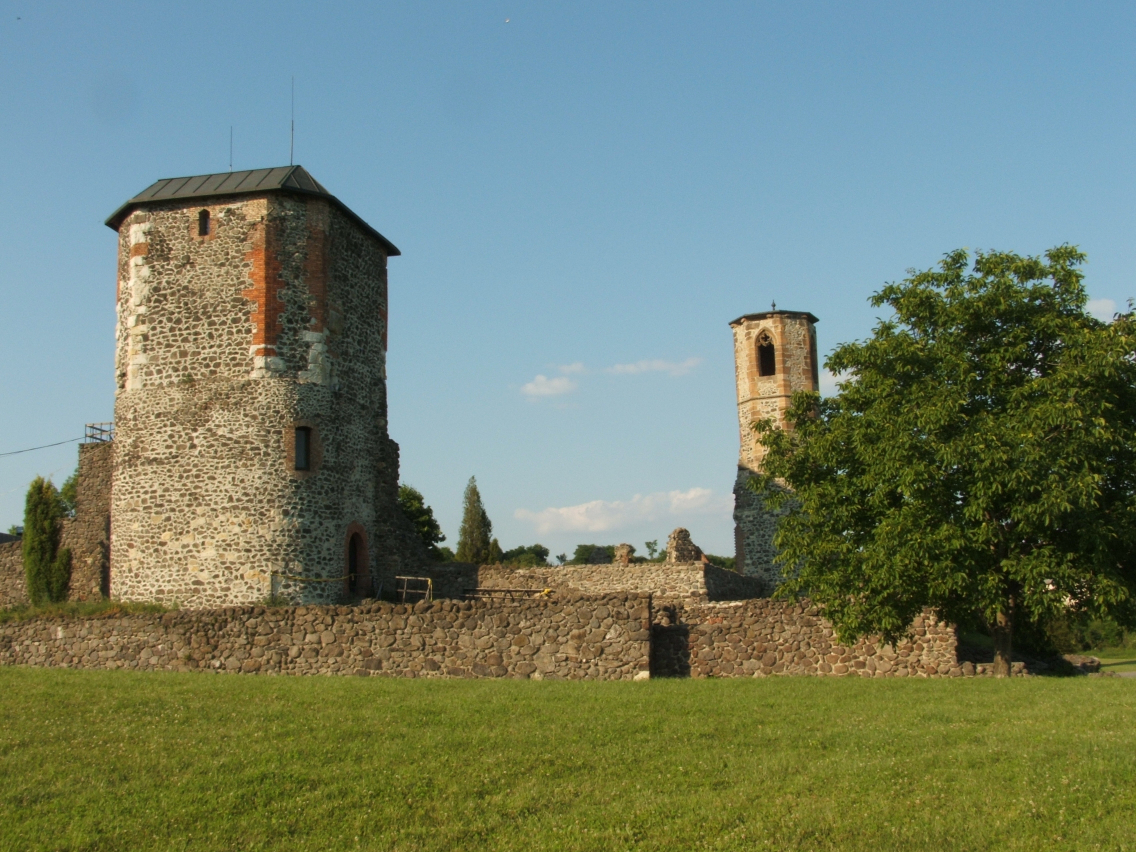
Kisnána Castle ruins stand as a remarkable testament to the evolution of medieval noble residences in Hungary, nestled in the scenic Mátra region. Originating in the 13th century, this hill castle reflects the architectural and historical transformations typical of Hungarian fortifications from the High Medieval period. The castle's history is deeply intertwined with the prominent Clan Aba and its offshoot, the Kompolti family, who played significant roles in the political and social spheres of medieval Hungary.The castle was initially established by the Kompolti family, descendants of the Aba clan, with Péter Kompolti being a key figure in its early development. His position as Chamberlain of the Queen during the late Árpád dynasty and the reign of King Charles Robert enabled him to amass considerable wealth, facilitating the construction of fortified noble residences including Kisnána. The castle was strategically positioned on a hill, providing natural defensive advantages complemented by man-made fortifications.Historical context and ownership lineageThe origins of Kisnána Castle trace back to the early 13th century when the Kompolti family acquired the land. In 1325, the estate was divided among Péter's sons, with István Kompolti inheriting Egyházas-Nána and establishing his residence there. The Kompolti family adopted the name Kompolti of Nána, marking the castle's rise as a noble seat. Throughout the 14th and early 15th centuries, the castle remained under the Kompolti family's control, who contributed to the development of the local parish church, rebuilding it in the Gothic style during the early 15th century.Following the extinction of the Kompolti male line, ownership passed to the Guti Ország family, who undertook significant modifications. This period saw the construction of a large wine cellar beneath the inner courtyard, accessed by a stairway from an extension adjacent to the chapel. The courtyard level was raised and paved with new stones, enhancing the castle's functionality and aesthetics. The north palace was remodeled with Renaissance-style window frames, reflecting the architectural trends of the time.Fortifications and military significanceIn the early 16th century, the castle underwent further fortification. The original Anjou-era mansion located in the southwest corner of the outer fortress was demolished, and its basement filled with earth to reinforce defenses. During this era, István Losonczy held lordship over the castle and famously provided refuge to László Móré, a figure surrounded by legend due to his conflicts with Ottoman forces.The castle's military importance culminated in 1543 when it was seized and destroyed by the Ottoman Turks, shortly after their occupation of Buda. Unlike other fortresses, Kisnána was not maintained or rebuilt as a border stronghold, partly due to the premature death of its owner and changing political circumstances. The abandonment led to gradual decay and stone quarrying by locals over the following centuries.Architectural features and layoutKisnána Castle exemplifies a hill castle typical of the High Medieval period, combining natural topography with constructed defenses. The site includes remnants of defensive walls that enclosed the complex, providing protection from external threats. The castle's layout reflects its dual role as a fortified residence and administrative center.A prominent feature is the Gothic chapel, whose interior was excavated in the 1940s. The chapel's preserved walls and architectural details offer insights into the religious practices and artistic styles of the late medieval nobility. The castle also contained a north palace, modified with Renaissance elements, and an inner courtyard with a subterranean wine cellar, illustrating the blend of residential comfort and defensive necessity.Later modifications and declinePost-medieval modifications included the reinforcement of fortifications and adaptations to accommodate changing military technologies and residential needs. However, after the Ottoman conquest, the castle fell into disuse. The surrounding community repurposed stones from the ruins for construction, accelerating the site's deterioration.20th and 21st-century archaeological and restoration effortsInterest in Kisnána Castle was revived in the 20th century, beginning with archaeological excavations in the 1940s led by Géza Lux, who surveyed the ruins during clearing operations. The site was temporarily used for paramilitary youth training, and some structures were adapted for habitation.Between 1962 and 1966, archaeologists Nóra Pámer and János Győző Szabó conducted extensive excavations, uncovering significant structural remains and artifacts. Subsequent restoration efforts focused on stabilizing exposed walls, protecting the north palace with a metal roof, and roofing the chapel with a flat hip roof to prevent further decay.In recent decades, further conservation has enhanced the site's accessibility and educational value. The Old Tower was converted into exhibition spaces, and a viewing terrace was added, allowing visitors panoramic views of the surrounding Mátra landscape. These efforts underscore Kisnána Castle's importance as a cultural heritage site and a window into Hungary's medieval past.Visitor experience and cultural significanceToday, Kisnána Castle ruins offer a compelling glimpse into the architectural and historical evolution of Hungarian noble residences. The combination of medieval fortifications, Gothic religious architecture, and Renaissance modifications provide a layered narrative of changing styles and functions over centuries.The castle's location in the Mátra region, known for its natural beauty and historical richness, enhances its appeal to visitors interested in history, architecture, and nature. The adjacent traditional Slovak peasant house museum further enriches the cultural context, presenting rural life in the region during the 19th century.Visitors can explore the preserved ruins, learn about the castle's storied past, and enjoy the scenic vistas from the restored tower terrace. Kisnána Castle remains a significant monument reflecting Hungary's medieval heritage and the enduring legacy of its noble families.

High Medieval (11th–13th c.)
Details
22.4 km

Markaz Castle Ruins

Markaz, Hungary

The Markaz Castle ruins are located about 2 kilometers from the village of Markaz in Hungary, perched at the end of the Vár crag. This small fortress was constructed in the late 13th century, specifically between 1270 and 1280, by the Kompolti family, who were part of the notable Aba genus. Unlike many castles of the period that served primarily military functions, Markaz Castle was built mainly as a recreational hunting lodge and a place of leisure for its owners.The castle's strategic location offers a spectacular view northward over the castle valley and the nearby settlement of Abasár, making it a favored spot for hunting and relaxation rather than defense. The castle's layout was quite compact, featuring a tiny and narrow yard enclosed by walls, with the most substantial surviving section being a 6-metre-high wall on the southeast side of the rectangular structure.Historical background and ownershipThe Kompolti family, influential members of the Aba clan, commissioned the construction of the castle during the High Medieval period. Their choice of location and design reflects a preference for a fortified residence that balanced comfort and status with the practical needs of hunting and leisure rather than frontline military defense.Throughout its history, the castle did not play a significant role in military conflicts, which is evident from its modest fortifications. However, its position and ownership linked it to the broader regional aristocracy of medieval Hungary.Architectural features and layoutThe castle was built as a rectangular fortification with a small courtyard, typical of smaller noble residences of the era. The surviving 6-metre wall on the southeast side is a key remnant that helps historians understand the scale and defensive capabilities of the structure.The compact design suggests that the castle was not intended to withstand prolonged sieges but rather to provide a secure and comfortable retreat. The use of local stone and the positioning on the crag would have offered natural protection and visibility over the surrounding landscape.Defensive elementsDespite its limited military importance, the castle included basic defensive features common to High Medieval fortifications, such as thick stone walls and a raised position. The narrow yard would have constrained attackers and provided a controlled space for the inhabitants.Decline and current stateThe castle is believed to have been demolished during the Turkish occupation of Hungary in the 16th and 17th centuries, a period marked by widespread destruction of many Hungarian fortifications. Over time, the structure fell into ruin, with only partial walls and foundations remaining today.Currently, the site is classified as ruins and is accessible to visitors who are interested in medieval history and castle architecture. The climb to the ruins is rewarded with panoramic views of the castle valley and the village of Abasár, making it a popular destination for hikers and history enthusiasts alike.Visiting Markaz Castle ruinsVisitors to the Markaz Castle ruins can explore the remains of this High Medieval recreational castle while enjoying the natural beauty of the surrounding landscape. The site offers insight into the lifestyle of the Hungarian nobility during the 13th century and the architectural characteristics of smaller noble residences of the period.The ruins are open year-round, although accessibility may vary with weather conditions. The location's elevation and rugged terrain require a moderate hike, which is part of the attraction for many visitors seeking both historical and outdoor experiences.

High Medieval (11th–13th c.)
Details
25 km

Benevár

Gyöngyös, Hungary

Benevár Castle, located in the municipality of Gyöngyös, Hungary, stands as a significant historical fortress with origins tracing back to the early formation of the Hungarian state. This hill castle occupies a strategic position on the Benevár ridge within the Mátra forest region, elevated approximately 470 meters above sea level. The castle's location between the Somor and Csatorna streams provided natural defensive advantages, which were further enhanced by its robust architectural design. Early history and foundation The site of Benevár is closely linked to the descendants of the Hungarian chieftain Edömér, dating back to the period of the Hungarian conquest. The original fortress was likely constructed as a pagan stronghold and was granted to Bene vitéz, Edömér's grandson, who received lands in this forested region. This early phase set the foundation for Benevár's role as a defensive and administrative center in the Mátra area. Medieval reconstruction and ownership changes The fortress suffered significant damage during the Mongol invasion of Hungary (Tatárjárás) in the 13th century. In response, between 1243 and 1250, the castle was reconstructed by Csobánka, a comes of the Aba clan. This reconstruction established Benevár as the principal seat of the Aba family. By the early 14th century, the castle came under the influence of Csák Máté, a powerful regional lord, with the owners aligning militarily with him. Following the consolidation of royal power by King Charles I of Anjou, Benevár was seized from the Csák faction and granted to the nobleman Szécsényi Tamás. This transfer reflects the shifting political landscape of medieval Hungary and the castle's importance as a noble estate. Decline and royal control In the early 15th century, Benevár's fortunes waned during the tenure of Salgói Miklós, who faced accusations of counterfeiting and adultery by King Sigismund. These charges led to Miklós's exile and the confiscation of his properties, including Benevár. By 1424, the castle was under direct royal control and was subsequently granted to Queen Barbara before passing to the Rozgonyi family. Destruction and archaeological rediscovery The castle met its demise amid the Hussite conflicts in the 15th century. Forces associated with the Hussites, who took refuge in the nearby Pata castle, are believed to have been responsible for the destruction of Benevár. By 1497, historical records identified the castle as abandoned under the ownership of the Kanizsai family. Interest in Benevár was revived in the 1980s through archaeological excavations and partial restoration efforts. These studies confirmed the castle's pentagonal layout and revealed key structural elements, including an old tower that served as a lookout and refuge, a palace wing for residential purposes, and a second tower guarding the entrance. The fortress was also protected by a double dry moat, enhancing its defensive capabilities. Architectural features and layout The ruins of Benevár showcase a well-planned fortified complex adapted to its mountainous terrain. The castle's elongated pentagonal shape is a distinctive feature, with stone construction that utilized the natural ridge for defense. The double dry moat surrounding the outer perimeter was a strategic element designed to slow and hinder attackers. Within the enclosure, the large central tower was the focal point, providing a vantage point over the surrounding landscape and a stronghold during sieges. The adjacent palace wing indicates the castle's dual function as both a military fortress and a noble residence. Smaller ancillary buildings supported the castle's economic activities, essential for sustaining the garrison and inhabitants. The second tower near the entrance was crucial for controlling access and reinforcing the castle's defenses at a vulnerable point. These architectural components reflect the castle's evolution from a pagan fortress to a medieval noble estate. Cultural and historical significance Benevár's history is intertwined with key figures and events in Hungarian medieval history, including the Mongol invasion, the rise of regional powers like the Aba clan and Csák Máté, and the Hussite wars. The castle's changing ownership mirrors the political shifts and conflicts that shaped Hungary during the Middle Ages. Today, the partially preserved ruins offer valuable insights into medieval castle construction and the defensive strategies employed in hill castles of the region. The site's proximity to Pata castle and its association with Hussite activity add layers of historical context, making Benevár an important cultural heritage site. Visiting benevár castle Visitors to Benevár can explore the visible stone foundations and remnants that evoke the castle's storied past. The site, accessible within the Mátra forest area near Gyöngyös, provides a scenic and historically rich experience for those interested in medieval architecture and Hungarian history. Although much of the castle remains in ruins, the partial restoration efforts have stabilized key sections, allowing for safer exploration. Due to its mountainous location and fragmentary condition, visitors are advised to wear appropriate footwear and prepare for uneven terrain. The castle's historical significance and picturesque setting make it a rewarding destination for history enthusiasts and hikers alike.

High Medieval (11th–13th c.)
Details

