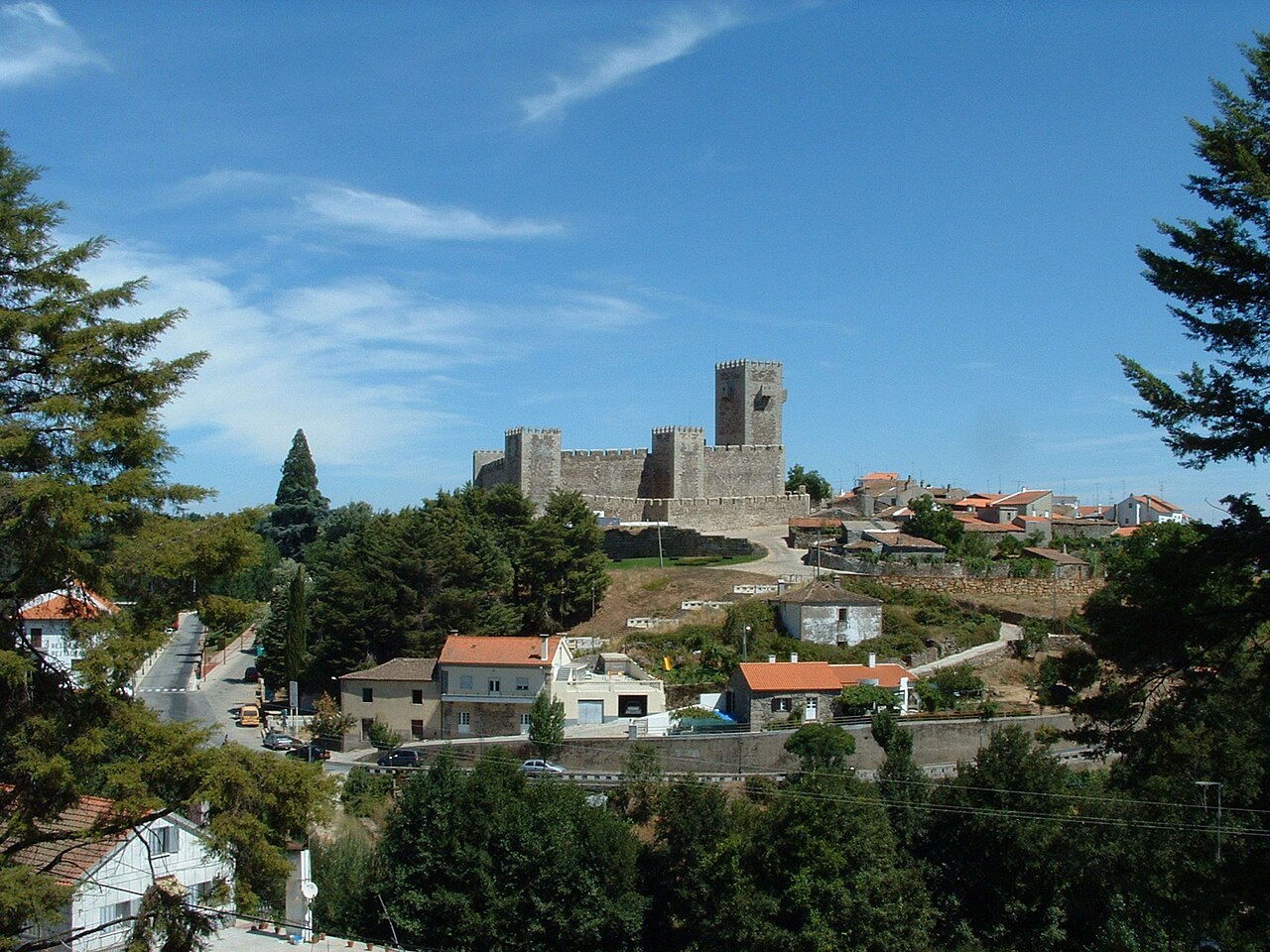
Alfaiates Castle
Alfaiates Castle, known locally as Castelo de Alfaiates, is a significant medieval fortress located in the village of Alfaiates within the Beiras e Serra da Estrela region of Portugal. This castle stands on a strategic hill on the east bank of the Côa River, a site with a long history of occupation dating back to prehistoric times. Archaeological evidence suggests that the area was originally a prehistoric hill fort, which was later utilized by the Romans, indicating its longstanding strategic importance.
During the Reconquista period in the late 12th or early 13th century, the region was captured by the Kingdom of León. It was at this time that a Christian fortification, likely a watchtower known as Castillo de la Luna, was established to secure the frontier. This early structure set the foundation for the castle that would evolve over the following centuries.
Medieval origins and royal reconstruction
Following the Treaty of Alcanices in 1297, the territory was definitively integrated into the Kingdom of Portugal. In response to the new border delineation, King Denis of Portugal initiated a program to strengthen border defenses, rebuilding Alfaiates Castle alongside other key fortifications such as Almeida, Castelo Bom, Castelo Melhor, and Castelo Rodrigo. This phase marked the castle's transformation into a more substantial medieval fortress designed to guard the frontier.
The castle's architecture from this period reflects typical high medieval military design, characterized by a square layout featuring a square keep and a rectangular tower positioned at opposite corners. The defensive system was enhanced with a circuit of outer walls that closely followed the shape of the inner castle, including three round corner towers that provided additional protection and vantage points for surveillance.
Decline and resettlement efforts in the 14th and 15th centuries
The 14th century was a challenging period for the borderlands including Alfaiates, which suffered from the combined effects of plague outbreaks and military conflicts that led to significant depopulation. To counter this, at the end of the century, King Manuel I of Portugal implemented policies encouraging resettlement by allowing criminals from other regions to settle under royal protection. This was part of a broader strategy to revitalize the frontier and maintain control over the territory.
Renaissance fortifications and 17th century enhancements
In 1510, King Manuel I ordered the construction of a new fortification, marking a shift from the medieval castle located in the village center to a new castle built on the outskirts. This new structure, known as Alfaiates Castle, was intended to provide stronger defenses in line with evolving military technology. Construction was slow and incomplete by 1525, reflecting the challenges of the period.
The castle saw further reinforcement in the 17th century during the Portuguese Restoration War, when a circuit of outer walls was added to bolster its defenses. These additions were part of a wider effort to fortify Portugal's borders against Spanish incursions following the restoration of Portuguese independence in 1640.
Military role in the peninsular war and subsequent decline
Alfaiates Castle maintained its military significance into the early 19th century. In 1811, during the Peninsular War, it served as a defensive position against Napoleonic forces advancing through the region. However, after the war, the castle's strategic importance diminished rapidly.
By the mid-19th century, the castle was abandoned as a military installation and repurposed as the village graveyard from 1836 onward. This change in function contributed to its gradual decline and ruin, though the structural remains still convey its historical significance.
Architectural features and current state
The castle's square layout is distinctive, with a prominent square keep and a rectangular tower positioned at opposite corners of the inner enclosure. The lower outer walls follow the contours of the inner castle closely, punctuated by three round corner towers that provided comprehensive defensive coverage.
Today, Alfaiates Castle is an accessible ruin, freely open to visitors. Its unusual layout and historical layers make it a compelling site for those interested in medieval military architecture and Portuguese border history. The castle's location on a hill overlooking the Côa River adds to its strategic and scenic appeal.
Historical context within the portuguese border defenses
Alfaiates Castle was part of a network of fortifications constructed to defend Portugal's eastern border during the Middle Ages and Renaissance. Its rebuilding under King Denis and later enhancements under King Manuel I reflect the shifting political and military landscape of the Iberian Peninsula. The castle's role during the Portuguese Restoration War and the Peninsular War further underscores its importance in regional defense strategies.
Connections with neighboring fortresses
The castle's history is intertwined with other nearby fortifications such as Almeida, Castelo Bom, and Pinhel. Together, these castles formed a defensive chain that protected the kingdom from invasions and controlled key routes along the border.
Visitor information and cultural significance
Visitors to Alfaiates Castle can explore the ruins and appreciate the castle's architectural features and its historical role in Portuguese border defense. The site offers insights into medieval and early modern military architecture and the complex history of the region.
The castle's preservation as a ruin and its use as a village graveyard contribute to its unique character. It remains an important cultural landmark within the Beiras e Serra da Estrela region, attracting historians, architecture enthusiasts, and tourists interested in Portugal's medieval heritage.
Frequently asked questions (FAQ)
- How do I get to Alfaiates Castle?
- Alfaiates Castle is located in the village of Alfaiates in the Beiras e Serra da Estrela region of Portugal. It is accessible by local roads, and visitors can reach the site by car or regional transport. The castle is situated on a hill overlooking the Côa River.
- What is the historical significance of Alfaiates Castle?
- Alfaiates Castle played a crucial role in the defense of Portugal's eastern border from the 13th century through the early 19th century. It was rebuilt by King Denis after the Treaty of Alcanices and later reinforced during the Portuguese Restoration War and the Peninsular War.
- Can I visit Alfaiates Castle today?
- Yes, Alfaiates Castle is freely accessible to the public today. Visitors can explore the ruins and enjoy views of the surrounding landscape. There are no entrance fees, and the site is open year-round.
- What architectural features does Alfaiates Castle have?
- The castle features a distinctive square layout with a square keep and a rectangular tower at opposite corners. It also has a circuit of outer walls with three round corner towers, typical of medieval military architecture adapted over time.
- When was Alfaiates Castle built and modified?
- The original fortification dates back to the late 12th or early 13th century, with significant rebuilding by King Denis in the late 13th century. King Manuel I ordered new fortifications in the early 16th century, and the castle was further reinforced in the 17th century during the Portuguese Restoration War.
Information
Address
Praça Braz Garcia de Mascarenhas, Portugal
Loading map...
Visitor reviews
No reviews yet. Been here? Write the first review and help other travelers!
Write the first reviewVisited this castle? Share your experience
Your review helps other travelers and adds first-hand knowledge to our encyclopedia.