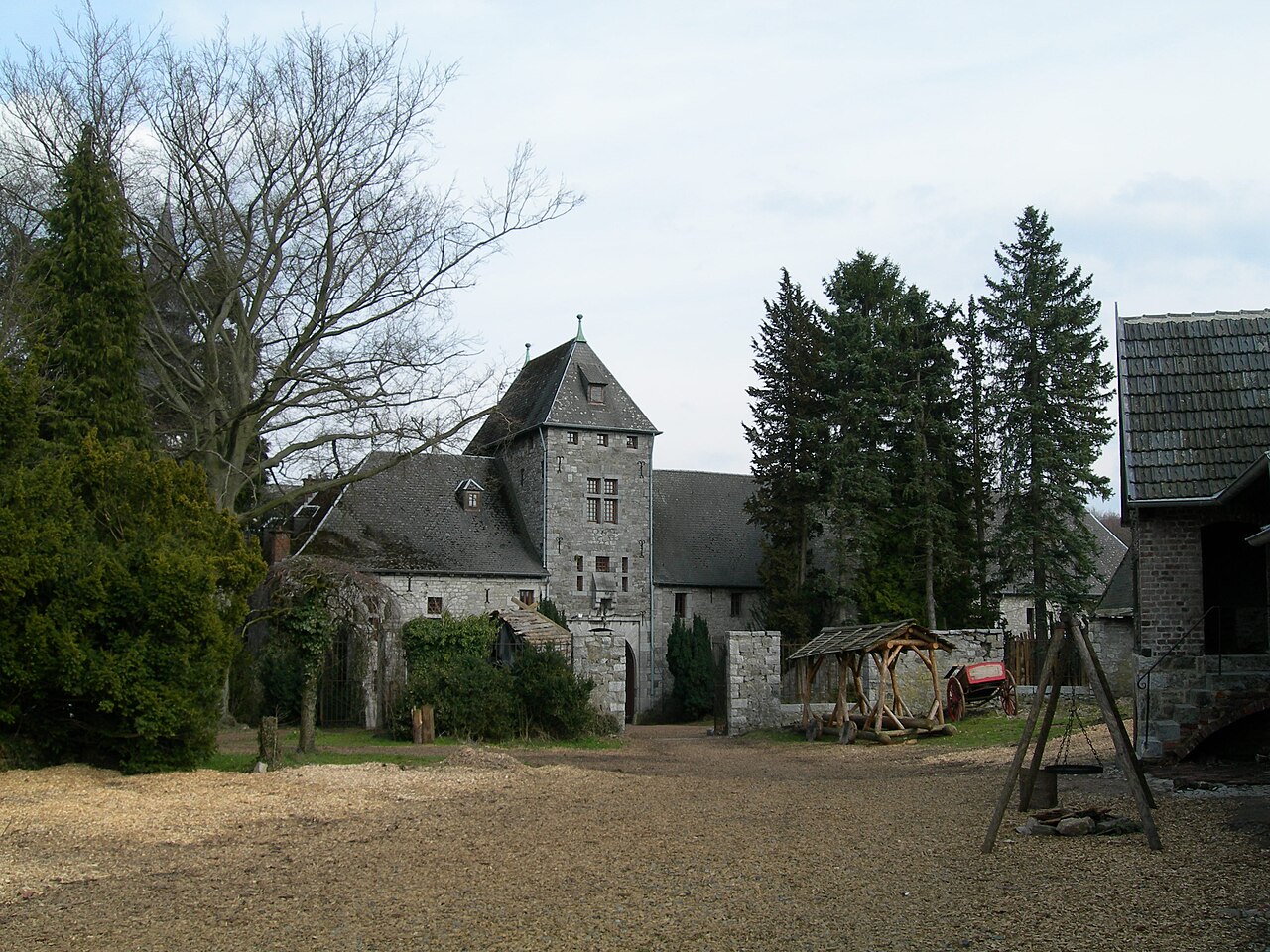
Alensberg Castle
Alensberg Castle, also known as Château d'Alensberg, is a historic fortified structure located in a private garden west of the village of Moresnet, in the Liège province within Belgium's Wallonia region. The castle stands in the valley of the Geul river, a strategic location that influenced its original construction and subsequent history.
Medieval origins and early ownership
The castle was constructed in the mid-15th century by Jean d'Alensberg, a noble figure whose family name the castle bears. This period corresponds with the late medieval era, characterized by the transition from fortified medieval castles to more residential chateaus in the region. Alensberg Castle was initially built as a fortified keep, designed to control the surrounding valley and provide defense against regional conflicts.
In the early 16th century, ownership of Alensberg Castle passed to the Tzevel family, notable also for owning the nearby Eyneburg Castle. This transfer of ownership reflects the common medieval practice of consolidating regional power through the acquisition of multiple fortifications.
Ownership transitions and architectural changes
The castle later came into the possession of the Dobbelstein family through marriage, maintaining their hold until the early 17th century. Subsequently, the Straeten family acquired the castle and retained it until the early 18th century. These families likely made modifications to the castle, adapting it to the evolving needs of aristocratic residence and defense, although detailed architectural records from these periods are scarce.
In the 19th century, the castle was owned by Charles James Cockerill, an industrialist linked to the region's burgeoning industrial development. His ownership marks a shift in the castle's role from purely defensive to a symbol of status and heritage.
Wartime impact and restoration
During World War I, the strategic importance of the valley was underscored by the construction of a massive railway viaduct by German forces. This viaduct, measuring approximately 1200 meters long and 58 meters high, was built just 200 meters from the castle to facilitate the transport of artillery. Its proximity to Alensberg Castle placed the structure in the midst of military activity.
In World War II, as German forces retreated, they deliberately destroyed the viaduct to hinder advancing Allied troops. The demolition caused significant damage to Alensberg Castle, particularly to its extensions. The destruction left the castle partially ruined and vulnerable.
Post-war, in 1946-47, the damaged extensions were demolished, and efforts were made to restore the castle's keep to its original medieval form. This restoration aimed to preserve the historical integrity of the castle's core structure, emphasizing its late medieval architectural character.
Architectural features and current status
Alensberg Castle is primarily recognized for its medieval keep, a fortified tower that served as the main defensive and residential structure. The keep's robust stone construction and strategic placement within the valley highlight typical late medieval defensive architecture in the region.
Although the castle once included extensive extensions and outbuildings, these were lost due to wartime damage and subsequent demolition. The surviving keep remains a testament to the castle's original design and function.
Today, Alensberg Castle is private property and is not open to the public. Its location within a private garden means that the interior and detailed architectural elements are not accessible for visitation or study. Despite this, the castle remains an important cultural landmark reflecting the region's medieval heritage and the impact of modern warfare on historic structures.
Frequently asked questions (FAQ)
- What is the historical significance of Alensberg Castle?
- Alensberg Castle, located in Moresnet, Belgium, dates back to the 12th century and is a prime example of medieval architecture. It played a crucial role in regional defense and served as a residence for nobility, reflecting the rich history of the area.
- When was Alensberg Castle built?
- Alensberg Castle was constructed in the 12th century, with several renovations over the centuries that reflect various architectural styles. Its long history provides insight into the evolution of castle design and its role in medieval society.
- Can I visit Alensberg Castle?
- Yes, Alensberg Castle is open to visitors, allowing you to explore its historic grounds and learn about its fascinating past. Guided tours are often available, providing a deeper understanding of the castle's significance and architecture.
- What are the opening hours for Alensberg Castle?
- Alensberg Castle typically opens to the public from 10 AM to 5 PM, but hours may vary depending on the season. It's advisable to check the official website or contact the castle directly for the most current information before your visit.
- Is it possible to access Alensberg Castle with a wheelchair?
- Alensberg Castle strives to be accessible for all visitors; however, due to its historical nature, some areas may present challenges for wheelchair users. It is recommended to inquire in advance about specific accessibility options when planning your visit.
- When is the best time to visit Alensberg Castle?
- The best time to visit Alensberg Castle is during the spring and early autumn months when the weather is mild and pleasant. Visiting during these seasons also allows you to enjoy the beautiful surrounding landscapes and gardens.
- What are the ticket prices for Alensberg Castle?
- Ticket prices for Alensberg Castle are generally affordable, with discounts available for children, students, and seniors. It's best to check the official website for the latest pricing information and any special promotions that may be offered.
- What nearby attractions can I explore while visiting Alensberg Castle?
- While visiting Alensberg Castle, you can explore the beautiful Moresnet countryside, as well as nearby attractions such as local museums and parks. The area is rich in history and natural beauty, making it a great destination for a full day of exploration.
Information
Address
Rue Langhaag 7, Belgium
Loading map...
Visitor reviews
No reviews yet. Been here? Write the first review and help other travelers!
Write the first reviewVisited this castle? Share your experience
Your review helps other travelers and adds first-hand knowledge to our encyclopedia.