Alba Iulia Fortress
The Alba Carolina Citadel, also known as Alba Iulia Fortress, is a prominent star fortress located in the heart of Alba Iulia, Romania. Constructed between 1715 and 1738 under the Habsburg Monarchy, this 18th-century bastioned fortress represents a significant example of post-Renaissance military architecture in Eastern Europe. It was built on the foundations of two earlier fortifications: the ancient Roman legionary fortress of Apulum, home to Legio XIII Gemina, and the medieval Belgrad citadel.
Historical background and strategic importance
The site of Alba Iulia has held military and administrative significance since Roman times. The original Roman fortress Apulum was a key military base in the province of Dacia. Centuries later, the medieval Belgrad citadel was constructed on the same site, serving as a defensive stronghold during the Middle Ages. The current Alba Carolina Citadel was commissioned by the Habsburgs to strengthen their control over Transylvania following the Ottoman retreat and to secure the region against future threats.
Architectural design and construction
The fortress is a classic example of a bastioned fortress, designed in a star-shaped layout with multiple bastions protruding from the walls, allowing for overlapping fields of fire and improved defense against artillery. Its design reflects the military engineering principles of the Vauban style, named after the French military engineer Sébastien Le Prestre de Vauban, who revolutionized fortress construction in the 17th century.
Construction began on 4 November 1715 and was completed in 1738. The project mobilized approximately 20,000 serfs, highlighting the scale and labor intensity of the endeavor. The total cost was estimated at around 3 million florins, a considerable sum at the time.
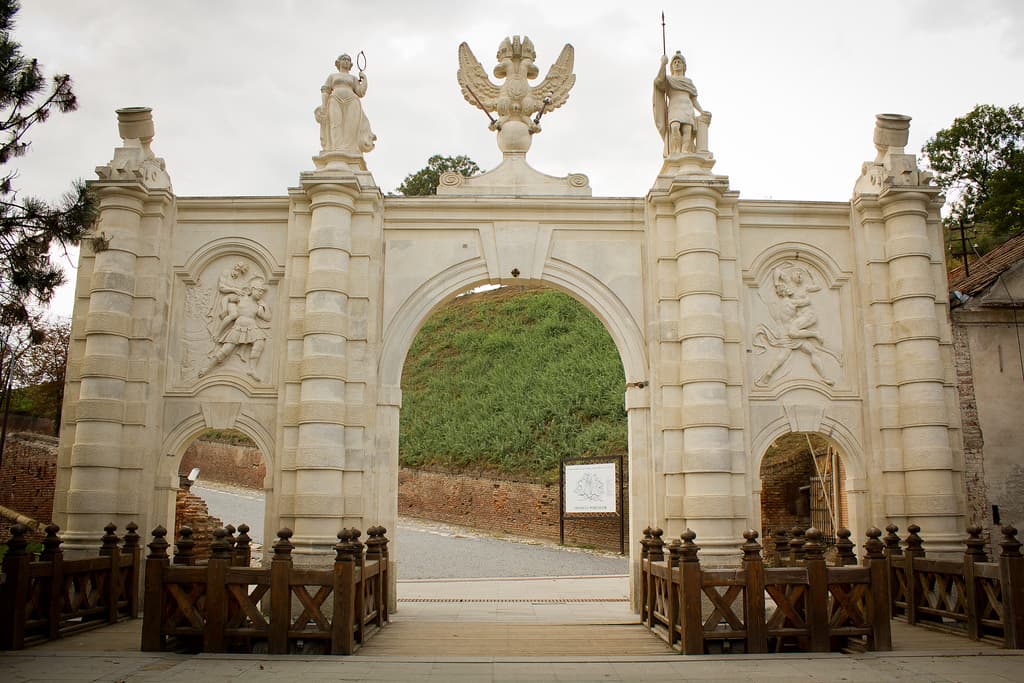
The fortress encompasses a large area surrounded by thick walls and deep moats. The walls are punctuated by seven bastions named after Habsburg rulers and military leaders, including Huniade, Transylvania, and Carolina bastions. The fortress also features gates with elaborate baroque decorations, such as the Porta Principalis and Porta Praetoria, which serve as impressive ceremonial entrances.
Inner structures and layout
Within the fortress walls, there are several important buildings including the Roman Catholic Cathedral of Saint Michael, a notable example of Baroque architecture, and the Orthodox Cathedral which reflects the religious diversity of the region. The fortress also housed military barracks, storage facilities, and administrative offices essential for its operation.
Cultural and historical significance
Alba Iulia Fortress is not only a military monument but also a cultural landmark. It played a pivotal role in the history of Transylvania and Romania, including being a focal point during the Great Union of 1918, when the region united with the Kingdom of Romania. The fortress is a symbol of the layered history of the area, reflecting Roman, medieval, and Habsburg influences.
Today, the fortress is well preserved and serves as a major tourist attraction. It hosts cultural events, reenactments, and exhibitions that celebrate its rich heritage. Its impressive fortifications and historical buildings attract scholars, history enthusiasts, and visitors interested in military architecture and Eastern European history.
Visiting Alba Iulia Fortress
Visitors to Alba Iulia Fortress can explore the extensive fortifications, including walking along the walls and visiting the bastions. The cathedrals within the citadel offer insight into the religious and architectural history of the region. The site is accessible year-round, with guided tours available to provide detailed historical context.
The fortress is located in the city of Alba Iulia, in the region of Transylvania, Romania. Its address corresponds to the central area of the city, easily reachable by public transport and car. The site is managed by local cultural authorities who maintain its condition and organize events.
Frequently asked questions (FAQ)
- What is the historical significance of Alba Iulia Fortress?
- Alba Iulia Fortress is one of the most important historical sites in Romania, symbolizing the country's unity and national identity. It was the site of the 1918 union declaration that united Transylvania with Romania, making it a pivotal location in Romanian history.
- When was Alba Iulia Fortress built?
- Construction of the current star-shaped fortress began in 1715 and was completed in 1781, designed by the renowned architect Giovanni Battista Rinaldi. The fortress was built to serve as a military stronghold and to enhance the defense of the region.
- What are the opening hours for Alba Iulia Fortress?
- Alba Iulia Fortress is typically open to visitors from 9:00 AM to 8:00 PM during the summer months and from 9:00 AM to 5:00 PM in winter. It’s advisable to check the official website for any seasonal changes or special events that may affect these hours.
- Can I access all areas of the fortress?
- Yes, visitors can access various sections of Alba Iulia Fortress, including the impressive bastions, gates, and the history museum. However, certain areas may have restricted access due to maintenance or special events, so it’s best to inquire at the entrance.
- Is it possible to take guided tours of the fortress?
- Yes, guided tours are available for visitors who wish to delve deeper into the history and architecture of Alba Iulia Fortress. These tours often provide fascinating insights and stories that enrich the visitor experience.
- What is the best time to visit Alba Iulia Fortress?
- The best time to visit Alba Iulia Fortress is during the spring and early autumn months when the weather is mild and pleasant for outdoor exploration. Additionally, visiting during local festivals can enhance your experience with cultural events and activities.
- What are the ticket prices for Alba Iulia Fortress?
- Ticket prices for Alba Iulia Fortress are typically very affordable, with discounts available for students and seniors. Visitors can also find special packages that include access to various attractions within the fortress.
- Are there any nearby attractions to Alba Iulia Fortress?
- Yes, nearby attractions include the Union Hall, the Batthyaneum Library, and the Coronation Cathedral, all within walking distance. These sites enhance the historical and cultural experience of visiting Alba Iulia.
- How do I get to Alba Iulia Fortress?
- Alba Iulia Fortress can be easily reached by car or public transport from major cities in Romania. The fortress is well-signposted, and parking is available nearby for those driving.
Photo gallery

Information
Loading map...
Visitor reviews
No reviews yet. Been here? Write the first review and help other travelers!
Write the first reviewVisited this castle? Share your experience
Your review helps other travelers and adds first-hand knowledge to our encyclopedia.