Alara Castle
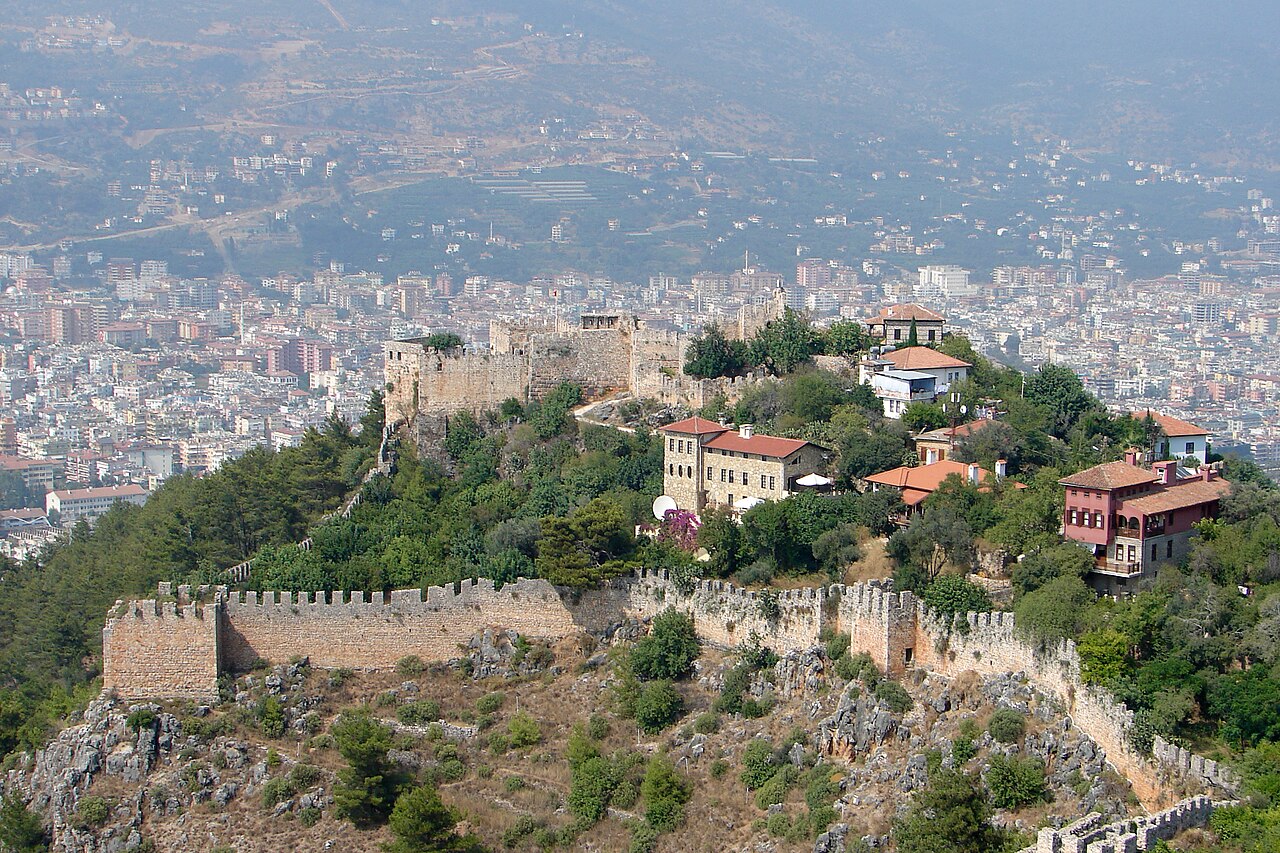
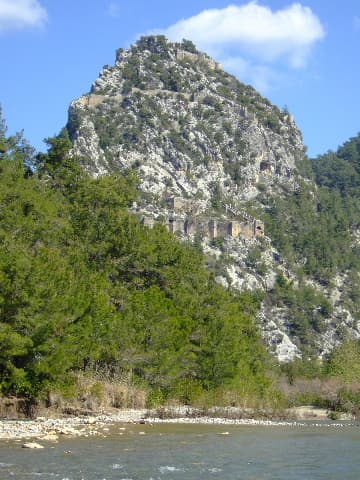
Alara Castle stands as a remarkable example of medieval military architecture in Anatolia, Turkey. Constructed originally in the 11th century during the Byzantine Empire, this hill castle occupies a commanding position on a steep rock formation overlooking the Alara River valley. Its strategic location made it a vital defensive stronghold controlling inland routes leading to the Mediterranean coast.
Initially built to serve Byzantine interests, the castle later became a crucial frontier fortress for the Armenian Kingdom of Cilicia from 1080 to 1375. During this period, it played a key role in protecting caravans traveling along the Silk Road, which was a major trade artery connecting Asia and Europe. The castle's proximity to the caravanserai known as Alarahan provided a secure resting point for merchants and travelers before they continued their journey toward the coast.
Alara Castle's natural defenses are enhanced by its location atop a steep hill rising between 200 and 500 meters above sea level and situated approximately 7 kilometers inland from the Mediterranean Sea. The castle is divided into two principal sections: the outer fortress and the inner citadel. Access to the inner citadel is gained through a distinctive square-shaped tower adorned with heraldic emblems painted in a rare fresco style, reflecting the artistic influences of the era.
Architectural features and layout
The castle's entrance is notable for a dark staircase carved directly into the bedrock, containing between 120 and 180 steps. This stairway was designed to be defensible and difficult for attackers to ascend. Partway up the staircase lies a cistern connected to a natural cave, which historically served as a vital water storage facility, ensuring the castle's sustainability during sieges.
Within the inner citadel, visitors can find the remains of a small palace attributed to the Seljuk period, along with residential quarters for the castle's personnel. The inclusion of a mosque and a bathhouse within the castle complex illustrates the multifunctional nature of the site, combining military, administrative, and domestic uses.
The Seljuk bathhouse and frescoes
The bathhouse is architecturally significant, comprising two vaulted chambers: a heated room featuring a small hearth and a cold room with two windows, one overlooking a scenic valley. This bathhouse is distinguished by its rare fresco-style decorations, including figurative images such as a legendary beast above the hearth window and a human figure painted on a now heavily damaged wall. These artworks are unique examples of Anatolian Turkish ornamental style within medieval architecture, highlighting the cultural synthesis present in the region during the Seljuk era.
Historical context and strategic importance
Alara Castle's history reflects the turbulent dynamics of medieval Anatolia. After its initial Byzantine construction, the castle was taken over by the Armenian Kingdom of Cilicia, which used it as a defensive outpost on its western frontier. Its role in safeguarding the Silk Road caravans made it a key asset for controlling trade and regional security.
In the early 13th century, the castle changed hands when its lord surrendered it around 1231 or 1232 following the Seljuk Sultan Alaeddin Keykubad I's conquest of nearby Alanya. The Seljuks incorporated Alara Castle into their expanding territory, adapting its structures and functions to suit their administrative and military needs.
Construction techniques and natural integration
Much of Alara Castle's interior, including tunnels, chambers, and stairways, was carved directly from the natural bedrock, demonstrating advanced craftsmanship in utilizing the landscape for defensive advantage. This integration of architecture with the natural environment not only enhanced the castle's defensibility but also conserved resources by adapting existing geological features.
The castle's position provides commanding views over the surrounding valley and the Mediterranean coast, including a harbor approximately three kilometers away at Qaraburun promontory. This vantage point allowed its occupants to monitor land and sea routes effectively.
Current condition and cultural significance
Today, Alara Castle remains a partially preserved ruin, with many of its structures exposed to the elements and overgrowth. Despite this, the site continues to offer valuable insights into the medieval military architecture of Anatolia and the cultural interactions between Byzantine, Armenian, and Seljuk civilizations.
The castle is an important cultural heritage site in Turkey, attracting historians, archaeologists, and tourists interested in exploring its complex history and architectural features. Its unique frescoes and bathhouse remain highlights for visitors, showcasing the artistic and functional sophistication achieved by its builders.
Efforts to preserve and study Alara Castle contribute to a broader understanding of the region's medieval history and the strategic importance of Anatolian fortresses along historic trade routes.
Frequently asked questions (FAQ)
- What is the historical significance of Alara Castle?
- Alara Castle was a strategic fortress during the Byzantine, Armenian, and Seljuk periods, guarding the Silk Road caravans and controlling key inland routes to the Mediterranean.
- Can visitors explore the interior of Alara Castle?
- Visitors can explore the ruins of Alara Castle, including the inner citadel, palace remains, mosque, and the Seljuk bathhouse with its unique frescoes.
- How do I reach Alara Castle from the Mediterranean coast?
- Alara Castle is located about 7 kilometers inland from the Mediterranean Sea near Alanya, Turkey. It can be reached by road followed by a climb up the carved stairway to the citadel.
- What architectural features make Alara Castle unique?
- The castle features a rock-carved stairway, a cistern connected to a cave, a Seljuk-era palace, a mosque, and a bathhouse with rare Anatolian Turkish fresco decorations.
- Is Alara Castle suitable for family visits?
- While Alara Castle offers a fascinating historical experience, the steep stairway and uneven terrain may require caution for families with young children or mobility issues.
Photo gallery

Information
Website
Visit websiteSources & official resources
Verify the information above using these authoritative references.
Loading map...
Visitor reviews
No reviews yet. Been here? Write the first review and help other travelers!
Write the first reviewVisited this castle? Share your experience
Your review helps other travelers and adds first-hand knowledge to our encyclopedia.