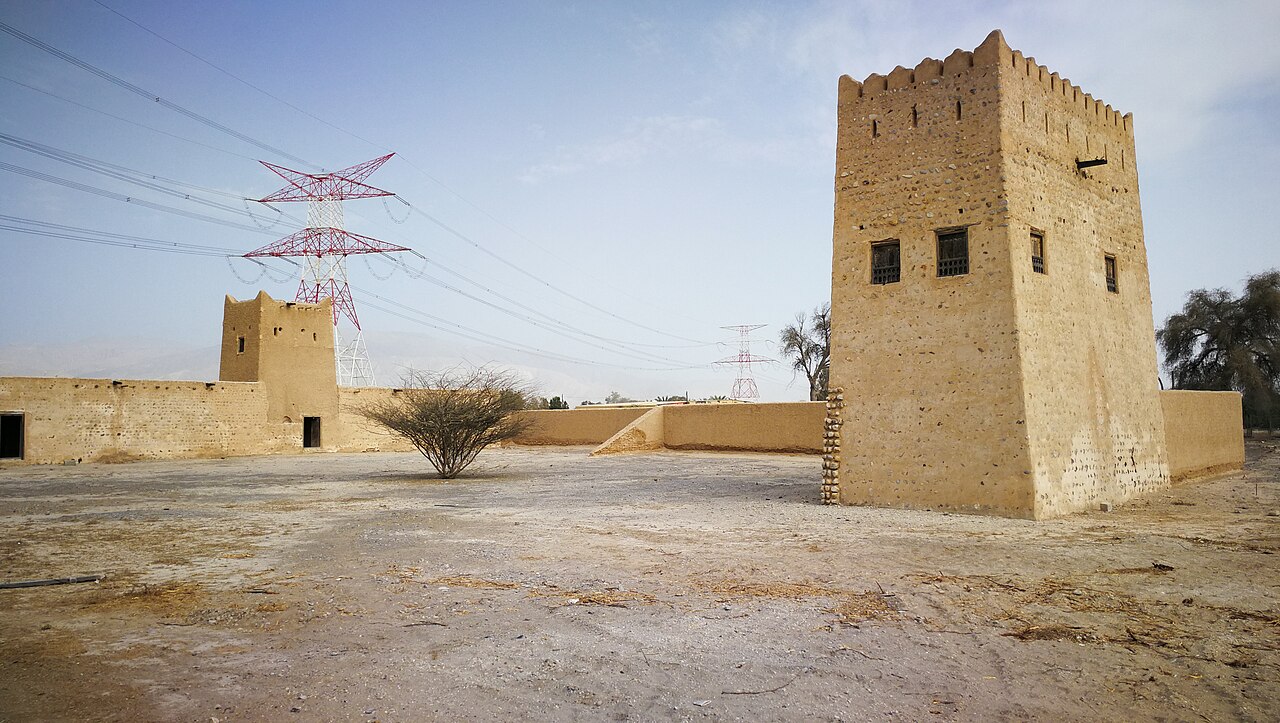
Ras Al Khaimah Fort
Ras Al Khaimah Fort is a prominent historical fortress located in the heart of the city of Ras Al Khaimah, within the emirate of the same name in the United Arab Emirates. This fort stands as a significant cultural landmark, reflecting the region's turbulent history and strategic importance along the Arabian Gulf coast.
The site of Ras Al Khaimah has hosted fortifications for centuries, with an earlier fort recorded approximately 700 meters north of the current structure. Historical records indicate that this original fort endured multiple attacks, notably its destruction by the Portuguese in 1621 and again by the British in 1820. These events underscore the area's contested position amid colonial and regional power struggles during the early modern period.
Construction and architectural features
The present Ras Al Khaimah Fort was constructed between the two major British military campaigns of 1809 and 1819, marking a strategic effort to strengthen local defenses outside the old town. The fort's design is characterized by a square ground plan with two square towers positioned on opposite corners. Early British maps depict it as a square fortification reinforced with three round towers and a larger main tower, indicative of its defensive role against seaborne and land-based threats.
Over time, the fort underwent expansions and modifications to enhance its fortifications. Its robust walls and towers were designed to provide vantage points for surveillance and defense, utilizing traditional Arabian Gulf military architecture adapted to withstand artillery and small arms fire prevalent in the 19th century.
Historical significance and usage
Ras Al Khaimah Fort served as the residence of the ruling Al Qasimi family until 1964, highlighting its role not only as a military stronghold but also as a center of political power within the emirate. The Al Qasimi dynasty was influential in the region, often involved in maritime trade and conflicts that shaped the history of the Arabian Peninsula.
Following its period as a royal residence, the fort was repurposed as a police headquarters and prison, reflecting changing administrative needs in the mid-20th century. This adaptive reuse preserved the structure's relevance within the evolving urban fabric of Ras Al Khaimah city.
Conversion into a museum and cultural preservation
In 1987, Ras Al Khaimah Fort was transformed into the National Museum of Ras Al Khaimah, marking a shift towards cultural preservation and public education. The museum showcases artifacts and exhibits related to the emirate's history, archaeology, and traditional life, providing visitors with insights into the region's heritage.
The museum's location within the fort allows visitors to experience the architectural features firsthand, including the fortified walls, towers, and internal courtyards. This setting enhances the interpretive value of the exhibits by situating them within a genuine historical context.
Visiting ras al khaimah fort today
Today, Ras Al Khaimah Fort is accessible to the public for a fee, inviting tourists and locals alike to explore its well-preserved defensive structures and museum collections. The fort's central location next to Al Hisn Road makes it a convenient destination for those interested in the history and architecture of the Arabian Gulf region.
Visitors can observe the fort's square towers, battlements, and strategic positioning, which collectively illustrate the military architecture of the early 19th century in this part of the world. The fort remains a significant symbol of Ras Al Khaimah's historical resilience and cultural identity.
Frequently asked questions (FAQ)
- What is the historical significance of Ras Al Khaimah Fort?
- Ras Al Khaimah Fort was a key military and political center for the Al Qasimi family, reflecting the emirate's strategic importance in the Arabian Gulf during the 19th century.
- Can I visit Ras Al Khaimah Fort and the National Museum?
- Yes, Ras Al Khaimah Fort is open to visitors for a fee and houses the National Museum, which exhibits the region's history and cultural heritage.
- What architectural features does Ras Al Khaimah Fort have?
- The fort features a square ground plan with two square towers on opposite corners, along with battlements and defensive walls typical of early 19th-century Arabian Gulf military architecture.
- When was Ras Al Khaimah Fort built?
- The current fort was constructed in the early 19th century, between the British attacks of 1809 and 1819.
- Where is Ras Al Khaimah Fort located?
- The fort is located in the center of Ras Al Khaimah city, next to Al Hisn Road, within the emirate of Ras Al Khaimah in the United Arab Emirates.
Information
Current owner
National Museum
Address
Next to Al Hisn Road, Ras Al Khaimah, United Arab Emirates
Loading map...
Visitor reviews
No reviews yet. Been here? Write the first review and help other travelers!
Write the first reviewVisited this castle? Share your experience
Your review helps other travelers and adds first-hand knowledge to our encyclopedia.