Al Bithnah Fort
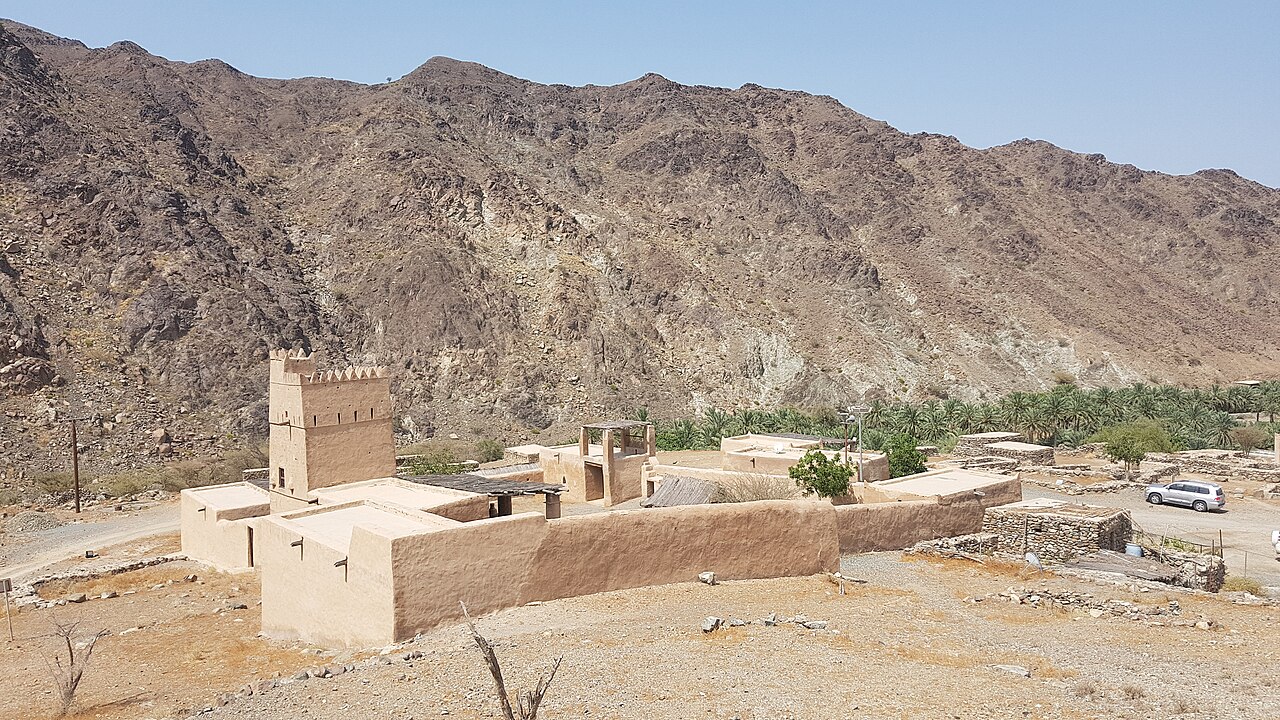
Al Bithnah Fort stands as a prominent bastioned fortress in the emirate of Fujairah within the United Arab Emirates. Situated east of the E89 road near the village of Bithnah, the fort commands a strategic position overlooking the Wadi Ham, a vital passage through the Hajar Mountains that historically connected the coastal city of Fujairah to the interior town of Manama.
The exact date of construction remains uncertain, but the fort is generally attributed to the 18th century, with many sources citing 1735 as a probable founding year. Other accounts suggest it was built later in the century, possibly in response to the Wahhabi incursions that culminated in the Battle of Bithnah in 1745. Regardless of its precise origins, the fort has played a significant role in controlling the main trade and travel route through the region.
Architectural features and layout
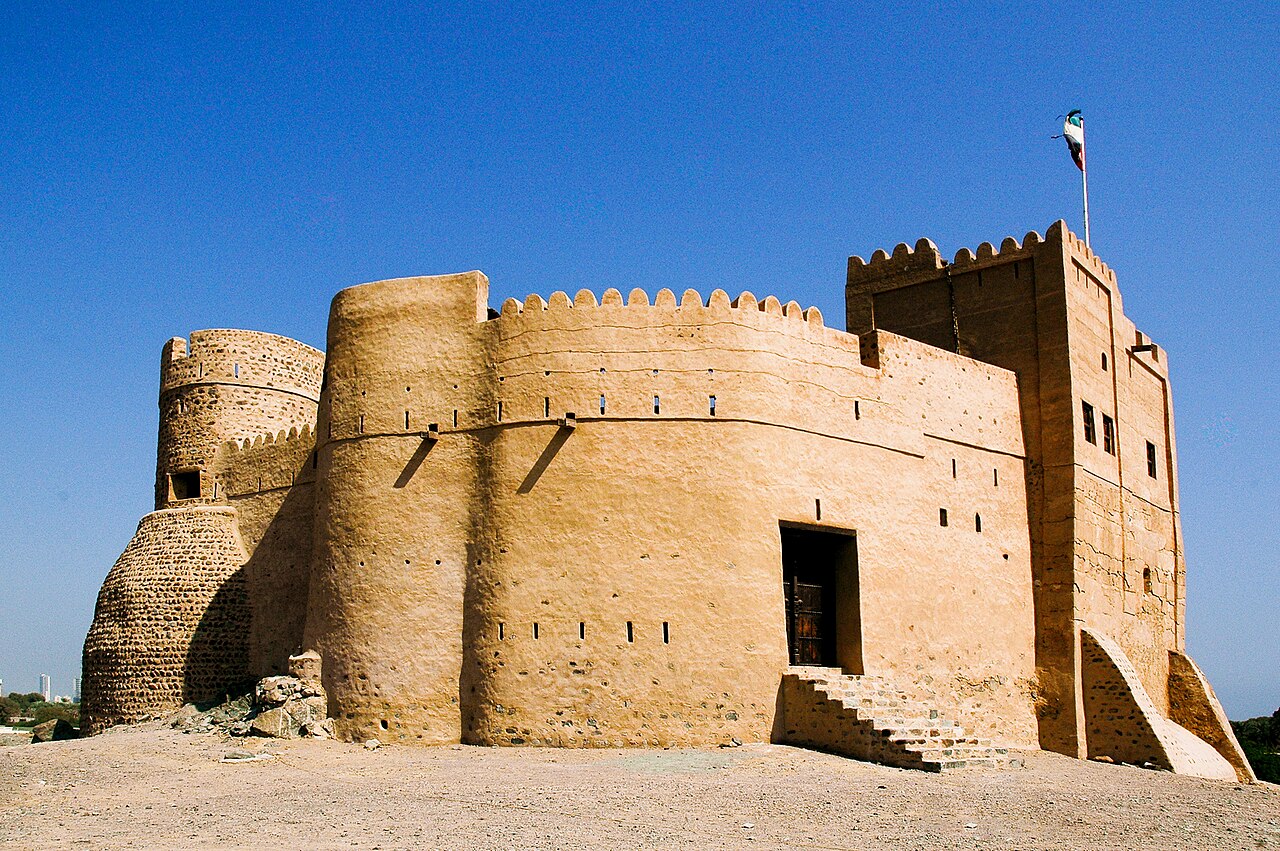
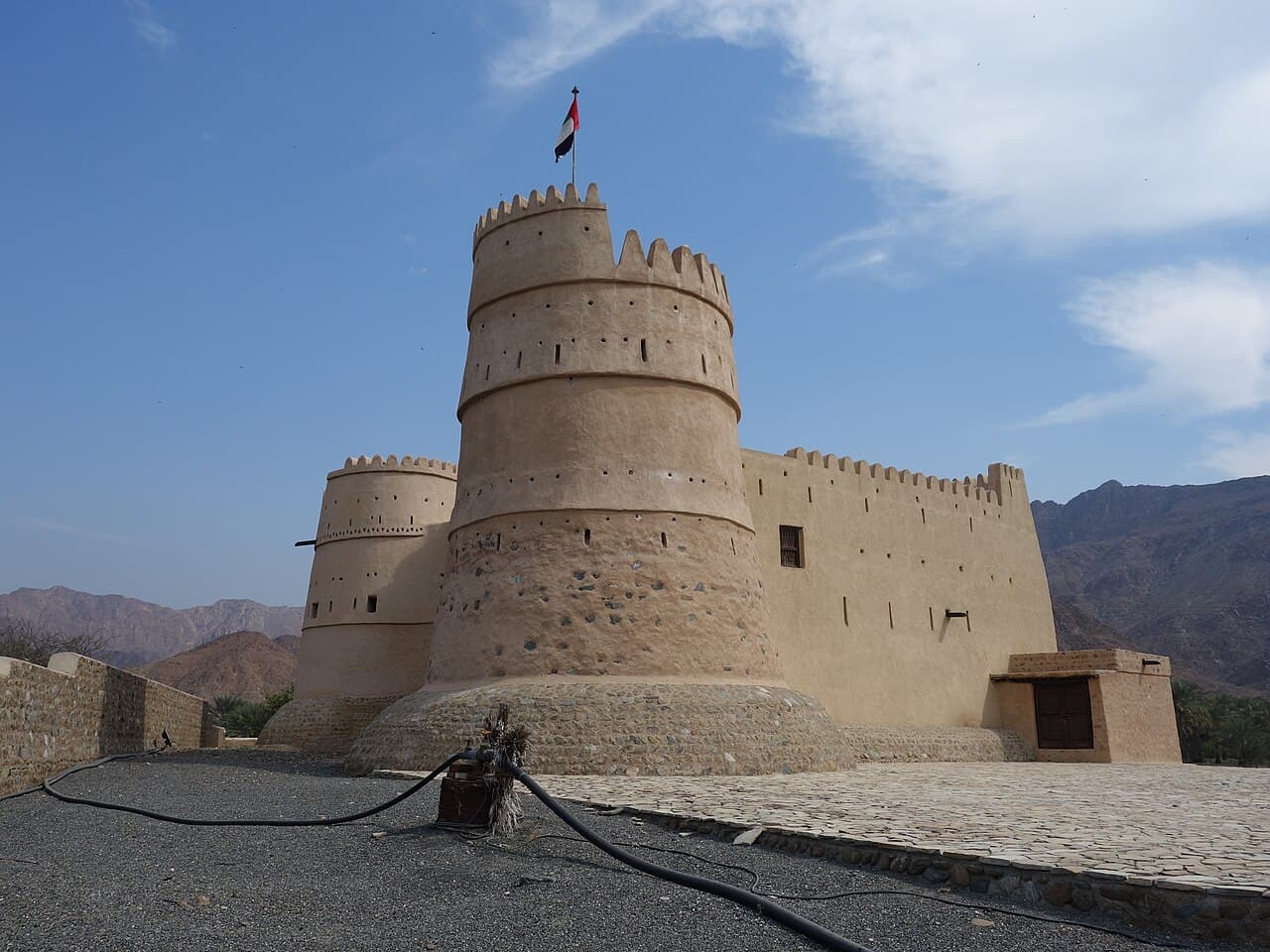
Al Bithnah Fort exhibits a classic bastioned fortress design, characterized by a rectangular ground plan reinforced with two sturdy round corner towers strategically positioned on the side facing the wadi. Constructed primarily from rock, coral, and mudbrick, the fort's walls are thick and robust, designed to withstand sieges and attacks common during its active use.
The fort is a double-story structure, with the upper level providing vantage points for surveillance and defense. The towers offered overlapping fields of fire along the approaches, enhancing the fort's defensive capabilities. The interior likely contained living quarters, storage rooms, and defensive positions, although detailed records of the internal layout are limited.
Historical significance and strategic role
Al Bithnah Fort's location was crucial for controlling the Wadi Ham, which served as the main route from the coast into the mountainous interior before modern roads were constructed. This made the fort a key military and administrative post, especially during the turbulent 18th and early 19th centuries, when tribal conflicts and external threats shaped the region's political landscape.
The fort is closely linked to the history of the Sharqiyin tribe, who used it as a stronghold to assert control over the area. Its strategic position allowed it to dominate trade and travel routes, contributing to the emergence of Fujairah as an independent emirate in the early 20th century. The fort replaced an earlier Iron Age fortification on the site, indicating the long-term military importance of this location.
Role in regional conflicts
The fort's history includes involvement in conflicts such as the Battle of Bithnah in 1745, which was part of the broader struggle against Wahhabi expansion in the region. Control of the fort was vital for local rulers to maintain dominance over the trade routes and to resist external incursions.
Restoration and current status
In the early 21st century, Al Bithnah Fort underwent restoration efforts to preserve its structure and historical significance. The restoration helped stabilize the fort and made it accessible to visitors. Today, it is well preserved and open to the public free of charge. The fort is maintained by a caretaker who often provides guided tours, offering insights into its history and architecture.
The fort's commanding views of the Wadi Ham and surrounding landscape continue to attract visitors interested in the military history and cultural heritage of the United Arab Emirates. Its preservation contributes to understanding the region's transition from tribal strongholds to modern states.
Access and visitor information
Visitors to Al Bithnah Fort can explore the fortress and its towers, gaining a sense of the defensive strategies employed in the 18th century. The site is accessible year-round, with no entrance fee, although tipping the caretaker is customary for the personalized attention and tours provided.
The fort's location near the village of Bithnah makes it a convenient stop for those traveling through Fujairah. Its proximity to the E89 road allows easy access by car. Visitors are advised to wear suitable footwear for walking on uneven terrain and to bring water, especially during the hotter months.
Frequently asked questions (FAQ)
- When was Al Bithnah Fort built?
- Al Bithnah Fort was likely built in the 18th century, with some sources suggesting 1735 as the founding year, while others associate its construction with events around 1745.
- What is the architectural style of Al Bithnah Fort?
- The fort features a bastioned fortress design with a rectangular plan and round corner towers, constructed from rock, coral, and mudbrick typical of the region's defensive architecture.
- Can I visit Al Bithnah Fort for free?
- Yes, Al Bithnah Fort is open to visitors free of charge. A caretaker is present who may offer guided tours, and tipping is appreciated.
- Why was Al Bithnah Fort strategically important?
- Its location overlooking Wadi Ham controlled the main route through the Hajar Mountains, making it vital for trade, travel, and military defense in the 18th and 19th centuries.
- What role did Al Bithnah Fort play in regional history?
- The fort was key in the emergence of Fujairah as an independent emirate and was involved in conflicts such as the Battle of Bithnah, resisting Wahhabi incursions.
Photo gallery

Information
Loading map...
Visitor reviews
No reviews yet. Been here? Write the first review and help other travelers!
Write the first reviewVisited this castle? Share your experience
Your review helps other travelers and adds first-hand knowledge to our encyclopedia.