Agropoli Castle

Agropoli Castle: an imposing late medieval fortress in Campania
Agropoli, Campania, Italy
Late Medieval (14th–15th c.)
Well Preserved

Agropoli Castle, also known as the Angevin-Aragonese castle, stands as a striking example of late medieval military architecture in the Campania region of Italy. Perched majestically on a promontory overlooking the Tyrrhenian Sea, the castle dominates the ancient village of Agropoli from its highest point, offering commanding views and a strategic vantage. Its origins trace back to the 6th century Byzantine foundations, making it a site of continuous historical and architectural evolution over many centuries.

Byzantine and Norman foundations

The earliest structural elements of Agropoli Castle date to the Byzantine period, when the initial fortifications were established to defend the coastline from invasions. These foundations provided the base for later expansions and reconstructions. During the Norman period (1077-1189), significant renovations were undertaken, including the construction of a curtain wall that protected the southern side of the town. This phase introduced Norman-Swabian architectural features characterized by robust stone walls and defensive towers, which formed the core of the castle's fortifications.

Development under the Sanseverino family

In the 15th century, the castle underwent its most substantial transformation under the direction of the Sanseverino Counts of Marsico, influential feudal lords within the Kingdom of Naples. They expanded and reinforced the structure to adapt it to the evolving demands of military technology and artillery warfare. The castle was reshaped into its present form, featuring a distinctive triangular layout with three circular towers strategically positioned at the vertices. This design improved defensive capabilities and allowed for better control of the surrounding territory.

Architectural features and layout

The castle is surrounded by a wide and deep moat, which historically served as a formidable obstacle to attackers. Although much of the moat has been lost due to agricultural development and landslides, sections remain visible near the village. The castle's walls exhibit a blend of architectural styles, reflecting the various phases of construction and renovation from Byzantine, Norman, to Aragonese influences.

Inside, the castle encloses a central square that today functions as an open-air theater, highlighting the site's cultural adaptation in modern times. On the northern side of this courtyard lies the so-called "French Room", a notable chamber whose historical function is linked to the castle's administrative or residential use during its peak.

Role in coastal defense and later history

Agropoli Castle's strategic position made it a key element in the coastal defense system of the Citra Principality, especially during periods of conflict in the Mediterranean. In 1806, following the Napoleonic reorganization of the Kingdom of Naples, the castle was occupied by the Military Genius and reinstated as a critical military outpost to guard against naval threats.

Throughout its history, the castle has witnessed numerous military and political changes, reflecting the turbulent history of southern Italy. Its preservation today allows visitors to appreciate the layered history and architectural ingenuity that characterize this fortress.

Visiting Agropoli Castle

Today, Agropoli Castle stands as a well-preserved monument and a cultural landmark in Campania. Visitors can explore its imposing walls, towers, and the central courtyard, gaining insight into the medieval fortification techniques and the castle's role in regional history. The open-air theater events held in the courtyard offer a unique way to experience the castle's ambiance and historical atmosphere.

Frequently asked questions (FAQ)

How do I get to Agropoli Castle?
Agropoli Castle is located in the charming town of Agropoli, Italy. You can reach it by taking a train to Agropoli railway station and then a short walk or local bus to the castle. There are also parking facilities nearby for those traveling by car.
What is the historical significance of Agropoli Castle?
Agropoli Castle, also known as the Castle of Agropoli, dates back to the 6th century and played a crucial role in the defense of the coast against invaders. It was built by the Byzantines and later expanded by the Normans and Aragonese. The castle's strategic position offers breathtaking views of the Gulf of Salerno and the surrounding area.
When was Agropoli Castle built?
The construction of Agropoli Castle began in the 6th century during the Byzantine period. Over the centuries, it underwent various renovations and expansions, particularly in the 15th century under the Aragonese rule. Today, it stands as a testament to the architectural styles of different eras.
Can I explore the interior of Agropoli Castle?
Yes, visitors can explore the interior of Agropoli Castle, where you can find ancient walls, towers, and beautiful panoramic views. Guided tours are often available, providing insights into the castle's history and architectural features. Be sure to wear comfortable shoes as some areas may involve walking on uneven surfaces.
Why is Agropoli Castle a popular tourist attraction?
Agropoli Castle is popular due to its stunning views, rich history, and well-preserved architecture. It offers visitors a glimpse into the past while providing a picturesque setting for photography and relaxation. Additionally, its proximity to the beautiful Cilento coastline makes it a perfect stop while exploring the region.
Is it possible to visit Agropoli Castle year-round?
Yes, Agropoli Castle is open to visitors throughout the year, though hours may vary by season. It's advisable to check the official website or local tourist information for the latest details on opening hours and any seasonal events. Visiting during the off-peak season can provide a more tranquil experience.
What are the ticket prices for Agropoli Castle?
Ticket prices for Agropoli Castle are generally modest, making it accessible to a wide range of visitors. Discounts may be available for students, seniors, and groups, so it's worth inquiring when purchasing tickets. Keep an eye out for special events that may offer free entry or guided tours.
What is the best time to visit Agropoli Castle?
The best time to visit Agropoli Castle is during the spring (April to June) and fall (September to October) when the weather is pleasant and the crowds are smaller. Summer can be quite hot, and winter may bring cooler temperatures, so plan accordingly for your visit. Regardless of the season, the castle offers stunning views year-round.
Are there any nearby attractions to Agropoli Castle?
Yes, there are several attractions near Agropoli Castle, including the beautiful beaches of Agropoli, the Cilento National Park, and the historic town center. You can also explore the nearby archaeological site of Paestum, famous for its ancient Greek temples. These sites provide a rich cultural experience in conjunction with your visit to the castle.

Information

Hill Castle

Loading map...

Visitor reviews

No reviews yet. Been here? Write the first review and help other travelers!

Write the first review

Visited this castle? Share your experience

Your review helps other travelers and adds first-hand knowledge to our encyclopedia.
Write a review

(5/5)

0/2000 characters

Your review will be visible after admin approval

Nearby castles

17.7 km
Cly Castle — Italy castle

Cly Castle

Saint-Denis, Italy

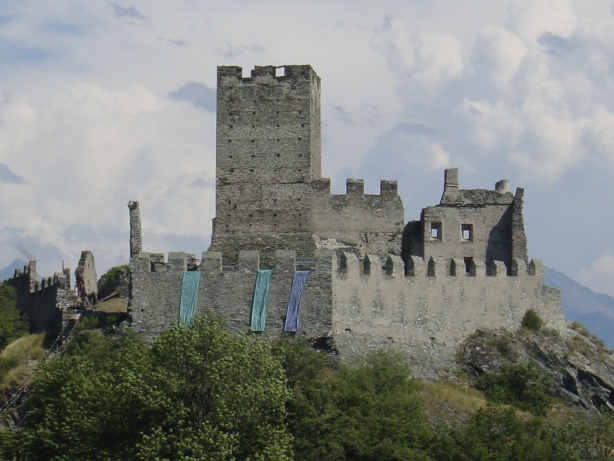
Cly Castle stands as a remarkable example of early medieval fortification in the region of Campania, Italy. Perched strategically on a hilltop in the municipality of Saint-Denis, it overlooks the Dora Baltea river and commands panoramic views of the surrounding countryside. The castle's origins trace back to the early 11th century, making it a significant relic of high medieval architecture and feudal history in the Italian Alps. The castle is classified as a hill castle, built in the so-called "primitive" style characterized by a central keep or mastio surrounded by a defensive curtain wall. Its construction is dated to around 1027 based on dendrochronological analysis of timber remains, although the first documentary mention appears in 1207. This early date situates Cly Castle among the oldest fortifications in the region, reflecting the strategic importance of controlling Alpine passes and trade routes during the medieval period. Historical context and ownership The site of Cly Castle reveals evidence of human occupation that predates its medieval construction, with archaeological findings indicating prehistoric and protohistoric activity. The castle's earliest wooden structures, particularly within the central keep, have been scientifically dated to the early 11th century, underscoring its role as a fortified manor established by local nobility during the early Middle Ages. Originally a fief under the suzerainty of the Counts of Savoy, the castle was granted to the Cly branch of the Challant family in the 13th century. Notably, Boson IV, son of Viscount Boson III of Aosta, significantly fortified and expanded the manor, shaping it into a complex that controlled a vast territory including present-day Chambave, Saint-Denis, Diémoz, Verrayes, Torgnon, and the Valtournenche valley. This expansion highlights the castle's strategic role in regional governance and defense. Following Boson IV, the lordship passed through his descendants, including Boniface I and his son Peter, whose oppressive rule led to conflict with Count Amadeus IV of Savoy. As a result, Peter's titles and properties, including Cly Castle, were confiscated. From 1376, the castle came under direct control of the House of Savoy, serving as an administrative center and justice seat for approximately two centuries. Notable events and later history One of the castle's most somber historical episodes occurred in 1428 when Johanneta Cauda was imprisoned in its dungeons. She is historically significant as the first woman in the Western Alps accused of witchcraft. After a 71-day confinement, she was executed by burning near the castle grounds, marking a dark chapter in the castle's history. Ownership of the castle later passed through several noble families, including the San Martino, de Candia, Visdomini di Ginevra, Birago San Martino de Candia, and finally the Roncas family in 1634. By the late 17th century, the castle was abandoned, and much of its stone was repurposed to construct a more comfortable manor in Chambave. The castle subsequently fell into ruin until the early 20th century when historian Tancredi Tibaldi acquired the property on behalf of the Saint-Denis municipality, preserving its remains. Architectural features and layout Cly Castle exemplifies the primitive castle style typical of the Aosta Valley, dominated by a massive central keep rising approximately 18 meters above its rocky foundation. The keep's base measures roughly 9.4 by 9 meters and is internally divided into three floors. Its elevated entrance, originally accessed by a wooden ladder, provided defensive advantages against attackers. This entrance was later modified with a stone staircase supported by a now-collapsed flying buttress. Over time, several doors and windows were bricked up to enhance the keep's defensibility. Surrounding the keep is a nearly intact crenellated curtain wall enclosing about 2800 square meters. The western section of the wall was intentionally left free of buildings to serve as a refuge area for the local population during attacks. On the southeastern side, archaeological excavations have revealed the foundations of several buildings dating from the 11th to 14th centuries. These included kitchens, stables, a guardhouse, and the lord's residence, alongside the Romanesque chapel of Saint Maurice. The chapel of saint maurice The chapel, attached directly to the keep, likely dates back to the 11th century. Its east-facing apse once featured frescoes depicting angels, saints, and evangelists. Although only fragments remain today, these frescoes were documented by early 20th-century scholars through drawings and descriptions, offering valuable insights into the castle's religious and artistic heritage. Water supply and defensive structures In the northwest corner of the castle enclosure lie the remains of a tower beneath which is a subterranean cistern lined with cocciopesto, a waterproof mortar used since antiquity. This cistern was part of an advanced water supply system, supplemented by a wooden pipeline that channeled water from a hillside spring. Such infrastructure highlights the castle's self-sufficiency and the importance of water management in medieval fortifications. The southern portion of the castle, once home to residential buildings and guardhouses, now exists largely in ruins, with only faint traces discernible. Despite this, the preserved curtain wall and central keep continue to convey the castle's original medieval layout and defensive design. Cultural significance and visitor information Today, Cly Castle is a cherished cultural landmark within the Aosta Valley, symbolizing the region's medieval heritage and feudal past. Its ruins offer visitors a tangible connection to the early medieval period and the complex history of noble families, regional power struggles, and architectural evolution. The castle is owned by the municipality of Saint-Denis and is open to the public through guided tours during the summer months of July and August. Visitors can explore the castle's ruins, appreciate its commanding views, and learn about its historical significance through interpretive materials and expert guides. Its location atop a hill overlooking the town of Chambave makes it accessible to visitors interested in medieval architecture, history, and Alpine culture. The site also attracts scholars and enthusiasts of medieval fortifications due to its well-preserved primitive style and archaeological importance.

High Medieval (11th–13th c.)
Details
29.3 km

Battipaglia Castle

Battipaglia, Italy

Battipaglia Castle is a striking example of Norman military architecture located in southwestern Italy, in the Campania region. Perched on a wooded hill above the city of Battipaglia, it commands panoramic views over the surrounding landscape, including the nearby Tusciano River and the fertile plains of the Piana del Sele. This strategic position was carefully chosen in the 12th century to protect the local population from invasions and natural threats such as flooding from the river. The castle, also locally known as Castelluccio, is an important cultural and historical landmark that reflects the Norman influence in southern Italy during the High Medieval period. Although the modern city of Battipaglia was officially established in 1929, the area has a rich history dating back to ancient times, with significant archaeological findings nearby, including tombs from the 7th to 6th centuries BC and a Roman villa ruin known as San Giovanni. Historical context and construction The origins of Battipaglia Castle trace back to the Norman conquest of southern Italy, which began in the 11th century. The Normans built a network of fortifications to consolidate their control over the region, and the castle at Battipaglia was part of this defensive system. Constructed in the 12th century, the fortress was designed to serve both as a military stronghold and as a refuge for the local population. The castle's location on a hill provided a natural defensive advantage, allowing defenders to monitor movements across the plain and along the river. This strategic siting was crucial during a period marked by frequent conflicts and power struggles among local lords and external invaders. Architectural features Battipaglia Castle exhibits typical elements of Norman castle architecture, characterized by robust stone construction and functional design aimed at defense. The fortress likely included a keep or donjon, which served as the last line of defense and residence for the lord or garrison commander. Surrounding the keep, there would have been curtain walls with battlements and possibly towers at key points for enhanced protection and surveillance. The castle's walls were constructed from local stone, providing both strength and durability. The presence of preserved murals inside the castle indicates that it also had areas intended for habitation and ceremonial use, reflecting the dual military and residential function of the structure. Defensive structures and layout The design of the castle incorporated features typical of Norman fortifications, such as narrow arrow slits for archers, and a well-protected gatehouse to control access. The elevated position on the hill enhanced the castle's natural defenses, making it difficult for attackers to approach unnoticed or mount an effective siege. Archaeological significance and surrounding sites The area around Battipaglia Castle is rich in archaeological remains that provide insight into the long history of human settlement in this part of Campania. Excavations have uncovered over a hundred tombs dating from the 7th to 6th centuries BC, indicating the presence of ancient communities well before the castle's construction. Additionally, the ruins of a Roman villa known as San Giovanni lie nearby, further attesting to the area's historical importance. Coins minted around 211 BC have also been found, highlighting the region's role in ancient trade and economy. Battipaglia today: cultural heritage and tourism Today, Battipaglia Castle stands as a prominent historical monument in the city, attracting visitors interested in medieval architecture and the rich cultural heritage of Campania. The castle overlooks the modern city, offering scenic views and a tangible connection to the region's past. The city of Battipaglia itself is renowned for its agricultural products, particularly Mozzarella di Bufala, a fresh buffalo milk cheese celebrated for its distinctive taste. Visitors to the castle can combine cultural exploration with culinary experiences unique to this part of Italy. The castle and its surroundings provide exceptional opportunities for cultural and historical tourism, with the site serving as a gateway to exploring the broader archaeological landscape of the region. Preservation efforts have maintained the castle's condition, allowing visitors to appreciate its Norman architectural features and the beautiful murals that remain within its walls. Visiting information Visitors to Battipaglia Castle can explore the hilltop fortress and enjoy the views over the city and the surrounding plain. The site offers a unique glimpse into medieval military architecture and the layered history of the Campania region. Nearby archaeological sites and local museums complement the visit, providing a comprehensive understanding of the area's historical development.

High Medieval (11th–13th c.)
Details
36.4 km

Gerione Castle

Campagna, Italy

Gerione Castle, located in Campagna, Italy, is a significant hill castle dating back to the High Medieval period. Its strategic position atop a hill overlooking the Sele plain made it a vital military and observation point controlling mountain routes and the surrounding territory. Although the exact date of construction remains uncertain, the castle is first documented in a 1056 parchment during the Lombard period, suggesting its origins likely trace to the 10th or 11th century. Historical significance and ownership The castle's earliest known lord was Count Roberto during the Norman era, highlighting its importance as a feudal stronghold. In 1220, it was incorporated into the Demanio Regio by Emperor Frederick II of Swabia, who classified it among the Castra exempta—the kingdom's primary fortified sites directly under imperial control. This elevated its status as a key defensive and administrative center within the kingdom. Gerione Castle also played a notable role during religious and political turmoil. In 1384, Pope Urban VI sought refuge within its walls while fleeing unrest in nearby Nocera, demonstrating its function as a sanctuary beyond purely military purposes. The castle maintained its defensive role until the early 16th century, when changing military needs rendered its location less practical. In 1515, the last feudal owner, Duke Ferdinando Orsini, transferred the castle to the Collegiate Church of Santa Maria della Pace. Later, under the feudal rule of the Grimaldi family, Princes of Monaco and Marquises of Campagna, the fortress was reportedly used as a prison and a Spanish garrison, reflecting its continued strategic and administrative utility. Architectural features and layout The castle occupies approximately 3,000 square meters and features a spindle-shaped plan, typical of medieval fortifications designed to maximize defensive capabilities and surveillance. Access is exclusively on foot via two main paths from Campagna or nearby areas such as Monte Romanella and Romanelle. Two principal entrances controlled access to the complex: one connecting to the Baronial Palace overlooking the Sant’Agostino cliff, and the other near Monte Romanella. The western perimeter is fortified by a curtain wall about 1.8 meters thick, punctuated by four towers along Via San Bartolomeo. One tower has been recently restored, preserving part of the castle's defensive heritage. Additional fortifications include a gate on Via Pianello reinforced by two flanking towers, emphasizing the castle's layered defense. The curtain walls are crowned with Guelph-style battlements featuring rectangular merlons, a design that provided effective protection for defenders. Inside, the outer courtyard beyond the entrance housed a garrison building and a basse-cour—a small enclosed yard used for domestic and defensive purposes. The lord's residential quarters were accessed via a wooden drawbridge leading to a courtyard overlooked by the donjon, a large rectangular keep serving as the fortress's stronghold. The main building, the lord's palace, has an irregular shape and rises over two floors. It contained essential facilities such as a chapel, kitchens, a cistern for rainwater collection, and private chambers, illustrating the dual role of the castle as both a military and residential complex. Strategic location and access Situated on a hilltop, Gerione Castle commands extensive views over Campagna and the Sele plain, underscoring its original purpose as a military lookout and control point. Its position allowed monitoring of key mountain passes and communication routes, vital in medieval warfare and governance. The castle's accessibility is limited to pedestrians, reached via two main paths from the town or from nearby localities, preserving its historical context and providing visitors with an authentic experience of its defensive setting. Preservation and current status Today, Gerione Castle remains a partially preserved fortress, with restoration efforts focused on stabilizing key towers and walls. Its ownership by the former orphanage Lavinia Cervone in Campagna ensures ongoing custodianship and protection of this historical monument. The castle serves as a cultural landmark, attracting visitors interested in medieval architecture, feudal history, and the strategic military heritage of southern Italy. Its preserved elements, including the curtain walls, towers, and donjon, offer valuable insights into medieval fortification techniques and the lifestyle of feudal lords. Historical context within the region Gerione Castle's history reflects the complex political and military dynamics of southern Italy during the Middle Ages. Its transition from Lombard to Norman control, followed by imperial administration under Frederick II, illustrates the shifting power structures of the time. The castle's role as a refuge for Pope Urban VI during the Western Schism and its later use as a prison and garrison under the Grimaldi family highlight its multifaceted importance beyond mere defense. Its location in Campagna, a town with rich medieval heritage, situates Gerione Castle within a network of fortifications that collectively secured the region against external threats and internal conflicts.

High Medieval (11th–13th c.)
Details

