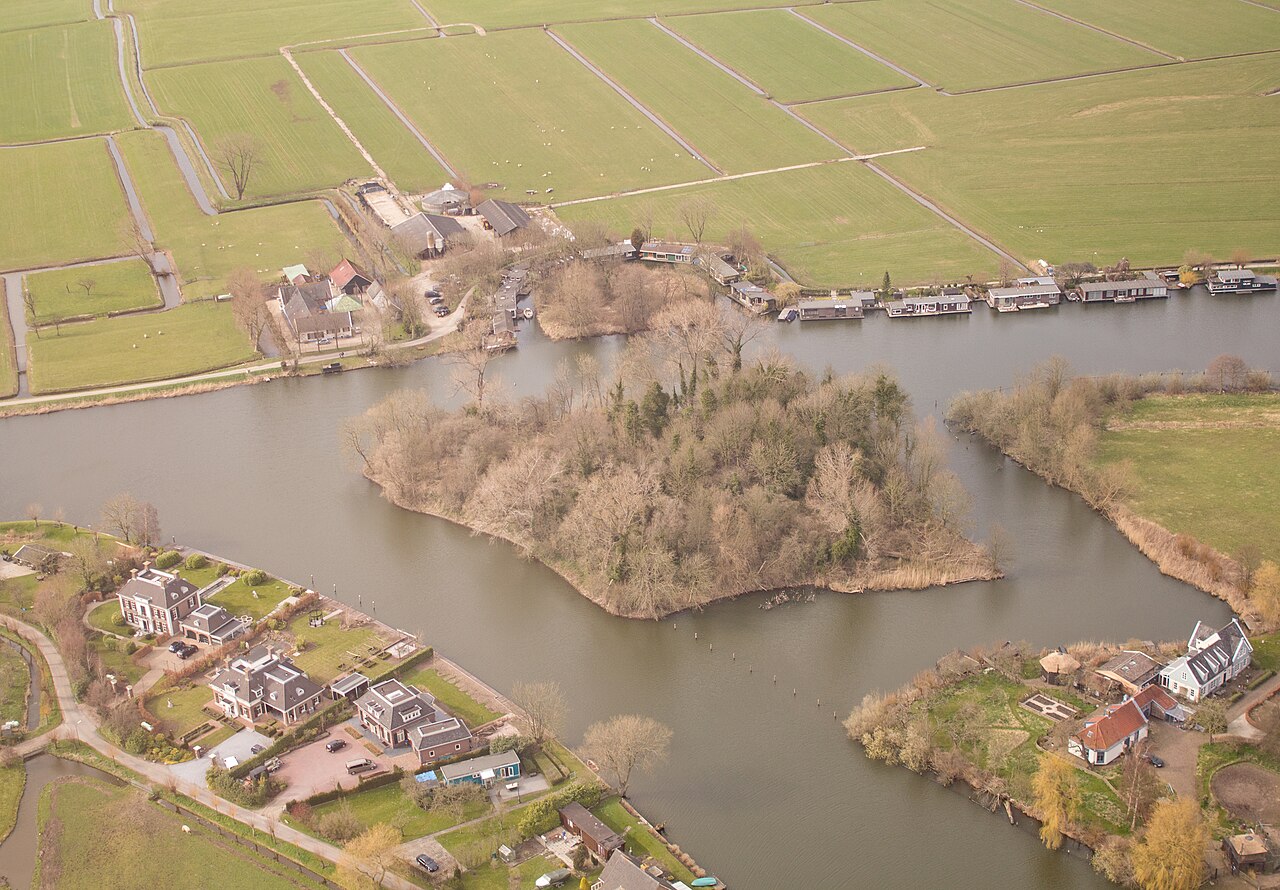
Abcoude Castle
Abcoude Castle was a prominent late medieval fortress located south of the village of Abcoude in the province of Utrecht, the Netherlands. Though no visible remains survive today, the castle played a significant role in the region's medieval history and witnessed several phases of construction, destruction, and ownership changes from the 13th to the 18th century.
The origins of Abcoude Castle are somewhat obscure, but it is generally believed to have been established in the 13th century, possibly by Zweder I van Zuylen, who adopted the name "van Abcoude" after marrying into the local nobility. Zweder I, first recorded in 1268, was also the founder of the nearby Duurstede Castle. The castle itself was first documented in 1273, the year it suffered destruction during the Kennemer Revolt at the hands of Gijsbrecht IV of Amstel, a notable regional lord. This early devastation underscores the turbulent political climate of the period.
Reconstruction and architectural features
The castle was rebuilt in 1328, marking its transition into a more established medieval stronghold. While detailed architectural plans and descriptions are lacking, typical characteristics of castles built or rebuilt in this era in the Netherlands included a fortified stone keep or donjon, surrounded by defensive walls and a moat. Given the castle's location near the intersection of Winkeldijk and De Horn, it likely featured a strategic position with natural water defenses enhanced by man-made moats.
Throughout its existence, Abcoude Castle would have included key medieval defensive elements such as battlements, curtain walls, and possibly towers to oversee the surrounding landscape. The presence of a moat, remnants of which still exist as waterlogged ditches, was a crucial defensive feature typical of the region's water castles.
Ownership and historical significance
In 1407, the castle passed to Jacob van Gaasbeek, a descendant of the van Zuylen van Abcoude family. After Jacob died without heirs in 1459, ownership transferred to David of Burgundy, the Bishop of Utrecht. The bishopric held significant power in the region, but the bishops preferred to reside in the more comfortable Duurstede Castle, leaving Abcoude Castle under the care of appointed stewards.
In 1529, the States of Utrecht took control of the castle from the bishops, reflecting the shifting political landscape of the Netherlands during the early modern period. The castle's military importance persisted into the 17th century, as it was garrisoned by soldiers during the Franco-Dutch War in 1672. These troops successfully protected the castle from damage during French incursions, highlighting its strategic value even at that late date.
Decline and eventual destruction
Following the war, the castle was largely neglected by the States of Utrecht. By 1704, contemporary accounts described it as dilapidated. In 1715, it was sold to Theodorus de Leeuw, who partially restored the castle and used it as a country residence until his death in 1744. Despite this brief revival, subsequent owners showed little interest in maintaining the medieval structure.
Throughout the 18th century, Abcoude Castle fell into increasing disrepair. By around 1800, it had become completely uninhabitable and was effectively a ruin. Over the following decades, the castle's stones were quarried for other building projects, a common fate for abandoned castles. The final remnants were leveled in 1860, erasing all visible traces of the once formidable fortress.
Present-day site and legacy
Today, no above-ground remains of Abcoude Castle survive. The site where the castle once stood is now open grassland, with only parts of the former moat still visible as subtle landscape features. Despite its physical disappearance, the castle's historical footprint remains significant for understanding medieval defensive architecture and regional power dynamics in the Utrecht area.
Archaeological interest in the site has provided some insights into the castle's layout and construction methods, though much remains to be discovered. The story of Abcoude Castle reflects broader themes in Dutch medieval history, including feudal conflicts, ecclesiastical influence, and the gradual decline of fortified residences in favor of more modern country estates.
Frequently asked questions (FAQ)
- When was Abcoude Castle originally built and by whom?
- Abcoude Castle was likely built in the 13th century, with the first mention in 1273. It may have been founded by Zweder I van Zuylen, who adopted the name 'van Abcoude' after marriage.
- What happened to Abcoude Castle during the Kennemer Revolt?
- The castle was destroyed in 1273 during the Kennemer Revolt by forces led by Gijsbrecht IV of Amstel, reflecting the region's medieval conflicts.
- Is there anything left to see of Abcoude Castle today?
- No above-ground remains of Abcoude Castle exist today. Only parts of the former moat remain visible, and the site is now grassland.
- Who owned Abcoude Castle after Jacob van Gaasbeek?
- After Jacob van Gaasbeek died without heirs in 1459, ownership passed to David of Burgundy, Bishop of Utrecht, and later to the States of Utrecht in 1529.
- Why was Abcoude Castle neglected and eventually demolished?
- Following the Franco-Dutch War, the castle was neglected by its owners, fell into disrepair, and was used as a stone quarry until its final remains were leveled in 1860.
Information
Address
Near the intersection of Winkeldijk and De Horn, Netherlands
Loading map...
Visitor reviews
No reviews yet. Been here? Write the first review and help other travelers!
Write the first reviewVisited this castle? Share your experience
Your review helps other travelers and adds first-hand knowledge to our encyclopedia.