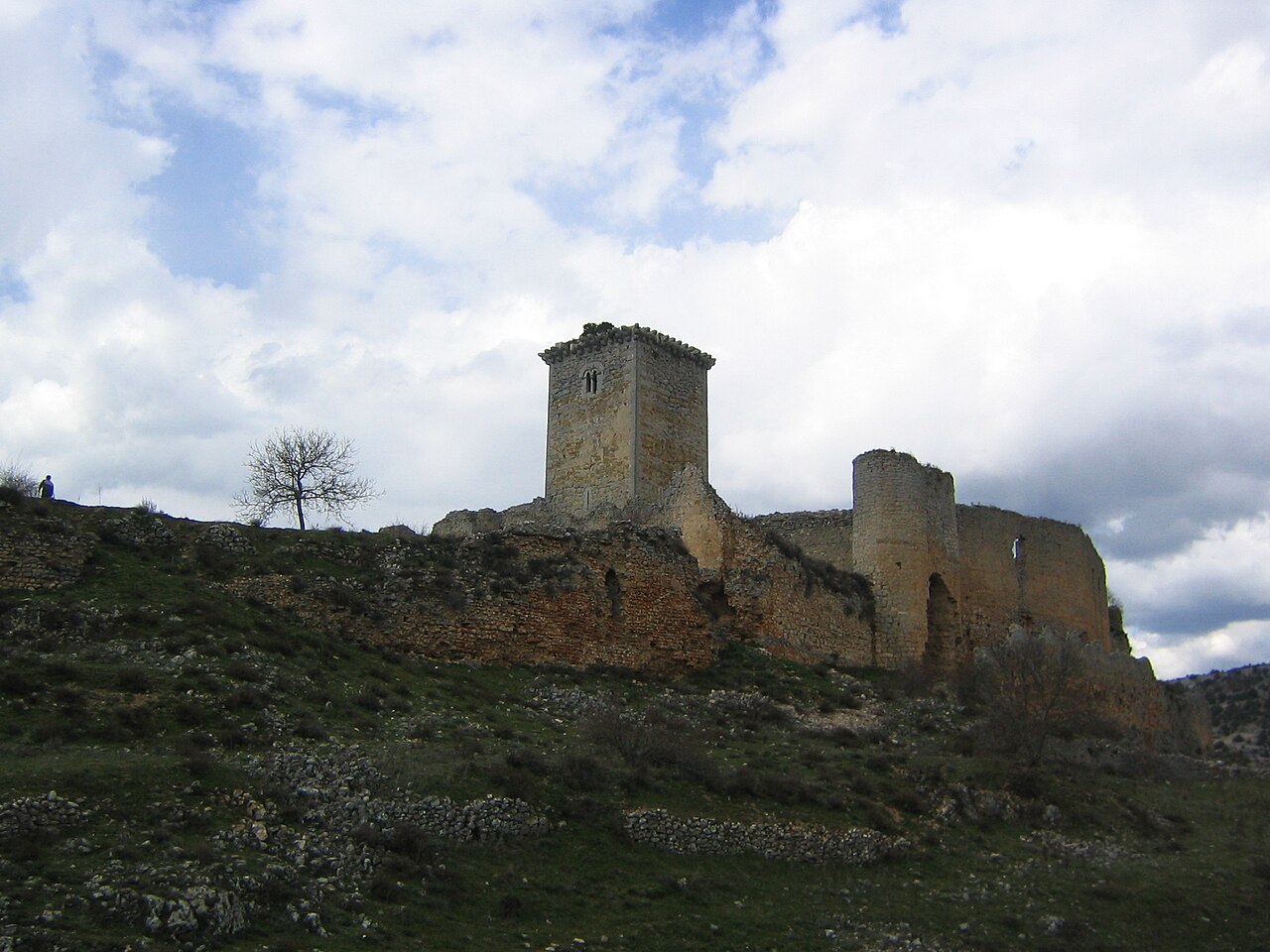
Abaluartado Castle
Abaluartado Castle in San Leonardo de Yagüe, Spain, is a notable example of Renaissance military architecture constructed in the mid-16th century. Built in 1563 by Juan Manrique de Lara, the castle reflects the architectural innovations brought from Italy to Spain during the Renaissance period. Its design specifically addresses the challenges posed by the advent of gunpowder artillery, marking a significant shift in fortress construction methods.
Historical context and construction
The castle was commissioned during a time when traditional medieval fortifications were becoming obsolete due to the increasing power of cannons and firearms. Juan Manrique de Lara implemented the Renaissance style of fortification, which emphasized low, thick walls and angular bastions designed to deflect and absorb artillery fire. This approach was a departure from the high curtain walls and towers typical of earlier medieval castles.
Abaluartado Castle's construction in 1563 places it firmly within the Renaissance period, a time when military architecture evolved rapidly across Europe to adapt to new warfare technologies. The castle served both defensive and strategic purposes, protecting the surrounding region and controlling important routes.
Architectural features and design
Bastioned fortifications
The defining characteristic of Abaluartado Castle is its bastioned design, a hallmark of Renaissance fortresses. The castle features angular bastions protruding from its walls, allowing defenders to cover adjacent walls with crossfire and eliminate blind spots. This design was crucial for countering the destructive power of gunpowder cannons.
Construction materials and techniques
The castle was built using robust local stone, ensuring durability against artillery bombardment. The walls are notably thick and angled, optimizing their ability to withstand cannon fire. The use of earthworks behind stone walls likely absorbed impacts, a common technique in Renaissance fortifications.
Layout and internal structures
Inside, the castle includes a central courtyard surrounded by defensive walls and bastions. The layout was designed to facilitate the movement of troops and artillery within the fortress. While primarily military in function, the castle also contained living quarters and storage areas necessary for sustaining a garrison during sieges.
Strategic importance and historical role
Abaluartado Castle played a key role in the defense of the region during a period marked by frequent conflicts and territorial disputes. Its location in San Leonardo de Yagüe allowed control over local routes and served as a deterrent against invasions. The castle’s design reflects the military innovations of the Renaissance, emphasizing resilience against cannon fire and improved defensive capabilities.
Preservation and current status
Today, Abaluartado Castle remains a significant historical monument representing Renaissance military engineering in Spain. While the castle’s condition is partially preserved, efforts have been made to maintain its structural integrity and historical value. Visitors can observe the distinctive bastions and thick walls that illustrate the adaptation of fortresses to early modern warfare.
Visiting Abaluartado Castle
The castle is accessible to the public, offering a glimpse into 16th-century military architecture. Visitors interested in Renaissance fortifications and Spanish history will find the site informative and visually striking. The castle’s location in San Leonardo de Yagüe also provides opportunities to explore the surrounding region's cultural and natural attractions.
Frequently asked questions (FAQ)
- What is the historical significance of Abaluartado Castle?
- Abaluartado Castle, located in San Leonardo de Yagüe, Spain, is a remarkable example of military architecture from the 17th century. It served as a defensive fortress during various conflicts, reflecting the strategic importance of the region in Spanish history.
- When was Abaluartado Castle built?
- Construction of Abaluartado Castle began in the late 1600s and was completed in the early 1700s. Its design showcases the transition from medieval fortifications to more modern military structures.
- Can I visit Abaluartado Castle?
- Yes, visitors are welcome to explore Abaluartado Castle and its fascinating grounds. Guided tours are often available, providing insights into the castle's history and architecture.
- Is it possible to access Abaluartado Castle with mobility aids?
- The accessibility of Abaluartado Castle may vary due to its historical structure. It is advisable to contact the local visitor center for detailed information regarding wheelchair access and any potential limitations.
- What are the opening hours for Abaluartado Castle?
- Abaluartado Castle typically opens to visitors from 10 AM to 6 PM during peak tourist season. However, it is recommended to check for any seasonal changes or special events that may affect these hours.
- What is the best time to visit Abaluartado Castle?
- The best time to visit Abaluartado Castle is during the spring and early autumn when the weather is mild and pleasant. These seasons also tend to have fewer crowds, allowing for a more enjoyable experience.
- Are there any nearby attractions to visit while at Abaluartado Castle?
- Yes, the surrounding area features several attractions, including local museums and scenic hiking trails. Visitors can also explore the charming village of San Leonardo de Yagüe for a taste of local culture and cuisine.
- How much do tickets cost to enter Abaluartado Castle?
- Ticket prices for Abaluartado Castle are typically modest, with discounts available for students and seniors. It is best to check in advance for the most current pricing and any special promotions that may be offered.
Information
Loading map...
Visitor reviews
No reviews yet. Been here? Write the first review and help other travelers!
Write the first reviewVisited this castle? Share your experience
Your review helps other travelers and adds first-hand knowledge to our encyclopedia.