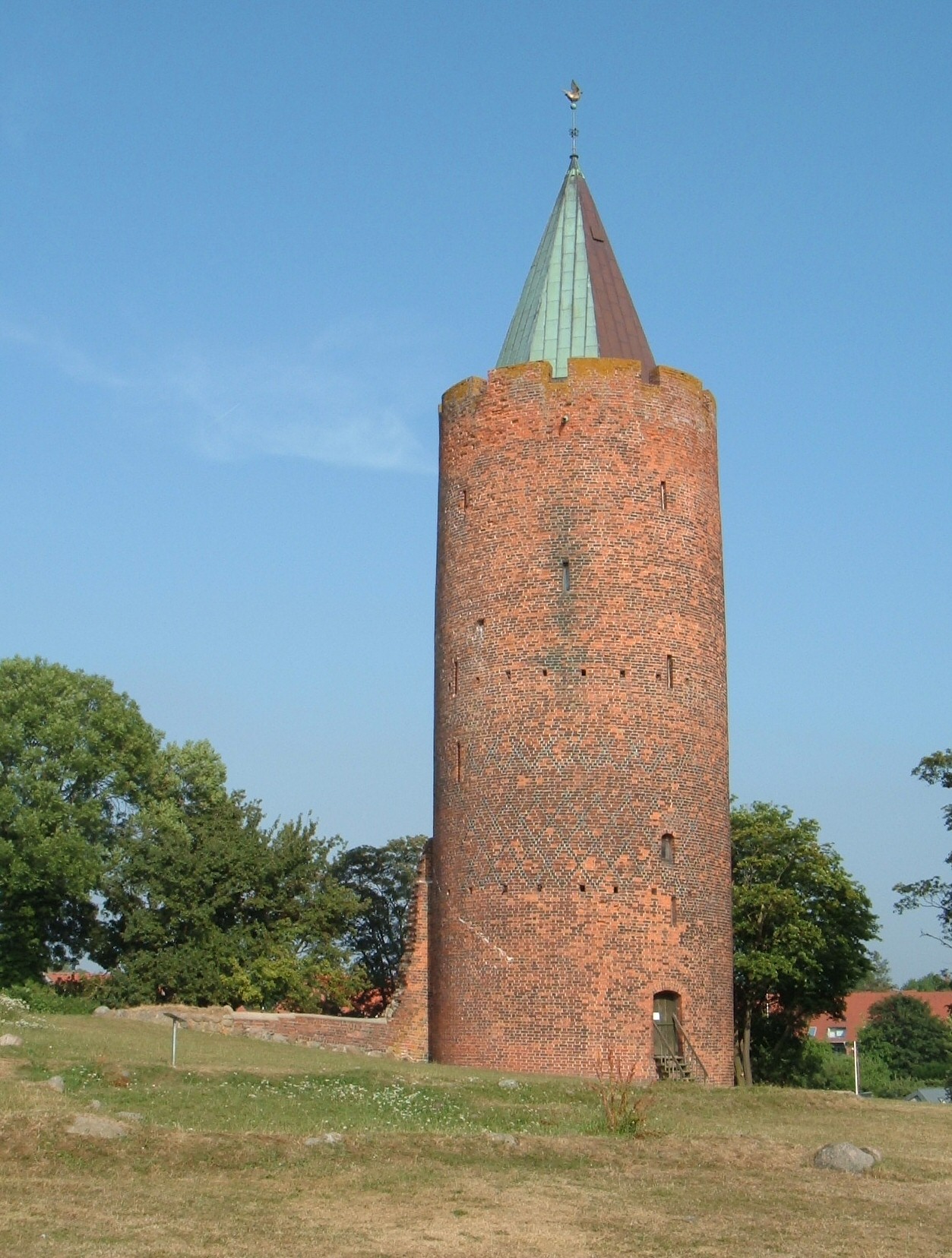
Aalholm Castle
Aalholm Castle is the oldest castle on the island of Lolland in Denmark, with its first recorded mention dating back to 1329. While the exact founding date remains uncertain, historical analysis suggests its origins likely trace to around 1200, during a period when the Danish crown established numerous royal fortifications to consolidate power and defend regional territories. Strategically situated on a small island within the inlet known as Nysted Nor, the castle benefitted from natural water defenses, being completely surrounded by water yet accessible to ships familiar with the channel. This advantageous location provided both security and control over maritime access.
The castle initially served as the seat of the king's vassal or lensmand, functioning as the administrative center for local governance and royal authority in the region. The surrounding fertile lands to the north and west enabled agricultural production to sustain the castle's inhabitants and generate surplus for the crown. The area's significance during the medieval period is further underscored by the nearby establishment of the Franciscan monastery in Nysted in 1286, the only one on the islands, reflecting a thriving community that supported the religious order.
Medieval origins and architectural evolution
The earliest surviving architectural elements of Aalholm Castle date from the 14th and 15th centuries, particularly in the north wing, which represents the oldest extant part of the structure. The castle's original medieval design likely included typical defensive features such as thick stone walls, towers, and a moat formed by the surrounding waters. Over the centuries, Aalholm Castle underwent numerous phases of construction, restoration, and alteration, reflecting changing military needs and residential preferences.
Repairs and modifications in the early modern period
During the 16th century, the castle required significant repairs, notably in the 1550s when bricks salvaged from the nearby Franciscan monastery were repurposed to restore parts of the building. The castle suffered damage during the Swedish Wars of 1657-1660, leaving it in a dilapidated state with missing windows and roofless towers. These events illustrate the castle's involvement in the turbulent military conflicts of the era and the impact of warfare on its structural integrity.
18th and 19th-century renovations
The 18th century saw further changes, including the demolition of parts of the south wing and a comprehensive renovation of the east wing. In 1889, additional modifications transformed the castle's layout by removing another section of the south wing and adding two lateral wings on the south side of the north wing. These additions altered the castle's original rectangular plan into a shape resembling a pair of spectacles, marking a significant architectural evolution while retaining much of the historic character.
Cultural significance and modern use
In the 20th century, Aalholm Castle transitioned from a private noble residence to a cultural and historical site. During the 1970s, parts of the castle were opened to the public as a museum, allowing visitors to explore its rich history and architectural features. The former owner also established a vintage car museum at Stubberup Farm, located about one kilometer west of the castle, enhancing the site's cultural offerings.
Following the sale of the castle and estate in 1995, the furnishings were auctioned off, and the new owner assumed control of the automobile museum. However, the vintage car museum closed in 2008 due to the deteriorating condition of the buildings. Despite these challenges, Aalholm Castle remains an important historical landmark, reflecting centuries of Danish royal administration, architectural adaptation, and regional significance.
Architectural features and defensive elements
The castle's position on an island surrounded by water provided natural defense, complemented by constructed fortifications typical of late medieval castles in Denmark. The surviving north wing, with its robust masonry walls, offers insight into medieval construction techniques. The castle originally included towers and battlements designed to repel invaders and control access via the waterway. The moat and water defenses were integral to its security, while internal courtyards and halls would have accommodated the administrative and residential functions of the lensmand and his retinue.
Building materials and structural details
Aalholm Castle's construction utilized local materials, including bricks reclaimed from the Franciscan monastery during repairs, illustrating resourcefulness and the interconnectedness of regional structures. The castle's walls and wings vary in style and period, reflecting the layered history of additions and restorations from the medieval through the 19th century. Architectural details such as window openings, doorways, and roofing styles evolved over time, adapting to changing defensive needs and residential comfort.
Historical context and regional importance
Aalholm Castle's establishment coincided with a broader strategy by the Danish monarchy to assert control over its territories during the late medieval period. Positioned on Lolland, a key island in the Baltic Sea, the castle played a crucial role in regional defense and administration. Its proximity to fertile agricultural land supported the castle's self-sufficiency and economic base. The presence of the Franciscan monastery nearby indicates the area's religious and social vitality during the Middle Ages.
The castle's history of damage and repair during the Swedish Wars reflects the geopolitical struggles in Scandinavia during the 17th century. These conflicts influenced the castle's physical state and underscored its strategic importance. Subsequent renovations in the 18th and 19th centuries demonstrate adaptation to peaceful times and changing architectural tastes, transitioning Aalholm from a fortress to a noble residence and cultural site.
Frequently asked questions (FAQ)
- When was Aalholm Castle first mentioned in historical records?
- Aalholm Castle was first mentioned in historical records in 1329, though it likely dates back to around 1200.
- What type of castle is Aalholm Castle?
- Aalholm Castle is classified as a water castle, situated on an island surrounded by water in the inlet called Nysted Nor.
- What architectural styles are present in Aalholm Castle?
- The castle features a mix of architectural styles due to various construction phases from the 14th century through the 19th century.
- Can visitors tour Aalholm Castle today?
- Parts of Aalholm Castle were opened as a museum in the 1970s, but current visiting information is limited and should be checked locally.
- What historical events impacted Aalholm Castle's structure?
- The castle suffered damage during the Swedish Wars of 1657-1660, leading to loss of windows and roofs on towers, necessitating later repairs.
Information
Loading map...
Visitor reviews
No reviews yet. Been here? Write the first review and help other travelers!
Write the first reviewVisited this castle? Share your experience
Your review helps other travelers and adds first-hand knowledge to our encyclopedia.