
Qatar
Historical background and medieval period
The heritage of castles and fortifications in Qatar is deeply intertwined with the peninsula’s strategic position along key maritime and desert trade routes. Although Qatar’s historical development differs from the medieval European castle tradition, its fortifications played a crucial role in protecting local communities and asserting control over resources. The region’s early fortifications date back several centuries, primarily constructed by tribal leaders and rulers seeking to defend against foreign invasions and internal conflicts.
During the medieval period and into the early modern era, Qatar was influenced by various powers, including the Portuguese, Ottomans, and local Arab tribes. This period saw the emergence of castles and forts that served not only as military strongholds but also as administrative centers and symbols of authority. The architecture and function of these fortifications reflect the harsh desert environment, tribal warfare, and the importance of controlling coastal access.
Continue reading below — scroll for the full article.
Castles in Qatar
Discover 19 magnificent castles across the country





Types of fortifications in Qatar
Qatar’s fortifications encompass several types of defensive structures, each serving unique purposes based on geographic and strategic needs. The most prominent are fortresses, coastal forts, and watchtowers. Unlike the towering castles of Europe, Qatari fortifications tend to be more compact and adapted to local materials and climate.
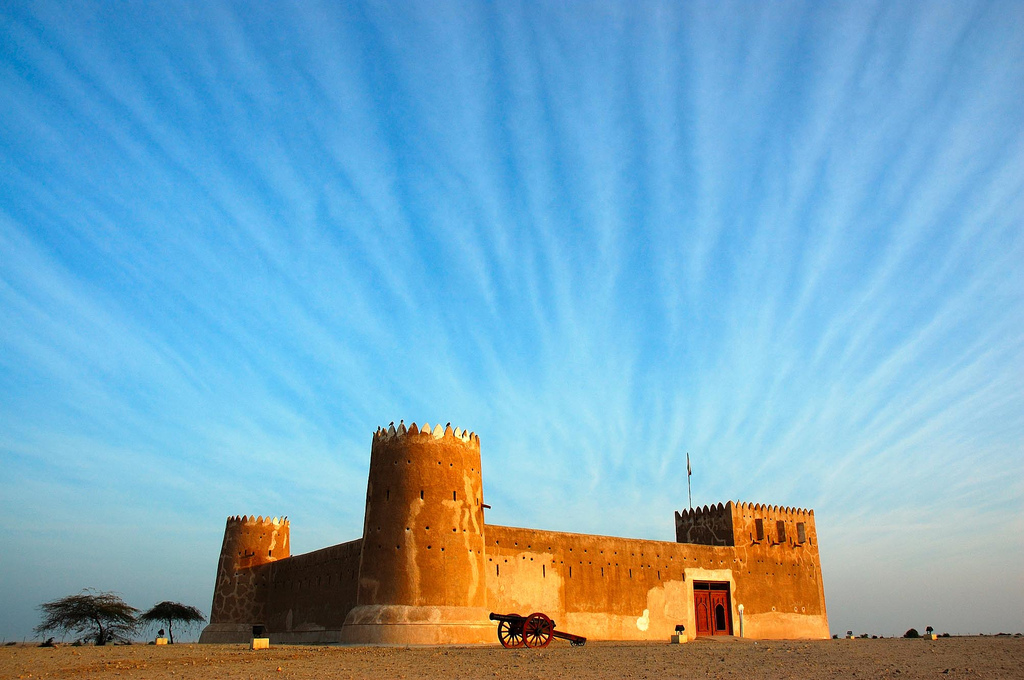
- Fortresses: These are robust stone or coral structures that acted as military bases and tribal residences. Al Zubarah Fort, for example, is a classic example of a fortress designed to protect a thriving trading town and its hinterland.
- Coastal forts: Situated along the shoreline, these forts guarded important harbors and pearl diving stations. Al Koot Fort in Doha was built to oversee and secure the city’s harbor and protect against seaborne threats.
- Watchtowers: Often smaller and more isolated, these towers provided early warning signals and surveillance over vast desert or coastline areas. They were essential for a mobile defense strategy in the wide-open terrain of Qatar.
Architectural styles and influences
The architecture of Qatar’s fortifications reflects a blend of indigenous building traditions and external influences from Persian, Ottoman, and Arabian Gulf cultures. The use of coral stone, limestone, and gypsum plaster is characteristic, allowing walls to withstand the harsh climate while maintaining thermal insulation.
Local building materials and techniques
Traditional Qatari forts were constructed using locally available materials such as coral rock, mud mortar, and limestone blocks. Walls were typically thick and designed to absorb heat during the day and release it at night. The layout often included rectangular or square towers, narrow slit windows for archers, and crenellated parapets to provide cover for defenders.
Cultural and regional influences
Qatar’s fortifications reveal influences from neighboring regions. For instance, the Portuguese architectural style can be seen in some coastal forts, due to their brief but impactful presence in the Gulf during the 16th century. Ottoman military architecture contributed to the design of certain defensive features such as battlements and gun ports. Additionally, the Islamic architectural tradition influenced the decorative aspects and functional elements like courtyards and gates.
Notable periods of castle construction
The most significant period of castle and fort construction in Qatar occurred between the 18th and early 20th centuries. This era was marked by increasing regional instability and competition among local tribes and colonial powers. Forts built during this time combined military utility with administrative functions.
Al Khor Fort, for example, was constructed in the late 19th century to consolidate the control of local rulers over the northern coast and protect the valuable pearl diving industry. Similarly, Al Zubarah Fort, built in the mid-18th century, served as a center for trade protection and local governance during Qatar’s rise as a regional trading hub.
Preservation and current state
Many of Qatar’s historical fortifications have undergone restoration and preservation efforts in recent decades. The government and cultural organizations recognize these castles and forts as vital links to the nation’s heritage and identity. Al Zubarah Fort, now a UNESCO World Heritage site, stands as a highly preserved example, offering insight into traditional Qatari life and defense.
Other sites like Al Koot Fort have been restored and repurposed as museums or cultural centers, helping to maintain public interest and awareness of Qatar’s rich architectural legacy. However, some smaller watchtowers and lesser-known forts remain vulnerable to natural decay and urban development pressures.
Castle tourism and accessibility
Qatar has increasingly promoted its castle heritage as part of its cultural tourism strategy. Key historical forts such as Al Zubarah Fort and Al Koot Fort are open to visitors, with informative displays and guided tours that highlight their historical and architectural significance. These sites provide tourists and residents alike with a tangible connection to Qatar’s past.
Accessibility varies depending on location; coastal forts near Doha are more easily reached, while desert fortifications like those in the northern regions may require guided trips. The preservation of these sites combined with modern visitor facilities has helped integrate castle tourism into Qatar’s broader cultural offerings.
Cultural significance and heritage
The forts and castles of Qatar are more than military relics; they symbolize the resilience and identity of the Qatari people. These fortifications reflect centuries of adaptation to the challenging environment, tribal dynamics, and foreign incursions. They stand as monuments to local governance, trade, and community protection.
Furthermore, these castles are integral to Qatar’s national narrative, representing the transition from tribal settlements to a modern state. Cultural festivals and educational programs often use these historic sites to promote awareness of Qatar’s heritage and foster pride in its architectural legacy.
Castle Locations in Qatar
Explore all castle locations on an interactive map
Loading castle locations...