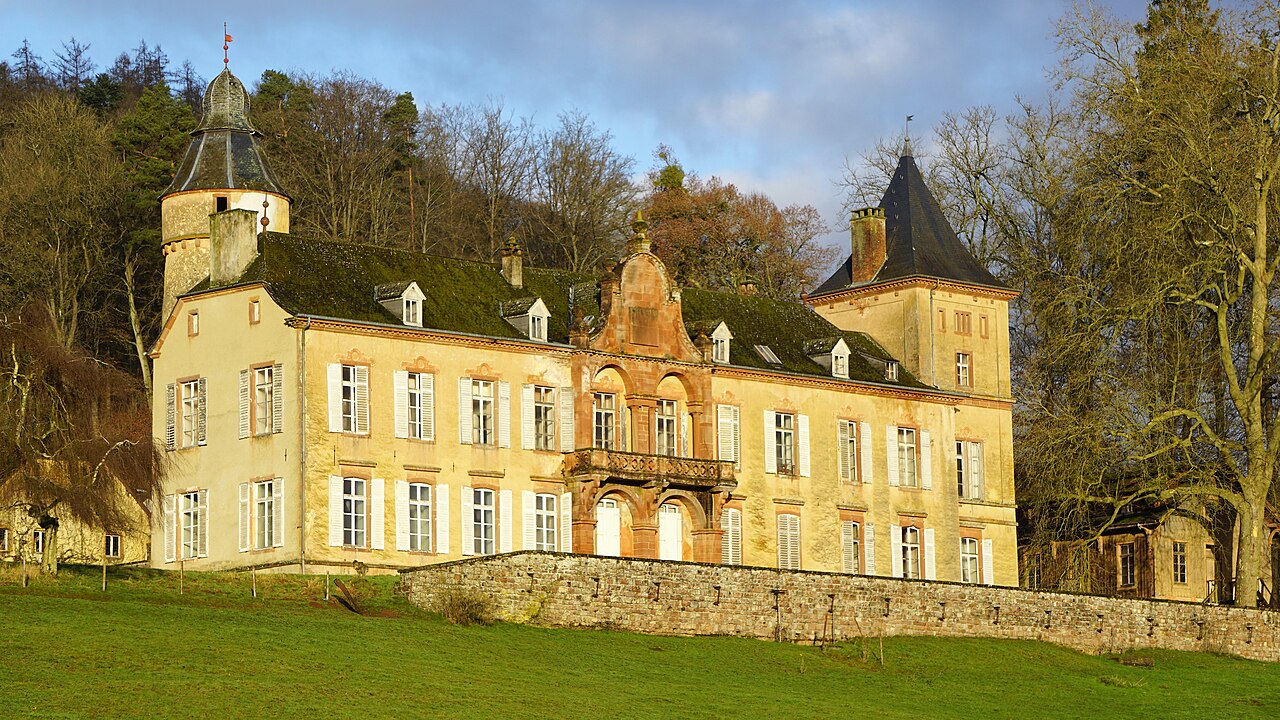
Замок Турельбах

Turelbaach castle: a modern hill castle in Luxembourg
Luxembourg, Luxembourg
Contemporary (20th–21st c.)
Well Preserved

Turelbaach castle is a distinctive architectural ensemble located in the settlement of Turelbaach within the municipality of Groussbus-Wal, Luxembourg. Unlike traditional castles rooted in medieval or early historical periods, this site is a remarkable example of a 20th-century castle construction developed entirely under the vision and direction of a private individual. Its origin story and gradual transformation reflect a personal passion for castle architecture rather than the strategic or administrative motives typical of historical fortifications.

The origins and development of Turelbaach castle

The story of Turelbaach castle begins in 1964 when Pol Gilson, then municipal secretary of Mäerzeg, acquired permission to build a simple wooden weekend retreat on the site. This initial structure was modest, serving as a leisure chalet rather than a defensive or noble residence. The site was enhanced by the restoration of a former pond, reshaped into an artificial island where the wooden building was situated, creating a picturesque setting that foreshadowed the castle-like environment to come.

Tragedy struck in 1973 when the original wooden chalet was destroyed by fire. Instead of abandoning the project, Gilson embarked on an ambitious and visionary endeavor to build a much larger residence that would embody the appearance and elements of a traditional castle. Over the next 25 years, from 1973 into the early 2000s, Gilson personally expanded and enhanced the complex in multiple phases. This gradual process transformed the modest leisure site into a sprawling castle-like estate featuring stone towers, bridges, gates, and carefully landscaped grounds, blending historical architectural motifs with modern construction techniques.

Architectural features and design elements

The castle complex is situated on an artificial island created by restoring and reshaping the original pond, which adds to the sense of seclusion and grandeur. The ensemble consists of a group of connected buildings that exhibit a variety of exterior finishes, including plastered walls and stone cladding, all unified beneath tiled roofs that provide architectural cohesion and continuity.

A centerpiece of the complex is a tall, round tower designed as a bergfried, a traditional European castle feature historically used as a main defensive tower. Although in this modern context the tower serves a primarily stylistic and symbolic role, it effectively evokes the medieval fortification aesthetic. On the eastern edge of the island stands a square, three-story tower pierced with narrow loopholes, which historically allowed defenders to observe and defend while remaining protected. This tower functions as the main gatehouse, controlling access to the complex through a single entry point.

Connecting the island to the mainland is a wooden bridge leading directly to the gate tower, enhancing the traditional castle motif of isolation and controlled entry. The surrounding grounds include a small park adorned with fountains and sculptures, integrating natural beauty and artistic elements into the estate's overall design.

Historical and cultural significance

Though Turelbaach castle lacks the medieval origins of most European castles, its creation and evolution over several decades make it a unique cultural landmark. The castle reflects the personal dedication and vision of Pol Gilson, who transformed a simple weekend retreat into a complex architectural statement. The castle also served as a social hub, hosting large annual celebrations that attracted hundreds of guests, embedding it in the local community's cultural life.

After Gilson's death in 2007, the property was managed by his widow, Annie Gilson, who eventually sold most of the estate to the municipality of Mäerzeg in 2020. This transfer ensured the site's preservation and public accessibility. On September 2, 2022, the castle and its surroundings received official recognition as a national cultural heritage site of Luxembourg, highlighting its architectural and cultural importance despite its modern origins.

Preservation and current condition

Today, Turelbaach castle stands as a well-preserved example of a modern hill castle built with a deliberate medieval-inspired design. The ensemble's stone towers, gates, and connecting buildings remain intact, maintaining the intended castle atmosphere. The artificial island setting, wooden bridge, and landscaped park contribute to the site's charm and historical ambiance.

The castle complex is an intriguing case study in how modern construction can reinterpret traditional castle architecture, blending historical motifs with contemporary materials and landscaping. Its preservation as a cultural heritage site ensures that this unique architectural experiment remains accessible for future generations to appreciate.

Frequently asked questions (FAQ)

What is the history of Turelbaach castle?
Turelbaach castle was originally a wooden weekend retreat built in 1964 by Pol Gilson. After a fire in 1973, Gilson expanded it into a castle-like complex over 25 years, culminating in a unique modern hill castle.
How can I visit Turelbaach castle?
Turelbaach castle is owned by the municipality of Mäerzeg. Visitors should check local resources for current access and visiting hours as it is a cultural heritage site.
What architectural features does Turelbaach castle have?
The castle features a tall round bergfried tower, a square gatehouse tower with loopholes, stone and plastered walls, tiled roofs, a wooden bridge, and landscaped grounds with fountains and sculptures.
Why is Turelbaach castle significant?
Though modern, Turelbaach castle is significant as a unique example of 20th-century castle construction, blending traditional medieval styles with contemporary design and serving as a cultural landmark in Luxembourg.

Information

Hill Castle

Current owner

Municipality of Mäerzeg

Sources & official resources

Verify the information above using these authoritative references.

Loading map...

Visitor reviews

No reviews yet. Been here? Write the first review and help other travelers!

Write the first review

Visited this castle? Share your experience

Your review helps other travelers and adds first-hand knowledge to our encyclopedia.
Write a review

(5/5)

0/2000 characters

Your review will be visible after admin approval

Nearby castles

7.6 km
Esch-sur-Sûre Castle — Luxembourg castle

Esch-sur-Sûre Castle

Esch-sur-Sûre, Luxembourg

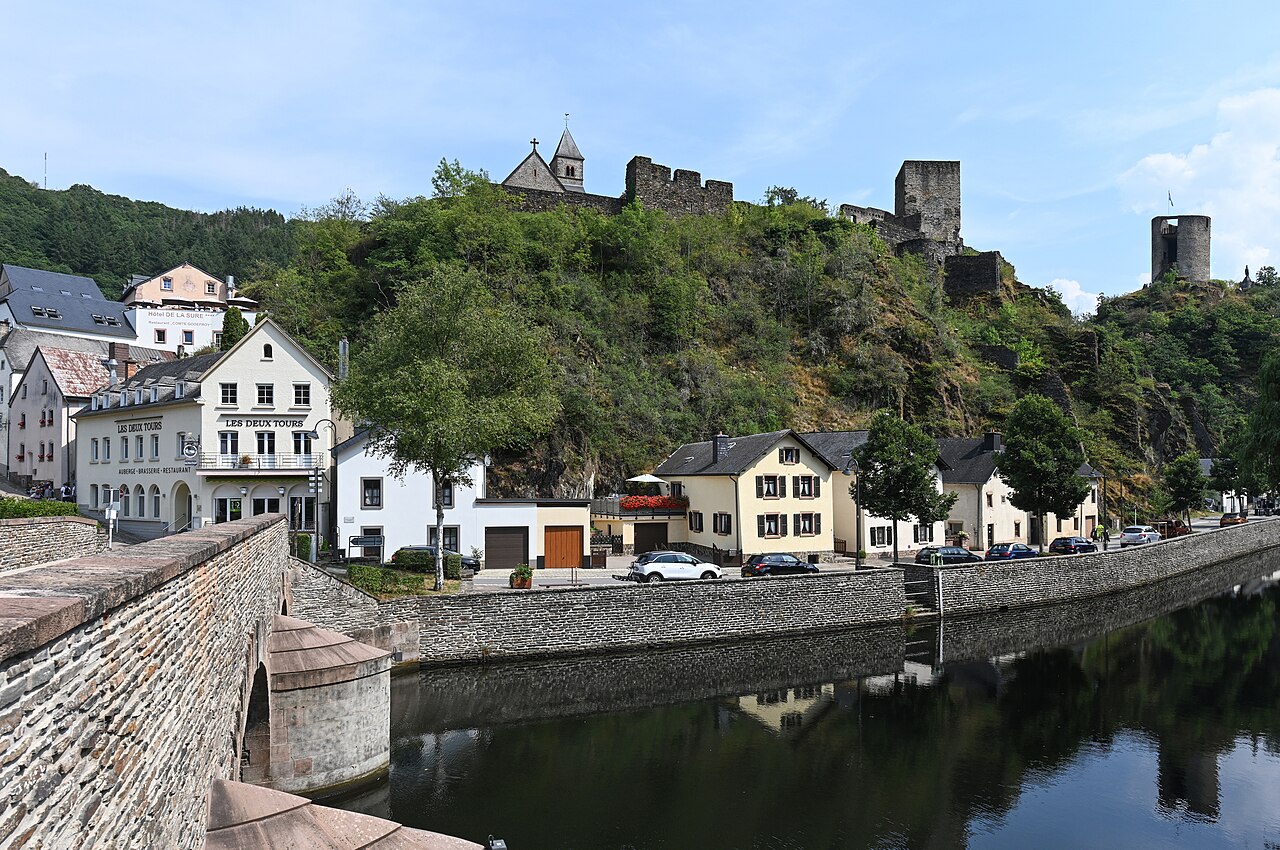
Esch-sur-Sûre Castle, also known by its German name Burg Esch-an-der-Sauer, is a remarkable medieval fortress located in the quaint village of Esch-sur-Sûre in north-west Luxembourg. Nestled on a prominent spur naturally defended by a sharp meander of the Sûre river, the castle's strategic position has made it a significant historical landmark since its inception in the early Middle Ages. The castle's origins trace back to around 927 AD when a noble named Megingaud (or Maingaud) acquired the site through an exchange with the Abbey of Stavelot. Megingaud constructed the original core of the castle, a robust Romanesque square keep measuring approximately eight meters on each side. This keep served both as a defensive stronghold and a residence, surrounded by agricultural buildings that supported the castle's self-sufficiency. By the end of the 11th century, the castle was under the control of the brothers Heinrich I and Godfrid I, Lords of Esch-sur-Sûre. Their participation in the First Crusade (1096-1099) notably kept them from expanding the castle during this period. Heinrich I died in Mesopotamia, underscoring the castle's connection to broader medieval European history. Medieval expansions and architectural evolution The castle underwent significant enlargement during the 13th century under the last two Counts of Esch. They expanded the fortress in the Gothic architectural style, transforming the originally modest keep into a more complex castle with additional residential and defensive structures. This period marked the castle's zenith, both in terms of architectural sophistication and regional influence. In response to the advent of gunpowder and changing military technology during the 15th century, the village of Esch-sur-Sûre was fortified with a substantial stone wall approximately 450 meters long, encircling the settlement with two defensive towers. A notable addition was the construction of the Lochturm, a large round watchtower positioned opposite the main keep, designed to enhance surveillance and defense. Defensive features and village fortifications The village defenses included a deep moat up to 30 meters wide and 20 meters deep, separating the main castle from the forework and round tower to the south. The curtain walls and gatehouses were reinforced to withstand artillery attacks, reflecting the castle's adaptation to the evolving warfare of the late medieval period. Decline and partial dismantling The castle's decline began in the mid-16th century as the nobility increasingly preferred more comfortable and modern residences elsewhere. The last major renovation focused on the northern gate, but overall maintenance waned. Following the capture of Luxembourg city by the troops of King Louis XIV of France in the late 17th century, many Luxembourg fortresses were dismantled to prevent their military use. Esch-sur-Sûre Castle was partially dismantled in 1685, although the village walls remained largely intact and were incorporated into local buildings. Throughout the 18th and 19th centuries, the castle fell into ruin and was inhabited by common villagers who repurposed parts of the structure for housing and storage. When the famed French writer Victor Hugo visited in 1871, several families still lived within the castle ruins, illustrating its continued role in local life despite its military obsolescence. 20th and 21st century restoration efforts In the early 20th century, the castle entered private ownership. In 1902, the ruins were purchased by the Egyptian Martin Riano d’Hutzt, who commissioned architect Charles Arendt to undertake restoration work. The castle chapel, originally Romanesque, was restored in 1906 with a distinctive bell tower, a rare feature for castle chapels. However, restoration funds were limited, and much of the castle remained in ruins. The State of Luxembourg acquired the site in 2005 and initiated further restoration and preservation work the following year. Archaeological excavations in the 1980s had already provided valuable insights into the castle's history and structure. Today, the castle ruins are well maintained, illuminated in the evenings, and freely accessible to the public during daytime hours, serving as a cultural and historical monument. Architectural features and layout The bergfried and keep The heart of Esch-sur-Sûre Castle is its Romanesque bergfried, a square stone tower measuring approximately 8 by 8 meters. This tower functioned as the primary defensive structure and residence for the lords. Its robust construction and elevated position provided commanding views over the surrounding landscape and the Sûre river. The lochturm and village walls The Lochturm, a large round watchtower built in the 15th century, stands on a higher rock platform opposite the bergfried. It was designed to guard the approach to the castle and village, separated by a deep moat. The village walls, stretching 450 meters, were about 1.5 meters thick and included two additional watchtowers, providing comprehensive protection for the settlement. Castle chapel and auxiliary buildings The castle chapel, restored in the early 20th century, retains its Romanesque origins with medieval-style interiors and a unique bell tower. Auxiliary buildings, including stables and residential quarters, were expanded northward between the 12th and 14th centuries, with terraces created by leveling surrounding rock outcrops to accommodate the growing complex. Historical significance and cultural heritage Esch-sur-Sûre Castle played a significant role in the regional power dynamics of medieval Luxembourg. The lords of Esch controlled numerous villages and hamlets, extending their influence to areas as far as Diekirch. Their participation in the First Crusade and presence at notable medieval events like the Chauvency tournament highlight the castle's importance within the noble networks of the time. The castle's gradual transformation from a military fortress to a residential and communal space reflects broader shifts in European medieval society, warfare, and architecture. Its preservation as a ruin and national monument today offers valuable insights into Luxembourg's medieval heritage and architectural evolution. Visiting esch-sur-sûre castle Visitors to Esch-sur-Sûre Castle can explore the atmospheric ruins set against the dramatic backdrop of the Sûre river valley. The site is open during daytime hours and benefits from evening illumination, enhancing its fairytale-like appearance. While no intact buildings remain, the preserved walls, towers, and chapel provide a tangible connection to the castle's rich history. The village of Esch-sur-Sûre itself offers charming surroundings with traditional houses and scenic river views, making a visit to the castle a rewarding cultural and historical experience in Luxembourg.

High Medieval (11th–13th c.)
Details
7.7 km

Schorels Castle

Rue du Château, Luxembourg

Schorels Castle is a medieval fortress ruin located in the dense forests north of the village of Eschette in Luxembourg. The castle occupies a strategic position on a natural rocky spur approximately 25 meters high, flanked by two brooks, which provided natural defensive advantages. Its elevated position and surrounding watercourses made it a stronghold well suited for defense during the medieval period. Architectural layout and defensive features The castle's remains reveal a rectangular main building enclosed within a close defensive wall. This compact layout was typical of small medieval fortifications designed to maximize defense on limited terrain. At the southern end of the castle, there was likely a gate tower, which served as the primary entrance and a key defensive point. The northern side of the castle was fortified with a dry moat approximately 5 meters deep and 14 meters wide, enhancing the castle's protection against attackers. The moat would have been a significant obstacle, especially combined with the natural rocky spur and watercourses. Historical ownership and significance The castle was historically associated with the Lords of Useldange or the Lords of Esch-sur-Sûre, two noble families prominent in the region during the medieval era. Later, ownership passed to the Post family, likely through marriage alliances, which was a common means of transferring property among noble families. During World War II, descendants of the Post family donated the castle to the Luxembourg State after receiving a tax notice on the property, reflecting the castle's transition from private noble ownership to public heritage. Current condition and accessibility Today, Schorels Castle stands as a forgotten ruin, heavily overgrown and partially obscured by forest vegetation. The ruins are somewhat difficult to locate, which adds to the experience for visitors who enjoy exploring less trafficked historical sites. The castle is accessible via a pleasant walk through the surrounding forest, offering an opportunity to appreciate both the natural environment and the medieval remains. The site is not extensively developed for tourism, preserving its quiet and secluded atmosphere. Archaeological and cultural context Despite its modest size, Schorels Castle is an important example of a medieval hill castle in Luxembourg, illustrating typical defensive architecture adapted to a rocky spur landscape. The castle's dry moat and gate tower reflect standard fortification techniques of the period. However, detailed historical records and archaeological studies on Schorels Castle are limited, leaving many aspects of its history and construction open to further research. It represents a valuable cultural heritage site for Luxembourg, highlighting the region's feudal past and the network of small noble fortifications that once dotted the landscape. Visitor information and tips Visitors interested in exploring Schorels Castle should prepare for a hike through forest trails, as the site is not heavily signposted or developed. The overgrown ruins offer a glimpse into medieval defensive architecture in a natural setting, ideal for history enthusiasts and hikers alike. Due to its secluded location, it is advisable to visit during daylight hours and wear appropriate footwear for uneven terrain.

High Medieval (11th–13th c.)
Details
8 km
Birtrange Castle — Luxembourg castle

Birtrange Castle

, Luxembourg

Birtrange Castle (Luxembourgish: Schlass Biertreng; French: Château de Birtrange) stands as a notable example of a 13th-century hill castle located near Schieren, Luxembourg. Its origins trace back to the High Medieval period, with construction attributed to Gaspard-Florent de Breiderbach. The castle was built in a distinctive English Gothic architectural style, a somewhat rare style for Luxembourg, characterized by pointed arches, ribbed vaults, and flying buttresses that would have enhanced both its defensive capabilities and aesthetic appeal. Historical background and ownership Birtrange Castle's early history is marked by its establishment in the 13th century, a time when fortifications were essential for local nobility to assert control and defend territories. The castle remained under the ownership of noble families for several centuries. In 1813, it was acquired by the De Blochhausen family, who maintained possession until 1935. Subsequently, the castle passed into the hands of the De Broqueville family. During World War II, the castle was repurposed by American troops as a military station. This period left a tangible mark on the castle's walls, where inscriptions and graffiti made by the soldiers remain visible to this day, offering a unique historical layer that connects the medieval structure to 20th-century events. Architectural features and style The castle's English Gothic style is reflected in its structural elements, which would have included tall towers, pointed arch windows, and possibly a moat or defensive walls typical of hill castles. Though the castle has suffered from neglect, original features such as its stone masonry and fortified battlements are still discernible. The choice of Gothic style in Luxembourg during the 13th century highlights the cultural exchanges occurring in medieval Europe, as styles traveled across regions. Modern history and recent events After the death of Baroness Claudine de Broqueville, the castle was donated to the Red Cross. The Baroness had expressed a wish for a music festival to be held on the grounds following her passing. In August 2019, the Red Cross organized a three-day festival that drew approximately 2500 attendees. This event was met with some controversy due to concerns about potential environmental damage to the historic site. Luxembourg's Minister of the Environment, Carole Dieschbourg, and Minister of Culture, Sam Tanson, assured that strict measures were taken to protect the castle, including monitoring by guards, placement of waste bins, prohibition of chemical products, and limits on music volume to prevent damage. By 2022, the Red Cross decided to auction Birtrange Castle due to its deteriorating condition and the high costs associated with its maintenance. The auction set a minimum bid of 5.2 million euros. The castle was purchased by Luxembourgish entrepreneur Jos Bourg, who initiated renovation efforts. These restoration works have been supported by the Department of National Sites and Monuments in Luxembourg, aiming to preserve the castle's historical integrity while adapting it for future use. Preservation challenges and cultural significance Birtrange Castle's abandonment in 2002 led to significant deterioration, a common fate for many historic castles without continuous upkeep. The challenge for its new owner lies in balancing restoration with conservation, ensuring that the castle's historical features are preserved. The involvement of national heritage authorities underscores the castle's cultural importance to Luxembourg's architectural and historical landscape. The castle's role in local heritage As a hill castle with roots in the High Medieval period, Birtrange Castle represents the feudal history of the region and the architectural trends of its era. Its survival through centuries and adaptation during World War II add layers to its story, making it a valuable site for understanding Luxembourg's past. The castle also serves as a venue for cultural events, linking historical preservation with contemporary community engagement.

High Medieval (11th–13th c.)
Details