Zbaszyn Castle Ruins
Zbąszyń Castle ruins stand as a significant historical monument in the town of Zbąszyń, Poland, embodying centuries of architectural evolution and turbulent history. Originally mentioned in 1231, this hill castle began as a medieval stronghold serving both administrative and military roles on the Polish frontier. Its strategic location made it pivotal for controlling trade and defense against neighboring powers, particularly the Teutonic Order.
The earliest records highlight the castle's role as a customs chamber founded by Duke Przemysł I in 1242, facilitating trade between Poland and the Teutonic lands. The castle-town suffered from repeated raids by marauders, reflecting the volatile nature of the borderlands during the High Medieval period. Ownership passed to the Zbąski family in the 14th century, who are credited with erecting a fortified structure referred to as a fortalitium in 1456, marking the transition from a simple stronghold to a more complex defensive edifice.
Architectural evolution and Renaissance transformation
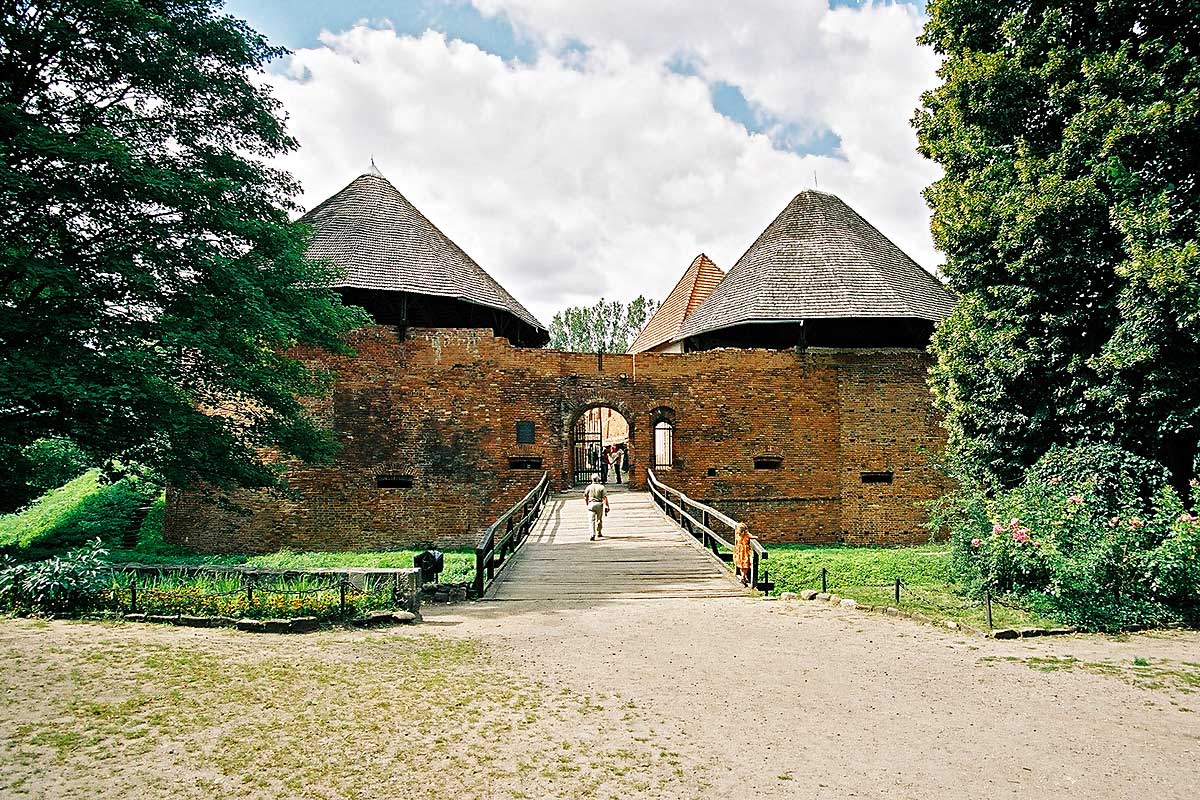
The castle underwent significant redevelopment between 1560 and 1577 under Abraham Zbąski, who either rebuilt or extensively modified the existing medieval fortress. What remains today includes a quadrilateral gate tower built in the Gothic style, integrated into the later fortified complex. This tower served as a critical defensive and access point, illustrating the castle's layered history.
In the early 17th century, Abraham's grandson, Abraham Ciświcki, Castellan of Bydgoszcz and Śrem, advanced the castle's development by initiating the construction of a palazzo in fortezza type residence during the 1620s. This architectural style combined the comforts of a Renaissance palace with robust military fortifications. The design was influenced by old-Dutch fortifications, featuring earth bastions and fortification curtains rather than stone walls, reflecting advancements in military architecture responding to artillery warfare.
Fortress layout and defensive features
The fortress was built on a rectangular plan approximately 250 by 350 meters, surrounded by substantial earth banks and reinforced with four sharp-tipped bastions at each corner. The main entrance was protected by a gate tower and a ravelin positioned before it, connected by a drawbridge over a moat fed by the Oder River. This setup exemplified the bastion fortification principles designed to resist cannon fire and sieges prevalent in the Renaissance and early modern periods.
Inside the fortress, the central area housed a residential building, which unfortunately has not survived. The entire complex was a blend of military and residential architecture, demonstrating the dual function of such castles during the period.
Historical challenges and destruction
Zbąszyń Castle's history is marked by repeated destruction due to regional conflicts. It suffered damage during the early 17th century, notably during the Swedish invasion of 1655–1660 known as the Deluge, and again in 1706 during the Great Northern War. Swedish troops under King Charles XII camped near Zbąszyń in 1705, looting the town and inflicting severe damage on the castle. An inspection in 1706 documented extensive devastation: interiors were gutted, stoves, windows, and doors removed, and the masonry gate tower was left without floors or heating. Key facilities including the chapel, kitchens, stables, and distillery were destroyed or emptied, marking the castle's decline as a military and residential stronghold.
Later history and preservation
Following these devastations, the castle fell into ruin. The gate tower was rebuilt in the 19th century, preserving a tangible link to the site's medieval and Renaissance past. Portions of the earth-water fortifications remain visible, including embankments and bastions to the north, northwest, and northeast, offering valuable insight into the castle's original defensive design.
Today, the site houses a branch of the Regional Museum, which helps preserve and interpret the castle's rich heritage for visitors and scholars. The ruins stand as a testament to the complex history of borderland fortifications in Poland and the evolution of military architecture from the High Medieval through the Renaissance periods.
Architectural significance and military innovation
Zbąszyń Castle is an important example of the transition from medieval fortresses to early modern bastion fortifications. The use of earth bastions and ravelins reflects the adaptation to gunpowder weaponry, which rendered traditional high stone walls vulnerable. The palazzo in fortezza concept embodied a shift towards combining residential luxury with military functionality, a trend seen across Europe during the Renaissance.
The surviving gate tower and remnants of the moat and bastions provide a rare glimpse into these architectural innovations. The castle's layout, with its angular bastions and water defenses, exemplifies the principles of star fort design, emphasizing overlapping fields of fire and protection against artillery.
Role in regional trade and politics
Beyond its military function, Zbąszyń Castle played a crucial role in regional trade and politics. The customs chamber established by Duke Przemysł I in 1242 highlights the castle's importance as a center for regulating commerce between Poland and the Teutonic Order. Control of this stronghold meant influence over trade routes and border security, making it a focal point in the shifting alliances and conflicts of medieval and early modern Central Europe.
Visiting the castle ruins today
Visitors to Zbąszyń can explore the evocative ruins set within a landscape shaped by centuries of military and residential use. The visible earthworks and the restored gate tower offer a tangible connection to the past. The onsite Regional Museum branch provides historical context and exhibits related to the castle's construction, destruction, and cultural significance.
The site is accessible to the public, allowing for exploration of the fortification outlines and appreciation of the castle's architectural heritage. Its location in the town of Zbąszyń makes it a notable destination for those interested in Polish history, Renaissance architecture, and military fortifications.
Frequently asked questions (FAQ)
- When was Zbąszyń Castle originally built?
- Zbąszyń Castle was first mentioned in 1231, with its initial construction dating back to the early 13th century during the High Medieval period.
- What architectural style characterizes the castle?
- The castle features a mixed architectural style, including Gothic elements in the gate tower and Renaissance influences in the palazzo in fortezza design with bastion fortifications.
- Can visitors access the castle ruins today?
- Yes, the castle ruins are accessible to the public and house a branch of the Regional Museum that offers historical exhibits and information about the site.
- What defensive features did the castle have?
- Zbąszyń Castle was fortified with earth bastions, a moat fed by the Oder River, a gate tower with a drawbridge, and a ravelin, reflecting Renaissance bastion fortification principles.
- How was the castle affected during the Great Northern War?
- During the Great Northern War in 1706, Swedish forces looted and heavily damaged the castle, destroying interiors, removing fittings, and leaving many structures in ruins.
Information
Sources & official resources
Verify the information above using these authoritative references.
Loading map...
Visitor reviews
No reviews yet. Been here? Write the first review and help other travelers!
Write the first reviewVisited this castle? Share your experience
Your review helps other travelers and adds first-hand knowledge to our encyclopedia.