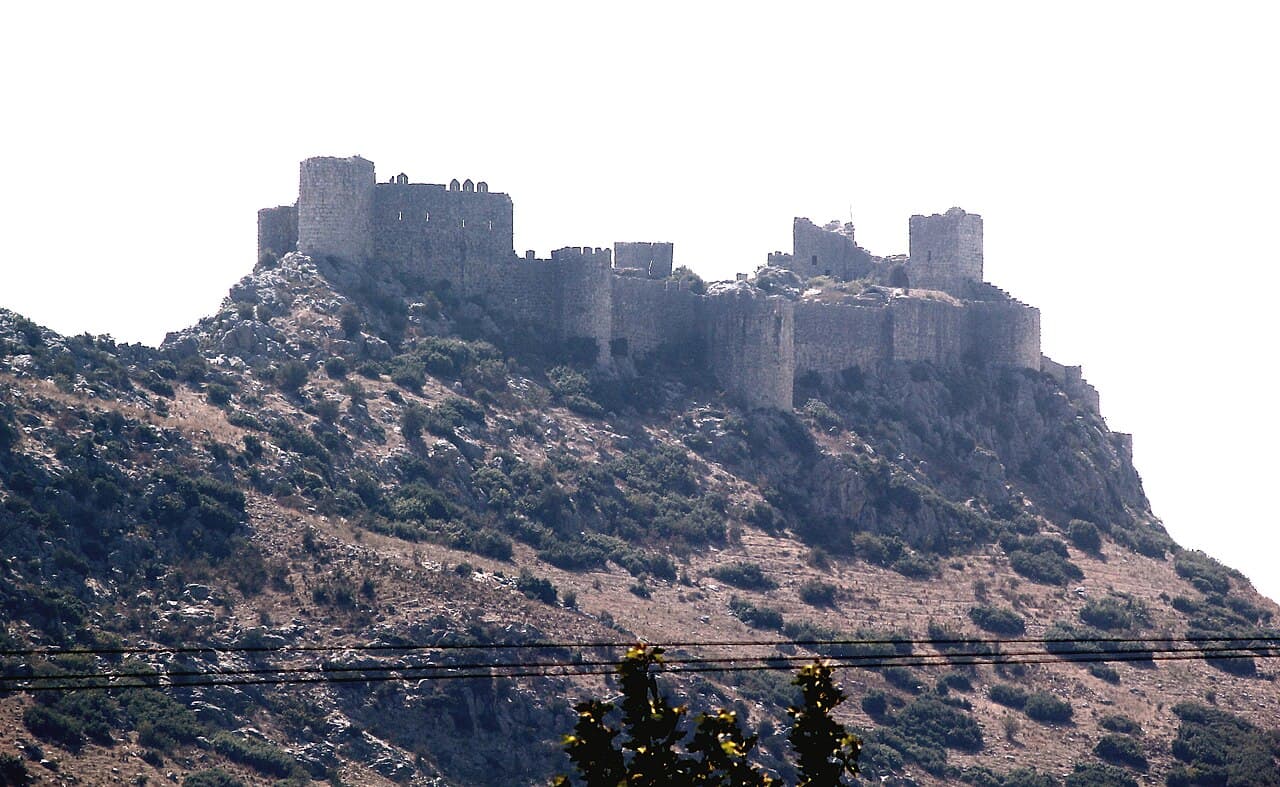
Yilan Castle
Yilan Castle, also known locally as Yilankale or Yilanli Kale, is a striking medieval fortress perched on a high rocky ridge in the province of Adana, Turkey. This fortress dominates the landscape near a village sharing its name and offers an insightful glimpse into the military architecture of the High Medieval period. Although the exact origins and medieval name of the castle remain unknown, its current name, meaning "Snake Castle," derives from local folklore about the abundance of snakes among the ruins.
The castle's construction is attributed to the Armenians in the early 12th century, based on the distinctive masonry techniques observed in the surviving walls. Strategically located on the northern bank of the Ceyhan River, Yilan Castle was built to oversee and protect the vital medieval road connecting the towns of Adana and Ceyhan. Its position on a central and uppermost limestone outcrop provided commanding views of the surrounding region and allowed visual communication with nearby fortresses such as Tumlu Castle, Anavarza Castle, and Sis Castle.
Architectural layout and features
The castle complex is divided into three main sections: the lower bailey, middle bailey, and upper bailey, each serving distinct defensive and functional roles. The lower bailey likely housed auxiliary facilities and support structures, while the middle bailey contained living quarters and storage areas. The upper bailey served as the final stronghold and command center, featuring several defensive towers and a chapel.
The castle's walls are constructed primarily of local limestone, showcasing typical Armenian masonry techniques of the period, including finely cut ashlar blocks and robust mortar joints. Numerous towers punctuate the curtain walls, providing vantage points for archers and lookouts. The presence of multiple cisterns within the castle grounds highlights the importance of water storage in sustaining the garrison during sieges.
The chapel and religious significance
One notable feature within the upper bailey is a small chapel, which reflects the religious practices of the castle's occupants. The chapel's architectural details, though partially ruined, suggest Armenian ecclesiastical influences, consistent with the castle's Armenian origins. Its placement within the upper bailey underscores the integration of spiritual life within the military complex.
Historical context and strategic importance
Yilan Castle's location was of significant strategic value during the High Medieval period. Positioned on a limestone ridge overlooking the Ceyhan River valley, the castle controlled a key route between important urban centers. Its intervisibility with other regional fortresses formed a network of defensive sites that could relay signals and coordinate military responses to threats.
The castle's Armenian builders were part of a broader effort to fortify the region during a time of frequent conflicts involving Byzantine, Crusader, and Seljuk forces. While detailed historical records of Yilan Castle's military engagements are limited, its robust construction and commanding location indicate its role as a frontier fortress securing Armenian domains.
Access and current condition
Today, Yilan Castle stands as a well-preserved medieval ruin accessible to visitors free of charge. Reaching the upper bailey requires traversing a steep and rocky path, including some climbing, which may challenge casual tourists but rewards them with extensive views and a tangible connection to medieval fortification architecture.
The castle's ruins include substantial sections of walls, towers, and the chapel, offering a valuable site for archaeological study and heritage tourism. Its location within the Adana region makes it a notable destination for those interested in medieval Armenian architecture and the military history of southeastern Anatolia.
Nearby castles and the defensive network
Yilan Castle's visual connection with Tumlu Castle, Anavarza Castle, and Sis Castle illustrates the strategic planning behind castle placement in the region. This network allowed for early warning systems and mutual defense during periods of conflict, enhancing regional security for the Armenian principalities and their allies.
Each neighboring castle has its own unique architectural features and historical significance, but together they represent a comprehensive medieval defensive system that controlled trade routes and protected local populations.
Visitor tips and cultural significance
Visitors to Yilan Castle should prepare for a physically demanding ascent but will find the effort worthwhile for the castle's extensive ruins and panoramic views of the surrounding landscape. The site offers a rare opportunity to explore a medieval Armenian fortress in a largely unspoiled setting.
While facilities are limited, the castle's open access encourages independent exploration and photography. The castle also holds cultural significance as a symbol of Armenian heritage in the region and contributes to understanding the complex history of medieval Anatolia.
Frequently asked questions (FAQ)
- How do I get to Yilan Castle?
- Yilan Castle is located near the village of Yılankale in Adana Province, Turkey. Visitors can reach the site by car or local transport, followed by a steep hike up a rocky path to the castle ruins.
- What is the historical significance of Yilan Castle?
- Yilan Castle was built in the early 12th century by Armenians to protect a key medieval road between Adana and Ceyhan. It served as a strategic fortress in a network of castles controlling the region during the High Medieval period.
- Is Yilan Castle accessible to visitors?
- Yes, Yilan Castle is freely accessible to the public. However, reaching the upper bailey requires climbing steep and rocky terrain, so visitors should be prepared for a moderately challenging hike.
- What architectural features does Yilan Castle have?
- The castle includes three baileys, several defensive towers, cisterns for water storage, and a chapel with Armenian ecclesiastical influences. Its masonry reflects typical 12th-century Armenian construction techniques.
- Are there other castles near Yilan Castle worth visiting?
- Yes, Yilan Castle has clear visual connections with Tumlu Castle, Anavarza Castle, and Sis Castle, forming a medieval defensive network. These nearby castles offer additional insights into the region's military history.
Photo gallery

Information
Address
Yılankale Yolu, Turkey
Loading map...
Visitor reviews
No reviews yet. Been here? Write the first review and help other travelers!
Write the first reviewVisited this castle? Share your experience
Your review helps other travelers and adds first-hand knowledge to our encyclopedia.



