Yburg Castle Ruins
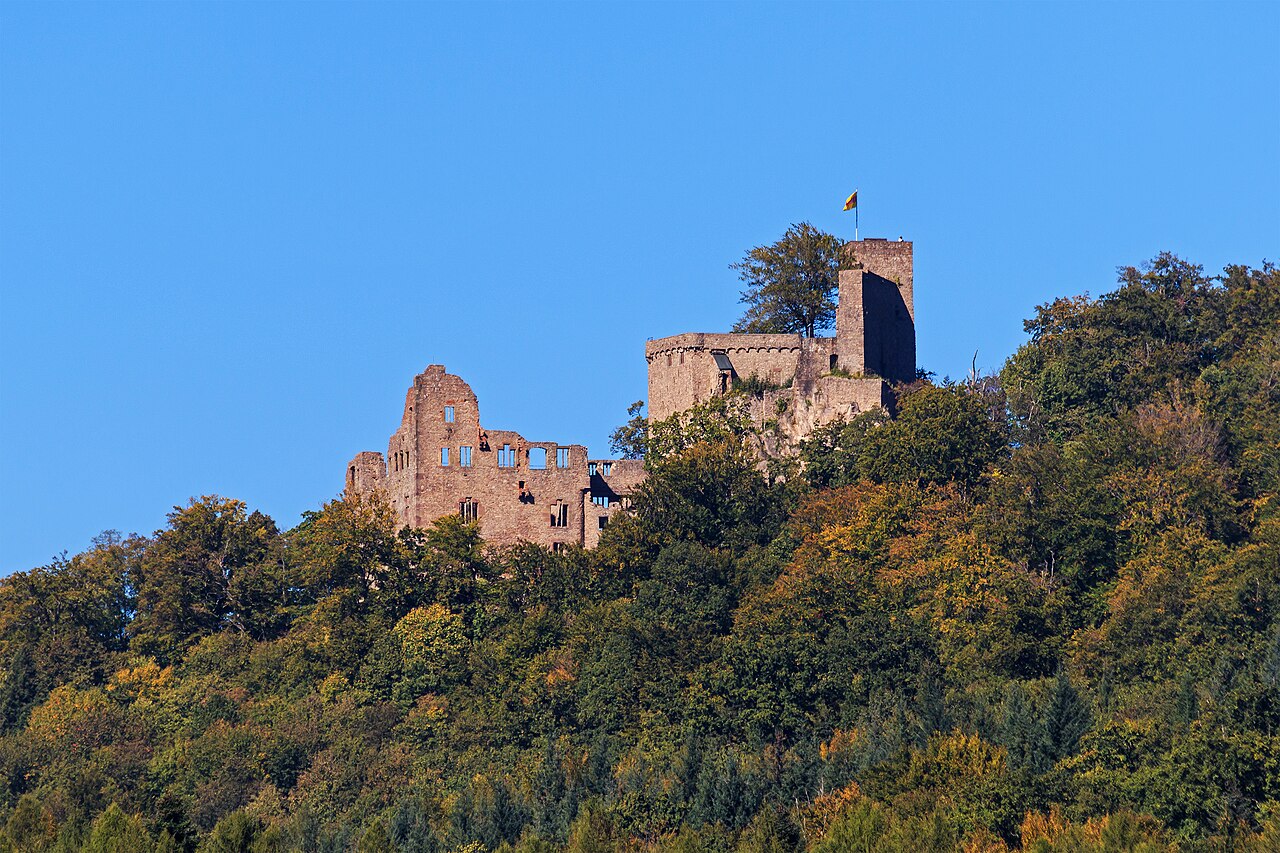
Yburg Castle, constructed around 1200, stands as a significant remnant of medieval fortifications in the Baden-Baden region of Germany. The castle derives its name from the rocky outcrop it occupies, historically known as Iberg, likely originating from the term Eibenberg, meaning "yew-tree mountain." This volcanic bluff provides a commanding position overlooking the Rhine valley, a strategic vantage point that underscored the castle's military importance.
Historical background and strategic importance
The castle was established during the High Medieval period as a defensive stronghold marking the southwestern frontier of the territory controlled by the margraves of Baden. Its imposing keep remains a prominent landmark visible from afar, symbolizing the region's feudal power structure. Throughout its history, Yburg Castle played a crucial role in regional defense and control of the surrounding lands.
In 1525, during the Peasants' War, the castle was invaded by rebellious peasants who inflicted significant damage upon the structure. Recognizing its strategic value, Margrave Georg Friedrich commissioned extensive reconstruction and fortification efforts between 1617 and 1620. These enhancements aimed to modernize the castle's defenses in response to evolving military technologies and threats.
Despite these efforts, the castle suffered further devastation in 1689 when French troops laid waste to it during the conflicts of the late 17th century. Following this destruction, Yburg Castle gradually fell into ruin, as did many medieval fortifications rendered obsolete by changes in warfare and political shifts.
Architectural features and restoration
The castle is situated atop a volcanic bluff, which provided natural defense advantages. Its original design included a robust keep, curtain walls, and defensive ramparts adapted to the rugged terrain. The keep, rebuilt in the early 17th century, remains the most intact part of the ruin and serves as a focal point for visitors.
In the 19th century, Yburg Castle attracted increasing attention from tourists and historians interested in medieval architecture and romantic ruins. Restoration efforts during this period focused on reinforcing the remaining ramparts and partially reconstructing sections of the castle to stabilize the ruins and enhance their visual appeal.
The castle's Burggaststätte (castle inn) was established to accommodate visitors, making the site a popular destination for day-trippers exploring the scenic Rebland wine region around Baden-Baden.
Visitor experience and cultural significance
Today, Yburg Castle ruins offer visitors a combination of historical intrigue and natural beauty. The restored keep provides stunning panoramic views of the Rhine Valley and the Black Forest, making it a favored spot for photographers and hikers alike.
The castle's location within the Baden wine region adds cultural value, linking the historic site to the area's longstanding viticultural traditions. The blend of medieval architecture and picturesque landscape continues to draw tourists interested in history, architecture, and nature.
Yburg Castle stands as a testament to the region's medieval heritage and its evolution through periods of conflict, reconstruction, and romantic revival. Its ruins remain a vivid reminder of the feudal past and the strategic importance of fortifications in shaping the history of southwestern Germany.
Frequently asked questions (FAQ)
- How do I get to Yburg Castle from Baden-Baden?
- Yburg Castle is accessible by car or hiking trails from Baden-Baden. The hike offers scenic views and takes about 1 to 1.5 hours from the city center.
- What is the historical significance of Yburg Castle?
- Yburg Castle marked the southwestern boundary of the margraves of Baden's territory and played a key role in regional defense during the High Medieval period.
- Can I visit the keep at Yburg Castle?
- Yes, the restored keep is open to visitors and offers panoramic views of the Rhine Valley and the Black Forest.
- Is there a place to eat at Yburg Castle?
- The castle features a Burggaststätte (castle inn) where visitors can enjoy local cuisine and refreshments while taking in views of the surrounding landscape.
- When was Yburg Castle rebuilt and fortified?
- The castle was rebuilt and fortified between 1617 and 1620 by Margrave Georg Friedrich after damage during the Peasants' War.
Information
Loading map...
Visitor reviews
No reviews yet. Been here? Write the first review and help other travelers!
Write the first reviewVisited this castle? Share your experience
Your review helps other travelers and adds first-hand knowledge to our encyclopedia.