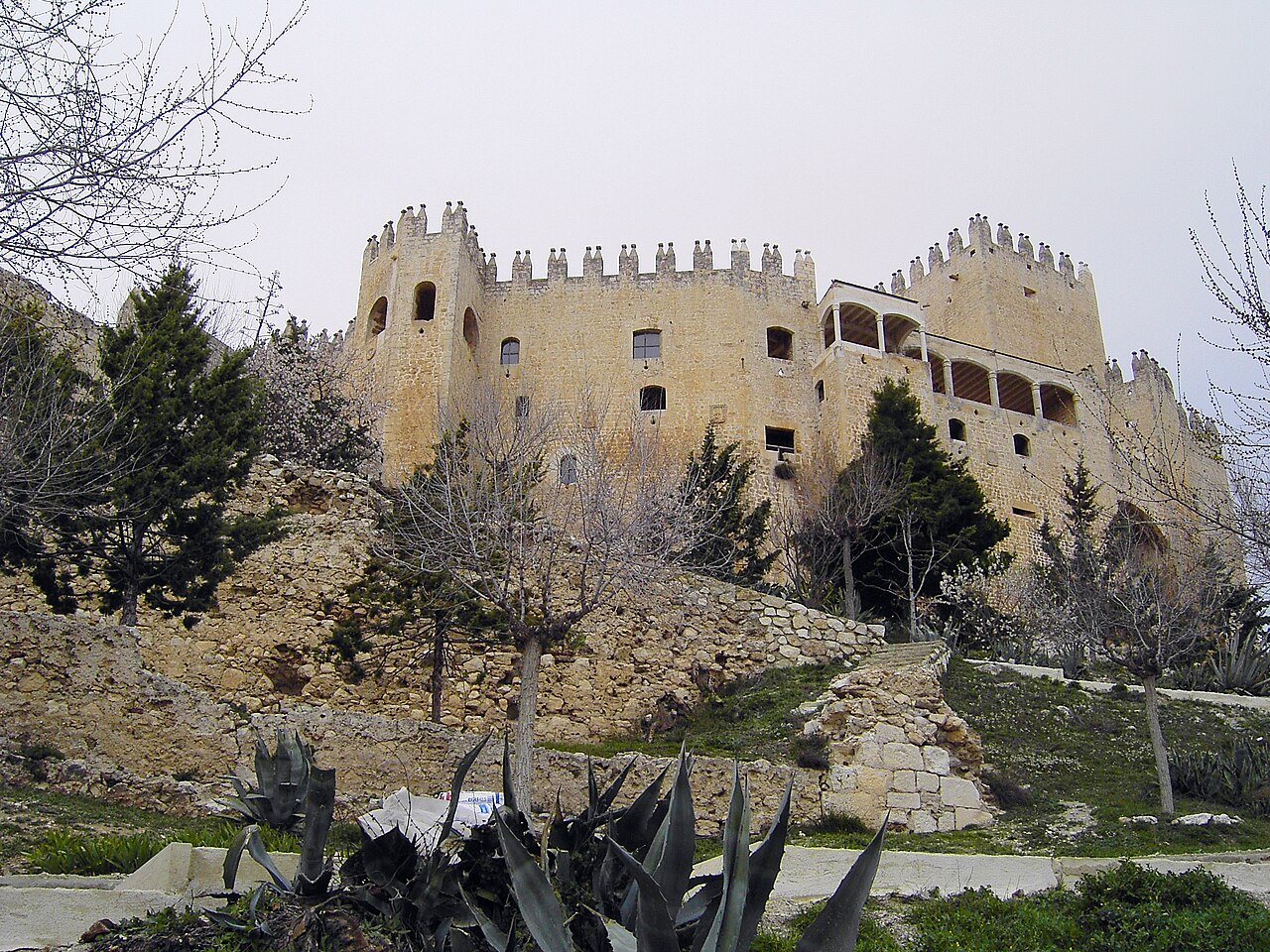
Xiquena Castle
Xiquena Castle, locally known as Castillo de Xiquena, stands on a small hill in the fields west of the village of La Parroquia, within the province of Murcia in southeastern Spain. This high medieval fortress was originally constructed during the period of Muslim rule in the region, with origins possibly dating back to the 10th century, although the castle is definitively documented by the 13th century.
The castle's strategic location near the Corneros River allowed it to serve as a sentinel overseeing the surrounding plains and other nearby fortifications, including the castles of Tirieza, Puentes, Vélez Rubio, and Vélez Blanco. The irregular plan of the castle conforms to the natural contours of the hill, a common feature in frontier fortifications designed to maximize defense and visibility.
Historical context and frontier significance
Originally established under the Muslim Taifa of Murcia, Xiquena Castle was part of a network of fortresses that controlled this borderland region. In 1243, the Taifa of Murcia was incorporated into the Kingdom of Castile, turning the area into a volatile frontier zone between Castilian and Nasrid Granada territories. Despite this political shift, the castle remained in Muslim hands for nearly two centuries, effectively becoming a lonely sentinel in a contested no man's land.
Its position on the border made it a key military asset and a target for sieges and skirmishes. In 1433, the castle was besieged and bombarded by the forces of Alonso Yáñez Fajardo, the Adelantado Mayor of Murcia, who successfully captured it for the Christian crown. This marked a turning point in the castle’s history, as it then served as a watch post guarding the frontier against the Emirate of Granada.
Ownership and decline
Following its capture, the castle was controlled by the influential House of los Vélez, a noble family deeply involved in the internal power struggles of the Kingdom of Castile. After losing a political contest in 1459, the castle was sold to Don Juan Pacheco, the Marquess of Villena, further entrenching its role as a noble stronghold.
The castle’s military importance diminished drastically after the Reconquista culminated in 1492 with the Christian conquest of the Emirate of Granada, effectively ending the frontier and the need for such border fortifications.
In 1520, the castle suffered deliberate destruction at the hands of Pedro Fajardo y Chacón, the Marquess of Vélez, who resided at nearby Vélez-Blanco Castle. This act likely reflected ongoing rivalries and power struggles among the regional nobility rather than military necessity.
Architectural features and layout
Xiquena Castle is characterized by its irregular plan, adapting to the natural topography of the hill on which it sits. The castle's walls and remaining structures are constructed from local stone, typical of frontier castles in Murcia. The fortification included defensive walls, towers, and a gatehouse designed to repel attackers and provide lookout points over the surrounding territory.
Although now in ruins, the castle’s remains still convey its former defensive strength and strategic importance. The elevated position offers commanding views over the landscape, which was crucial for early warning and defense against incursions from Granada.
Visiting xiquena castle today
Today, Xiquena Castle is accessible to visitors, though it remains a ruined fortress without formal pathways leading to it. Visitors must undertake a short walk across open fields and climb the hill to reach the site. This journey adds to the experience of exploring a remote and evocative medieval frontier castle.
The solitude and scenic vistas from the castle ruins make it a rewarding destination for history enthusiasts and hikers alike. Its proximity to other notable castles in the Murcia region, such as Vélez-Blanco and Vélez Rubio, allows for a broader exploration of medieval military architecture in southeastern Spain.
Frequently asked questions (FAQ)
- How do I get to Xiquena Castle?
- Xiquena Castle is conveniently located near the C-22 road in Spain, making it accessible by car. Visitors can follow the signs to the castle, and there is parking available nearby for easy access.
- What is the historical significance of Xiquena Castle?
- Xiquena Castle dates back to the 12th century and is a remarkable example of medieval military architecture in Spain. It played a crucial role in the region's defense during various historical conflicts, showcasing the rich history of the area.
- When was Xiquena Castle built?
- The construction of Xiquena Castle began in the late 1100s, during the period of the Reconquista. This strategic fortress was built to protect the territory from invaders and has since become a symbol of the region's historical heritage.
- Can I visit Xiquena Castle year-round?
- Yes, Xiquena Castle is open to visitors throughout the year, though hours may vary by season. It is advisable to check the official website or contact local tourist information for the most current visiting hours.
- Why is Xiquena Castle a popular tourist attraction?
- Xiquena Castle attracts visitors for its stunning architecture and panoramic views of the surrounding landscape. Its historical significance and well-preserved structures make it a fascinating destination for history buffs and tourists alike.
- Is it possible to explore the interior of Xiquena Castle?
- Yes, visitors can explore the interior of Xiquena Castle, including its towers and walls, which offer insight into its defensive architecture. Guided tours are available, providing a deeper understanding of the castle's history and significance.
- What are the ticket prices for Xiquena Castle?
- Ticket prices for Xiquena Castle are generally affordable, with discounts available for students and seniors. Children under a certain age may enter for free, making it a great family-friendly destination.
- What is the best time to visit Xiquena Castle?
- The best time to visit Xiquena Castle is during the spring and fall when the weather is mild and pleasant for exploring. Summer can be quite hot, while winter may bring cooler temperatures, so plan your visit accordingly.
- Are there any nearby attractions to Xiquena Castle?
- Yes, there are several nearby attractions, including beautiful hiking trails and quaint villages that reflect the local culture. Visitors can also explore other historical sites in the region, making it easy to create a full day of sightseeing.
Loading map...
Visitor reviews
No reviews yet. Been here? Write the first review and help other travelers!
Write the first reviewVisited this castle? Share your experience
Your review helps other travelers and adds first-hand knowledge to our encyclopedia.