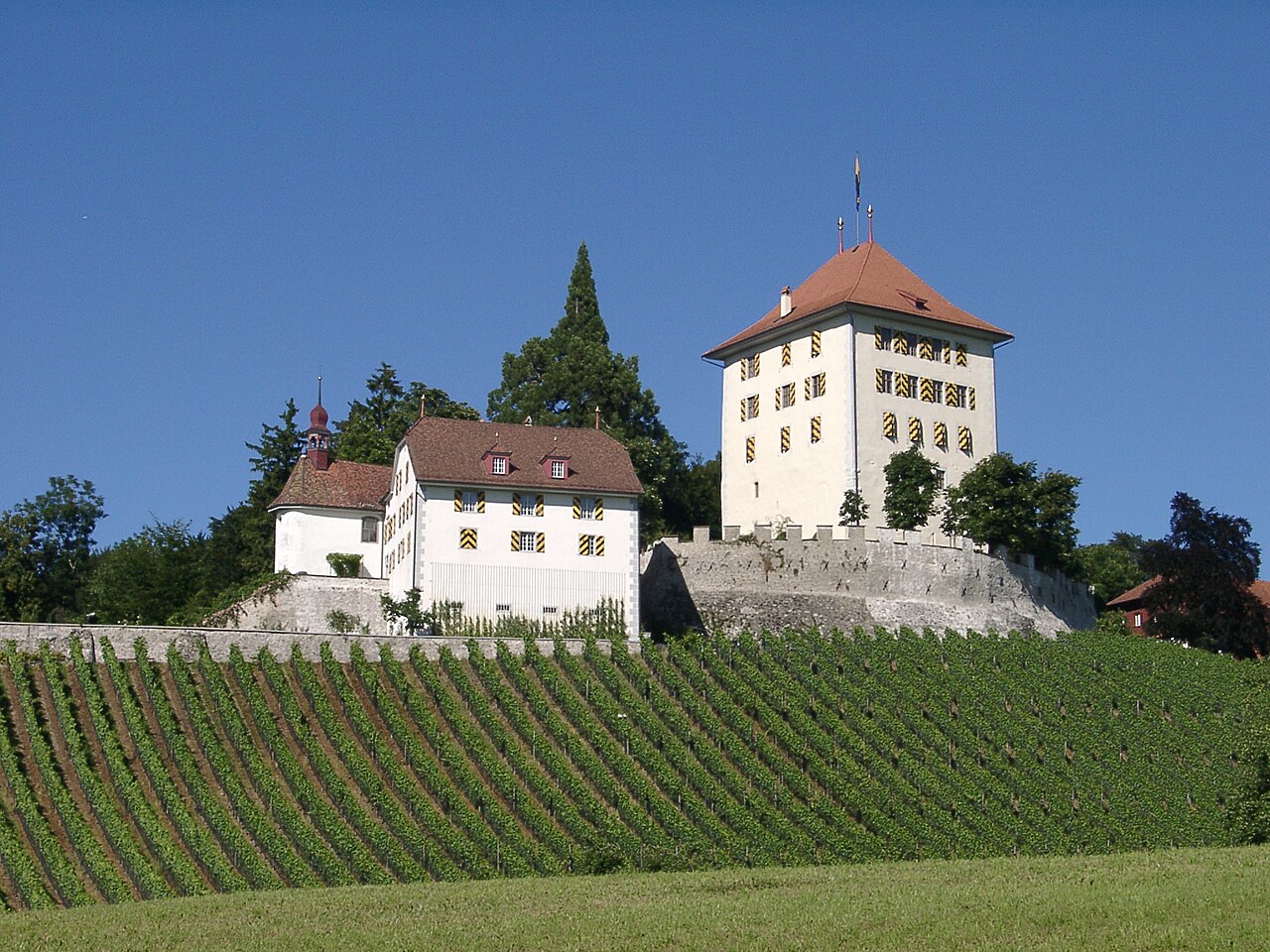
Wyher Castle

Wyher Castle in Ettiswil, Switzerland
Ettiswil, Switzerland
Late Medieval (14th–15th c.)
Partially Restored

Wyher Castle is a prominent example of a moated castle located just south of the village center of Ettiswil, Switzerland. First documented in 1304, the castle has a rich history tied to several noble families and reflects the architectural evolution from the late medieval period into the late-Gothic style. Its strategic position surrounded by a water-filled moat highlights its original defensive purpose, a common feature in castles of this era.

Historical development and ownership

The castle was initially the residence of the Freiherr von Wediswil family, who were the original medieval lords associated with the estate. Through the centuries, ownership changed hands multiple times, reflecting the shifting political and social landscape of the region. Around the end of the 15th century, the Feer family acquired Wyher Castle. It was under their stewardship, particularly through Petermann Feer around 1510, that the castle underwent significant reconstruction, transforming it into a late-Gothic castle. This renovation introduced architectural elements typical of the Gothic style, such as pointed arches, intricate stonework, and ornamental detailing.

In 1588, the castle passed to Ludwig Pfyffer von Altishofen, whose descendants took on the name Pfyffer von Wyher, cementing their association with the estate. The Pfyffer family maintained ownership for several centuries, contributing to the castle's preservation and historical legacy.

Between 1837 and 1964, the castle was owned by the Hüsler family, local farmers who represented a shift from noble to more common ownership. This period saw the castle's function transition from a noble residence to a more practical agricultural estate.

Architectural features and restoration

Wyher Castle's most distinctive feature is its moat, which encircles the structure and served as a defensive barrier. The castle's layout includes typical medieval defensive elements such as thick stone walls, a fortified gatehouse, and towers that would have provided vantage points for surveillance and protection.

The late-Gothic reconstruction led by Petermann Feer introduced refined architectural details, including elegant window tracery and decorative stone carvings that enhanced both the castle's defensive capabilities and its aesthetic appeal. The castle's interiors likely included vaulted halls and chambers characteristic of the period, designed to serve both residential and administrative functions.

In 1964, a fire caused partial destruction of the castle, damaging significant portions of the structure. Following this event, the castle was acquired by the canton, which initiated extensive restoration efforts between 1981–83 and 1992–96. These renovations focused on repairing fire damage, restoring the moat to its original condition, and preserving the castle's historical integrity.

Current use and cultural significance

Since 1996, Wyher Castle has functioned as a museum, showcasing the Josef Zihlmann collection of local religious art. This collection highlights the region's cultural and spiritual heritage, making the castle not only an architectural landmark but also a center for cultural education and preservation.

The castle's transformation into a museum has allowed visitors to explore its historical architecture and gain insight into the local history of Ettiswil and the surrounding canton. The preservation of Wyher Castle ensures that its late medieval and late-Gothic architectural features remain accessible for future generations.

Visiting Wyher Castle

Visitors to Wyher Castle can experience a well-preserved example of a Swiss moated castle with significant historical and architectural value. The castle's museum offers a unique glimpse into local religious art, enriching the cultural experience. The moat and restored defensive structures provide a tangible connection to the castle's medieval origins.

Frequently asked questions (FAQ)

How do I get to Wyher Castle?
Wyher Castle is located in Ettiswil, Switzerland, and can be easily accessed by car or public transport. If you opt for public transport, take a train to the nearest station and then a short bus ride or walk to the castle. Parking is available on-site for visitors traveling by car.
What is the historical significance of Wyher Castle?
Wyher Castle, dating back to the 13th century, is an important example of medieval architecture in Switzerland. It served as a noble residence and has witnessed significant historical events in the region. The castle's preservation allows visitors to step back in time and appreciate its rich heritage.
When was Wyher Castle built?
Wyher Castle was constructed in the early 13th century, with its first historical mention appearing in 1243. Over the centuries, it has undergone various renovations and restorations, maintaining its historical integrity while adapting to modern needs. The castle's architecture reflects the evolution of defensive structures during the medieval period.
Can I visit Wyher Castle year-round?
Yes, Wyher Castle is open to visitors year-round, but it's recommended to check the specific opening hours before planning your visit. The castle may have limited hours during the winter months or on public holidays. Guided tours are available, providing an in-depth exploration of its history and architecture.
Why is Wyher Castle a popular tourist attraction?
Wyher Castle attracts visitors due to its stunning medieval architecture and picturesque surroundings. The castle offers a unique glimpse into Switzerland's past, with beautiful views of the nearby landscape. Additionally, it hosts various cultural events throughout the year, making it a vibrant part of the local community.
Is it possible to host events at Wyher Castle?
Yes, Wyher Castle is available for private events, including weddings, corporate gatherings, and other celebrations. The castle's charming setting and historical ambiance make it a memorable venue for special occasions. It's advisable to contact the castle management for detailed information regarding bookings and availability.
What are the ticket prices for visiting Wyher Castle?
Ticket prices for Wyher Castle are typically affordable, with discounts available for students and seniors. Children under a certain age may enter for free, making it a family-friendly destination. For the most accurate pricing, it's best to check the official website or contact the castle directly.
What are the best times to visit Wyher Castle?
The best time to visit Wyher Castle is during the spring and summer months when the weather is pleasant, and the surrounding gardens are in full bloom. Additionally, the castle hosts various events during these seasons, enhancing the visitor experience. Autumn also offers beautiful foliage, making it a picturesque time to explore the castle grounds.
Are there any nearby attractions to visit along with Wyher Castle?
Yes, there are several nearby attractions that complement a visit to Wyher Castle, including charming villages and scenic hiking trails. The region is known for its beautiful landscapes, making it perfect for outdoor enthusiasts. Local museums and cultural sites can also provide additional insights into Swiss heritage and history.

Information

Water Castle

Loading map...

Visitor reviews

No reviews yet. Been here? Write the first review and help other travelers!

Write the first review

Visited this castle? Share your experience

Your review helps other travelers and adds first-hand knowledge to our encyclopedia.

Write a review

(5/5)

0/2000 characters

Your review will be visible after admin approval

Nearby castles

2.4 km

Kastelen Tower Ruins

Alberswil, Switzerland

Kastelen Tower Ruins are a significant medieval site located in the municipality of Alberswil, near Willisau, Switzerland. Built in the 13th century by the Counts of Kyburg, the castle served as a feudal residence and administrative center during the high medieval period. Its strategic position on a wooded hill at 651 meters above sea level provided commanding views and natural defenses, typical of hill castles of the era. The castle's history is closely tied to the political dynamics of medieval Switzerland, transitioning from Kyburg control to the powerful Habsburg dynasty after the Kyburg line ended in 1264. Under the Habsburgs, Kastelen became the seat of a district administration, underscoring its importance in regional governance. Despite threats during the 1375 Gugler invasion and the 1386 Sempach War, the castle avoided destruction, likely due to alliances with the nearby city of Lucerne. Historical context and ownership changes Ownership of Kastelen shifted multiple times, reflecting the turbulent political landscape of the region. In 1482, the castle was acquired by Hans Feer, then mayor of Lucerne, marking a period of urban influence. Later, in 1598, Hans Ulrich Heinserlin, a Lucerne patrician, undertook renovations but financial troubles led to his bankruptcy. By 1645, the castle was under the control of the city of Lucerne, though it was already falling into disuse. The Peasants' War of 1653 was a turning point when the castle was plundered by rebellious peasants opposing urban authorities. The damage led to partial decay, and in 1680, the lordship was sold to Franz von Sonnenberg. His nephew built a new Kastelen Castle at a lower elevation in 1682, leaving the original medieval structure to deteriorate. By 1743, the state of Lucerne dismantled most of the decaying castle, preserving mainly the robust stone tower. Architectural features of the tower The surviving residential tower stands approximately 21 meters tall and represents the core of the original castle complex. Constructed with durable stone masonry typical of the mid-13th century, dendrochronological analysis confirms the dating of timber elements integrated into the walls. The tower's entrance is notably elevated above ground level, a defensive design feature common in medieval fortifications, now accessible by a modern external staircase. The tower comprises a cellar and four upper floors with varied functions. The south and east facades feature three rounded-arch windows indicating the presence of a chapel on the first floor, emphasizing the importance of religious practice within the castle. The second floor includes a kitchen in the northwest corner, added in the late Middle Ages to meet evolving domestic needs. The third floor served as living quarters, equipped with a tiled stove for heating. The fourth floor originally had a defensive role, featuring four corner turrets and large embrasure windows for archers. However, by the 16th century, these openings were modified into additional living spaces, reflecting a shift from military to residential use. This architectural evolution illustrates how castles adapted to changing political and social conditions over centuries. The sodbrunnen well and site environment One of the most remarkable features of Kastelen is the Sodbrunnen well, located adjacent to the tower. At 57.6 meters deep, it ranks among the deepest wells in Switzerland. This well was not part of the original construction but was added in the late medieval period to ensure a reliable water supply during sieges. Its stone lining and engineering demonstrate advanced medieval craftsmanship, with natural drainage maintaining a steady water level. Restoration efforts in the early 21st century cleared debris from the well and installed illumination, allowing visitors to peer into its depths safely. The castle ruins occupy a wooded hill surrounded by beech forest on three sides, with an open eastern vista framed by three large linden trees. A concrete shelter beneath the ruins protects the site from environmental damage. Modern restoration and visitor experience Interest in Kastelen revived in the late 20th century when the Burgruine Kastelen association acquired the site in 1996. Archaeological excavations uncovered significant remnants inside the tower, enriching understanding of its medieval past. In 2003 and 2004, restoration stabilized the upper floors, making them safe for visitors. In 2006, a freestanding metal observation tower was installed within the ruins, featuring two platforms. The lower platform allows close inspection of the masonry and inner walls, while the upper platform offers panoramic views of the surrounding landscape, including nearby villages, Schloss Wyher, and distant mountain ranges visible on clear days. This combination of historical preservation and modern accessibility makes Kastelen Tower Ruins a compelling destination for those interested in medieval architecture and Swiss history. Archaeological significance and earlier occupation The hill on which Kastelen stands has a long history of human occupation predating the stone castle. Archaeological evidence reveals Neolithic activity, a Late Bronze Age settlement, and traces of an earlier medieval wooden castle beneath the stone tower. These findings highlight the site's continuous strategic importance over millennia. Overall, Kastelen Tower Ruins offer a rare glimpse into the evolution of medieval fortifications, feudal administration, and residential architecture in Switzerland. Its well-preserved tower, deep well, and layered history make it a valuable cultural heritage site that connects visitors with the region's rich past.

High Medieval (11th–13th c.)
Details
3.6 km

Willisau Castle

Willisau, Switzerland

Willisau Castle stands as a prominent example of Baroque architecture in central Switzerland, constructed between 1690 and 1695 under the commission of the city of Lucerne. Built to serve as the residence and administrative center for the bailiffs, this castle reflects the civic authority and artistic ambitions of the period. Its location in Willisau situates it within the cultural and political landscape of the Lucerne region, where it played an important role in local governance. Architectural design and baroque features The castle is renowned for its secular Baroque style, which was relatively rare in this part of Switzerland during the late 17th century. The structure is particularly notable for the design of its first two floors, which showcase a sophisticated approach to space and decoration. The layout was intended to accommodate both administrative functions and residential needs, blending utility with aesthetic refinement. Stucco work and interior decoration The courtroom inside Willisau Castle is distinguished by its magnificent stucco work, crafted by the artists Augusto Giacomo and Pietro Neurone from Lugano. Their work exemplifies the intricate plaster artistry typical of the Baroque period, featuring elaborate motifs and ornamental flourishes that enhance the grandeur of the space. Ceiling paintings by francesco antonio giorgioli The castle's ceilings are adorned with impressive paintings by Francesco Antonio Giorgioli, an artist from Ticino known for his contributions to Baroque art in Switzerland. His ceiling frescoes add a dramatic visual narrative and depth to the interiors, complementing the stucco work and emphasizing the castle's status as a cultural landmark. Historical context and significance Constructed during the Renaissance period's late phase, Willisau Castle represents the transition into the Baroque era in Swiss architecture. It was commissioned by the city of Lucerne to house its bailiffs, officials responsible for local administration and justice. The castle's design and decoration reflect the importance of these roles and the desire to project authority and prestige. Throughout its history, the castle has maintained its function as a center of governance and has been preserved as an important cultural monument. Its combination of administrative purpose and artistic embellishment makes it a unique example of civic architecture from this era. Location and current status Willisau Castle is located in the town of Willisau within the canton of Lucerne, Switzerland. The castle remains well preserved, allowing visitors to appreciate its Baroque architectural elements and interior artworks. It serves as a testament to the region's historical governance and artistic heritage. Visiting information and cultural impact Today, Willisau Castle attracts visitors interested in architecture, history, and art. Its well-maintained interiors, including the courtroom's stucco and ceiling paintings, offer insight into the craftsmanship of the late 17th century. The castle contributes to the cultural identity of Willisau and is often included in tours highlighting Swiss Baroque architecture. Faq When was Willisau Castle built? Willisau Castle was constructed between 1690 and 1695 under the commission of the city of Lucerne. What architectural style characterizes Willisau Castle? The castle is a prime example of secular Baroque architecture in central Switzerland. Who were the artists behind the castle's interior decoration? The stucco work was created by Augusto Giacomo and Pietro Neurone, while the ceiling paintings were done by Francesco Antonio Giorgioli. Is Willisau Castle open to visitors? Yes, the castle is accessible to the public, offering a glimpse into 17th-century civic architecture and art. Where is Willisau Castle located? It is situated in Willisau, in the canton of Lucerne, Switzerland.

Renaissance (15th–17th c.)
Details
20.6 km
Heidegg Castle — Switzerland castle

Heidegg Castle

Hitzkirch, Switzerland

Heidegg Castle stands as a prominent hill castle in the municipality of Hitzkirch, nestled within the Canton of Lucerne, Switzerland. Its origins trace back to the High Medieval period, with construction beginning in the 12th century and substantial development through the 13th century. The castle's earliest documented mention appears in 1185, referencing the noble Lords of Heidegg, who established the site as their feudal residence for several centuries. Medieval origins and architectural evolution The core of Heidegg Castle comprises the castle tower, which houses the oldest surviving living quarters in the Canton of Lucerne. Originally, the tower's foundations likely served as the castle's palas, the main residential building of the medieval fortress. By 1237, this structure had been fortified into a defensive tower by the Lords of Heidegg, reflecting the military and residential duality typical of castles from the high medieval era. Throughout the Late Middle Ages, the castle underwent significant remodeling to enhance comfort and domestic functionality, transitioning from a purely defensive stronghold to a more habitable noble residence. The castle complex also includes a chapel and several residential buildings, all set amidst lush forests and idyllic vineyards, which contribute to the site's scenic and historic ambiance. Baroque influences and patrician ownership Following the decline of the original Heidegg and Büsiger noble families, ownership passed to wealthy Lucerne patricians who had accrued wealth through trade and military service abroad. Notably, the Pfyffer family took stewardship of the castle and undertook extensive renovations. Their work introduced Baroque architectural elements while maintaining a historicist style that respected the castle's medieval character. These renovations reflect a blend of Baroque style with medieval inspiration, creating a unique architectural fusion. In the 18th century, the city of Lucerne acquired Heidegg Castle, later transferring it to the canton. The castle experienced a revival of aristocratic lifestyle when the Pfyffer von Heidegg family returned in 1875, reestablishing the castle as a noble residence. Modern preservation and cultural significance After the last member of the Pfyffer von Heidegg family left the castle to the canton in 1950, Heidegg Castle was transformed into a museum. The castle now functions as the history and culture center of the Seetal valley, offering visitors a living museum experience that showcases the stories, customs, and aristocratic heritage of the region. The castle grounds feature a large park with the renowned rose garden, chestnut-lined boulevards, romantic walking paths, and the scenic Tobelweg. These outdoor spaces invite visitors to explore and reflect on the castle's historical environment. The castle tower itself holds exhibitions and interactive attractions designed to engage visitors of all ages, making the history accessible and immersive. Between 1995 and 1998, significant renovations were undertaken to preserve the castle and its park. Since then, the Foundation Pro Heidegg has managed the site, ensuring its maintenance and public accessibility. Heidegg Castle is recognized as a Swiss heritage site of national significance, underscoring its importance in Swiss cultural and architectural history. Architectural features and layout The castle complex is characterized by its fortified tower, which dominates the site and served both defensive and residential purposes. The chapel within the castle grounds reflects the religious practices of its medieval inhabitants. Surrounding the main buildings are residential wings and service structures, all enclosed within a protective perimeter that historically included defensive walls and possibly a moat, typical of hill castles. The castle's location atop a hill provided strategic advantages, offering commanding views of the surrounding Seetal valley and controlling access routes. The integration of natural landscape elements such as forests and vineyards enhances the castle's picturesque setting. The rose garden and park The rose garden is a distinctive feature of Heidegg Castle's grounds, attracting visitors with its vibrant floral displays. The park's design incorporates chestnut-lined boulevards and several rest areas, inviting leisurely exploration. The Tobelweg, a scenic path through the nearby ravine, adds a naturalistic element to the visitor experience, blending cultural heritage with the natural environment. Museum exhibitions and visitor experience Inside the castle, exhibitions focus on the aristocratic families who inhabited Heidegg over the centuries, their customs, and the broader history of the Seetal valley. Interactive displays and hands-on activities cater to families and school groups, making the castle a dynamic educational venue. The preservation of the oldest living quarters in the canton offers unique insight into medieval domestic life.

High Medieval (11th–13th c.)
Details