Windeck Castle
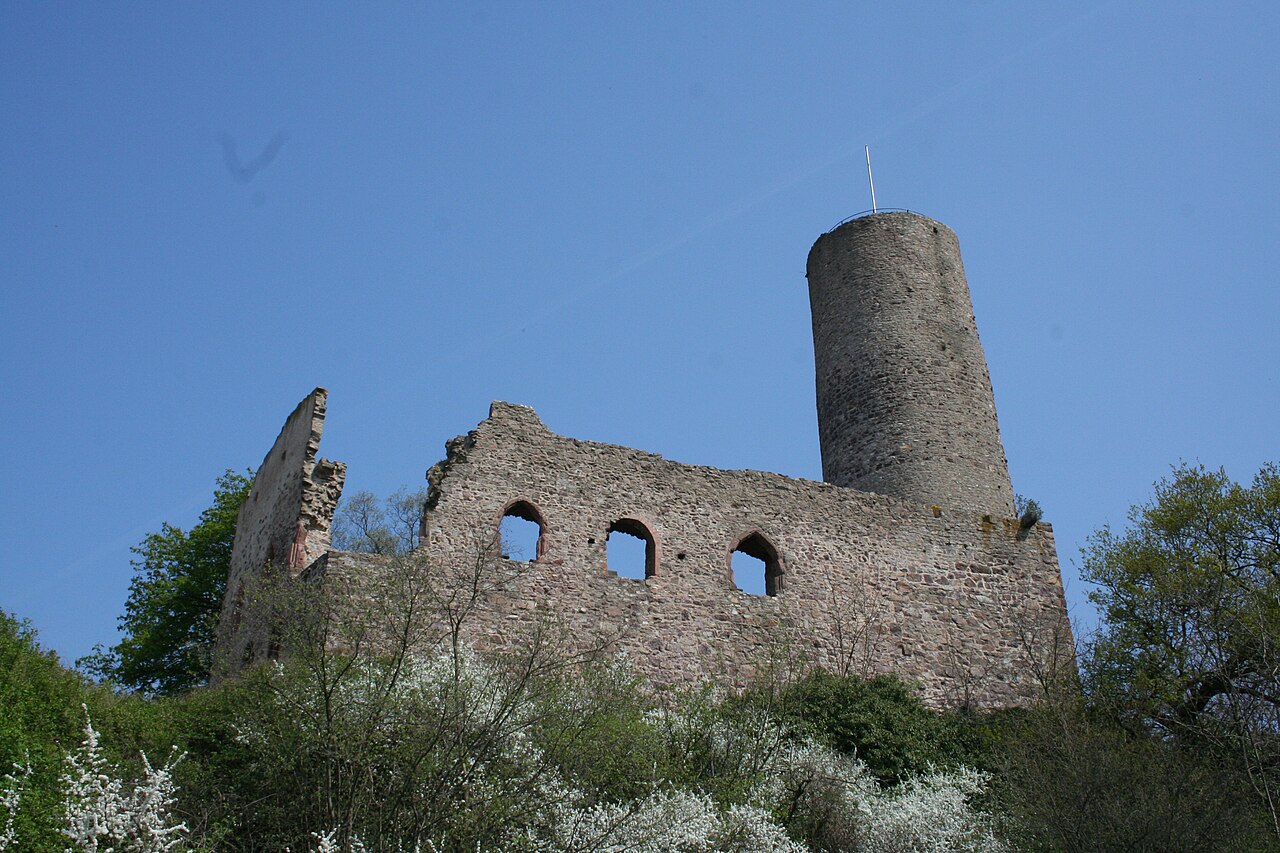
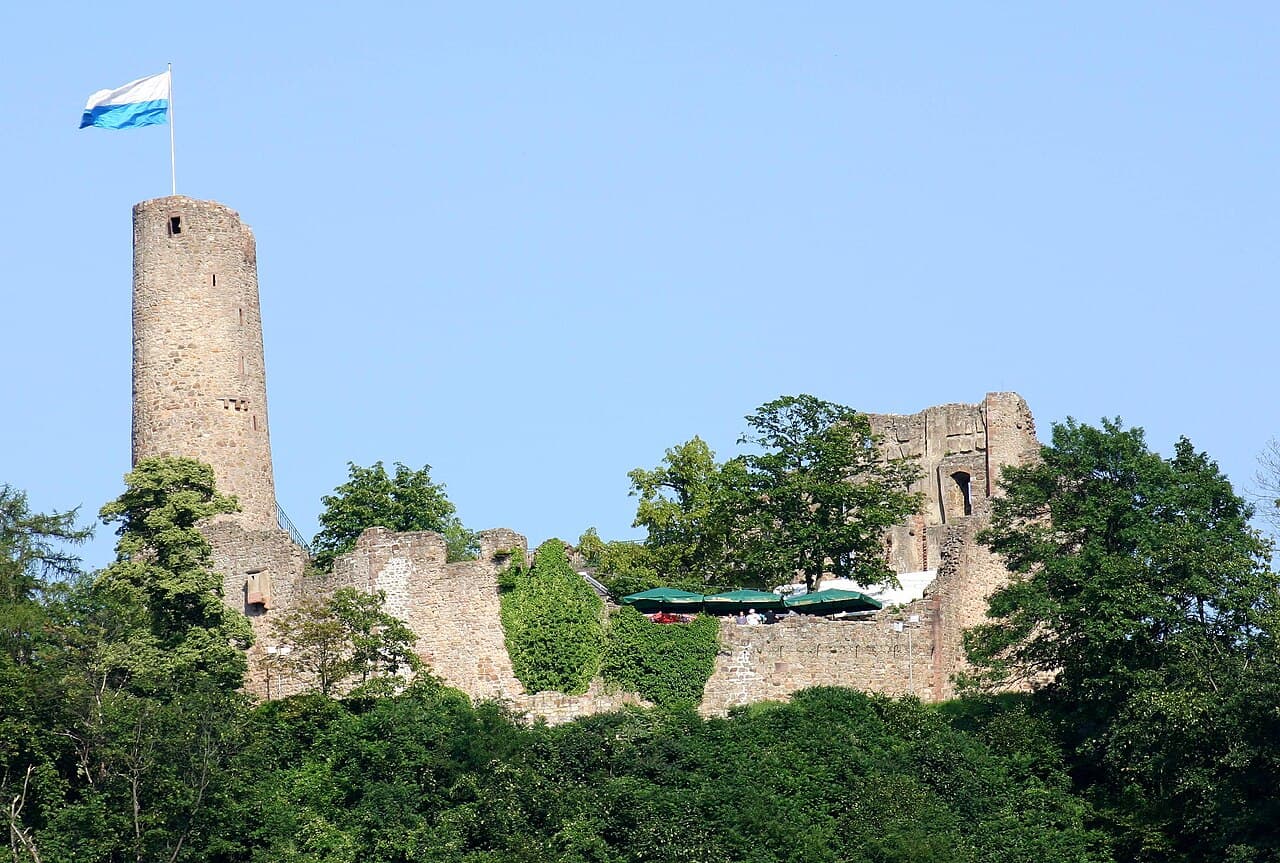
Windeck Castle stands as a remarkable example of a medieval hill castle perched atop the Schlossberg, or Castle Hill, in the municipality of Weinheim, Germany. Constructed originally in the early 12th century, this fortress played a significant role in the region's turbulent history, witnessing numerous conflicts and ownership changes. Today, its evocative ruins offer a tangible connection to the past, showcasing key architectural features and defensive structures emblematic of medieval fortifications.
Early history and construction
The origins of Windeck Castle trace back to around 1110, when it was initially built by forces linked to the Lorsch Abbey, an influential imperial abbey during the early medieval period. The primary purpose of this early fortification was to safeguard the abbey’s extensive estates in the region. However, this first castle was short-lived, having been destroyed in 1114.
Between approximately 1125 and 1130, a new castle was erected on the same foundations. This reconstruction marked the beginning of the structure whose ruins remain today. The castle was strategically positioned at an elevation of about 220 meters above sea level, providing commanding views of the surrounding landscape and serving as a defensive stronghold.
Medieval significance and ownership disputes
Following the decline of Lorsch Abbey’s independence in 1232, Windeck Castle became a focal point of contention between two dominant regional powers: the Archbishopric of Mainz and the Electoral Palatinate. The castle's ownership shifted multiple times during this period, reflecting the complex political landscape of the region.
Eventually, the castle was secured by the counts of the Palatinate, although sources vary on whether this occurred in 1264 or 1344. Unlike many contemporary castles held by noble families, Windeck was administered by appointed castle officials known as Burgmänner. These officials oversaw the castle’s defense and management, supported by nearby villages responsible for maintenance and provisioning.
Architecture and key features
Layout and surviving structures
The castle complex exhibits a compact layout typical of medieval hill castles, with fortifications designed to maximize defense. The surviving structures primarily date from the 14th century, though foundations and elements from the 12th century remain visible, attesting to the castle's long history.
Among the oldest remnants are the lower floors of a rectangular residential tower or palas, located in the southern part of the site. This tower served as the main living quarters and reflects early medieval masonry techniques. Adjacent to the palas lies the gatehouse, dating back to the 12th century, which functioned as the controlled entrance to the fortress.
The bergfried and defensive elements
The most prominent feature of Windeck Castle is its bergfried, a tall main tower typical of German castles. Standing approximately 28 meters high, the bergfried was crucial for defense and surveillance. Visitors today can ascend its summit via a series of 111 steps arranged in three staircases beginning in the inner courtyard.
The ascent includes a terrace and battlement walk along the eastern shield wall, followed by two offset spiral staircases within the tower comprising 20 and 41 steps respectively. The upper spiral staircase is externally visible on the tower’s southwestern face. The bergfried’s upper section measures about 6.20 meters in diameter and supports a tall flagpole on the northwest side.
The battlements feature four rectangular window niches and a parapet approximately 1.10 meters high on the southern side. From this vantage point, expansive views stretch across the Wachenburg Castle, the town of Weinheim, the Bergstraße region, the Rhine Valley, and on clear days, the Palatinate Forest and Donnersberg mountain.
Dungeon and subterranean features
Below the bergfried lies the "Angstloch", an entrance to an 11-meter-deep dungeon. This subterranean chamber was used to imprison captives under harsh conditions, with the name "Angstloch" roughly translating to "fear hole," reflecting its grim purpose.
Later history and decline
During the Thirty Years’ War (1618–1648), the castle sustained some damage but remained largely intact. Repairs were undertaken in 1663 to restore its defenses. However, the castle’s military role ended in 1674 when it was plundered and destroyed by French forces under General Henri de Turenne during the campaigns of King Louis XIV. This event rendered the fortress unusable for military purposes.
Following its destruction, Windeck Castle was abandoned. Local populations scavenged building materials from the ruins, effectively turning the site into a quarry. The property was transferred to the Margraviate of Baden in 1803. In 1900, the castle was purchased by the Counts and Barons von Berckheim, who initiated early preservation efforts to protect the remaining ruins.
Since 1978, ownership has rested with the city of Weinheim, which has overseen extensive conservation and stabilization projects. These efforts have preserved much of the castle’s structural integrity and ensured its accessibility as a historical site.
Cultural significance and visitor experience
Windeck Castle is not only an important historical monument but also a cultural landmark within the Bergstraße region. The ruins offer visitors a glimpse into medieval defensive architecture and the complex history of territorial disputes in southwestern Germany.
Visitors can explore the castle grounds, ascend the bergfried for panoramic views, and learn about the castle’s role through interpretive signage and guided tours. The site’s preservation allows for a meaningful connection to the past, making it a valued destination for both history enthusiasts and casual tourists.
Frequently asked questions (FAQ)
- How do I get to Windeck Castle in Weinheim?
- Windeck Castle is located on the Schlossberg hill in Weinheim, accessible by foot via marked hiking trails from the town center. Parking is available in Weinheim, and the walk to the castle offers scenic views.
- What is the best time to visit Windeck Castle?
- The best time to visit Windeck Castle is during the spring and summer months when the weather is mild, and the surrounding landscape is lush and green. Autumn also offers beautiful foliage views from the bergfried.
- Is Windeck Castle accessible for visitors with mobility issues?
- Due to its medieval hilltop location and the steep ascent to the bergfried involving many steps, Windeck Castle may be challenging for visitors with mobility issues. However, parts of the castle grounds are accessible, and assistance may be available.
- Are guided tours available at Windeck Castle?
- Guided tours are occasionally offered by the city of Weinheim or local historical societies, especially during special events. Visitors should check the official website or local tourist information for current tour schedules.
- What can I see from the top of the bergfried?
- From the top of the bergfried, visitors enjoy panoramic views of Wachenburg Castle, the town of Weinheim, the Bergstraße region, the Rhine Valley, and on clear days, the Palatinate Forest and Donnersberg mountain.
Photo gallery

Information
Sources & official resources
Verify the information above using these authoritative references.
Loading map...
Visitor reviews
No reviews yet. Been here? Write the first review and help other travelers!
Write the first reviewVisited this castle? Share your experience
Your review helps other travelers and adds first-hand knowledge to our encyclopedia.