Wilson Castle

Wilson castle in proctor, vermont: a 19th-century chateau-style landmark
Post-Renaissance (17th–18th c.)
Well Preserved

Wilson Castle, located in Proctor, Vermont, is an exceptional example of a mid-19th century chateau-style mansion that stands as a testament to architectural grandeur and family heritage. Built during the Victorian era, this striking red brick estate blends multiple European architectural influences to create a unique and captivating residence nestled in the heart of the Green Mountains.

The castle’s imposing facade is crafted from English brick and marble, distinguished by nineteen open proscenium arches that add depth and elegance to its exterior. Dominating the silhouette are a towering turret, intricate parapets, and a graceful balcony, all contributing to its fairy-tale appearance. The castle’s three spacious floors encompass 32 rooms, each designed with attention to detail and a blend of stylistic elements that reflect the tastes of its builders and successive generations.

Architectural features and design elements

The castle’s architecture is a remarkable fusion of styles, incorporating elements reminiscent of French chateaux alongside Victorian and Gothic Revival touches. The extensive use of turrets and parapets lends a fortified yet elegant character, typical of romanticized 19th-century castle constructions. The facade’s proscenium arches create a rhythmic visual appeal, while the balcony offers panoramic views of the surrounding estate.

One of the most striking interior features is the presence of 84 stained glass windows, which fill the rooms with colorful, filtered light and showcase exquisite craftsmanship. These windows depict various motifs and add a sense of artistry and refinement throughout the castle. Complementing this are 13 fireplaces adorned with imported tiles and bronze finishes, which serve as focal points in many rooms and highlight the luxurious nature of the residence.

Interior decor and furnishings

The interiors of Wilson Castle are richly appointed with a collection of Far Eastern and European antiques and museum-quality pieces. This eclectic mix includes statuary, Chinese scrolls, and Oriental rugs, which together create an atmosphere of cultured elegance and historical depth. Each room offers a distinctive ambiance, with architectural details and furnishings harmoniously combined to provide an inviting yet majestic living space.

Historical context and family legacy

Constructed in the mid-19th century, Wilson Castle has been the cherished home of five generations of the Wilson family. This continuity of ownership has ensured the preservation of the castle’s unique character and historical significance. The property reflects both the aspirations and accomplishments of the family, standing as a monument to their heritage and the architectural trends of the period.

Part of the estate is managed by the Wilson Foundation, Inc., a non-profit organization dedicated to preserving the castle’s longevity and cultural importance. This stewardship helps maintain the castle not only as a private residence but also as a public landmark that educates and inspires visitors about 19th-century architecture and lifestyle.

The estate and grounds

Wilson Castle is situated on a sprawling 115-acre estate that enhances its grandeur and provides a scenic backdrop of Vermont’s natural beauty. The grounds include manicured lawns, gardens, and wooded areas that create a peaceful and picturesque setting. The estate’s size and landscaping contribute to the castle’s stately presence and offer ample space for events and outdoor activities.

Public access and events

The castle is open to the public for guided tours, allowing visitors to explore its architectural splendor and historical interiors. These tours provide insights into the castle’s construction, design elements, and the Wilson family’s legacy. In addition to tours, Wilson Castle serves as a popular venue for weddings, parties, and special events, capitalizing on its romantic ambiance and elegant spaces.

Visitors can experience the castle’s unique charm firsthand, whether attending a public tour or a private event. The combination of historical authenticity and modern hospitality makes Wilson Castle a cherished cultural destination in Vermont.

Architectural significance and preservation

Wilson Castle stands out as a rare example of a 19th-century American chateau-style mansion, a style more commonly associated with European aristocracy. Its preservation offers valuable insights into the adaptation of European architectural motifs in the United States during the Victorian era. The castle’s ongoing maintenance by the Wilson Foundation ensures that its architectural integrity and historical value are protected for future generations.

As a well-preserved historic site, Wilson Castle contributes to Vermont’s rich architectural heritage and serves as an educational resource for those interested in castle architecture, historic preservation, and 19th-century design trends.

Architectural style and influences

The castle’s design reflects a blend of Victorian eclecticism with strong influences from French Renaissance chateaux and Gothic Revival architecture. This synthesis is evident in the use of ornate brickwork, the vertical emphasis of turrets, and the decorative parapets. The extensive stained glass and detailed interior finishes further underscore the artistic ambitions of its creators.

Construction and materials

Built primarily from English brick and accented with marble, the castle’s exterior showcases the durability and aesthetic appeal valued in 19th-century construction. The choice of materials not only ensured longevity but also conveyed a sense of prestige and refinement. The integration of imported tiles and bronze in fireplaces highlights the attention to detail and the desire to incorporate global artistic influences.

Visiting information and practical details

Wilson Castle is located at 2708 West Street, Proctor, Vermont 05765. It is accessible to the public through scheduled tours, which provide a comprehensive look at the castle’s architecture and history. The castle also operates as a venue for weddings and events, offering a unique and elegant setting.

Visitors are encouraged to check the official Wilson Castle website for the latest information on tour availability, ticket prices, and event bookings. The castle’s blend of historical authenticity and modern amenities ensures a memorable experience for all guests.

Frequently asked questions (FAQ)

What is the architectural style of Wilson Castle?
Wilson Castle features a mixed architectural style blending French Renaissance chateau elements with Victorian and Gothic Revival influences.
When was Wilson Castle built?
Wilson Castle was built in the mid-19th century, during the Victorian era, reflecting the eclectic tastes of that period.
Can I take a guided tour of Wilson Castle?
Yes, guided tours of Wilson Castle are available to the public, offering insights into its architecture, history, and the Wilson family legacy.
Is Wilson Castle open for events and weddings?
Wilson Castle operates as a venue for weddings, parties, and special events, providing an elegant and historic setting.
Where is Wilson Castle located?
Wilson Castle is located at 2708 West Street, Proctor, Vermont 05765, in the heart of Vermont's Green Mountains.
Who owns Wilson Castle currently?
The castle is currently owned and maintained by the Wilson Foundation, Inc., a non-profit organization dedicated to its preservation.

Information

Palace Castle

Current owner

Wilson Foundation, Inc.

Address

2708 West Street, Proctor, Vermont 05765

Loading map...

Visitor reviews

No reviews yet. Been here? Write the first review and help other travelers!

Write the first review

Visited this castle? Share your experience

Your review helps other travelers and adds first-hand knowledge to our encyclopedia.

Write a review

(5/5)

0/2000 characters

Your review will be visible after admin approval

Nearby castles

0.3 km

Wilson Castle

Proctor, United States Minor Outlying Islands

Wilson Castle stands as a remarkable example of 19th-century American castle architecture, nestled in the rural village of Proctor, Vermont. This striking estate, covering 115 acres, is renowned for its imposing presence, featuring authentic battlements and towers that distinguish it as a true castle in the United States. Its architectural uniqueness and historical narrative make it a fascinating landmark in a region otherwise dominated by modest ranch houses and trailers. The castle was commissioned in 1867 by Dr. John Johnson, a Vermont physician who sought to create an extraordinary residence to impress his wife, an English aristocrat he met while studying medicine in the United Kingdom. The construction spanned eight years, culminating in a lavish estate that reportedly cost around $1.3 million—a staggering sum for the era. The castle’s design incorporates elements reminiscent of European medieval castles, including crenellated parapets, multiple towers, and expansive stone walls, which contribute to its fairy-tale appearance. Architectural features and design Wilson Castle is characterized by its eclectic architectural style, combining influences from Gothic Revival and romantic medieval architecture. The castle’s exterior is dominated by robust stone masonry, with intricate detailing around the windows and doorways. Its towers vary in height and shape, some cylindrical and others polygonal, adding to the asymmetrical charm of the structure. The battlements along the roofline give the castle a fortified look, though the building was never intended for military defense. Inside, the castle boasts a variety of rooms designed for comfort and grandeur, including spacious halls, ornate fireplaces, and richly decorated chambers. The interior décor reflects Victorian tastes, with elaborate woodwork, stained glass windows, and period furnishings that evoke the lifestyle of the late 19th century elite. Historical context and significance The castle’s history is intertwined with the personal story of Dr. Johnson and his wife. Despite the grandeur of the estate, Mrs. Johnson lived in the castle for only about three years before returning to England. After her death, Dr. Johnson was compelled to sell the property, marking the end of the original family’s association with the castle. Over the years, Wilson Castle has experienced various phases of ownership and maintenance, leading to its current condition, which is described as being in various stages of disrepair. Despite this, the castle remains a symbol of ambition and romanticism, attracting visitors intrigued by its unusual presence in rural Vermont and its embodiment of European castle aesthetics in an American setting. Location and surroundings The castle is accessed via a rural road branching off the main highway near Rutland, Vermont. The surrounding area is sparsely populated, with a mix of small ranch houses and trailers that starkly contrast with the castle’s grandeur. This juxtaposition enhances the castle’s mystique and highlights its uniqueness in the local landscape. Visitor experience and cultural impact Today, Wilson Castle is a point of interest for tourists and history enthusiasts. Tour guides emphasize its status as a "real castle" due to its authentic architectural features like battlements and towers. Visitors can explore the estate and appreciate the blend of Victorian luxury and medieval-inspired design. The castle’s eerie beauty and the story of its creation contribute to its reputation as one of the few true castles in the United States. While the castle is not fully restored, its partial preservation offers a glimpse into the ambitions of a 19th-century American who sought to bring a piece of European aristocratic grandeur to Vermont. The estate’s expansive grounds and distinctive architecture continue to captivate those interested in historic homes, architectural oddities, and the cultural heritage of the region.

Post-Renaissance (17th–18th c.)
Details
30.5 km

Whitehall Castle

Whitehall, United States of America

Whitehall Castle in Whitehall, New York, stands as a remarkable example of late 19th-century military architecture, originally constructed as an armory in 1899. This imposing structure covers nearly 40,000 square feet and is renowned for its distinctive crenellated towers, which dominate the local skyline and serve as a key landmark in the town. The castle's robust brick and stone construction reflects the architectural trends of the period, combining functional military design with ornamental elements that evoke medieval fortifications.Architectural features and designWhitehall Castle's design is characteristic of late 19th-century armories built across the United States, blending Romanesque Revival and Gothic Revival influences. The castle features crenellated battlements atop its towers and walls, which were stylistic rather than defensive, designed to recall medieval castles and instill a sense of strength and permanence. The use of heavy masonry with brick and stone materials provided both durability and an imposing aesthetic.The castle's layout includes multiple towers of varying heights, connected by thick walls enclosing an expansive interior space originally intended for military drills and equipment storage. Large arched windows and doorways, along with decorative stonework, add to the building's historic character. Internally, the space was designed to accommodate the needs of the National Guard, including an armory drill hall, offices, and storage rooms.Historical context and usageConstructed at the turn of the century, Whitehall Castle served as an armory for the local National Guard units. Its establishment in 1899 reflects a period of increased military preparedness in the United States, with many such armories built to support local militia and National Guard operations. The castle's substantial size and fortified appearance symbolized civic pride and military readiness.After its military use, the building was repurposed as an athletics club, demonstrating adaptive reuse of historic military structures. In 1995, Whitehall Castle was listed on the National Register of Historic Places, recognizing its architectural significance and historical importance to the region.Current status and preservationToday, Whitehall Castle is a privately owned residence. While no longer open to the public, the castle remains a prominent feature of Whitehall's architectural heritage. Its preservation as a private home ensures the continued maintenance of its historic fabric, although visitors are asked to respect the privacy of the owners.The castle's location at 62 Poultney Street, Whitehall, NY 12887 situates it within the town's historic district, contributing to the area's cultural landscape. Its listing on the National Register helps protect the structure from inappropriate alterations and encourages preservation efforts.Significance and cultural heritageWhitehall Castle stands as a testament to the era of armory construction in the United States, embodying both the military history and architectural trends of the late 19th century. Its distinctive crenellated towers and robust masonry make it an architectural landmark in Whitehall, symbolizing the town's historical connection to military service and community identity.The castle's adaptive reuse over the decades—from armory to athletics club to private residence—illustrates the evolving relationship between historic structures and contemporary needs, highlighting the importance of preservation and respectful stewardship.

Post-Renaissance (17th–18th c.)
Details
38.4 km
Fort Ticonderoga — United States of America castle

Fort Ticonderoga

, United States of America

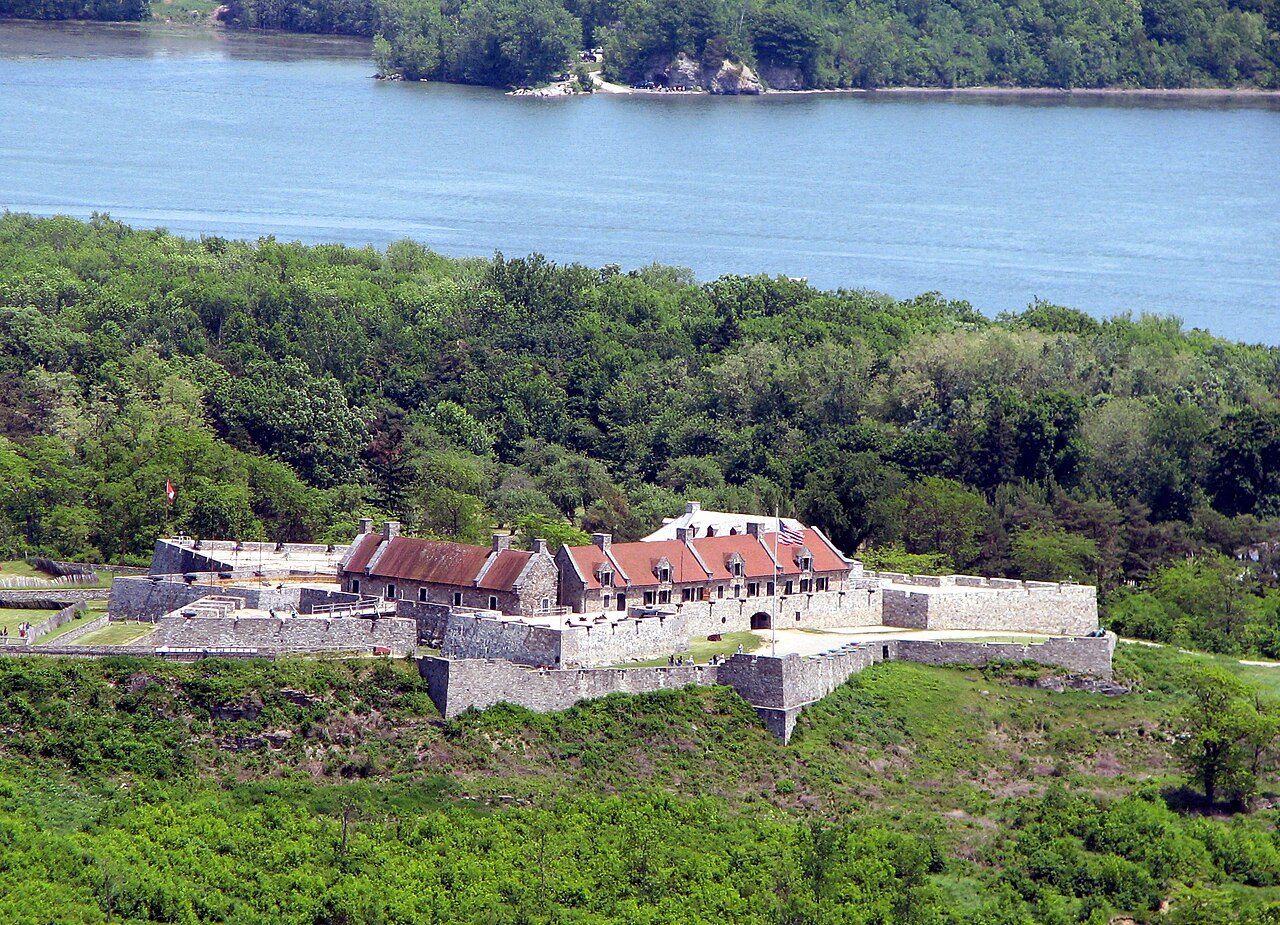
Fort Ticonderoga, originally named Fort Carillon, is a prominent 18th-century star fort located near the southern end of Lake Champlain in northern New York. Constructed between October 1755 and 1757 by the French-Canadian military engineer Michel Chartier de Lotbinière, Marquis de Lotbinière, it played a crucial role in the French and Indian War, the North American theater of the Seven Years' War. The fort's design reflects the bastioned fortress style prevalent in the post-Renaissance period, featuring angled bastions optimized for defense against artillery. The fort's strategic position controlled a vital river portage at the mouth of the rapid La Chute River, linking Lake Champlain and Lake George over a distance of approximately 3.5 miles (5.6 km). This location was essential for controlling trade and military movements between the British-controlled Hudson River Valley and the French-controlled Saint Lawrence River Valley. The surrounding Appalachian Mountains and the orientation of the lakes created natural barriers, making the narrow corridor commanded by Fort Ticonderoga a critical chokepoint in the region. Architectural design and features The fort exhibits the characteristics of a bastioned fortress, a design that emerged in Europe during the post-Renaissance era to counter the increasing power of cannon fire. Its layout includes star-shaped bastions that project outward from the main walls, allowing defenders to cover all approaches with overlapping fields of fire. The fort's walls were constructed with thick earthworks faced with stone, designed to absorb and deflect artillery bombardment. The main fortification includes several bastions, curtain walls, and a well-planned network of internal structures such as barracks, magazines, and powder stores. The fort's design prioritized both defense and the accommodation of a sizable garrison, reflecting its importance as a military stronghold in the contested borderlands of colonial North America. Historical significance in colonial conflicts Fort Ticonderoga was central to several key military engagements during the mid-18th century. The Battle of Carillon in 1758 saw approximately 4,000 French defenders successfully repel a much larger British force of around 16,000 troops. This victory underscored the fort's formidable defenses and strategic value. However, in 1759, the British returned with a reinforced army and captured the fort after the French garrison withdrew. The fort then became a British stronghold during the lead-up to the American Revolutionary War. Role in the american revolutionary war At the start of the Revolutionary War, Fort Ticonderoga was under British control. On May 10, 1775, it was seized by the Green Mountain Boys and other militia forces led by Ethan Allen and Benedict Arnold. This capture was significant for the American cause, as it provided a cache of artillery and a strategic position. Henry Knox famously transported the fort's artillery overland to Boston during the winter of 1775-1776, enabling the Continental Army to force the British evacuation of the city in March 1776. The Americans held the fort until June 1777, when the British under General John Burgoyne occupied the high ground above it, compelling an American withdrawal. In September 1777, a direct attack on the fort by about 500 American troops led by John Brown was unsuccessful against a smaller British garrison. Following the failure of the British Saratoga campaign, the fort was abandoned by the British and lost military importance. Post-war history and preservation After the Revolutionary War, Fort Ticonderoga fell into disuse and disrepair. Local residents scavenged building materials, and the fort was largely neglected. In 1820, it was purchased by a private family and gradually became a tourist destination, attracting visitors interested in its rich history. During the early 20th century, private owners undertook significant restoration efforts to preserve the fort's structure and historical integrity. Today, the Fort Ticonderoga Association manages the site as a museum, research center, and tourist attraction, offering educational programs and maintaining the fort's legacy as a symbol of colonial and Revolutionary War history. Geographical and cultural context The name "Ticonderoga" derives from the Iroquois word tekontaró:ken, meaning "it is at the junction of two waterways," highlighting the site's importance as a crossroads between major water routes. The fort's location in the narrow corridor between Lake Champlain and Lake George made it a focal point for control over the surrounding region during the colonial era and beyond. Today, Fort Ticonderoga stands as a well-preserved example of post-Renaissance military architecture in North America and remains a testament to the complex history of European colonization, indigenous presence, and the struggle for American independence.

Post-Renaissance (17th–18th c.)
Details