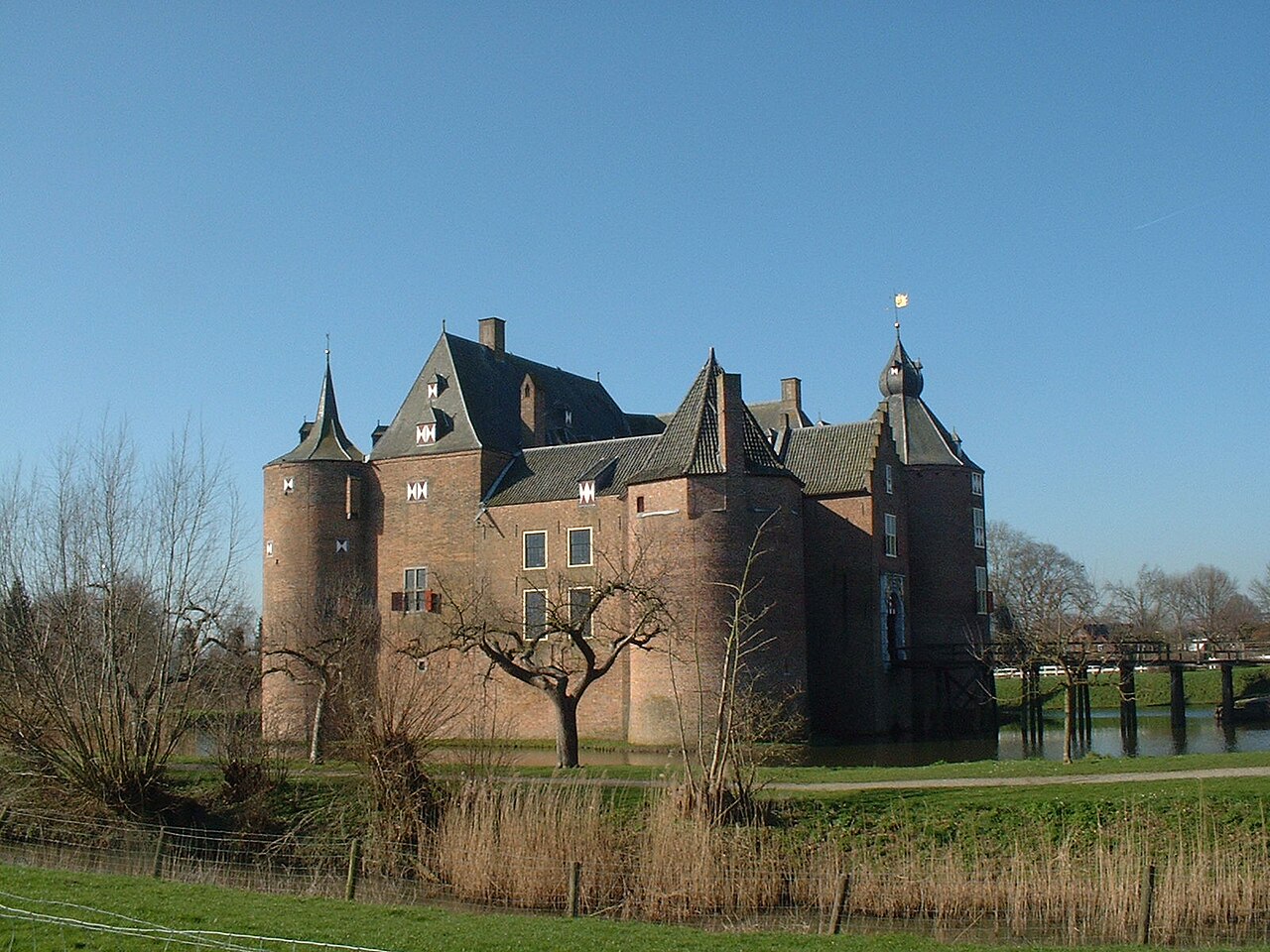
Well Castle
Well Castle, also known locally as Slot Well or Huis van Malsen, is a historic 14th-century medieval water castle located near the village of Well in the province of Gelderland, Netherlands. It is important to distinguish this castle from its namesake in Limburg. The castle is situated within a dike along the Meuse River and is surrounded by a moat fed by the Meersloot stream, a typical defensive feature of water castles.
The origins of Well Castle date back to the early 14th century, when it was initially constructed as a rectangular tower house with walls approximately one meter thick. This tower formed the core of the castle and was likely built by Nicolaes van Malsen, a vassal of the Count of Guelders mentioned in 1326. Over time, the castle was expanded, with a western wing added during the 14th or 15th century, enhancing its residential and defensive capabilities.
Architectural evolution and medieval fortifications
Well Castle's architectural development reflects the typical evolution of medieval fortifications in the Low Countries. The castle complex consists of two main buildings: the Main Castle and the Outer Castle or bailey, enclosing two courtyards and two moats (inner and outer). These moats historically provided essential protection and now serve as habitats for various waterfowl, including ducks, black swans, and geese.
In 1492, the castle's defenses were reinforced with the construction of an earthen rampart. A strong round defensive tower was built atop this rampart, known historically as the Dragon Tower. During the 80 Years' War, this tower was converted into a windmill by Dutch States troops but was destroyed by Spanish forces in 1586. The Dragon Tower remains a ruin, symbolizing the turbulent military history of the region.
19th and 20th-century modifications
The castle underwent significant alterations in the 19th century to enhance its castellated appearance. A round corner tower was added, along with a new front building in 1884 featuring battlements or crenellations, which are characteristic of medieval fortifications. These additions were more aesthetic than defensive, reflecting the romantic revival of medieval architecture during this period.
In 1934, the entrance was further developed with the addition of a wooden drawbridge and a gatehouse. The entrance facade prominently displays coats of arms from the Ammerzoden family and the Duchy of Guelders, indicating historical ties and noble patronage. The entrance portal bears the inscription "Huys van Malsen," flanked by the Van Malsen family coat of arms, described as red with a silver diagonal stripe.
Historical ownership and significance
Well Castle's ownership history is marked by several noble families and reflects the shifting political landscape of the region. The earliest documented association is with Nicolaes van Malsen in the early 14th century. By 1363, the castle was mentioned in records when Willem van Baerlo leased it to his brother-in-law, though it is unclear if this referred to the present structure or an earlier predecessor.
In 1382, Salentijn I van Arendael acquired the castle, and his descendants maintained ownership until around 1478. Subsequently, it passed to Hendrik van den Bylandt, Viscount of Nijmegen. The Van Vlodrop family owned the castle from approximately 1550 until 1628. Later owners included Count Henri de Pas, Marquess de Feuquière, until 1852, when the Austrian noble family Von Schloissnig took possession. They rarely resided at the castle, selling it in 1905 to German industrialist Richard Wolters.
The castle's German ownership during the 20th century led to its confiscation by the Dutch State in 1945 after World War II. It was subsequently managed by various foundations before being acquired in 1988 by Emerson College, an American institution. Since then, the castle has served as a residence and educational facility for students participating in a study abroad program.
Current use and public access
Today, Well Castle remains a well-preserved example of a medieval water castle adapted for modern use. While the castle itself functions as a private residence and educational center for Emerson College students, the surrounding gardens and park grounds are open to the public free of charge. Visitors can enjoy well-maintained flower beds, fountains, shrubbery, and the ruins of the Dragon Tower.
The castle grounds also feature a carriage house (koetshuis), a historic water pump, and decorative stone lion sculptures, adding to the site's charm and historical ambiance. Occasionally, the castle's barn is used for weddings and other events, contributing to its role as a cultural venue.
Architectural and historical documentation
Visual records of Well Castle's appearance over the centuries provide valuable insights into its architectural evolution. Notable depictions include an 18th-century drawing by W. Tavernier (1786) and a circa 1739 watercolor of the village of Well by Jan de Beijer. These artworks illustrate the castle's form and its integration within the surrounding landscape during different historical periods.
Well Castle stands today as a testament to the layered history of medieval fortifications in the Netherlands. Its combination of original 14th-century structures, later defensive enhancements, and 19th- and 20th-century romantic restorations offers a rich architectural narrative. The castle's ongoing use as an educational facility ensures the preservation and appreciation of this cultural heritage site for future generations.
Frequently asked questions (FAQ)
- What is the historical significance of Well Castle?
- Well Castle, dating back to the 14th century, is an important historical site in the Netherlands, showcasing the architectural style of medieval fortifications. It served as a residence for noble families and played a role in regional power dynamics. Today, it stands as a testament to the rich history of the area, attracting visitors interested in Dutch heritage.
- When was Well Castle built?
- Well Castle was constructed in the late 14th century, with its origins tracing back to around 1390. Over the centuries, it has undergone various renovations, reflecting the architectural styles of different eras. This long history adds to its charm and significance as a cultural landmark.
- Can I visit Well Castle?
- Yes, Well Castle is open to the public for visits. Guests can explore the beautiful grounds and learn about the castle's history through guided tours. Be sure to check the official website for any updates on visiting hours and special events.
- What are the opening hours for Well Castle?
- Well Castle typically opens its doors to visitors from 10 AM to 5 PM, Tuesday through Sunday. It is advisable to verify current opening hours on their official website, especially during holidays or special events when hours may vary. Planning your visit accordingly ensures you have ample time to explore.
- Is it possible to host events at Well Castle?
- Yes, Well Castle offers facilities for hosting private events such as weddings, corporate gatherings, and special celebrations. The picturesque surroundings provide a unique backdrop for memorable occasions. Interested parties should contact the castle's event coordination team for details on availability and services.
- What are the nearby attractions to Well Castle?
- Visitors to Well Castle can explore several nearby attractions, including the charming village of Well and the scenic countryside that surrounds it. The region is known for its beautiful walking and cycling paths, allowing for a leisurely day of exploration. Additionally, the historic towns of Venray and Boxmeer are just a short drive away.
- How do I purchase tickets for Well Castle?
- Tickets for Well Castle can be purchased on-site at the entrance or through their official website for added convenience. Group discounts and family tickets may be available, so it’s worth checking for any current promotions. Ensure you have your tickets ready to enjoy a hassle-free entry.
- What is the best time to visit Well Castle?
- The best time to visit Well Castle is during the spring and early fall when the weather is pleasant and the gardens are in full bloom. These seasons also see fewer crowds, allowing for a more enjoyable experience as you explore the grounds. Special events and festivals may also enhance your visit during these times.
- How accessible is Well Castle for visitors with disabilities?
- Well Castle strives to accommodate all visitors, including those with disabilities. The main areas are accessible, with ramps and designated pathways to ensure ease of movement. For specific accessibility questions or to request assistance, it is best to contact the castle prior to your visit.
Information
Website
Visit websiteSources & official resources
Verify the information above using these authoritative references.
Loading map...
Visitor reviews
No reviews yet. Been here? Write the first review and help other travelers!
Write the first reviewVisited this castle? Share your experience
Your review helps other travelers and adds first-hand knowledge to our encyclopedia.