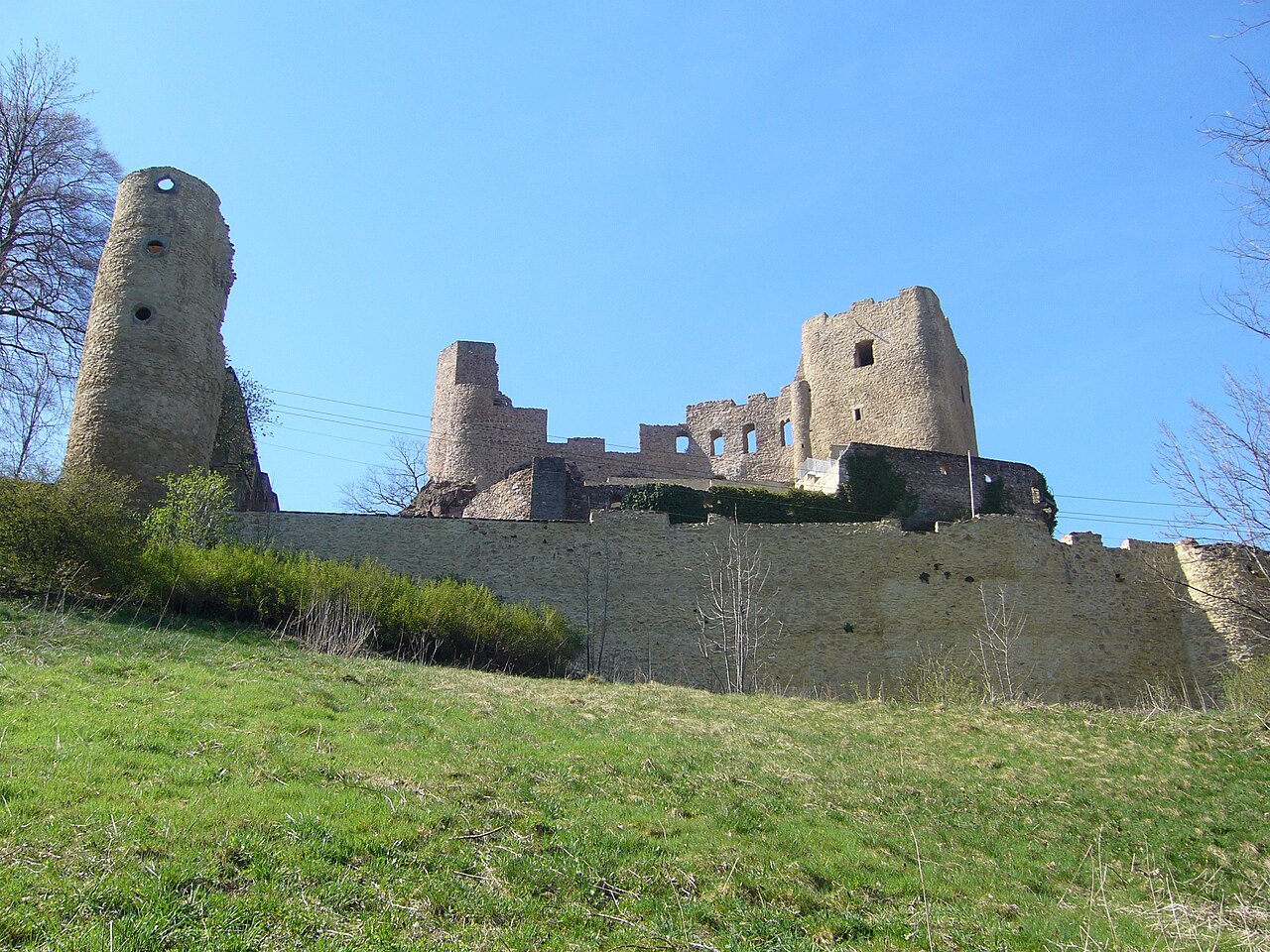
Weißenborn Castle

Weißenborn Castle in Saxony, Germany
Weißenborn, Germany
High Medieval (11th–13th c.)
Partially Preserved

Weißenborn Castle, located in Weißenborn, Saxony, Germany, is a historic fortress with origins dating back to the 13th century. The castle was first documented in 1213 alongside the village of Weißenborn, marking its early medieval significance in the region. Although the exact construction date is uncertain, architectural and historical evidence suggests that the castle was likely built in the 14th century, during the high medieval period. This places Weißenborn Castle among the many fortifications established in Saxony during a time of territorial consolidation and feudal power struggles.

Historical ownership and feudal ties

The castle’s history is closely tied to the noble family von Hartitzsch, who were granted Weißenborn as a fief in 1365 by the Freiberg authorities. The von Hartitzsch family maintained possession of the castle and its manor for over four centuries, until 1802. This long tenure reflects the castle's role as a feudal seat and administrative center within the Saxon nobility. Throughout this period, Weißenborn Castle witnessed the turmoil of regional conflicts, including the impacts of wars, looting, and even outbreaks of the plague, which were common challenges for castles of this era.

Architectural features and castle type

Weißenborn Castle is classified as a hill castle, typical for its strategic placement on elevated terrain to provide defensive advantages. The castle's architecture reflects the high medieval style, characterized by robust stone walls, fortified towers, and a layout designed to withstand sieges. While detailed records of the castle’s structural evolution are limited, it likely included key defensive elements such as battlements, a gatehouse, and possibly a moat or dry ditch to enhance protection. The castle’s design would have balanced military functionality with residential needs for the noble family.

Changes in ownership and usage from the 19th to 20th centuries

In 1802, the castle and manor left the von Hartitzsch family when Alexander von Hartitzsch sold the property to Christoph Schubert. Subsequently, the manor passed to a cavalry master from Weißenbach, indicating a shift from noble to military ownership. Later, in 1882, Colonel Freiherr von Wangenheim acquired the manor from Count Hohenthal-Püchau and retained it until 1924. This period saw the castle’s function transition more towards a manor house rather than a purely defensive fortress.

Dr. Otto Fritz became the owner in 1931, but the property was expropriated in 1945 following the upheavals of World War II and the establishment of the German Democratic Republic (GDR). During the GDR era, the castle premises were repurposed as a culture house, reflecting the socialist government's use of historic buildings for community activities rather than private residence or noble functions.

Current status and preservation

Since 2010, Weißenborn Castle has returned to private ownership. The current condition of the castle is partially preserved, with some restoration efforts likely undertaken to maintain its structural integrity and historical character. The castle remains a significant cultural landmark in Saxony, embodying centuries of regional history from medieval feudalism to modern times.

Notable historical context and regional significance

Weißenborn Castle’s location in Saxony places it within a region rich in medieval history and architectural heritage. The castle’s endurance through periods of war, plague, and political change highlights its resilience and the shifting nature of castle functions over time. Its association with prominent families such as the von Hartitzsch and later military owners illustrates the evolving social and political landscape of Saxony from the Middle Ages through the modern era.

Cultural heritage and tourism potential

While not as widely known as some larger German castles, Weißenborn Castle offers insights into the typical development of high medieval hill castles in Saxony. Its layered history and architectural features provide valuable opportunities for cultural tourism and historical study. Visitors interested in medieval architecture, feudal history, and Saxon heritage would find Weißenborn Castle a noteworthy destination.

Information

Hill Castle

Loading map...

Visitor reviews

No reviews yet. Been here? Write the first review and help other travelers!

Write the first review

Visited this castle? Share your experience

Your review helps other travelers and adds first-hand knowledge to our encyclopedia.

Write a review

(5/5)

0/2000 characters

Your review will be visible after admin approval

Nearby castles

6.8 km

Terra Mineralia

Freiberg, Germany

Freudenstein Castle, located in the historic town of Freiberg in the eastern German region of Saxony, stands as a remarkable monument intertwining the rich heritage of mining with Renaissance architecture. The castle's origins date back to the High Medieval period, specifically 1168, when it was initially constructed under the orders of Margrave Otto II of Meissen to protect the burgeoning silver mines discovered in the nearby Erzgebirge mountains. This strategic fortress played a critical role in safeguarding the precious mineral resources that would shape the region's economic and cultural development for centuries. The castle underwent significant transformation in the Renaissance era, beginning in 1566 under the guidance of the master builder Hans Irmisch and the supervision of Rochus zu Lynar. Completed in 1577, the castle was remodeled into a Renaissance palace, reflecting the architectural trends of the time with elegant facades, symmetrical layouts, and ornamental details. This period also marked the castle's association with the influential House of Wettin, as it became a residence for Duke Henry the Pious and the birthplace of his sons, Moritz and Augustus, who would later become electors of Saxony. Architectural features and historical significance The castle's architectural evolution is a testament to its varied roles throughout history. Originally built as a defensive hill castle to protect the valuable silver mines, its structure incorporated robust fortifications, including thick walls and strategic positioning. During the Thirty Years' War, Freudenstein Castle formed part of the town's defensive system and was occasionally utilized as a military base, underscoring its continued strategic importance. In the aftermath of the Seven Years' War in 1762, the castle's interior suffered extensive damage, leading to significant alterations when the military treasury assumed ownership in 1784. The Renaissance windows were replaced with smaller, more functional armoury windows, and the interior was adapted to serve as a magazine and later as a miners' granary (Bergmagazin). These changes reflect the castle's shift from a noble residence to a utilitarian military and storage facility. Restoration and modern use The 20th century saw further changes, including use as a hospital during the Napoleonic Wars in 1813 and as a granary until 1979. A youth club and heritage organization occupied parts of the castle in the latter half of the century. Notably, from 1980 to 1990, efforts were made to restore the castle's Renaissance facade, particularly the New House section, returning it to its 1577 appearance. In the early 21st century, a Europe-wide architectural competition led to a comprehensive renovation of the castle between 2005 and 2008, directed by AFF Architects Berlin/Chemnitz. This renovation included the gutting of the Church Wing to accommodate the mining archives and the establishment of the Terra Mineralia exhibition in the adjacent Long House. Terra mineralia exhibition: a treasure trove of minerals The Terra Mineralia exhibition is one of the world's largest and most comprehensive mineralogical collections, housed within the Renaissance-era Freudenstein Castle. Spanning five floors, the exhibition showcases approximately 3,500 mineral specimens renowned for their size, beauty, and unusual shapes. The ground floor features a "schatzkammer" or treasury, where the most breathtaking and rare stones are displayed, captivating visitors with their natural splendor. The collection not only highlights local minerals from the Erzgebirge region but also includes precious gems and mineral specimens from around the globe. This global diversity reflects the active role of Freiberg's geoscientists, particularly those affiliated with the Technical University Bergakademie Freiberg, who participated in numerous international excursions and research expeditions to enrich the collection. Scientific and cultural importance Terra Mineralia serves as a vital center for mineralogical research and education, linking Freiberg's mining heritage with contemporary scientific study. The exhibition offers visitors insights into the geological processes that form minerals, the historical significance of mining in the region, and the artistry involved in mineral collection and preservation. Beyond its scientific value, the exhibition contributes to the cultural identity of Freiberg, celebrating the town's centuries-old relationship with mining and geology. It attracts scholars, students, and tourists alike, fostering a deeper appreciation for the natural world and the human endeavors intertwined with it. Freudenstein castle's role in freiberg's mining history Freudenstein Castle is more than an architectural landmark; it is a symbol of Freiberg's mining legacy. From its initial construction to protect the silver mines to its later adaptations as a military base, granary, and hospital, the castle's history mirrors the economic and social transformations of the region. The castle's connection to the House of Wettin and its role as a ducal residence further emphasize its importance in Saxony's political and cultural history. The birth of electors Moritz and Augustus within its walls marks it as a site of dynastic significance. Military and economic transformations Throughout the 18th and 19th centuries, the castle's function evolved in response to changing military and economic needs. Its conversion into a magazine and miners' granary illustrates the practical adaptations made to sustain Freiberg's mining industry. The use of the castle as a hospital during wartime also highlights its strategic value beyond defense. Visiting freudenstein castle and terra mineralia today Today, Freudenstein Castle stands as a well-preserved Renaissance structure, offering visitors a unique blend of historical architecture and scientific exploration. The Terra Mineralia exhibition provides an immersive experience into the world of minerals, making it a must-visit destination for enthusiasts of geology, history, and art. Visitors can explore the castle's five floors of exhibits, including the treasury of exceptional stones, and learn about the region's mining heritage through detailed displays and archives. The castle's location in Freiberg, a town with deep mining roots, further enriches the visit with opportunities to explore related historical sites and cultural attractions. Practical information for visitors Opening hours: Typically open daily from 10:00 to 16:00, but visitors should check current schedules before planning their visit. Ticket prices: Admission fees vary; discounts are often available for students, seniors, and groups. Accessibility: The castle and exhibition are partially accessible for visitors with mobility impairments, though some historic areas may have limited access. Nearby attractions: Freiberg's old town, mining museum, and the Technical University Bergakademie Freiberg offer additional points of interest.

High Medieval (11th–13th c.)
Details
12.5 km
Frauenstein Castle — Germany castle

Frauenstein Castle

Frauenstein, Germany

Frauenstein Castle stands as a significant high medieval fortress ruin perched on a 680-metre-high granite outcrop along the crest of the Eastern Ore Mountains, near the town of Frauenstein in the German district of Mittelsachsen. First documented in 1272, this castle was strategically constructed as a border fortification between the March of Meissen and Bohemia. Its primary purpose was to protect vital trade routes and the lucrative silver mining industry that flourished in the region during the 13th century. Early construction and architectural features The original castle layout was compact, with the inner ward measuring approximately 30 by 15 metres. Central to this was a tower house, a common defensive residential structure of the period, designed to offer both protection and living quarters. Shortly after the initial construction, a second tower house was added, linked to the first, enhancing the castle's defensive capabilities. In the late 13th century, the castle expanded with the addition of a great hall and a castle chapel, reflecting the growing importance of the site as a noble residence and administrative center. The curtain wall, a formidable defensive barrier, was constructed in the first half of the 14th century, featuring walls approximately 1.5 metres thick. This wall enclosed the castle's key structures and provided protection against sieges and attacks. Historical context and ownership transitions In 1329, the castle and its associated dominion were enfeoffed by the margrave to the burgraves of Meissen, marking a shift in control and signaling its continued strategic relevance. The nearby parish of Frauenstein was granted town rights in 1411, further cementing the area's regional importance. The castle endured significant conflict in 1438 when it was largely destroyed during a siege by the Wettin family. This siege was part of a succession dispute following the extinction of the Meinheringer line in 1426, which led to the castle passing to the House of Plauen through their Vögte (advocates). Eventually, the noble von Schönberg family took possession of Frauenstein Castle in 1473. Renaissance palace and later uses Between 1585 and 1588, the von Schönbergs commissioned the construction of a Renaissance palace (Schloss) near the castle ruins. This palace was designed by Hans Irmisch, the architect to the Elector, and represented a shift from medieval fortress to more comfortable noble residence. Following the completion of the palace, the original castle was abandoned as a residence but maintained some functional roles. The castle chapel underwent renovation in 1615, indicating ongoing religious use. The last Schönberg owner sold the estate in 1647 to Prince-Elector John George I. Subsequently, the palace was repurposed for administrative functions, including serving as a judicial office (Gerichtsamt), forestry office (Forstrentamt), and district court (Amtsgericht). However, the castle itself, unlike the palace, was not restored after suffering damage in a 1728 fire that devastated much of Frauenstein town. Surviving structures and preservation efforts Today, the ruins of Frauenstein Castle include the notable 13th-century tower house known as Dicker Merten and extensive sections of the thick curtain wall. Visitors can explore the remains of the cellar, kitchen, castle chapel, prison, two parlours, and several vaulted chambers that offer insight into medieval castle life. Restoration efforts have been undertaken intermittently since the mid-20th century, with significant work completed in 1968, 1990, and 1992 to stabilize the ruins and improve public access. In 2007, an interest group was formed dedicated to preserving the castle ruins, ensuring they remain accessible to visitors and protected from private acquisition. Architectural significance and cultural heritage Frauenstein Castle exemplifies typical high medieval fortification architecture in the Ore Mountains region, illustrating the evolution from a compact tower house complex to a larger fortified site with curtain walls and specialized buildings such as chapels and great halls. Its location on a granite rock provided natural defensive advantages, which were enhanced by its thick walls and strategic design. The castle's history reflects the complex political dynamics of the region during the Middle Ages, including territorial disputes, noble family succession, and the interplay between military and residential functions. Its transformation into a Renaissance palace and later administrative center demonstrates adaptive reuse over centuries. Today, Frauenstein Castle is an important cultural monument, attracting visitors interested in medieval architecture, regional history, and the heritage of the Ore Mountains. Its ruins offer a tangible connection to the past and a window into the life and defense strategies of medieval German nobility.

High Medieval (11th–13th c.)
Details
15.2 km

Reinsberg Castle

Reinsberg, Germany

Reinsberg Castle stands as a significant monument of medieval architecture in the municipality of Reinsberg, located in central Saxony, Germany. This hill castle was established in the 12th century and has witnessed over eight centuries of regional history, noble lineage, and architectural evolution. Its strategic position on a steep slope overlooking the Bobritzsch river provided natural defense advantages, complemented by man-made fortifications such as moats and drawbridges. Origins and early history The earliest records dating back to 1197 identify Reinsberg Castle as the seat of a knightly lord family. While the exact founder remains uncertain, historical consensus suggests that a German noble named Reinhardt likely initiated the construction of the castle to protect an emerging agricultural settlement. This protective role fostered the gradual development of the village of Reinsberg under the castle's aegis. The castle's initial noble occupants, known as the Reinsberg (Regensberg) family, appear in medieval documents as witnesses and local lords. However, their tenure was relatively brief. By the 14th century, the Reinsberg family lost significant portions of their holdings, culminating in the transfer of the castle and remaining estates to the Schönberg family in 1411. The Schönbergs maintained possession for over five centuries, marking Reinsberg Castle as a long-standing noble residence. Architectural features and fortifications Reinsberg Castle exemplifies typical high medieval hill castle construction, leveraging natural terrain for defense. The castle is perched on a steep slope above the Bobritzsch river, which acted as a natural barrier on most sides. The eastern side, less protected by topography, was secured by a moat that could only be crossed via a drawbridge, a common defensive feature of the period. The castle complex was crowned by a substantial tower, likely serving as a keep or donjon, the last refuge during sieges and a symbol of lordly power. The presence of such a tower indicates the castle’s military and administrative importance in the region. Over centuries, the castle would have included typical medieval elements such as curtain walls, battlements, courtyards, and residential chambers, although detailed architectural studies are limited. The adjacent agricultural estate, or folwark, in nearby Krummenhennersdorf, was part of the castle’s economic base, supporting its inhabitants and lords. Later history and modern use Following centuries of noble occupancy, the castle’s role evolved with changing political and social conditions. During the German Democratic Republic (GDR) period, Reinsberg Castle was repurposed as a holiday hostel for employees of the Kombinat Schwarze Pumpe, an industrial conglomerate. This adaptation reflects the castle’s shift from feudal residence to community-oriented use. After the reunification of Germany, the castle entered private ownership and functioned as a hotel until 1995. Since then, it has remained empty, with preservation challenges typical of historic sites. However, the surrounding park remains accessible to visitors on foot, and a local initiative has been established to prevent the castle from falling into ruin. Nearby, the bathing park serves as the open-air swimming pool for Reinsberg since 1978, adding recreational value to the area. The popular hiking trail known as the Grabentour passes close to the castle, making it a point of interest for tourists and nature enthusiasts. Significance and cultural heritage Reinsberg Castle is a valuable cultural landmark that illustrates the evolution of medieval fortifications in Saxony. Its continuous occupation by noble families, particularly the Schönbergs, underscores its importance in regional governance and society. The castle’s architectural features, including its strategic location, moat, and tower, provide insights into medieval defensive strategies and noble lifestyle. Efforts to conserve the castle reflect broader interest in preserving Saxony’s historical heritage. Visitors today can appreciate the castle’s setting, its historical context, and the surrounding landscape that shaped its development over centuries. Visitor experience and accessibility While the castle itself is currently not open for interior tours due to its condition, the accessible park and hiking trails offer visitors an opportunity to explore the site’s natural and historical environment. The proximity to the Bobritzsch river and the scenic views from the castle hill enhance the visitor experience. Local organizations continue to advocate for restoration and adaptive reuse, which may in future allow more comprehensive public access and educational opportunities about this high medieval hill castle and its role in Saxony’s history.

High Medieval (11th–13th c.)
Details