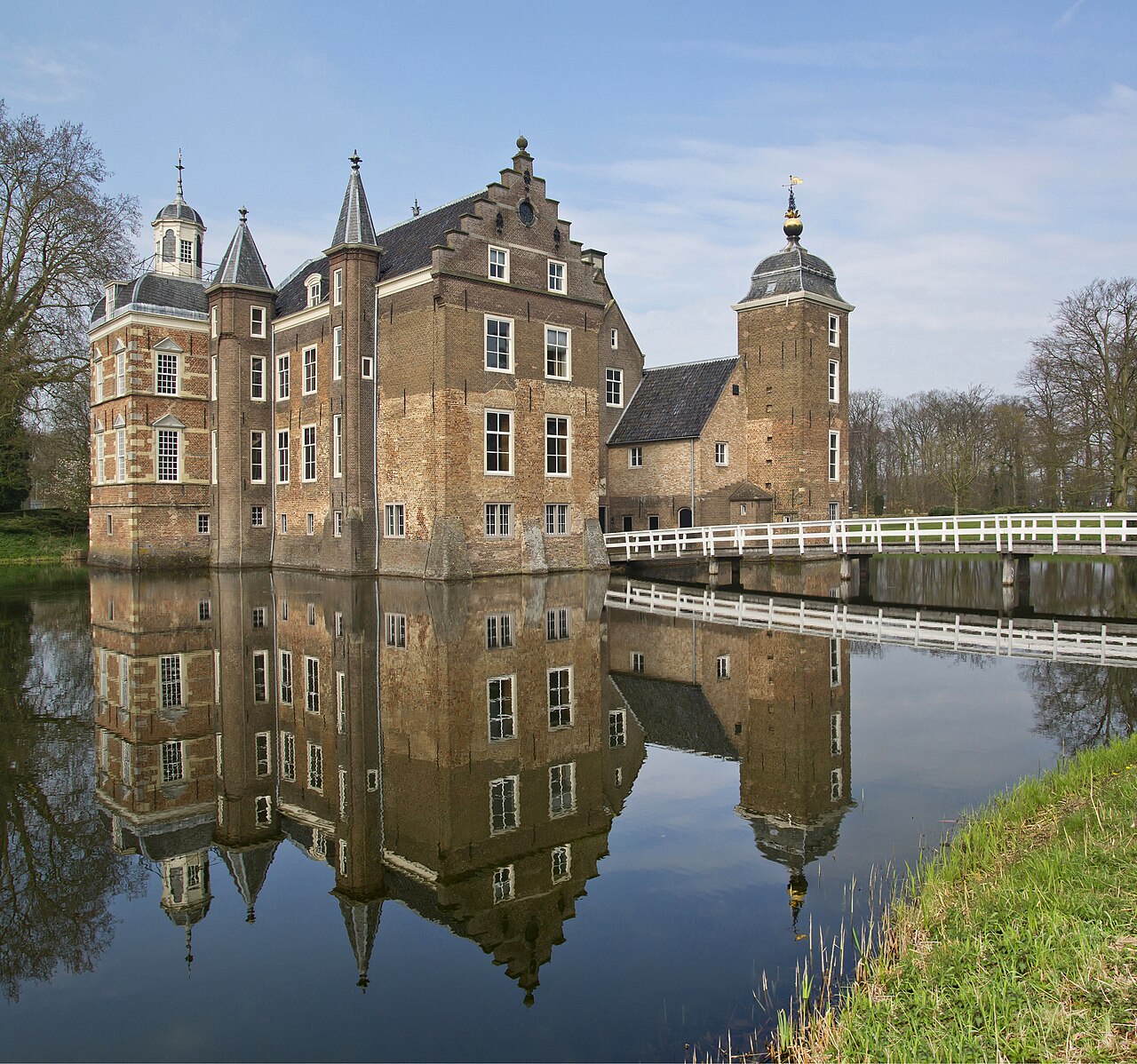
Vorden Castle

Vorden Castle in the Netherlands
Vorden, Gelderland, Netherlands
Late Medieval (14th–15th c.)
Restored

Vorden Castle, located in the town of Vorden in the Netherlands, is a notable example of a late-medieval castle with a history tracing back to the early 14th century. The castle was first mentioned in historical records in 1315, situating its origins firmly in the late medieval period. This period was marked by the construction of fortified residences that combined defensive features with the residential needs of nobility.

Historical significance and early history

The castle's earliest recorded mention in 1315 indicates its establishment as a significant local stronghold during a time when the region was characterized by feudal fragmentation and frequent conflicts. Over the centuries, Vorden Castle played a role in regional power dynamics and witnessed various ownership changes among noble families.

Impact of the Eighty Years' War

In 1580, during the turbulent Eighty Years' War (1568–1648), which was a protracted conflict between the Dutch provinces and the Spanish Empire, Vorden Castle suffered significant damage when it was looted. This event reflects the strategic importance of the castle and its vulnerability amid the widespread military campaigns of the era.

Architectural features and style

While specific architectural details of Vorden Castle are less documented, its classification as a late-medieval castle suggests typical features such as thick defensive walls, a moat, towers, and a gatehouse designed for protection and control of access. Castles from this period often included residential quarters arranged around a courtyard, with fortifications adapted to advances in siege technology.

Decline and restoration

Following the upheavals of the early modern period and changing military technologies, Vorden Castle gradually lost its defensive role. After the Second World War, the castle was left to decay, reflecting a common fate for many historic castles that were no longer maintained as residences or military sites. However, in 1976, a restoration initiative was undertaken to preserve the castle's structure and historical value. This restoration helped to stabilize the building and maintain its presence as a cultural heritage site.

Current condition and cultural importance

Today, Vorden Castle stands as a restored late-medieval castle that offers insight into the region's feudal past and architectural traditions. It is an important cultural landmark in the Gelderland province of the Netherlands, attracting visitors interested in medieval history and castle architecture.

Visiting Vorden Castle

Visitors to Vorden Castle can explore the exterior and surrounding grounds, appreciating the castle's historical context and architectural features. While interior access and specific visiting hours may vary, the castle contributes to the heritage tourism of the area and complements nearby historical sites.

Frequently asked questions (FAQ)

How do I get to Vorden Castle?
Vorden Castle is located in the charming village of Vorden, Netherlands. You can reach it by car, taking the A1 highway and following local signs. Public transport is also available, with nearby train and bus connections making it convenient to visit.
What is the historical significance of Vorden Castle?
Vorden Castle dates back to the 14th century and has a rich history tied to noble families of the region. It played a vital role in the feudal system and has been well-preserved, offering insights into medieval architecture and lifestyle. The castle is also a symbol of Vorden’s cultural heritage.
When was Vorden Castle built?
Vorden Castle was originally constructed in the early 14th century, with its first documented mention in 1326. Over the years, it has undergone several renovations and expansions, reflecting the architectural styles of different eras. Today, visitors can see elements from both its medieval origins and later modifications.
Can I take a guided tour of Vorden Castle?
Yes, guided tours of Vorden Castle are available, providing an in-depth look at its history and architecture. These tours are typically led by knowledgeable guides who share fascinating stories and insights. It’s advisable to check the castle’s official website for tour schedules and availability.
Why is Vorden Castle popular among visitors?
Vorden Castle is popular due to its stunning architecture, rich history, and picturesque surroundings. Visitors are drawn to its beautiful gardens and serene atmosphere, making it a perfect spot for photography and leisurely strolls. Additionally, the castle often hosts events and exhibitions, enhancing its appeal.
Is it possible to host events at Vorden Castle?
Yes, Vorden Castle offers facilities for hosting various events, including weddings, corporate gatherings, and private celebrations. The unique historical setting provides a memorable backdrop for any occasion. It's best to contact the castle's management for more information on booking and available services.
What are the opening hours for Vorden Castle?
Vorden Castle typically opens to visitors from Tuesday to Sunday, with specific hours varying by season. It is recommended to check the castle’s official website for the most current opening hours and any special holiday closures. Planning your visit around these times will ensure you have ample opportunity to explore.
What are the ticket prices for visiting Vorden Castle?
Ticket prices for Vorden Castle vary depending on age and type of visit, such as guided tours or special events. Generally, there are discounted rates for children, students, and seniors. It's best to review the castle's website for the latest pricing details and any available promotions.
What is the best time to visit Vorden Castle?
The best time to visit Vorden Castle is during the spring and summer months when the gardens are in full bloom and the weather is pleasant. However, autumn also offers a beautiful backdrop with colorful foliage. Checking the castle's event calendar can help you plan your visit around any special activities or exhibitions.
Are there nearby attractions to visit along with Vorden Castle?
Yes, Vorden is surrounded by several attractions, including stunning natural parks and other historical sites. Nearby, you can explore the picturesque village itself, or take a short trip to the beautiful Achterhoek region known for its scenic landscapes. This makes Vorden Castle an ideal starting point for a day of exploration.

Information

Hill Castle

Sources & official resources

Verify the information above using these authoritative references.

Loading map...

Visitor reviews

No reviews yet. Been here? Write the first review and help other travelers!

Write the first review

Visited this castle? Share your experience

Your review helps other travelers and adds first-hand knowledge to our encyclopedia.

Write a review

(5/5)

0/2000 characters

Your review will be visible after admin approval

Nearby castles

0.5 km

Castle Vorden

Vorden, Netherlands

Located in the eastern part of the Netherlands, near the historic Castle Vorden, the Lane of Knots (Dutch: Het Knopenlaantje) is a remarkable natural and cultural landmark. This unique pathway is distinguished by its rows of beeches whose branches have been deliberately twisted and intertwined into intricate knots over many years. The lane is a scenic and symbolic feature, blending horticultural artistry with local tradition. The natural and cultural significance of the lane of knots The Lane of Knots is not a castle in the traditional sense but a fascinating example of landscape architecture and living art closely associated with the nearby Castle Vorden. The lane runs through the Gelderland region, known for its rich history and natural beauty. The trees lining the lane are European beech trees (Fagus sylvatica), which have been carefully manipulated by local inhabitants for generations. Over time, the branches of these beeches have been twisted into knots and loops, some so tightly intertwined that the wood has grafted together, creating permanent shapes. This grafting is a natural process where the cambium layers of the branches fuse, making the knots a lasting feature of the trees' growth. This practice demonstrates a deep understanding of tree physiology and patience in horticultural craftsmanship. Symbolism and local traditions The knots along the lane are traditionally understood to symbolize love and commitment. Couples walking down the lane tie the branches together, creating a living metaphor for the strength and endurance of their relationship. The intertwined branches stand as a testament to the bond between partners, growing stronger over time just like the grafted knots of the trees. While the romantic interpretation is the most common, some locals humorously suggest the knots also represent the stiffness and challenges that can develop in long-term relationships. Regardless, the lane remains a cherished cultural landmark, attracting visitors who appreciate both its natural beauty and symbolic meaning. Relationship to castle vorden and regional context The Lane of Knots lies just south of Castle Vorden, a medieval castle with a history dating back to the 14th century. The castle itself is a well-preserved example of a lowland castle typical of the Gelderland region, featuring characteristic defensive walls and a moat. The proximity of the lane to this historic site adds cultural depth to the visitor experience, linking natural heritage with medieval architecture. Visitors to the area often combine a trip to Castle Vorden with a walk along the lane, enjoying the peaceful atmosphere and the unique arboreal sculptures. The lane contributes to the overall historical landscape, reflecting the region's blend of natural and human-made heritage. Botanical and environmental aspects The beeches of the lane are mature trees that thrive in the temperate climate of the Netherlands. Their ability to be shaped and grafted over decades showcases the adaptability of Fagus sylvatica to human intervention. The lane also serves as a habitat for various birds and insects, contributing to the local ecosystem. Maintaining the lane involves careful management to preserve the health of the trees while respecting the traditional knot-tying practice. This balance between conservation and cultural expression is key to the lane's ongoing significance. Visiting the lane of knots The Lane of Knots is accessible to the public year-round and is a popular destination for romantic walks, photography, and nature appreciation. Its location near Vorden makes it easy to reach by car or bicycle. There are no entrance fees, and visitors can enjoy the lane at their own pace. The best time to visit is during late spring and early summer when the beech trees are in full leaf, enhancing the visual impact of the knots. Autumn also offers a spectacular display of colors, adding to the lane's charm. While the lane itself does not have facilities, nearby Castle Vorden offers guided tours and historical exhibits that complement the natural experience of the lane.

Details
3.1 km

Hackfort Manor

Vorden, Netherlands

Hackfort Manor stands as a significant example of a Renaissance fortified stately home in the province of Gelderland, Netherlands. Originally constructed as a keep in the 13th century, it was expanded into a castle that played a notable role in the region's turbulent history. The castle was destroyed in 1586 during the conflicts involving Spanish troops but was rebuilt in 1600, preserving much of its fortified character despite later transformations. Historical background and significance The manor traces its origins back to the medieval period when it served as a defensive stronghold. Its most prominent historical figure, Berent van Hackfort (1475-1557), was a key nobleman who served the Duke of Guelders during a time of intense conflict with the Spanish Habsburgs. Berent held various high-ranking positions including commander and deputy to the duke, sheriff, and steward, reflecting the manor's importance as a seat of regional power. He was also a signatory of the 1543 treaty that ended the Duchy of Guelders' independence, marking a pivotal moment in the area's history. Destruction and rebuilding in the late 16th century During the late 16th century, the region became a battleground in the Eighty Years' War. In 1585, Spanish forces captured the nearby city of Zutphen, turning the surrounding area into a zone of conflict. Hackfort Manor was destroyed by Spanish troops in 1586 amidst these hostilities, particularly during a failed attempt by the Dutch States Army under Maurice of Nassau to retake Zutphen. The manor remained in ruins until its reconstruction in 1600, which restored its status as a fortified residence. Architectural evolution and 18th-century renovations In 1788, Hackfort Manor underwent significant renovations that altered its medieval fortress appearance. The old gatehouse and various outbuildings were demolished, and the defensive canals were filled in. These changes transformed the castle into an 18th-century manor house, reflecting contemporary tastes and the reduced military function of such estates. Today, only the two original towers remain as visible reminders of its fortified past. Architectural features and layout The manor's surviving towers are characteristic of Renaissance military architecture, featuring robust masonry and defensive elements typical of the period. The estate includes a coach house and a watermill, both restored and open to visitors. The manor's layout reflects its evolution from a medieval fortress to a stately home, with the surrounding estate once protected by moats and walls. Current status and public access Since 1981, Hackfort Manor has been owned and managed by the Netherlands Natural Heritage Society (Natuurmonumenten). The organization has restored the manor house, coach house, and watermill, making them accessible to the public. The estate's gardens and natural surroundings are also being carefully restored to their historical condition, offering visitors a glimpse into the manor's past landscape and environment. Visitor experience and cultural value Visitors to Hackfort Manor can explore the restored buildings and enjoy the extensive grounds, which include walking paths through the estate's natural heritage areas. The manor serves not only as a cultural monument but also as a center for nature conservation and historical education. Its well-preserved towers and the estate's serene setting provide a tangible connection to the region's Renaissance and early modern history.

Renaissance (15th–17th c.)
Details
8.7 km
Kasteel Huize Ruurlo — Netherlands castle

Kasteel Huize Ruurlo

Ruurlo, Netherlands

Kasteel Huize Ruurlo is a late medieval hill castle located in the town of Ruurlo, within the province of Gelderland, in the Netherlands. The castle's history dates back to at least 1326, when it was first mentioned in historical records. It has been a significant residence for centuries, notably remaining in the possession of the noble Van Heeckeren family since the 15th century. Historical background and ownership The castle is first documented in the early 14th century, establishing its origins firmly within the late medieval period. Over the centuries, Kasteel Huize Ruurlo has witnessed the shifts in power and architectural trends typical of Dutch noble estates. The Van Heeckeren family, an influential noble lineage in the region, acquired the castle in the 1400s and have maintained ownership ever since, marking it as a hereditary seat and symbol of their status. Architectural features and layout As a hill castle, Kasteel Huize Ruurlo is situated on elevated ground, a strategic choice common in medieval castle construction to provide natural defense advantages. The castle's structure has evolved over the centuries, with the core dating back to the 14th century. While detailed architectural plans are limited, the castle traditionally features fortified walls, towers, and a surrounding moat, elements typical of medieval Dutch castles designed for both defense and residence. Defensive elements The castle's elevated position on a hill allowed for enhanced visibility and defense against potential attackers. It likely included curtain walls and gatehouses to control access. Defensive features such as battlements and arrow slits would have been incorporated into the design to provide protection for the inhabitants during conflicts. Residential and interior aspects Inside, the castle would have contained living quarters, halls, and service rooms necessary for the noble family and their retainers. Over time, renovations and expansions may have introduced Renaissance or later stylistic elements, reflecting changing tastes and functional needs, although the primary style remains rooted in the medieval tradition. Cultural significance and preservation Kasteel Huize Ruurlo holds cultural and historical importance as a longstanding noble residence in the Gelderland region. Its continuous ownership by the Van Heeckeren family contributes to its heritage value, representing centuries of Dutch aristocratic life. The castle is part of the local identity and attracts interest for its historical associations and architectural character. The castle is currently well-preserved, maintaining much of its historical fabric. It serves as a private residence and is not generally open to the public, which has helped protect its condition. However, its exterior and surroundings can be appreciated by visitors to Ruurlo, offering a glimpse into the region's medieval past. Location and surroundings Located in Ruurlo, a town in the eastern part of the Netherlands, the castle is set within a landscape typical of Gelderland, featuring gentle hills and waterways. The setting enhances the castle's defensive advantages and provides a picturesque environment that complements its historical stature. Nearby attractions Visitors to the area can explore other historical sites in Gelderland, including various castles, estates, and natural reserves. The town of Ruurlo itself offers cultural experiences and local heritage museums that contextualize the castle within the broader history of the region.

Late Medieval (14th–15th c.)
Details