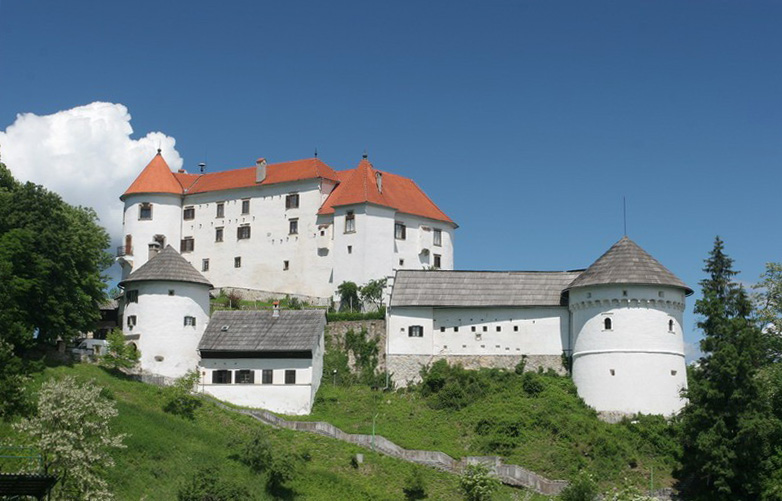
Vodriz Castle
Vodriž Castle is a notable example of a late medieval fortress constructed in the early 14th century, located on a scenic ridge near Slovenj Gradec, Slovenia. Its strategic position provided commanding views of the surrounding landscape, which was typical of hill castles built during this period to maximize defense and control over the region. Today, the castle stands as ruins, preserving key architectural elements that reveal insights into medieval castle design and feudal life.
Historical context and ownership
The castle's history is marked by its unusual shared ownership, a practice not uncommon in medieval Europe but well documented in the case of Vodriž. A surviving document from 1338 records that the castle was divided among the Hebenstreit brothers, indicating that the property was co-held by multiple heirs or knights. This arrangement influenced the castle's internal organization and possibly its expansions, as different owners required distinct living and administrative spaces within the complex.
Architectural layout and defensive features
Vodriž Castle was designed with several defensive and residential components typical of the era. The main entrance was accessed via a completely filled moat, a defensive feature that was well protected, likely by a gatehouse or drawbridge system. On the northern side of the castle stood a guardhouse, essential for monitoring and defending the entrance.
Adjacent to the guardhouse, on the left side, were buildings designated for servants, indicating a clear spatial division between the lordly and service quarters. Central to the castle was a large square inner tower enclosing a tight castle courtyard, which served as the heart of the castle's daily activity and defense.
To the left of the courtyard rose the two-story residential tower known as the Palas, the main living quarters of the castle's lord. This tower featured wooden ceilings and was designed to provide comfort and status. The ground floor functioned as a wine cellar, a common feature in medieval castles for storage of food and drink, while the upper floors contained the lord’s private chambers.
On the northern side, near the residential buildings, are the remains of the castle chapel, reflecting the importance of religious practice within the castle community.
Surrounding features and later history
Close to the castle was a cemetery, which was slightly lower along the path leading from the castle, illustrating the integration of burial sites within or near medieval fortifications. Additionally, a castle pond was situated nearby, historically significant as the site where the gallows stood, indicating the castle's role in local justice and administration.
The castle met a dramatic fate in 1766 when it was burnt down due to an accidental fire started by cooking fat igniting while cooks were baking donuts. This event led to the castle's decline and eventual ruin, halting its function as a noble residence and defensive stronghold.
Architectural significance and preservation
Despite its ruined state, Vodriž Castle remains an important example of a hill castle from the late medieval period in Slovenia. The preserved elements such as the moat, guardhouse, inner tower, Palas, and chapel remains offer valuable insight into the defensive strategies and residential arrangements of the time. The castle's shared ownership model also provides a rare glimpse into the social and legal aspects of medieval property division.
Visitors to the site can explore the ruins and imagine the castle's former stature and complexity. The surrounding landscape, including the cemetery and pond, enriches the historical narrative of the site, connecting the architectural remains with the broader medieval community life and governance.
Frequently asked questions (FAQ)
- How do I get to Vodriž Castle from Slovenj Gradec?
- Vodriž Castle is located near Slovenj Gradec and can be reached by local roads leading to the ridge where the castle ruins stand. Visitors should check local maps or tourist information centers for the best access routes and parking options.
- What remains can be seen at Vodriž Castle today?
- Today, visitors can explore the ruins of Vodriž Castle, including the moat, guardhouse foundations, the large square inner tower, the two-story Palas residential tower, and the remains of the castle chapel.
- When was Vodriž Castle built and what is its architectural style?
- Vodriž Castle was built in the early 14th century during the late medieval period. It exemplifies typical hill castle architecture of that era, focusing on defensive features such as moats, towers, and fortified courtyards.
- Is Vodriž Castle accessible to the public year-round?
- Access to Vodriž Castle ruins depends on local conditions and weather, as it is an outdoor historical site. Visitors are advised to check with local tourist offices for current accessibility and any guided tours available.
- Why was Vodriž Castle burnt down in 1766?
- The castle was accidentally burnt down in 1766 when cooking fat ignited while the cooks were baking donuts, leading to a fire that destroyed much of the structure.
Information
Loading map...
Visitor reviews
No reviews yet. Been here? Write the first review and help other travelers!
Write the first reviewVisited this castle? Share your experience
Your review helps other travelers and adds first-hand knowledge to our encyclopedia.