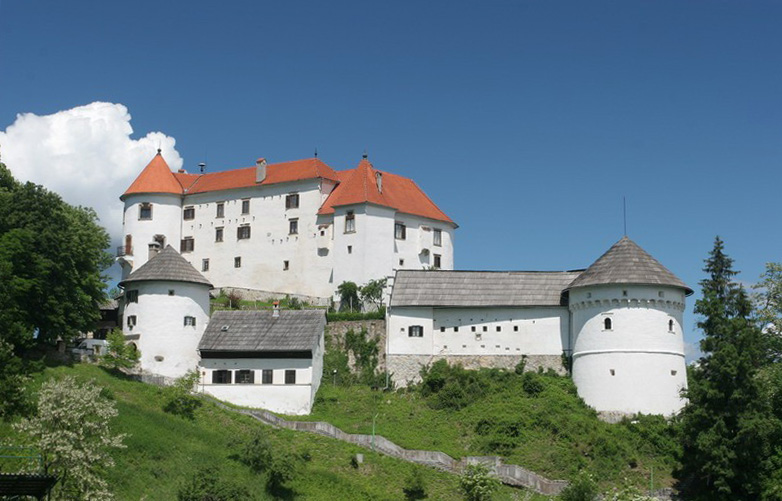
Vrbovec Castle

Vrbovec Castle in Nazarje: medieval fortress and forestry museum
Nazarje, Nazarje, Slovenia
High Medieval (11th–13th c.)
Restored

Vrbovec Castle is a significant medieval fortress located at the confluence of the Dreta and Savinja rivers in Nazarje, Slovenia. Known in German as Altenburg, its Slovenian name derives from "vrba," meaning willow, reflecting the willow trees that once lined the riverbanks around the site. The castle stands as the most important monument of secular medieval architecture in the Upper Savinja Valley.

Medieval origins and architectural evolution

The original castle was constructed in the 12th century on a rocky outcrop, which formed the core of the fortress complex. The initial structure was typical of high medieval fortifications, designed for defense and control of the surrounding valley. Around 1480, the castle underwent significant modifications that gave it much of its current appearance, reflecting late medieval architectural trends. However, the medieval core itself was removed in the 18th century, altering the castle's silhouette and internal layout.

Architectural features

Vrbovec Castle originally featured defensive elements common to hill castles of its time, including thick stone walls, battlements, and strategically placed towers to oversee the river confluence. The rocky outcrop provided natural fortification, complemented by man-made defenses. The castle complex included residential quarters, a chapel, and various outbuildings necessary for sustaining its occupants and garrison.

Historical ownership and significance

Throughout its history, Vrbovec Castle was owned by several prominent entities. Initially, it was under the control of the Aquileia patriarchate, a powerful ecclesiastical authority in the region. Later, it came into the possession of the Counts of Celje, one of the most influential noble families in medieval Slovenia and Central Europe. Following the extinction of the Celje line, ownership transferred to the Austrian authorities.

The castle's role evolved over time, serving as a noble residence, administrative center, and military stronghold. Its strategic location at the river junction made it valuable for controlling trade routes and regional power dynamics.

Later history and transformations

By the early 17th century, the castle changed hands frequently among various leigemen until 1615, when it was acquired by the Ljubljana bishopric for ecclesiastical purposes. In 1920, the Chapel of St. Joseph was constructed atop the original rocky outcrop, and the castle was renamed Marijingrad.

During World War II, the castle suffered significant damage. In 1941, German forces seized the castle, demolishing the chapel to install anti-aircraft guns. The castle was subsequently set on fire in 1944, leaving it partially destroyed. Post-war restoration efforts were limited initially.

Modern restoration and current use

In the late 20th century, the Nazarje Forest Corporation undertook a comprehensive restoration project between 1988 and 1992, rescuing Vrbovec Castle from decay. The restoration preserved its historical character while adapting the complex for modern use.

Today, Vrbovec Castle houses several forestry institutions, municipal administration offices, private companies, and a restaurant. It also hosts a museum of forestry and woodworking, highlighting the region's rich tradition in these industries. This adaptive reuse has ensured the castle remains a vibrant part of the local community while preserving its architectural heritage.

Cultural and heritage importance

Vrbovec Castle represents a vital link to Slovenia's medieval past and the evolution of secular architecture in the Upper Savinja Valley. Its layered history reflects broader regional shifts in power, culture, and economy from the Middle Ages through modern times.

Frequently asked questions (FAQ)

How do I get to Vrbovec Castle?
Vrbovec Castle is located in Nazarje, Slovenia, and can be reached by car or public transport. If traveling by car, follow the signs to Nazarje, and you will find ample parking near the castle. Local buses also service the area, making it accessible for visitors without a vehicle.
What is the historical significance of Vrbovec Castle?
Vrbovec Castle dates back to the 16th century and has played a crucial role in the region's history, serving as a noble residence and fortification. It reflects the architectural styles of the Renaissance period and offers insights into Slovenia's feudal past. The castle's well-preserved structure provides visitors with a glimpse into the historical lifestyle of the nobility.
When was Vrbovec Castle built?
Vrbovec Castle was constructed in the 16th century, with significant modifications made in subsequent centuries. The castle showcases elements of Renaissance architecture, and its historical importance has been recognized over the years. Restoration efforts have preserved its features, allowing visitors to appreciate its long-standing heritage.
Can I take guided tours of Vrbovec Castle?
Yes, guided tours are available at Vrbovec Castle, providing visitors with an in-depth understanding of its history and architecture. These tours are led by knowledgeable guides who share fascinating stories and facts about the castle. Tours typically run during the castle's open hours, so be sure to check the schedule in advance.
Why is Vrbovec Castle a popular attraction?
Vrbovec Castle is a popular attraction due to its stunning architecture and rich history, making it a must-visit for history enthusiasts and tourists alike. Its picturesque setting amidst beautiful landscapes adds to its charm, offering visitors a serene environment to explore. Additionally, the castle hosts various cultural events throughout the year, enhancing its appeal.
Is it possible to host events at Vrbovec Castle?
Yes, Vrbovec Castle is available for hosting various events, including weddings, corporate gatherings, and cultural activities. The castle's unique atmosphere and scenic surroundings make it an ideal venue for special occasions. Interested parties should contact the castle's management for more details on bookings and available services.
What are the opening hours for Vrbovec Castle?
Vrbovec Castle is typically open to visitors from April to October, with specific hours varying by season. During peak tourist months, the castle may extend its hours to accommodate more visitors. It is advisable to check the official website or contact the castle directly for the most current information on opening times.
Are there any nearby attractions to visit?
Yes, the area surrounding Vrbovec Castle is rich in attractions, including beautiful hiking trails and local cultural sites. Visitors can explore the charming town of Nazarje, which offers additional historical insights and picturesque views. Nearby natural parks and scenic landscapes also make for perfect day trips after visiting the castle.
What are the ticket prices for Vrbovec Castle?
Ticket prices for Vrbovec Castle are generally affordable, with discounts available for students and seniors. Admission fees contribute to the maintenance and preservation of the castle, ensuring that it remains a beautiful destination for future visitors. Check the official website for the latest pricing information and any special offers that may be available.

Information

Hill Castle

Loading map...

Visitor reviews

No reviews yet. Been here? Write the first review and help other travelers!

Write the first review

Visited this castle? Share your experience

Your review helps other travelers and adds first-hand knowledge to our encyclopedia.
Write a review

(5/5)

0/2000 characters

Your review will be visible after admin approval

Nearby castles

6.4 km
Zovnek Castle — Slovenia castle

Zovnek Castle

Braslovče, Slovenia

Žovnek Castle stands as a significant medieval fortress located northeast of Braslovče in Slovenia, perched above the serene Lake Žovnek. Its origins trace back to the 12th century, marking it as a prominent structure from the high medieval period. The castle is historically notable as the ancestral seat of the Lords of Žovnek, who later rose to prominence as the Counts of Celje, one of the most influential noble families in Slovenian history. Historical significance and lineage The castle was first documented in 1278 under the name Castrum Sevnekke, later known by its German name Sanneck. The Lords of Žovnek established their residence here at the end of the 12th century, consolidating their power in the region. In 1333, their descendants relocated to Celje (Cilli), where they expanded their estates and acquired the prestigious title of Counts of Celje, becoming a dominant force in the political and social landscape of the area. Architectural features and layout Although today Žovnek Castle exists primarily as ruins, it originally featured typical high medieval defensive architecture. The castle was strategically positioned on elevated terrain overlooking Lake Žovnek, providing natural defense and commanding views of the surrounding landscape. The remains suggest a complex with fortified walls, towers, and residential quarters designed to serve both military and noble residential functions. The castle's layout would have included a keep or donjon, defensive curtain walls, and possibly a gatehouse controlling access. The elevated site also allowed for panoramic surveillance over the Posavje hills, the Dobrovelj plateau, and the town of Celje, emphasizing its strategic importance. Restoration and current condition Since 1995, significant efforts have been made to restore and preserve Žovnek Castle. A dedicated group of volunteers, working within the framework of the Cultural and Historical Society and in cooperation with the Municipality of Braslovče, have undertaken restoration projects. These efforts have stabilized many parts of the ruins, with some covered rooms restored to allow visitors to experience the castle's historical atmosphere. Despite its ruinous state, the site remains accessible via a footpath, offering visitors a pleasant hike and rewarding views. The castle's elevated position provides sweeping vistas of Lake Žovnek, the northern peaks of the Posavje hills, the wooded slopes of the Dobrovelj plateau, and the distant town of Celje. Visiting Žovnek Castle Visitors to Žovnek Castle can explore the ruins and enjoy the natural beauty of the surrounding landscape. The site is particularly appreciated for its combination of historical interest and scenic views. The footpath leading to the castle is suitable for most hikers, making it a popular destination for those interested in medieval history and outdoor activities in Slovenia. Interpretive signage and local guides often provide additional context about the castle's history, the Counts of Celje, and the architectural features that once defined this medieval stronghold.

High Medieval (11th–13th c.)
Details
10.4 km

Komenda Castle

Polzela, Slovenia

Komenda Castle in Polzela, Slovenia, is a significant medieval fortress first mentioned in historical records in 1149. The castle's origins trace back to the 12th century, situating it firmly in the high medieval period. Its long history connects closely with the Sovereign Order of Malta, which owned and maintained the castle from 1323 to 1780. This association has left a lasting mark on the castle’s architecture and cultural heritage. Historical significance and ownership The castle's earliest documentation in 1149 indicates its importance as a defensive and administrative center during the high medieval era. The transfer of ownership to the Sovereign Order of Malta in the early 14th century reflects the strategic and religious significance of the site. The Order, known for its role in the Crusades and as a military and hospitaller organization, used Komenda Castle as a regional stronghold and base of operations for several centuries. Architectural features and construction Komenda Castle exhibits typical high medieval construction features characteristic of fortifications built during the 12th century. The structure includes robust defensive walls, a fortified entrance gate, and a prominent staircase leading to the main courtyard. The castle's layout and stonework reveal the functional priorities of medieval military architecture, emphasizing defense and control of the surrounding territory. The antique lion sculpture One of the castle’s most distinctive relics is an antique lion sculpture carved from Pohorje marble. This lion stands guard on the staircase railing near the entrance gate, symbolizing strength and protection. The use of Pohorje marble, a local material, highlights the regional craftsmanship and the integration of artistic elements into the castle’s defensive design. Commemorative elements Above the staircase, visitors can find a bronze plaque embedded in the wall featuring the portrait of France Prešeren, Slovenia’s greatest poet. This addition connects the castle not only to military and feudal history but also to the cultural and literary heritage of Slovenia, enriching the site’s significance beyond its medieval origins. Preservation and cultural importance Today, Komenda Castle stands as an important cultural and historic monument in Slovenia. While the castle retains many of its original medieval features, it has undergone various preservation efforts to maintain its structural integrity and historical character. The castle’s condition reflects a balance between well-preserved elements and areas that show the passage of time, offering visitors insight into medieval architecture and the legacy of the Sovereign Order of Malta in the region. Visiting Komenda Castle Komenda Castle is accessible to visitors interested in exploring Slovenia’s medieval heritage. The site provides a tangible connection to the high medieval period and the military-religious history of the Order of Malta. Visitors can appreciate the castle’s architectural details, the unique marble lion, and the commemorative plaque honoring France Prešeren, making it a multifaceted destination for history enthusiasts and cultural tourists alike.

High Medieval (11th–13th c.)
Details
12.9 km
Velenje Castle — Slovenia castle

Velenje Castle

Velenje, Slovenia

Velenje Castle (Slovene: Velenjski grad) stands as a prominent example of a high medieval hill castle in the town of Velenje, Slovenia. Constructed in the 13th century, it has undergone various phases of ownership and architectural changes while maintaining its essential medieval character. The castle is strategically perched on a hill overlooking the town, a typical defensive position for castles of its era, designed to control the surrounding territory and provide protection against invasions. Historical background and ownership The castle was originally owned by the Kunšperk family, an influential noble lineage in the region during the Middle Ages. Subsequently, ownership passed to their relatives from Ptuj and later to the Lichtenberg family. Throughout its history, the castle played a significant role in local governance and defense. Its noble owners contributed to the development of the surrounding area and used the castle as a seat of power. Architectural features and construction Velenje Castle exemplifies the architectural characteristics of high medieval hill castles. The castle complex includes a fortified keep, defensive walls, and a gatehouse designed to withstand sieges. The stone construction and strategic positioning on elevated terrain enhanced its defensive capabilities. Over the centuries, the castle saw modifications and expansions, adapting to changing military technologies and residential needs. Defensive structures The castle's curtain walls encircle the main courtyard, providing a formidable barrier against attackers. The gatehouse features a portcullis and arrow slits, allowing defenders to repel assaults effectively. The keep served as the last refuge during attacks and housed the lord's living quarters. Residential and functional spaces Inside the castle, various chambers and halls were used for administration, living, and storage. The design reflects the dual purpose of the castle as both a fortress and a noble residence. The interior spaces include a great hall for gatherings and feasts, private chambers, and service rooms. Cultural significance and museum Today, Velenje Castle functions as a museum dedicated to art and culture, preserving the heritage of the region. The museum exhibits collections that highlight the castle's history, local traditions, and artistic achievements. Visitors can explore the castle's rooms and learn about the noble families who once lived there. Museum collections The museum's exhibits include historical artifacts, artworks, and cultural objects that illustrate the lifestyle and history of the area. These collections provide insight into the medieval period and the castle's role within it. Preservation and visitor experience Velenje Castle is well preserved, allowing visitors to experience an authentic medieval atmosphere. The castle's location on a hill offers panoramic views of the town and surrounding landscape. It is accessible to the public and hosts various cultural events throughout the year, enhancing its role as a center for heritage and education.

High Medieval (11th–13th c.)
Details