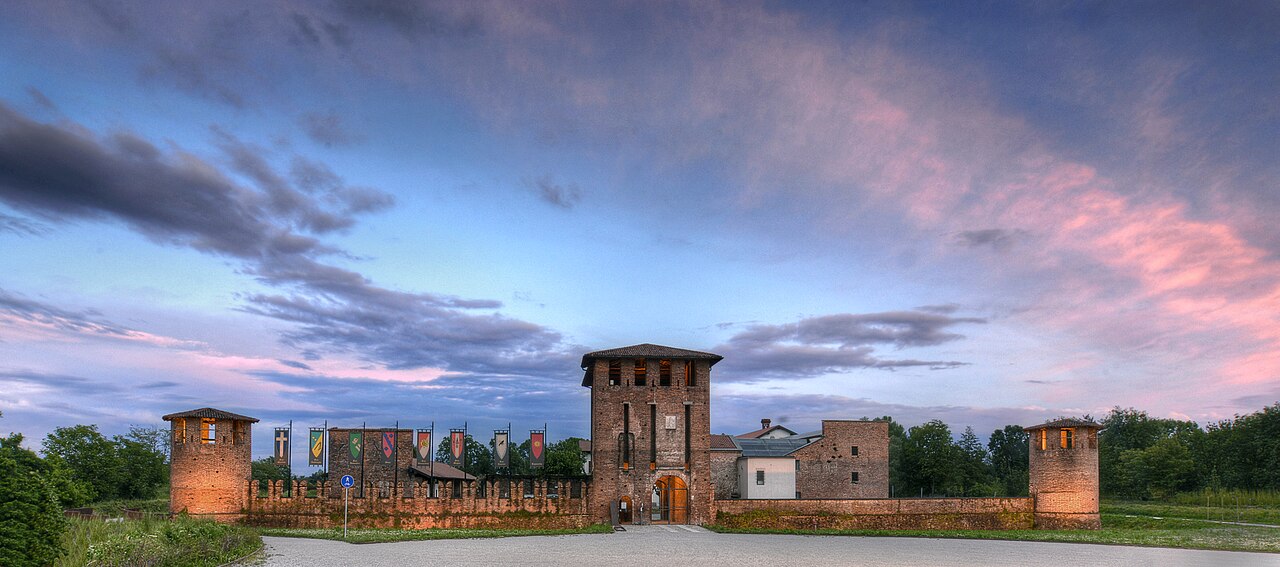
Visconti Castelbarco Castle
Visconti Castelbarco Castle, also known locally as Castello Visconti Castelbarco, is situated in the heart of Cislago, a town in the Varese province within the Lombardy region of Italy. This castle stands as a remarkable example of a medieval fortification that evolved through centuries into a stately residence, reflecting the layered history and architectural transformations typical of northern Italian noble estates.
Early origins and medieval history
The site of Visconti Castelbarco Castle has been fortified since at least the 10th century, marking it as an early medieval stronghold. The original fortification served as a defensive structure during a period characterized by frequent local conflicts and the fragmentation of power across small lordships in Lombardy. By the late 13th century, the castle came under the control of the Visconti family, one of the most powerful dynasties in Milanese and northern Italian history.
The acquisition of the castle by Uberto Visconti, brother of Matteo Visconti, Lord of Milan, established the Visconti di Cislago branch. This lineage played a significant role in regional politics and maintained the castle as their seat of power. The castle's strategic location and formidable medieval defenses underscored its importance as a noble residence and military fortification.
Destruction and 17th-century reconstruction
In 1510, the castle experienced near-total destruction during the invasion of Swiss troops allied with the Cardinal of Sion. This military action left only the north tower standing, signaling a dramatic interruption in the castle's medieval continuity. The devastation reflected the turbulent political and military struggles in Lombardy during the Renaissance, as regional powers vied for dominance.
After a period of ruin, the castle was comprehensively rebuilt in 1620 by Cesare II Visconti, Marquis of Cislago. This reconstruction transformed the castle from a purely defensive fortress into a luxurious country residence, embodying the Baroque architectural style that was prevalent in Italy at the time. The renovation included the addition of crenellations on the roofline, a stylistic choice intended to evoke the castle's medieval origins while serving no practical defensive purpose.
The rebuilt castle was designed on the original U-shaped plan, retaining two prominent towers at the corners of the main facade. These towers, along with the crenellated roof, contribute to the castle's distinctive silhouette and its romanticized appearance as a noble residence rather than a military fortress.
Ownership and legacy
The castle remained in the hands of the Visconti di Cislago family until the 18th century. Through marriage, the estate passed to the Castelbarco family, whose descendants adopted the combined surname Castelbarco-Visconti. This continuity of ownership by noble families has preserved the castle's heritage and ensured its maintenance as a private residence.
Today, Visconti Castelbarco Castle remains a private home and is not open to the public. Its preservation offers a window into the architectural and social history of Lombardy's aristocracy, showcasing the transition from medieval fortress to elegant Baroque villa with neo-medieval stylistic elements.
Architectural features and stylistic elements
The castle's architecture reflects its complex history. The original medieval fortifications are largely lost, but the north tower is a surviving element from the earlier structure. The 17th-century reconstruction introduced Baroque villa characteristics including symmetry, refined facade treatments, and spacious interiors designed for comfort and display rather than defense.
The addition of crenellations during the 1620 rebuild is a notable example of the neo-medieval revival aesthetic, blending historical references with contemporary tastes. This feature lends the castle a picturesque quality, aligning it with other Lombardy noble residences that sought to evoke chivalric heritage.
The castle's U-shaped layout creates an inner courtyard, a common feature in Italian villas, facilitating social functions and providing a private outdoor space. The two corner towers enhance the facade's vertical emphasis and serve as architectural focal points.
Historical and cultural significance
Visconti Castelbarco Castle is an important cultural landmark within Lombardy, illustrating the region's feudal past and the evolution of aristocratic residences from fortified castles to elegant country estates. The castle's association with the Visconti family links it to the broader history of Milanese power and influence during the Middle Ages and Renaissance.
Its survival through periods of conflict and transformation highlights the adaptability of noble estates in northern Italy. The castle's continued private ownership by descendants of the original noble families underscores the enduring legacy of aristocratic lineage in the region.
Visiting information
As a private residence, Visconti Castelbarco Castle is not accessible to the public. Visitors to Cislago can view the castle's exterior and appreciate its architectural features from the surrounding streets, particularly Vicolo Cavour. The castle's setting within the town center makes it a visible reminder of Cislago's medieval origins and noble heritage.
Frequently asked questions (FAQ)
- How do I get to Visconti Castelbarco Castle?
- Visconti Castelbarco Castle is located in Vicolo Cavour, Italy, and is easily accessible by public transportation. You can take a bus or train to the nearest station and then enjoy a short walk to the castle. Additionally, local taxi services are available for a more direct route.
- What is the historical significance of Visconti Castelbarco Castle?
- Visconti Castelbarco Castle dates back to the medieval period and is a remarkable example of the architectural style of its time. It served as a stronghold for the Visconti family and played a crucial role in the region's history. The castle's rich past is reflected in its well-preserved structure and historical artifacts.
- When was Visconti Castelbarco Castle built?
- The construction of Visconti Castelbarco Castle began in the 14th century, during a time of significant political and social change in Italy. Over the centuries, it has undergone various renovations that have preserved its historical integrity. Today, it stands as a testament to the architectural prowess of the era.
- Can I visit Visconti Castelbarco Castle year-round?
- Yes, Visconti Castelbarco Castle is open to visitors throughout the year, although specific hours may vary by season. It's advisable to check the official website for any seasonal events or maintenance closures that might affect your visit. Guided tours are available to enhance your experience.
- Why is the architecture of Visconti Castelbarco Castle noteworthy?
- The architecture of Visconti Castelbarco Castle reflects the typical features of medieval fortifications, including imposing walls and strategic towers. Its design showcases both defensive capabilities and residential comfort, making it a fascinating study for architecture enthusiasts. This blend of functionality and aesthetics is a hallmark of the castle's enduring appeal.
- Is it possible to take guided tours of the castle?
- Yes, guided tours of Visconti Castelbarco Castle are available and are highly recommended for a deeper understanding of its history and architecture. Knowledgeable guides provide insights into the castle's past and the significance of its various architectural elements. Tour schedules vary, so it's best to check in advance.
- What are the ticket prices for visiting the castle?
- Ticket prices for Visconti Castelbarco Castle are typically affordable, with discounts available for students and seniors. Children under a certain age may be granted free entry. It's advisable to purchase tickets in advance during peak tourist seasons to ensure availability.
- What are the opening hours for Visconti Castelbarco Castle?
- The opening hours for Visconti Castelbarco Castle vary by season, but it generally opens in the morning and closes in the late afternoon. During peak tourist seasons, extended hours may be available to accommodate more visitors. Always check the official website for the most current information.
- What nearby attractions should I visit while in Vicolo Cavour?
- While visiting Visconti Castelbarco Castle, consider exploring other nearby attractions such as the charming local markets and historic churches. The picturesque landscape surrounding the castle also offers various hiking trails for nature enthusiasts. Additionally, local eateries provide a taste of authentic Italian cuisine to complete your visit.
Loading map...
Visitor reviews
No reviews yet. Been here? Write the first review and help other travelers!
Write the first reviewVisited this castle? Share your experience
Your review helps other travelers and adds first-hand knowledge to our encyclopedia.