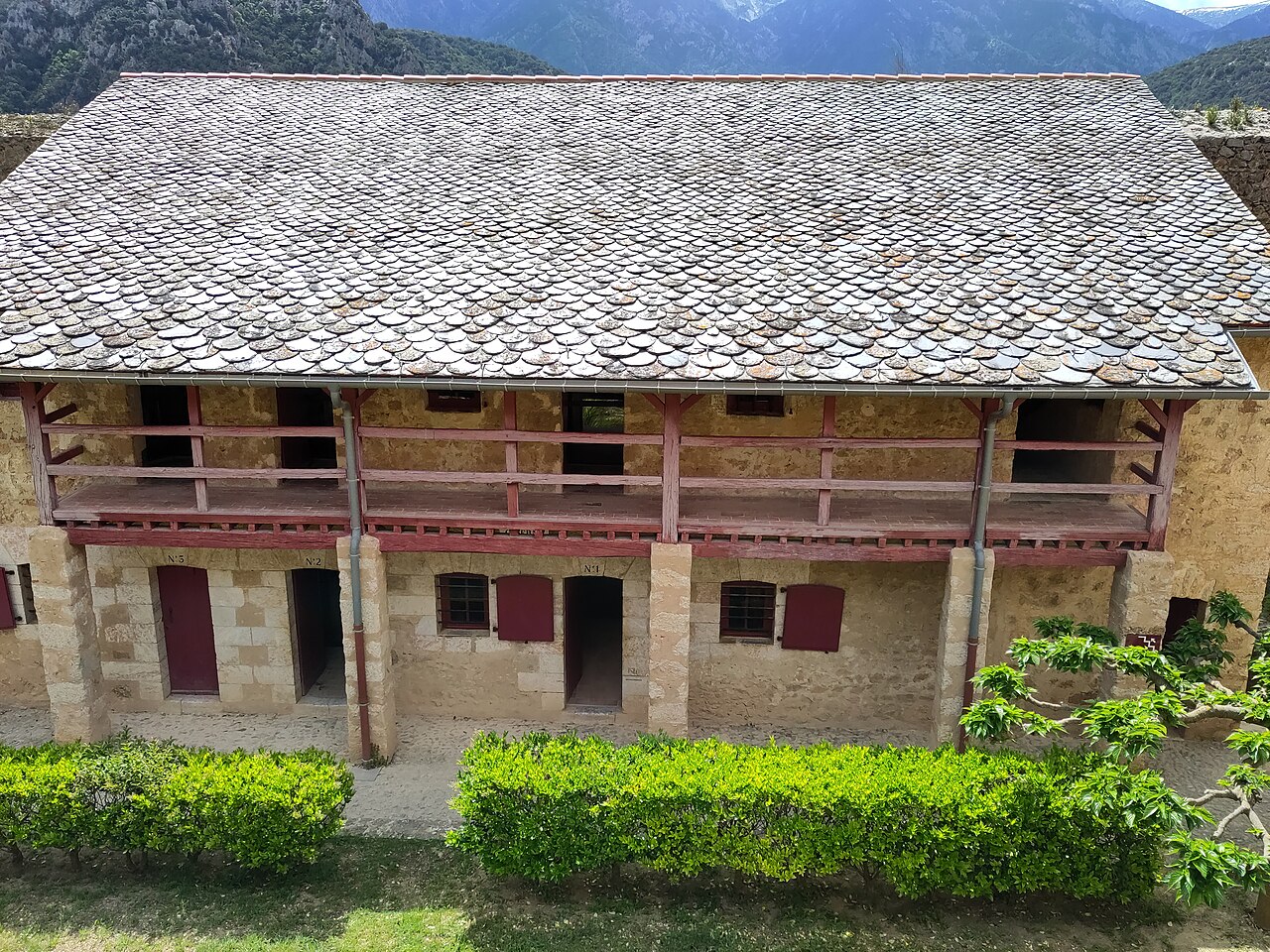
Villefranche-de-Conflent Fortress
Villefranche-de-Conflent fortress stands as a remarkable example of Renaissance military architecture in southern France. Constructed in 1681 under the direction of the renowned military engineer Sébastien Le Prestre de Vauban, the fortress was designed to strengthen France's defenses along its border with Spain. This imposing structure overlooks the medieval town of Villefranche-de-Conflent, dominating the landscape with its extensive ramparts, bastions, and counterscarp galleries.
The fortress was later enhanced during the reign of Napoleon III, who added further fortifications to adapt to evolving military technologies and threats. Its strategic location and robust design made it a key defensive site in the region, controlling access through the narrow mountain passes of the Pyrenees.
Architectural features and fortifications
The fortress is characterized by its massive ramparts constructed with thick stone walls designed to withstand artillery bombardment. Vauban's signature style is evident in the angular bastions that project outward, allowing defenders to cover the entire perimeter with overlapping fields of fire. These bastions are connected by curved curtain walls and protected by deep ditches.
One of the fortress's most remarkable features is the counterscarp galleries, which are tunnels built into the outer walls that allowed defenders to fire upon attackers attempting to cross the moat or ditches. These galleries are a testament to Vauban's innovative approach to fortification design, combining defense in depth with effective use of terrain.
The underground staircase
A unique and striking element of the fortress is its 734-step underground staircase, carved into the rock beneath the fortress. This staircase provided a secure and concealed route for troops and supplies between the fortress and the town below. It also served as an escape route during sieges, demonstrating the fortress's comprehensive defensive planning.
Historical significance and military role
Villefranche-de-Conflent fortress played a crucial role in the military history of the region, particularly during the turbulent periods of the late 17th and 19th centuries. Its construction followed the Treaty of the Pyrenees in 1659, which established the border between France and Spain, necessitating strong fortifications to defend this frontier.
Throughout its history, the fortress was never taken by force, a testament to its formidable design and strategic location. The enhancements by Napoleon III reflected the continued military importance of the site well into the 19th century, adapting to changes in artillery and warfare tactics.
Cultural heritage and modern-day status
Today, the Villefranche-de-Conflent fortress is recognized as a significant cultural and historical monument. Its ramparts and fortifications are part of the UNESCO World Heritage list under the designation "Fortifications of Vauban," acknowledging their outstanding universal value as masterpieces of military engineering.
The fortress houses a chapel and an archaeology and caving museum, which offer visitors insights into the region's history, geology, and the fortress's role in military strategy. The site is open to the public, allowing exploration of its extensive walls, bastions, and the impressive underground staircase.
Visitors can appreciate the fortress's commanding views over the surrounding landscape and the medieval town below, gaining a comprehensive understanding of its architectural ingenuity and historical importance.
Frequently asked questions (FAQ)
- What is the historical significance of the Villefranche-de-Conflent Fortress?
- The Villefranche-de-Conflent Fortress, built in the 17th century, was designed by the renowned military engineer Vauban. It played a crucial role in defending the region against invasions and is a UNESCO World Heritage site, reflecting the ingenuity of military architecture of its time.
- When was the Villefranche-de-Conflent Fortress constructed?
- Construction of the fortress began in 1669 and was completed in 1681. It was part of a series of fortifications built under Louis XIV to protect the French border from Spanish incursions.
- What are the opening hours for visiting the fortress?
- The Villefranche-de-Conflent Fortress is open to visitors from 9 AM to 7 PM during the summer months and from 10 AM to 5 PM in the winter. It is advisable to check the official website for any seasonal changes or special events that may affect visiting hours.
- Can I access the fortress with limited mobility?
- While the fortress offers breathtaking views and historical insights, some areas may be challenging for visitors with limited mobility due to steep paths and uneven terrain. It is recommended to contact the site in advance to inquire about accessibility options and available assistance.
- What is the best time to visit the Villefranche-de-Conflent Fortress?
- The best time to visit the fortress is during the spring and early autumn when the weather is mild and the crowds are smaller. Visiting during these seasons allows for a more enjoyable experience while exploring the fortress and its surroundings.
- Are there nearby attractions to explore after visiting the fortress?
- Yes, after visiting the fortress, you can explore the charming village of Villefranche-de-Conflent, known for its picturesque streets and local shops. Additionally, the nearby Cova de l'Infern cave and the scenic train ride through the Pyrenees are popular attractions that enhance your visit.
- What are the ticket prices for entering the fortress?
- Tickets for the Villefranche-de-Conflent Fortress are priced at approximately €8 for adults, with discounts available for students and children. Family passes and group rates may also be offered, so it's a good idea to check the official website for the latest pricing information.
Information
Loading map...
Visitor reviews
No reviews yet. Been here? Write the first review and help other travelers!
Write the first reviewVisited this castle? Share your experience
Your review helps other travelers and adds first-hand knowledge to our encyclopedia.