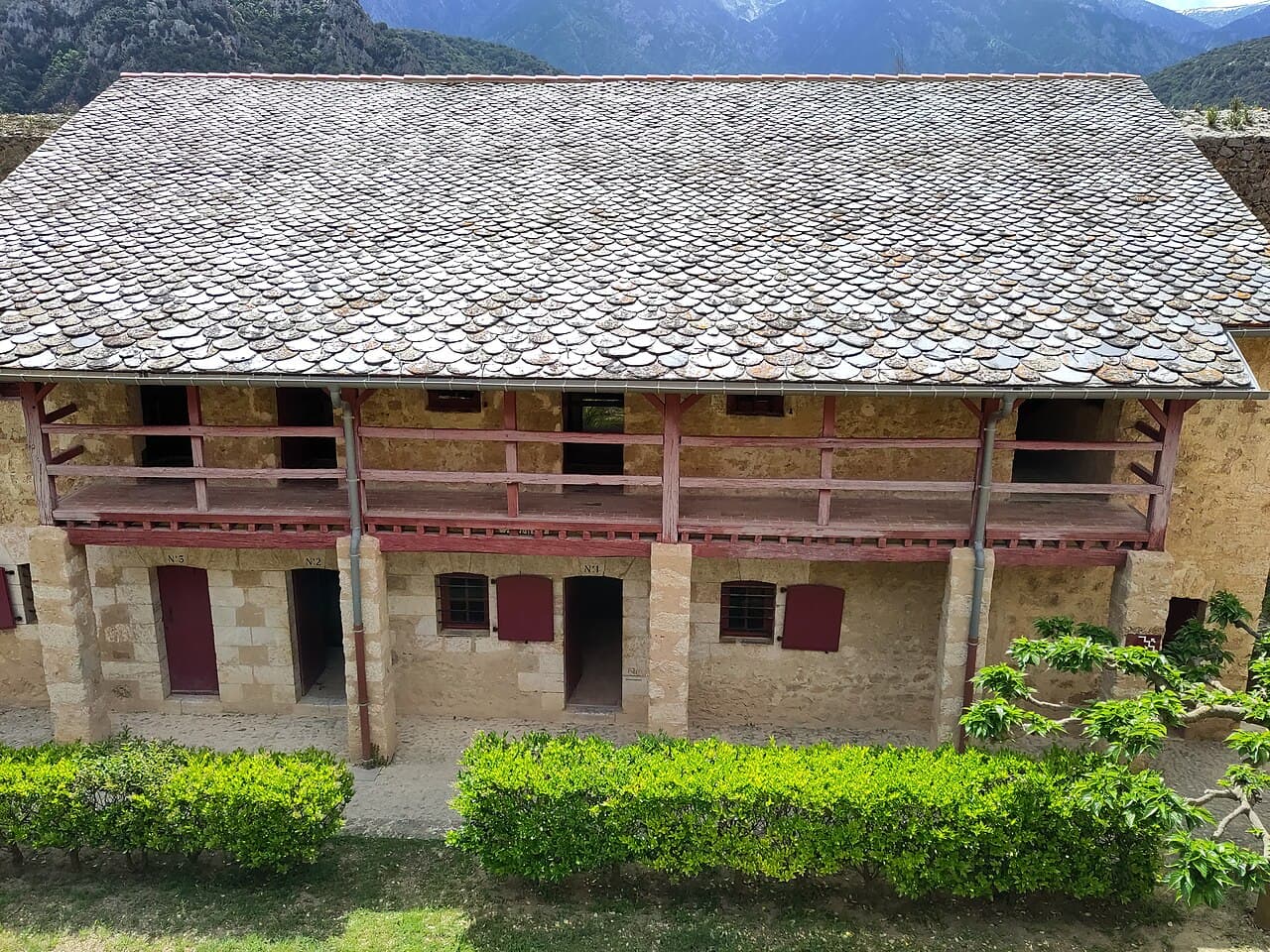
Fort Libéria
Fort Libéria is a prominent bastioned fortress located in the historic town of Villefranche de Conflent in the Pyrénées-Orientales department of southern France. Constructed in 1681 under the direction of the renowned military engineer Sébastien Le Prestre de Vauban, the fortress was designed to secure the strategically vital region of Roussillon following the Treaty of the Pyrenees in 1659, which transferred the territory from Spain to France.
Strategic location and historical context
Perched atop a rocky hill overlooking the confluence of the Têt, Rotjà, and Cady rivers, Fort Libéria commands a commanding view of the surrounding landscape and the fortified town below. Its location was carefully chosen to control access routes and protect the newly acquired border region. The fortress was part of a broader network of fortifications along the Franco-Spanish frontier, reflecting the military innovations of the Renaissance period.
Architectural design and fortifications
Vauban's bastioned fortress principles
The design of Fort Libéria exemplifies the principles of Vauban's bastioned fortifications, which emphasized angular bastions projecting from curtain walls to eliminate blind spots and provide overlapping fields of fire. The fortress features robust ramparts, bastions, and counterscarp galleries that enhance its defensive capabilities. The walls are constructed of local stone, thick and angled to withstand artillery bombardment.
Unique structural features
One of the most remarkable features of Fort Libéria is its extensive underground staircase consisting of 734 steps. This staircase connects the fortress with the town below, allowing for secure movement of troops and supplies even under siege conditions. Additionally, the fortress houses a chapel and an archaeology and caving museum, which offer insights into the region's cultural and military history.
Military use and historical significance
Fort Libéria was garrisoned by approximately 100 soldiers and equipped with ten cannons, serving as a vital military installation to defend the French border. The fortress saw minimal combat, being attacked only once during its active military period. It played a role in regional defense through the 17th and 18th centuries and was later fortified further by Napoleon III in the 19th century to adapt to evolving military technologies.
Use as a prison
Beyond its military function, the fortress also served as a prison. Notably, in 1682, two women implicated in the infamous Affair of the Poisons were imprisoned within Fort Libéria by order of Louis XIV. They remained incarcerated for decades until their deaths, highlighting the fortress's role in the judicial and penal systems of the time.
Later history and preservation
By the late 19th century, Fort Libéria lost its military importance and was sold in 1927. It briefly served as a retirement home for sailors before being acquired by local businessmen in 1984. Since 1987, it has been open to the public as a historic site.
The fortress, along with its extensive underground staircase, is protected as a monument historique by the French government and is recognized as part of a UNESCO World Heritage Site for its exemplary military architecture and historical significance.
Visiting Fort Libéria today
Visitors to Fort Libéria can explore its well-preserved ramparts, bastions, and counterscarp galleries, as well as the chapel and museum housed within the fortress. The 734-step underground staircase offers a unique experience of the fortress's defensive ingenuity. The site provides panoramic views of Villefranche de Conflent and the surrounding Pyrenean landscape, making it a significant cultural and historical attraction in the region.
Frequently asked questions (FAQ)
- How do I get to Fort Libéria in Villefranche de Conflent?
- Fort Libéria is located on a hill above Villefranche de Conflent, accessible by foot via the town's streets and marked paths. The fortress is well signposted and within walking distance from the town center.
- What are the opening hours for visiting Fort Libéria?
- The fortress is typically open to visitors daily during the warmer months, often from 10:00 to 18:00. It is advisable to check local tourism websites for seasonal variations and special closures.
- Is there an entrance fee to visit Fort Libéria?
- Yes, there is an entrance fee to access Fort Libéria. Ticket prices vary but generally include options for adults, children, and groups. Discounts may be available for seniors and students.
- What architectural features make Fort Libéria unique?
- Fort Libéria is notable for its <strong>bastioned fortifications</strong> designed by Vauban, including angled bastions and counterscarp galleries. Its extensive 734-step underground staircase connecting the fortress to the town is a rare and impressive feature.
- Can I visit the underground staircase at Fort Libéria?
- Yes, visitors can descend the 734-step underground staircase, which provides a glimpse into the fortress's defensive design and offers a unique experience of its military architecture.
- What is the historical significance of Fort Libéria?
- Built after the Treaty of the Pyrenees, Fort Libéria secured France's new border and served as a military stronghold for centuries. It also functioned as a prison during the reign of Louis XIV and was later fortified by Napoleon III.
Photo gallery

Information
Current owner
Private owner
Loading map...
Visitor reviews
No reviews yet. Been here? Write the first review and help other travelers!
Write the first reviewVisited this castle? Share your experience
Your review helps other travelers and adds first-hand knowledge to our encyclopedia.



