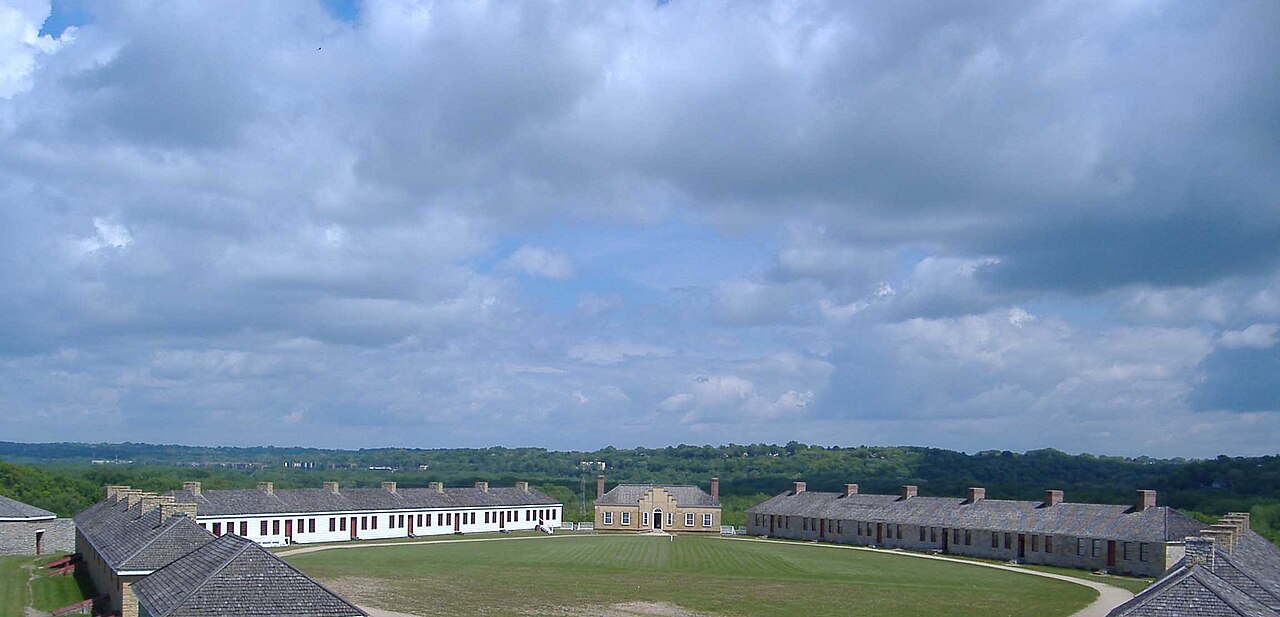
Villa Maria

Villa maria: historic chateau-style event venue in frontenac, minnesota
Post-Renaissance (17th–18th c.)
Well Preserved

Villa Maria in Frontenac, Minnesota, is a historic estate known for its distinctive chateau-esque architectural style. Nestled on a sprawling 3,000-acre property overlooking Lake Pepin, this estate has evolved from its origins as a Catholic school into a premier event venue cherished for its romantic ambiance and scenic surroundings.

Historic origins and architectural significance

Originally established in the 1890s by the Ursuline Sisters of the Central Province, a Catholic religious order based in St. Louis, Villa Maria Academy served as an educational institution for young women. The main building, known as Marian Hall, was constructed in the 1940s and exemplifies the estate's chateau-inspired design with elegant rooflines, intricate masonry, and expansive windows that capture the natural beauty of the surrounding landscape.

The architectural style reflects a romanticized interpretation of French chateaux, characterized by steeply pitched roofs, dormer windows, and ornamental details that convey a sense of grandeur and historic charm. This style was popular in the United States in the late 19th and early 20th centuries, especially for estates and institutional buildings seeking to evoke European elegance.

Transition to retreat and event venue

After decades of serving as a school, the property underwent a significant transformation in 1969 when several of its buildings were converted into a retreat and conference center. This adaptive reuse preserved the estate's historic fabric while opening it up for broader community use and spiritual gatherings.

In 2019, Villa Maria reopened with a renewed focus as a wedding and special events venue. Managed by the University Club of Saint Paul, which has extensive experience hosting events, the estate offers a variety of indoor and outdoor spaces designed to accommodate ceremonies, receptions, and corporate functions.

Facilities and visitor experience

The estate includes multiple event areas, both within the elegant interiors of Marian Hall and across the estate's picturesque grounds. Guests can enjoy beautifully landscaped gardens, scenic views of Lake Pepin, and charming architectural features such as stone terraces and courtyards that enhance the romantic atmosphere.

Catering services are provided on-site, ensuring a seamless experience for events. The venue's management by the University Club of Saint Paul brings a high standard of hospitality and professionalism, drawing on over 30 years of expertise in hosting weddings and special occasions.

Looking ahead, Villa Maria plans to expand its offerings by introducing lodging accommodations, anticipated in 2021, which will allow guests to stay overnight and fully immerse themselves in the estate's tranquil and historic setting.

Location and accessibility

Located at 29847 County 2 Boulevard, Frontenac, MN 55026, Villa Maria enjoys a picturesque setting in the historic town of Frontenac, along the shores of Lake Pepin. This location provides easy access for visitors from the Twin Cities and surrounding regions, making it a sought-after destination for weddings, retreats, and cultural events.

Cultural and heritage importance

While Villa Maria is not a traditional medieval castle, its chateau-inspired architecture and rich history as a Catholic educational institution contribute to its cultural significance. The estate embodies the architectural trends and social history of the late 19th and early 20th centuries in Minnesota, reflecting the influence of European styles adapted for American contexts.

Its preservation and adaptive reuse demonstrate a commitment to maintaining historic landmarks while providing contemporary community value, making Villa Maria a unique blend of heritage and modern hospitality.

Frequently asked questions

  • What is the history of Villa Maria? Villa Maria was founded in the 1890s by the Ursuline Sisters as a Catholic school and later transformed into a retreat center and event venue.
  • Can I host a wedding at Villa Maria? Yes, Villa Maria is a popular wedding venue offering both indoor and outdoor event spaces with catering services provided on-site.
  • Where is Villa Maria located? It is located at 29847 County 2 Boulevard in Frontenac, Minnesota, overlooking Lake Pepin.
  • Are there lodging options available? Lodging accommodations were planned to open in 2021, enhancing the venue's offerings for overnight stays.
  • Who manages Villa Maria? The University Club of Saint Paul manages the venue, bringing decades of event hosting experience.
  • What architectural style is Villa Maria? It features a chateau-esque style inspired by French Renaissance architecture, popular in late 19th-century America.
  • Is Villa Maria open for public visits? The estate is open for private events, weddings, and retreats by reservation.

Frequently asked questions (FAQ)

What is the history of Villa Maria?
Villa Maria was founded in the 1890s by the Ursuline Sisters as a Catholic school and later transformed into a retreat center and event venue.
Can I host a wedding at Villa Maria?
Yes, Villa Maria is a popular wedding venue offering both indoor and outdoor event spaces with catering services provided on-site.
Where is Villa Maria located?
It is located at 29847 County 2 Boulevard in Frontenac, Minnesota, overlooking Lake Pepin.
Are there lodging options available?
Lodging accommodations were planned to open in 2021, enhancing the venue's offerings for overnight stays.
Who manages Villa Maria?
The University Club of Saint Paul manages the venue, bringing decades of event hosting experience.
What architectural style is Villa Maria?
It features a chateau-esque style inspired by French Renaissance architecture, popular in late 19th-century America.
Is Villa Maria open for public visits?
The estate is open for private events, weddings, and retreats by reservation.

Information

Palace Castle

Opening hours

By reservation only

Ticket prices

Varies by event

Current owner

University Club of Saint Paul

Address

29847 County 2 Boulevard, Frontenac, MN 55026

Loading map...

Visitor reviews

No reviews yet. Been here? Write the first review and help other travelers!

Write the first review

Visited this castle? Share your experience

Your review helps other travelers and adds first-hand knowledge to our encyclopedia.

Write a review

(5/5)

0/2000 characters

Your review will be visible after admin approval

Nearby castles

62.3 km

The Hollywood Castle

The Hollywood Castle, United States of America

The Hollywood Castle stands as a striking example of castle-style architecture adapted for modern luxury living in the heart of the Hollywood Hills. This grand mansion is designed to emulate the appearance of a traditional British castle, featuring imposing facades and lush gardens that create a secluded, palatial atmosphere. While it evokes the charm and grandeur of medieval fortresses, the castle is a contemporary residence equipped with state-of-the-art amenities, blending historic architectural inspiration with modern comfort. Perched high atop the hills, the Hollywood Castle offers breathtaking panoramic views of the surrounding landscape and the cityscape below. Its location ensures complete solitude, making it an ideal retreat from the bustling life of Hollywood while remaining just minutes from its vibrant core. The estate's design emphasizes privacy and exclusivity, characteristics that have made it a sought-after venue for a variety of creative productions and private events. Architectural style and features The castle's design is inspired by British castle architecture, with features such as turrets, battlements, and stone-like exterior finishes that evoke the medieval aesthetic. However, unlike authentic historic castles built for defense, this mansion prioritizes luxury and entertainment. The grounds are surrounded by luscious gardens that enhance the estate's grandeur and provide a serene environment. Inside, the castle boasts modern luxuries seamlessly integrated into its historic facade. The heated pool and Jacuzzi stand out as key amenities, offering relaxation and leisure in a setting that visually transports visitors to a different era. The interior spaces are designed to accommodate large groups, making the property versatile for events ranging from music video shoots to reality TV productions and private gatherings. Historical and cultural significance Though not a historic fortress, the Hollywood Castle holds cultural significance as a unique architectural landmark within the Hollywood Hills. It represents a fusion of historic style with contemporary lifestyles, reflecting a trend in luxury real estate to evoke grandeur and romanticism through castle-inspired design. The castle's use as a filming location further cements its role in the entertainment industry, contributing to Hollywood's visual and cultural landscape. Location and accessibility Situated in the Hollywood Hills, the castle enjoys both exclusivity and accessibility. Its hidden location ensures privacy, yet it remains conveniently close to Hollywood's main attractions and business centers. This balance makes it an attractive option for those seeking a secluded environment without sacrificing proximity to urban amenities. Current use and availability Today, the Hollywood Castle is available for rental, catering to a diverse clientele including filmmakers, photographers, and event planners. Its unique combination of historic charm and modern functionality makes it a memorable venue for music videos, television shoots, photography sessions, and large group events. The estate's solitary setting and extensive facilities provide an ideal backdrop for creative projects requiring both privacy and grandeur. Contact information for bookings and inquiries is available through the castle's official channels, ensuring professional management and tailored services for clients.

Details
77.7 km
Fort Snelling — United States of America castle

Fort Snelling

, United States of America

Fort Snelling is a significant 19th-century bastioned fortress located in the U.S. state of Minnesota, strategically positioned on the bluffs overlooking the confluence of the Minnesota and Mississippi Rivers. Originally named Fort Saint Anthony, the fort was renamed Fort Snelling upon its completion in 1825. It served as a crucial military installation for the United States Army through much of the 19th and early 20th centuries. Early construction and military significance The fort was constructed as a bastioned fortress, a style characterized by angular bastions projecting from the curtain walls to provide defensive fire in multiple directions. This design was typical of military architecture in the early 19th century, reflecting advances in artillery and fortification techniques. Fort Snelling's location was chosen for its commanding views and control over river traffic, making it a vital strategic point for the U.S. military in the upper Midwest. Architectural features The original fort complex included a lower post situated on the river bluffs and an upper post on higher ground. The lower post featured prominent round and hexagonal towers, which served as key defensive structures. The fort's walls were constructed from locally quarried limestone, providing robust protection against attacks. The upper post contained essential military buildings such as barracks, officers' quarters, a hospital, and supply depots. Over time, many of these structures have been preserved or restored, although some remain in disrepair. Historical context and notable events Fort Snelling played a pivotal role in several historical events. Before the American Civil War, the fort was a site where the U.S. Army permitted soldiers and fur traders to bring enslaved African Americans, including Dred Scott and Harriet Robinson Scott. The Scotts lived at the fort in the 1830s and later sued for their freedom in the landmark Dred Scott v. Sandford Supreme Court case, which had profound implications for slavery and civil rights in the United States. Slavery at the fort ended shortly before Minnesota's statehood in 1858. During the Dakota War of 1862, Fort Snelling served as the primary center for U.S. government forces. It was also the site of a concentration camp where eastern Dakota and Ho-Chunk non-combatants were held before forced removal from Minnesota. This somber chapter highlights the fort's complex role in Native American history and U.S. military operations. Military use through the 20th century Following the Civil War, Fort Snelling continued to serve as a recruiting and training station during the Spanish–American War and both World Wars. The fort was decommissioned in 1946 after World War II, leading to a period of neglect and disrepair. Restoration efforts began in 1965, focusing on the lower post to return it to its original appearance. Despite these efforts, some buildings on the upper post remain unrestored. Current status and preservation Today, Fort Snelling is recognized as a National Historic Landmark and is administered by the Minnesota Historical Society. The fort is part of the Mississippi National River and Recreation Area, a unit of the National Park Service. The surrounding land includes Fort Snelling State Park, managed by the Minnesota Department of Natural Resources, which was once part of the fort's original territory. As of early 2026, some federal buildings within the fort are utilized by United States Customs and Border Protection and Immigration and Customs Enforcement for housing federal agents and detaining individuals involved in immigration enforcement operations. Multiple government agencies own different portions of the fort, reflecting its continued strategic and administrative importance. Cultural and heritage significance Fort Snelling is cited as a "National Treasure" by the National Trust for Historic Preservation due to its rich history and well-preserved military architecture. The fort's layered history encompasses early American frontier defense, the complex legacies of slavery and Native American displacement, and its role in multiple American wars. Its preservation allows visitors to explore these themes through its surviving structures, exhibits, and educational programs. Visitors to Fort Snelling can explore the restored bastioned fortress, including the defensive towers, barracks, and historic grounds. The site offers a tangible connection to key moments in U.S. history and military architecture, making it an important destination for historians, architects, and the general public interested in America's past.

Modern (19th–20th c.)
Details
87.1 km

Turnblad Castle

Minneapolis, United States of America

Turnblad Castle, located in Minneapolis, Minnesota, is a remarkable example of early 20th-century residential architecture inspired by European styles and Swedish heritage. This grand mansion serves as the centerpiece of the American Swedish Institute (ASI), a cultural institution dedicated to preserving and sharing the history and contributions of Swedish immigrants in the United States. The mansion was commissioned by Swan J. Turnblad and his wife Christina Turnblad, Swedish immigrants who settled in Minnesota in the late 1800s. Swan Turnblad rose from modest beginnings as a farmer's son and printer to become the owner and publisher of the Svenska Amerikanska Posten, the largest Swedish-language newspaper in the United States. The couple's success and worldly experiences are reflected in the mansion's design and decoration. Architectural design and construction The Turnblads engaged architects Christopher Boehme and Victor Cordella to design their residence, which was constructed over a five-year period from 1904 to 1908. The mansion features a distinctive French Chateauesque architectural style, characterized by steeply pitched roofs, ornate gables, and elaborate stonework that evoke the grandeur of French Renaissance châteaux. The 33-room mansion is notable for its intricate craftsmanship and attention to detail. Among its most striking interior features are 11 decorative tile stoves imported from Sweden, which not only serve as heating elements but also as exquisite examples of Swedish ceramic artistry. The interiors blend European elegance with Scandinavian influences, creating a unique cultural fusion. Historical significance and cultural legacy Although the Turnblad family resided in the mansion for only about two decades, until 1929, their legacy endures through their generous donation of the property to the American Institute for Swedish Art, Literature and Science, now known as the American Swedish Institute. This act transformed the private residence into a public cultural landmark. Today, Turnblad Castle functions as a museum and cultural center that offers visitors insight into Swedish-American history, art, and traditions. The ASI hosts exhibitions, educational programs, and community events that celebrate the heritage of Swedish immigrants and their impact on American society. Notable features and visitor experience Visitors to Turnblad Castle can explore the mansion's richly decorated rooms, which include formal dining areas, parlors, and bedrooms furnished to reflect the early 20th-century lifestyle of affluent Swedish-Americans. The castle's ornate exterior and beautifully landscaped grounds provide a picturesque setting in the heart of Minneapolis. The mansion's design reflects the Turnblads' extensive travels and appreciation for European art and architecture, making it a unique architectural gem in the region. The American Swedish Institute also offers guided tours, workshops, and cultural events that deepen the understanding of Swedish-American heritage. Location and practical information Turnblad Castle is located at 2600 Park Avenue South, Minneapolis, MN 55407. The institute can be contacted via phone at 612-871-4907 or email at [email protected]. Visitors are encouraged to check the ASI website for current opening hours, ticket prices, and special events. Turnblad Castle stands as a testament to the rich cultural tapestry woven by Swedish immigrants in America and remains a cherished landmark that continues to educate and inspire.

Post-Renaissance (17th–18th c.)
Details