Van Fortress
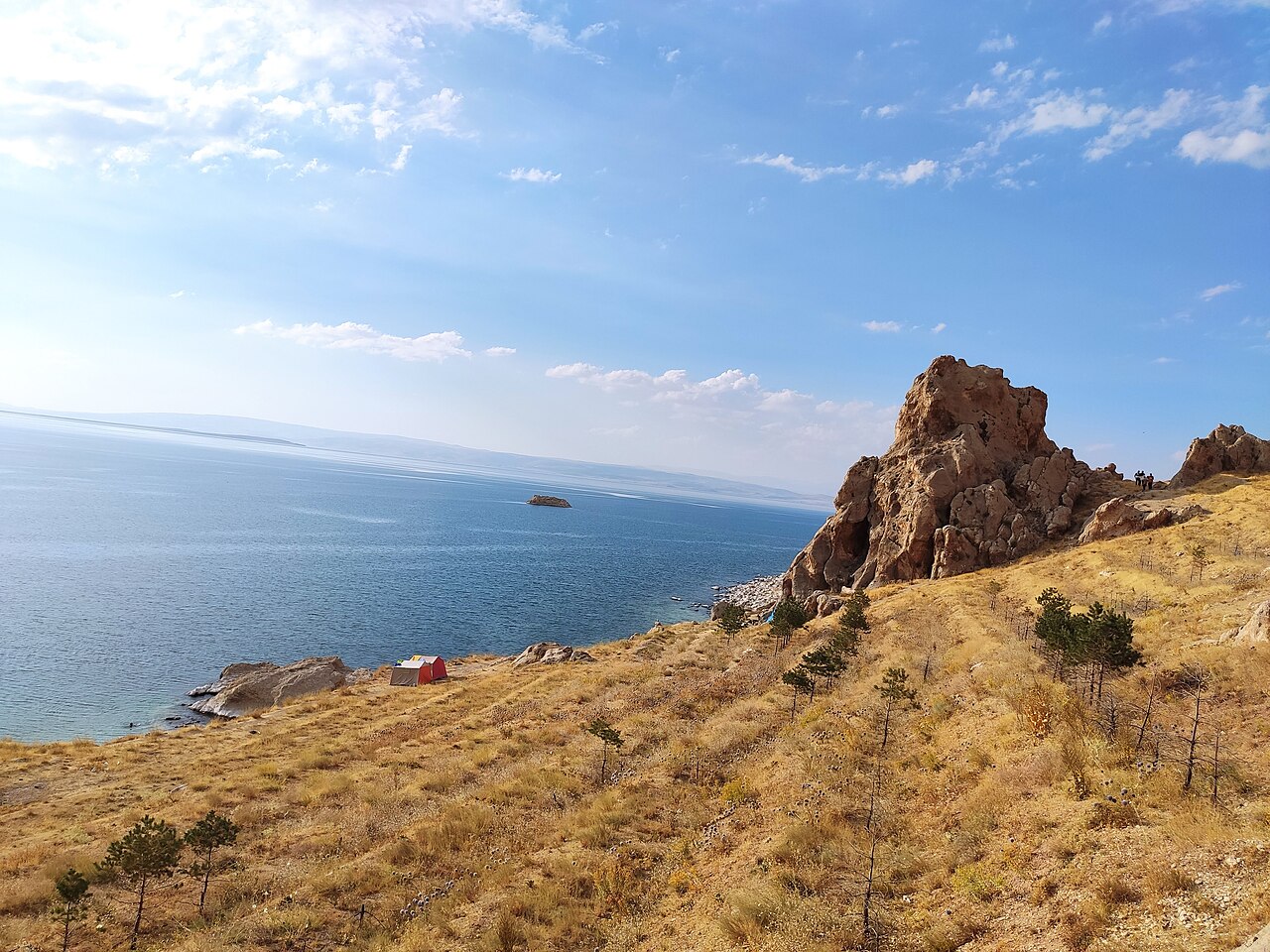
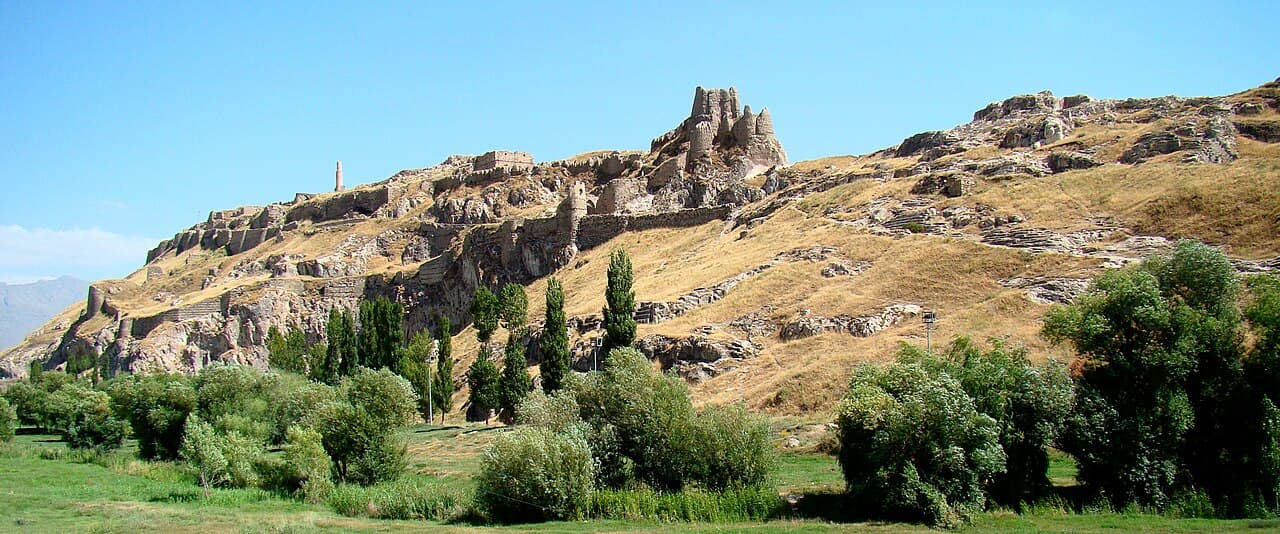
Van Fortress stands as a monumental testament to the ancient kingdom of Urartu and the rich historical tapestry of eastern Turkey. Located in the municipality of İpekyolu, the fortress was originally constructed between the 9th and 7th centuries BCE and served as the capital fortress for the city of Tushpa, the ancient Urartian capital. Its commanding position on a steep cliff overlooking the ruins of Tushpa and the expansive Lake Van to the west underscores its strategic and symbolic importance in the region.
The fortress's history spans millennia, reflecting the succession of empires and cultures that controlled this crossroads of civilizations. After the Urartian period, the fortress came under the influence of the Medes and later the Achaemenid Persian Empire. A remarkable feature near the fortress is the Achaemenid royal inscription carved on a smooth rock face about 20 meters above the ground. This inscription, dating to the 5th century BCE, is unique as the only known royal Achaemenid text found outside modern Iran. It is trilingual—written in Old Persian, Elamite, and Babylonian—and mentions kings Darius I and Xerxes I, linking the fortress directly to the Persian imperial narrative.
Architectural features and construction
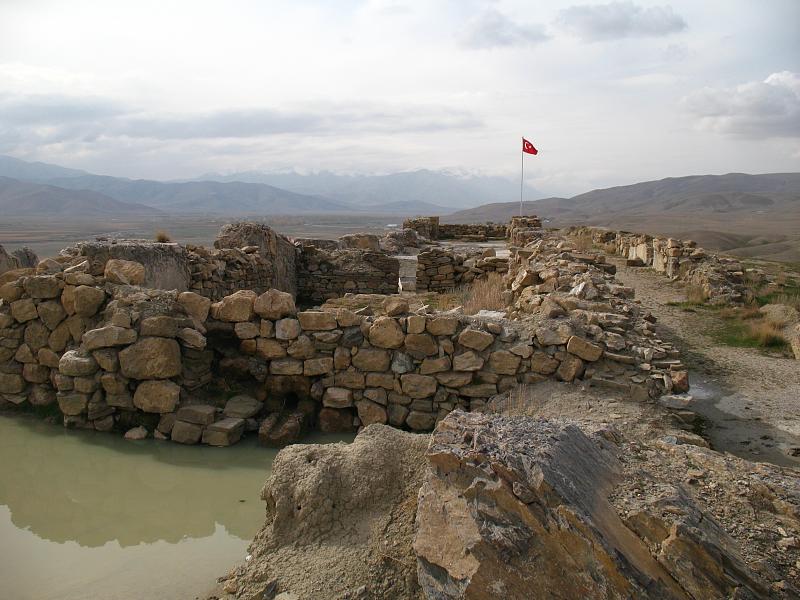
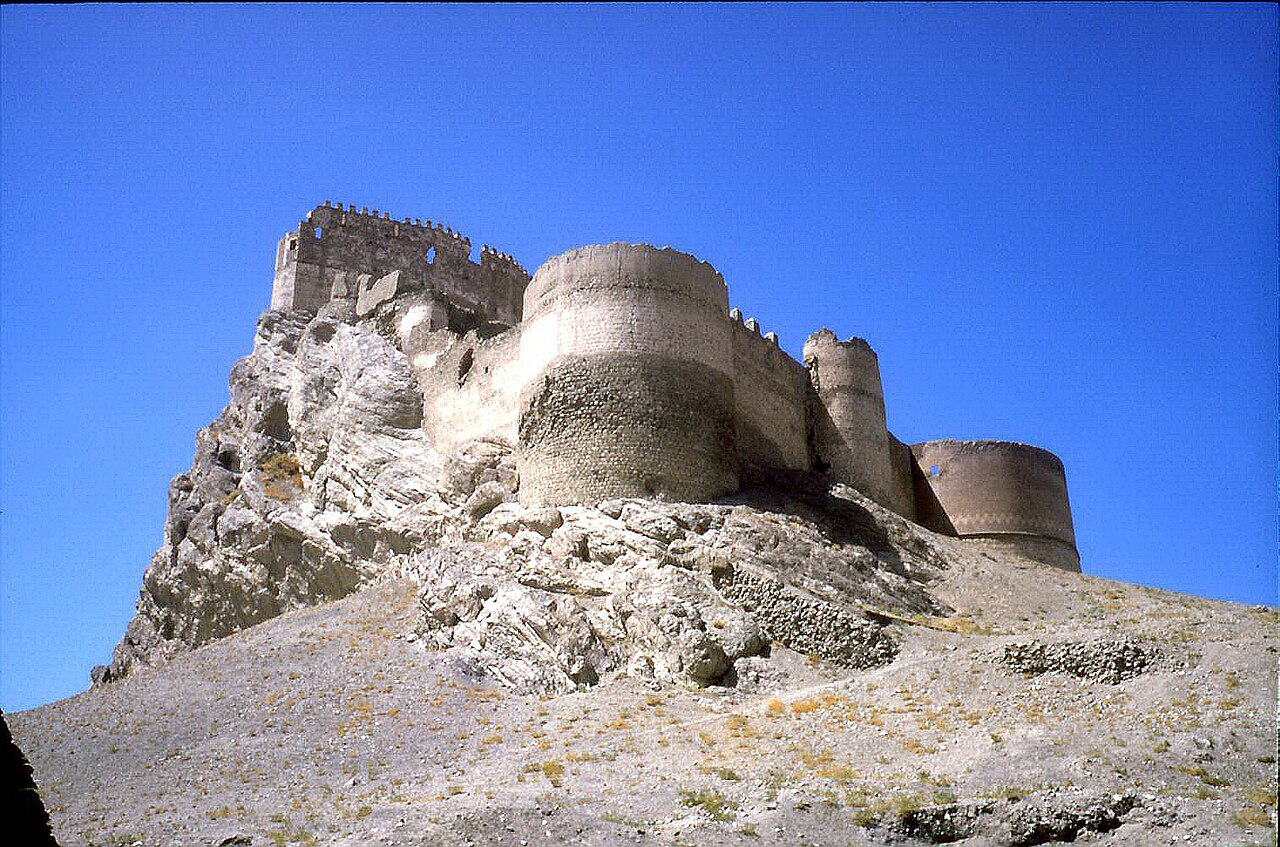
Van Fortress stretches approximately 1800 meters in length, rises to about 120 meters in height, and spans roughly 80 meters in width. Its construction showcases a blend of ancient and medieval techniques, reflecting its long history of use and adaptation. The lower fortress walls are composed of massive, unworked basalt stones arranged without mortar, a hallmark of Urartian construction methods designed to withstand the rugged terrain. In contrast, the upper sections of the walls incorporate brick and wooden beams, materials introduced in later periods to reinforce and rebuild the structure.
The fortress's layout takes full advantage of the natural topography, perched atop a high cliff that provides commanding views over the ruins of Tushpa below and the vast expanse of Lake Van. This elevated position was crucial for defense, surveillance, and asserting regional control. The extensive fortifications include multiple defensive walls, gates, and towers added during the medieval period, which overlay the original Urartian foundations.
Royal enclosure and religious significance
Within the fortress lies a distinctive rock-cut enclosure known as the "Royal Enclosure" or "Royal Table". This carved space measures approximately 20 meters long, 9 meters wide, and 2.5 meters high. Archaeological evidence and inscriptions indicate that this enclosure was used for holding bulls and sheep intended for sacrifice to the Urartian gods. This feature highlights the fortress's dual role as both a military stronghold and a center of religious activity during the Urartian kingdom's zenith.
Historical context and successive occupations
Following the decline of Urartu, Van Fortress experienced a complex history of occupation by a succession of empires and peoples. The Medes initially took control, followed by the expansive Achaemenid Persian Empire, which integrated the fortress into its imperial structure. The presence of the royal inscription from Darius I and Xerxes I attests to the fortress's importance during this era.
Later, the fortress was held by a diverse array of powers including the Armenians, Parthians, Romans, Sassanian Persians, Byzantines, Arabs, Seljuks, Safavids, Afsharids, Ottomans, and Russians. Each successive occupant left its mark through repairs, modifications, and additions to the fortress's defenses and infrastructure. Despite these changes, the fortress primarily functioned as a regional administrative and military center rather than a site for large-scale defensive warfare.
Medieval fortifications and adaptations
The defensive walls visible today mostly date from the medieval period, constructed atop or alongside the ancient Urartian foundations. These walls feature typical medieval military architecture elements such as battlements, towers, and reinforced gates. The fortress's long-term reuse and adaptation by various rulers demonstrate its enduring strategic value and the evolving nature of military architecture in the region.
Archaeological investigations and preservation
An important archaeological excavation was conducted by American archaeologist Silva Tipple New Lake between 1938 and 1940. This mission sought to uncover the layers of history embedded within the fortress's walls and to document its architectural and cultural significance. Unfortunately, many artifacts and records from this expedition were lost when the ship transporting them sank in 1940, limiting the available archaeological data.
Today, Van Fortress remains a prominent historical and cultural landmark. Its vast scale, complex construction, and rich historical associations make it a key site for understanding the ancient Near East and the successive empires that shaped this region. The fortress's location outside the modern city of Van allows visitors to appreciate its imposing presence and panoramic views, connecting the past with the present landscape.
Significance of the Achaemenid inscription
The Achaemenid royal inscription near the fortress is of exceptional historical importance. Carved into a smooth rock face within a niche, it contains 27 lines in three columns written in Old Persian, Elamite, and Babylonian. This trilingual text is a rare example of Achaemenid royal propaganda outside Iran and provides valuable insights into the empire's reach and administration. The inscription's preservation allows scholars and visitors alike to connect with the ancient imperial narratives that once governed this region.
Visiting Van Fortress today
Visitors to Van Fortress can explore its extensive ruins, including the massive basalt walls, the rock-cut royal enclosure, and the site of the Achaemenid inscription. The fortress's elevated position offers stunning views over the surrounding landscape, including the remains of ancient Tushpa and the shimmering waters of Lake Van. While much of the fortress is in a state of partial preservation, its scale and historical depth provide a compelling experience for those interested in ancient architecture and Near Eastern history.
The site is accessible from the city of Van, with pathways leading up to the fortress. Visitors should prepare for a climb to the summit, where the full extent of the fortress can be appreciated. Informational signage and local guides may offer additional context to enrich the visit.
Frequently asked questions (FAQ)
- How do I get to Van Fortress from the city of Van?
- Van Fortress is accessible by a short drive or taxi ride from the city center of Van, followed by a climb up the hill. The path is well-trodden but can be steep, so comfortable walking shoes are recommended.
- What is the historical significance of Van Fortress?
- Van Fortress was the capital stronghold of the ancient kingdom of Urartu and later served as a strategic site for various empires including the Achaemenids and Byzantines. It provides invaluable insights into ancient Near Eastern history and architecture.
- When was the Achaemenid inscription at Van Fortress created?
- The Achaemenid inscription near Van Fortress dates to the 5th century BCE and is unique as the only royal Achaemenid inscription found outside modern Iran. It was initiated by Darius I and completed by Xerxes I.
- Can I see the rock-cut royal enclosure at Van Fortress?
- Yes, the rock-cut royal enclosure known as the "Royal Table" is accessible within the fortress. It was used for sacrificial animals during the Urartian period and remains a significant archaeological feature.
- Is Van Fortress suitable for visitors with limited mobility?
- Due to its location on a steep hill and uneven terrain, Van Fortress may be challenging for visitors with limited mobility. Assistance and careful planning are advised.
Photo gallery

Information
Website
Visit websiteSources & official resources
Verify the information above using these authoritative references.
Loading map...
Visitor reviews
No reviews yet. Been here? Write the first review and help other travelers!
Write the first reviewVisited this castle? Share your experience
Your review helps other travelers and adds first-hand knowledge to our encyclopedia.