Hoşap Castle
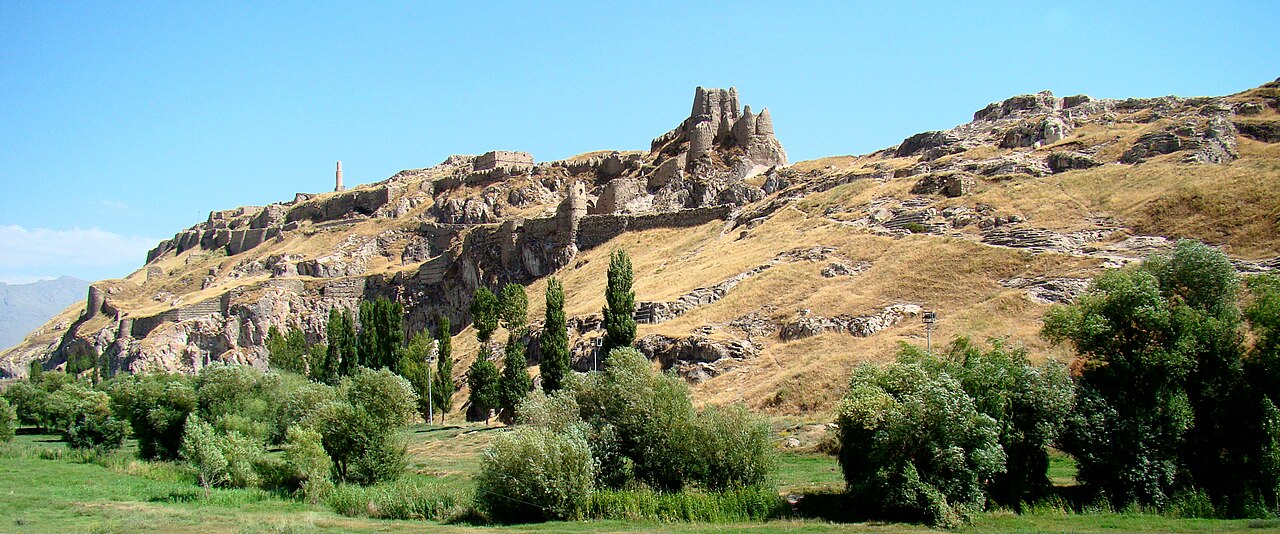
Hoşap Castle stands as a monumental hill fortress in southeastern Turkey, embodying a rich tapestry of historical layers that span from the ancient Urartian period through medieval Armenian times to the Kurdish rule of the 17th century. Its strategic location atop a steep rocky promontory overlooking the Hoşap River—whose name means "fresh" or "sweet water" in Persian—has made it a key military and trade stronghold for centuries.
The castle's origins trace back to the Urartian civilization, which flourished around the 9th to 6th centuries BCE in the Armenian Highlands. Initially established as a military outpost, the fortress was strategically placed at a crossroads in southeastern Anatolia, controlling vital routes for both armies and commerce. This early phase laid the foundation for the castle's enduring military significance.
Following the decline of the Urartians, the site was rebuilt on the foundations of a medieval Armenian fortress. The Armenian builders retained elements of the original Urartian layout, particularly visible in the eastern walls and towers, reflecting a continuity of defensive architecture. The Armenian fortress featured a sophisticated double wall system near the main keep, complemented by intermediate fortifications, which underscored its role as a formidable military bastion during the medieval period.
The 17th-century Kurdish reconstruction
Between 1643 and 1649, the castle underwent extensive reconstruction under the leadership of Sarı Süleyman Bey, head of the Kurdish Mahmudi tribe. Originally migrants from the Jazira region and practitioners of Yezidism, the Mahmudi beys fortified the castle with new entrance towers and outer walls that largely define the structure seen today. Their efforts transformed the castle into a robust fortress-city, capable of supporting a significant population and serving as a regional power center.
During the mid-19th century, Hoşap Castle was home to approximately 1,500 families, including around 1,000 Armenians engaged in agriculture, crafts, and commerce, alongside Kurdish inhabitants focused on animal husbandry. The castle complex contained two Armenian churches, which were later demolished following the Armenian community's expulsion. The Mahmudi family maintained semi-autonomous control over the castle until 1847, when the Ottoman Empire reasserted direct authority.
Architectural features and defensive structures
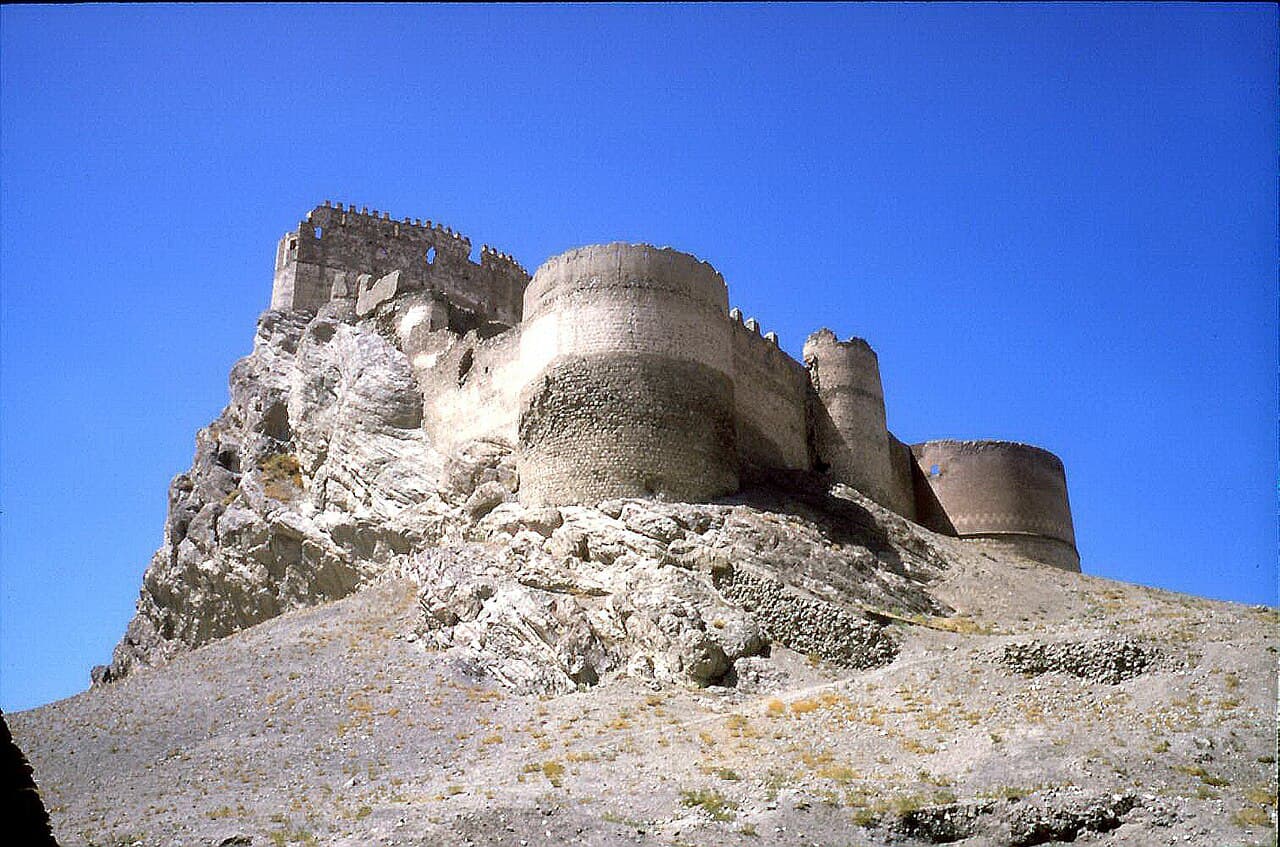
The castle is enclosed by three concentric defensive walls, ingeniously adapted to the rugged terrain of the promontory. These walls protect both the central fortress and the adjacent former town area, creating a complex fortified settlement. The inner fortress occupies a mass with a steep drop on the southern side and a gentler slope to the north, enhancing its natural defenses.
Thick curtain walls and towers, especially on the northeast and western sides, enclose the core stronghold. A second line of fortifications to the northeast further reinforces the defenses. The principal gate, located on the northern side, features a gatehouse with a pointed arch and is adorned with a Persian inscription flanked by lion reliefs. Remarkably, the original iron gate wings remain operational. These massive gates, weighing approximately 17,000 kilograms, were forged entirely of iron sourced from Nakhchivan without any wood, an exceptional feature for defensive doors of this scale.
Interior structures and palace complex
Within the castle walls lie numerous structures illustrating the site's extensive use and complexity. These include two mosques and three bathhouses, which indicate the presence of vibrant religious and social life. Decorative fountains and underground dungeons add to the architectural richness, alongside residential buildings that housed the castle's inhabitants.
The southeastern section holds the Mahmudi Palace complex, which comprises a viewing pavilion at the highest eastern point, a harem directly to its west, and a selamlık or reception area at the western end. This layout reflects the multifunctional nature of the palace and its role as the seat of the ruling elite within the fortress.
Outer defenses and surrounding settlement
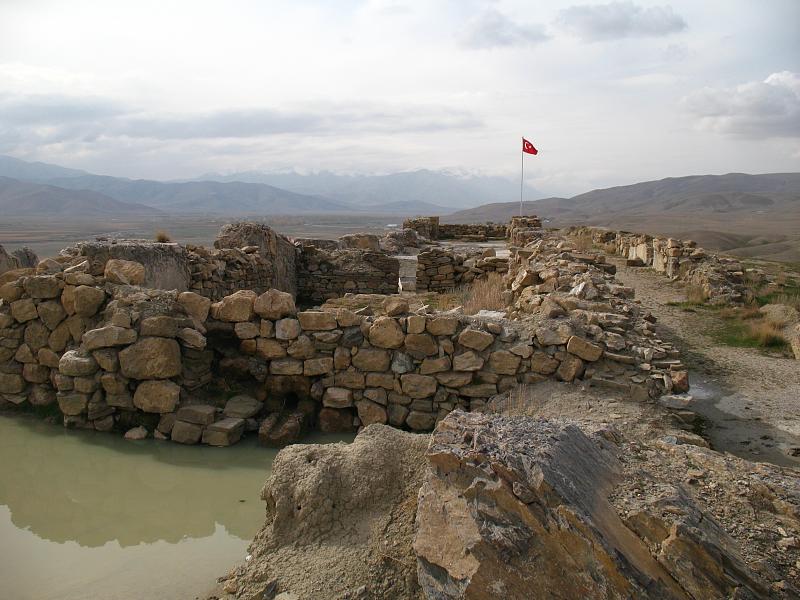
The outer defensive walls extend eastward, northward, and westward, conforming to the natural landscape. While some sections, especially on the west, have fallen into ruin, several bastions remain standing. The original eastern and western gates of the outer walls have been completely destroyed. A watchtower at the northeastern corner still offers a commanding vantage point over the surrounding area.
Surrounding the fortress cliffs and protecting the former town area are remnants of mud walls with battlements. This town area lies north of the castle rock and extends into an enclosed section opposite the main road. Below the fortress, spanning the Hoşap River, is a historic stone bridge constructed by Zeynel Bey, which linked the settlement to wider regional routes, facilitating trade and communication.
Historical significance and legacy
The castle is documented in numerous historical sources spanning several centuries. The 13th-century Arab chronicler Yakut referred to it as "Khavshab" in the province of Ashevatsyats, part of the Armenian region of Vaspurakan. Later Ottoman travelers and historians, including Matrakçı Nasuh and Evliya Çelebi, noted its imposing iron gates and strategic location.
Hoşap Castle remained largely intact and in use until its abandonment in the mid-19th century. Today, it preserves many original architectural details and decorative elements, offering a unique glimpse into the layered history of southeastern Anatolia. Its combination of Urartian foundations, medieval Armenian fortifications, and 17th-century Kurdish rebuilding efforts makes it a singular example of historical continuity and architectural adaptation.
Visitors to Hoşap Castle can explore its vast complex of walls, towers, gates, and internal structures, appreciating the ingenuity of its builders across different eras. The castle's preservation allows for an understanding of the military, social, and cultural dynamics that shaped this frontier region for over two millennia.
Frequently asked questions (FAQ)
- How do I get to Hoşap Castle?
- Hoşap Castle is located near the town of Güzelsu in the Eastern Anatolia Region of Turkey. It is accessible by road, and visitors can reach it by car or local transport from nearby cities such as Van.
- What is the best time to visit Hoşap Castle?
- The best time to visit Hoşap Castle is during spring and autumn when the weather is mild and pleasant. Summers can be hot, and winters are cold with potential snowfall, which may limit access.
- Is Hoşap Castle accessible to visitors with mobility issues?
- Due to its location on a steep rocky promontory and uneven terrain, accessibility for visitors with mobility issues is limited. Some areas require climbing and navigating rugged paths.
- Are there guided tours available at Hoşap Castle?
- Guided tours are occasionally available through local tourism offices or private guides. These tours provide detailed historical and architectural insights into the castle's complex heritage.
- What architectural styles are represented in Hoşap Castle?
- Hoşap Castle features a mix of architectural styles, including Urartian foundations, medieval Armenian fortifications, and 17th-century Kurdish reconstruction elements.
- Can I visit the interior structures of Hoşap Castle?
- Visitors can explore many of the castle's interior structures, including the palace complex, mosques, bathhouses, and defensive towers, though some areas may be restricted for safety reasons.
Photo gallery

Information
Opening hours
09:00-18:00, daily
Ticket prices
Free
Current owner
Turkish Ministry of Culture and Tourism
Loading map...
Visitor reviews
No reviews yet. Been here? Write the first review and help other travelers!
Write the first reviewVisited this castle? Share your experience
Your review helps other travelers and adds first-hand knowledge to our encyclopedia.