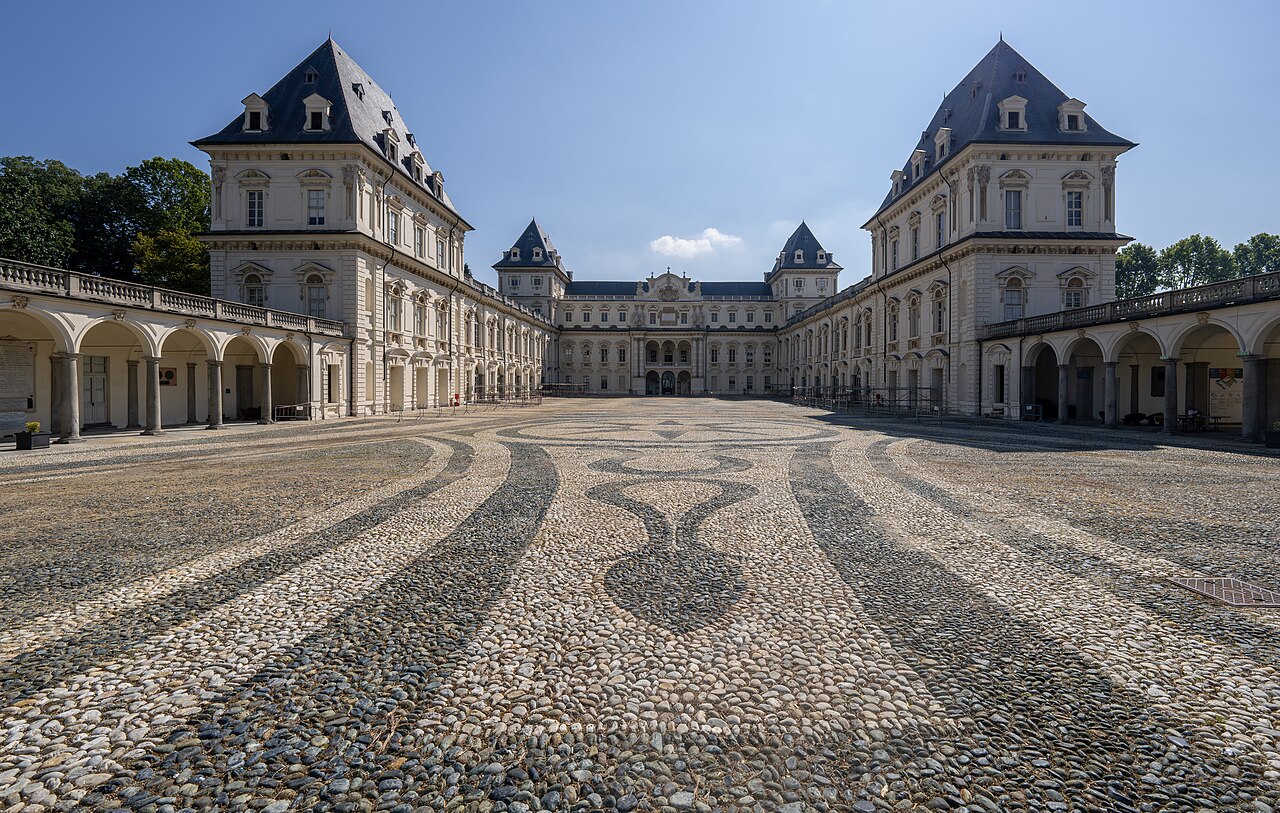
Valentino Castle
Valentino Castle, located in the city of Turin within the Parco del Valentino along the banks of the River Po, stands as one of the most significant royal residences in the Piedmont region of Italy. This imposing structure is not only a symbol of the region's aristocratic heritage but also a remarkable example of 17th-century French Baroque architecture adapted to Italian tastes. Today, the castle serves as the home of the Faculty of Architecture of the Polytechnic University of Turin, blending its historic grandeur with modern academic life.
Early history and savoy ownership
The origins of Valentino Castle date back to the late Renaissance period, but its most notable transformation began in 1564 when it was acquired by Emanuele Filiberto di Savoia, known as the "Duke Iron Head." This acquisition marked the beginning of the castle's close association with the House of Savoy, a dynasty that played a pivotal role in shaping the history and culture of Piedmont and Italy as a whole. Emanuele Filiberto initiated restoration works to enhance the castle's defensive and residential functions, which were further expanded by his successor, Carlo Emanuele I.
The baroque transformation under maria cristina de borbón
The castle reached its architectural and cultural zenith during the tenure of Maria Cristina de Borbón, the wife of Vittorio Amedeo I. In 1630, Maria Cristina took residence at Valentino Castle and commissioned a significant renovation led by the architects Carlo and Amedeo di Castellamonte. Their work imbued the castle with a distinct French Baroque character, visible in the addition of four corner towers arranged around a horseshoe-shaped layout and the introduction of mansard roofs, a hallmark of French architectural influence across the Alps.
The interiors were lavishly decorated with rich stuccoes and frescoes, many of which survive to this day. The main floor's rooms were adorned with intricate decorations, reflecting the aristocratic tastes and cultural ambitions of the Savoy court. The castle became a vibrant center of aristocratic life and social gatherings, often referred to as the "Royal Lady's" palace in honor of Maria Cristina's influential role.
Architectural features and layout
The castle's plan is characterized by a unique horseshoe shape, with the open end facing the river, allowing for scenic views and natural light. The four corner towers provide a balanced visual rhythm and were designed both for defense and aesthetic appeal. The mansard roofs added during the Baroque renovation not only enhanced the castle's silhouette but also increased usable attic space.
Inside, the castle houses several notable rooms such as the apartment of Moncalieri, featuring the central hall, the Zodiac Room, the Green Room, the Valentino Room, the Rose Room, and the Cabinet Room of the flowers and lilies. These rooms are celebrated for their exquisite frescoes and decorative schemes that reflect the tastes of the 17th century.
Later history and modern use
Following Maria Cristina's death, the castle experienced periods of neglect and abandonment. In the 19th century, it was repurposed to better integrate with the urban fabric of Turin, especially in preparation for the National Exposition of 1858, which showcased the city's cultural and industrial advancements. Despite this, the castle again fell into disuse until it was designated as the seat of the Faculty of Engineering in 1860, a role that evolved into its current function as the Faculty of Architecture.
The castle suffered the loss of many of its original 17th-century furnishings during the Napoleonic invasions, when soldiers removed valuable items. However, many of the frescoes remain intact, preserving the artistic heritage of the period.
Cultural significance and unesco recognition
In recognition of its historical, architectural, and cultural importance, Valentino Castle was inscribed as part of the UNESCO World Heritage Site in 1997, under the group of Residences of the Royal House of Savoy. This designation highlights the castle's role in the broader context of European royal architecture and the legacy of the Savoy dynasty.
Visiting valentino castle today
Although Valentino Castle is primarily an academic institution today, it remains accessible to the public under specific conditions. Visitors can explore the castle's interiors, including its richly decorated rooms and frescoes, primarily on Saturdays and by prior reservation. This limited access ensures the preservation of the historic fabric while allowing the public to appreciate the castle's artistic and architectural splendor.
The castle's location within the scenic Parco del Valentino also makes it a popular destination for tourists and locals alike, offering a blend of natural beauty and historical grandeur.
Frequently asked questions (FAQ)
- How do I get to Valentino Castle?
- Valentino Castle is located in the heart of Turin, easily accessible via public transport. You can take the metro to the Porta Nuova station and then a short walk or bus ride will lead you directly to the castle grounds.
- What is the historical significance of Valentino Castle?
- Valentino Castle is a UNESCO World Heritage site and a prime example of Renaissance architecture in Italy. Originally built in the 16th century, it served as a royal residence and has been a key part of Turin's history, reflecting the city's growth and cultural development.
- When was Valentino Castle built?
- Construction of Valentino Castle began in the mid-16th century, with significant modifications and expansions occurring over the years. The castle has undergone various renovations, most notably in the 19th century, which contributed to its current Gothic Revival style.
- Can I take guided tours of Valentino Castle?
- Yes, guided tours of Valentino Castle are available and highly recommended for a deeper understanding of its history and architecture. These tours are offered in multiple languages and provide insights into the castle's significance and the surrounding park.
- Why is Valentino Castle a popular tourist attraction?
- Valentino Castle attracts visitors for its stunning architecture, beautiful gardens, and rich history. Its picturesque location along the Po River and proximity to other attractions make it a must-visit destination for tourists in Turin.
- Is it possible to access the gardens of Valentino Castle?
- Yes, the gardens surrounding Valentino Castle are open to the public and free to access. They provide a lovely setting for a stroll and offer beautiful views of the castle, making it a perfect spot for relaxation and photography.
- What are the opening hours for Valentino Castle?
- Valentino Castle is typically open to visitors from 9 AM to 7 PM, with varying hours on holidays. It's advisable to check the official website for any seasonal changes in hours or special events that may affect access.
- How much are the ticket prices for Valentino Castle?
- Admission to Valentino Castle is generally affordable, with tickets priced around 5 euros for adults and reduced rates for students and seniors. Some special exhibitions may have additional fees, so it's best to verify before your visit.
- What is the best time to visit Valentino Castle?
- The best time to visit Valentino Castle is during the spring and early autumn when the weather is pleasant, and the gardens are in full bloom. Weekdays are also less crowded, allowing for a more enjoyable experience as you explore the castle and its surroundings.
- Are there any nearby attractions to Valentino Castle?
- Yes, Valentino Castle is located near several attractions, including the beautiful Valentino Park and the Turin Museum of Natural History. Additionally, the city center is just a short distance away, offering a wealth of shopping, dining, and cultural experiences.
Information
Loading map...
Visitor reviews
No reviews yet. Been here? Write the first review and help other travelers!
Write the first reviewVisited this castle? Share your experience
Your review helps other travelers and adds first-hand knowledge to our encyclopedia.