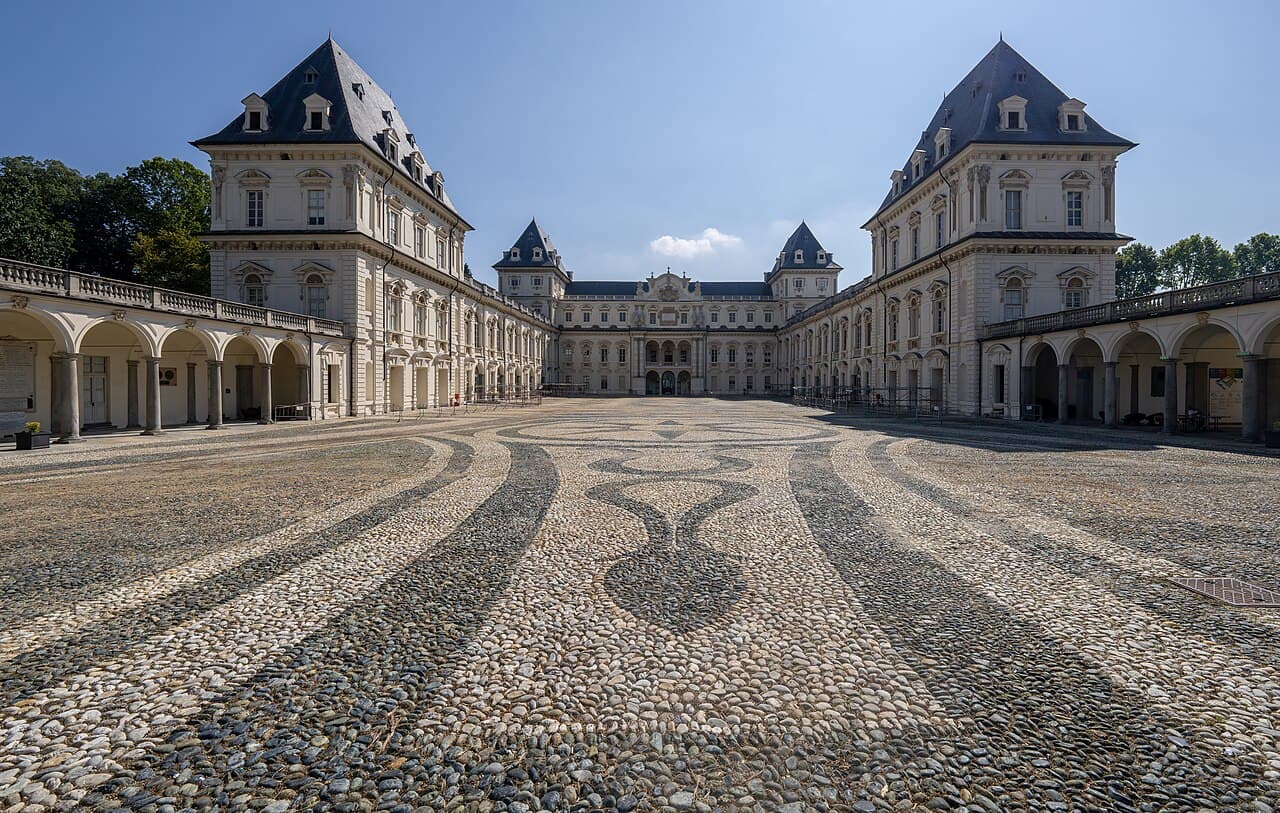
Castello del Valentino
Castello del Valentino stands as a remarkable historic palace in the northwestern Italian city of Turin. Nestled within the scenic Parco del Valentino, this castle is renowned for its rich history as a royal residence and its current role as the seat of the Architecture Faculty of the Polytechnic University of Turin. Recognized as one of the prestigious Residences of the Royal House of Savoy, it was inscribed on the UNESCO World Heritage List in 1997, underscoring its cultural and architectural significance.
Historical background and origins
The name "Valentino" was first recorded in 1275, likely derived from a saint named Valentine, whose relics were venerated in a nearby church. The original structure dates back to the 13th century, though the castle as it stands today owes much of its form to extensive renovations carried out in the 17th century.
The castle was acquired by Duke Emmanuel Philibert of Savoy in the 16th century, influenced by the advice of the renowned architect Andrea Palladio. However, the most transformative period came during the tenure of Princess Christine of France (1606–1663), wife of Victor Amadeus I. She took residence here from 1630 and initiated a comprehensive renovation project that began around 1633 and continued until 1660.
Architectural design and features
The renovation was masterminded by the prominent architect Carlo di Castellamonte, assisted by his son Amedeo di Castellamonte. They redesigned the castle into its distinctive horseshoe shape, featuring four rectangular towers positioned at each corner. The castle encloses a spacious inner courtyard paved with elegant marble, enhancing its grandeur.
The castle's façade prominently displays a massive coat of arms of the House of Savoy, symbolizing its royal heritage. The ceilings of the upper floors exhibit a clear influence of the French style (referred to as "transalpino"), reflecting Princess Christine’s origins and tastes.
Interior and furnishings
Originally, the interiors were richly furnished in the 17th century style, though much of this furniture was lost during the early 19th century when French troops removed many valuable pieces. Minor modifications were made during this period, but the castle subsequently fell into neglect for several decades.
Later history and restoration
In the 19th century, specifically around 1860, the castle underwent significant restoration and was repurposed as the seat of the Engineering Faculty of Turin. Since then, it has been further restored and adapted to serve as the central building for the Architecture Faculty of the Polytechnic University of Turin.
Today, Castello del Valentino not only represents an important architectural monument but also serves as a vibrant educational institution. Its location within Parco del Valentino enhances its appeal, surrounded by beautiful gardens and the historic Orto Botanico dell'Università di Torino, a botanical garden that adds to the cultural landscape of the castle grounds.
Significance and cultural heritage
As one of the Residences of the Royal House of Savoy, Castello del Valentino exemplifies the grandeur and architectural innovation of the Savoy dynasty. Its blend of French and Italian styles reflects the historical ties between the House of Savoy and France, particularly through Princess Christine of France.
The castle’s inclusion on the UNESCO World Heritage List highlights its value as a cultural and historical treasure. It stands as a testament to the evolving architectural trends from the High to Late Renaissance periods and the enduring legacy of the Savoy monarchy in shaping the urban and cultural fabric of Turin.
Architectural style and classification
While the original castle dates from the High Medieval period, the current structure is predominantly a 17th-century palace showcasing Baroque architectural elements with strong French influences. Its classification aligns with a palace castle, combining residential luxury with defensive features such as towers and a courtyard.
Visitor information and accessibility
Today, visitors to Turin can explore the castle’s exterior and surrounding park, though access to the interior is primarily reserved for university functions. The Parco del Valentino and the adjacent botanical gardens offer a scenic setting for leisure and cultural activities, making the castle a notable landmark within the city.
Frequently asked questions (FAQ)
- What is the historical significance of Castello del Valentino?
- Castello del Valentino is a UNESCO World Heritage Site and an iconic example of Baroque architecture in Italy. Originally built in the 16th century as a hunting lodge for the Duke of Savoy, it later became a royal residence and reflects the grandeur of the era.
- When was Castello del Valentino built?
- Construction of Castello del Valentino began in 1564 and was completed in the early 17th century. It has undergone various renovations over the centuries, particularly in the 19th century, which contributed to its current architectural style.
- What are the opening hours for Castello del Valentino?
- The castle is open to visitors from Tuesday to Sunday, typically from 9:00 AM to 7:00 PM. However, it is advisable to check the official website for any seasonal changes or special events that may affect opening times.
- Can I visit Castello del Valentino with children?
- Yes, Castello del Valentino is family-friendly and offers a fascinating experience for visitors of all ages. There are educational programs and activities designed specifically for children, making it an enjoyable outing for the whole family.
- Is it possible to access Castello del Valentino by public transport?
- Absolutely! The castle is easily accessible via public transportation, including buses and trams that stop nearby. Visitors can also enjoy a scenic walk through the Valentino Park, which leads directly to the castle.
- What are the ticket prices for visiting Castello del Valentino?
- Ticket prices for Castello del Valentino are generally affordable, with discounts available for students, seniors, and children. It’s recommended to purchase tickets in advance online to avoid long queues, especially during peak tourist seasons.
- When is the best time to visit Castello del Valentino?
- The best time to visit Castello del Valentino is during the spring and early autumn months when the weather is pleasant, and the gardens are in full bloom. Additionally, visiting on weekdays can help you avoid larger crowds and enjoy a more peaceful experience.
- What nearby attractions can I visit while at Castello del Valentino?
- While visiting Castello del Valentino, you can explore the beautiful Valentino Park, which surrounds the castle and offers lovely walking paths and gardens. The nearby Borgo Medievale, a reconstructed medieval village, is also worth a visit for its unique architecture and picturesque setting.
Photo gallery

Information
Website
Visit websiteSources & official resources
Verify the information above using these authoritative references.
Loading map...
Visitor reviews
No reviews yet. Been here? Write the first review and help other travelers!
Write the first reviewVisited this castle? Share your experience
Your review helps other travelers and adds first-hand knowledge to our encyclopedia.


