Valdek Castle

Valdek Castle: medieval hill castle ruin in Central Bohemia
Chaloupky, Czech Republic
High Medieval (11th–13th c.)
Ruins

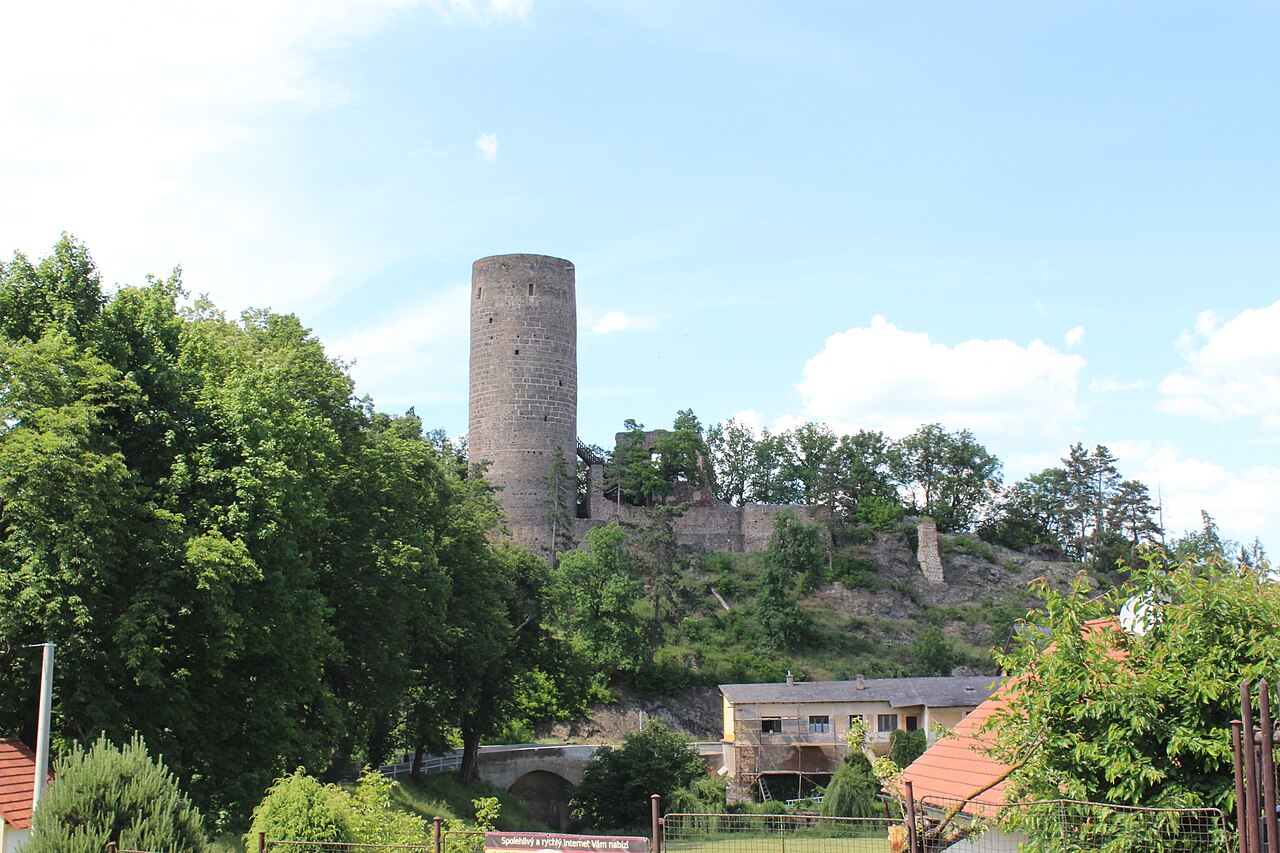
Valdek Castle is a notable medieval hill castle ruin situated in the municipality of Chaloupky in the Central Bohemian Region of the Czech Republic. Its name likely originates from the German words Wald (forest) and Eck (rock formation), reflecting the castle's location amidst dense woodlands and rocky terrain. Constructed around the mid-13th century, with the first written record dating to 1263, Valdek was established by the aristocratic Buzic family, a noble lineage influential in Bohemian history during the High medieval period.

Historical background and ownership

The castle was originally built as a defensive stronghold and residence for the Buzic family, who played a significant role in regional politics and military affairs. Valdek's strategic position on a forested hilltop allowed it to control important routes and oversee the surrounding landscape. Throughout the centuries, the castle changed hands and gradually lost its military importance. By the early 17th century, Valdek was already described as abandoned, specifically noted in 1623.

Architectural features and construction

Valdek Castle is characterized by its hill castle typology, constructed primarily from local stone and timber. The most prominent surviving feature is a large round bergfrit tower, built in the latter half of the 13th century. This tower served as a last refuge during sieges and as a lookout point. The bergfrit's robust cylindrical form and thick walls exemplify High medieval military architecture designed to withstand attacks.

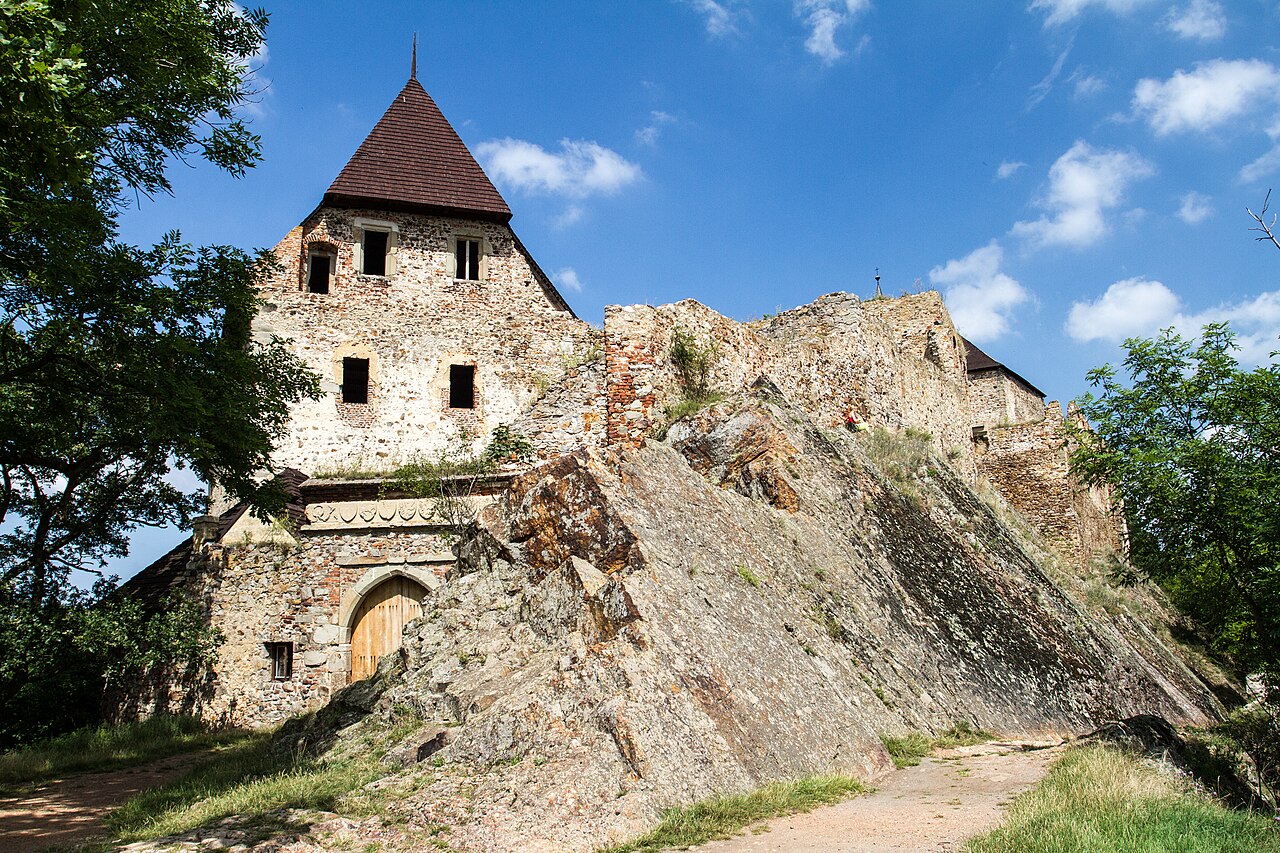
Although much of the castle lies in ruins today, archaeological studies and remaining structures indicate a complex layout with defensive walls, residential quarters, and possibly a courtyard. The castle's location on rocky outcrops provided natural fortification, supplemented by man-made defensive works.

Decline and modern history

After its abandonment in the early 17th century, Valdek fell into ruin over the following centuries. In 1926, the area encompassing the castle became part of the Jince military training area. Despite military use, the castle remained accessible to visitors except during military exercises. However, after 1950, public access was prohibited entirely due to the sensitive nature of the military zone.

Following the political changes of 1989 in Czechoslovakia, restrictions eased, and the castle became accessible once again. Visitors are allowed to approach the ruins, though they are required to stay on designated paths to protect the site and comply with military regulations.

Valdek's cultural and heritage significance

Valdek Castle is an important cultural monument reflecting the medieval history of Central Bohemia. Its ruins offer valuable insights into 13th-century castle construction and the lifestyle of Bohemian nobility during the High Middle Ages. The surviving bergfrit tower stands as a testament to the military architecture of the period.

Today, Valdek is a popular destination for tourists and history enthusiasts interested in exploring authentic medieval ruins in a forested setting. Its preservation within a military area has both protected it from modern development and limited extensive restoration, leaving the castle in a partially preserved ruin state that evokes its historical atmosphere.

Visiting Valdek Castle

Visitors to Valdek Castle can explore the site by following marked trails leading to the ruins. The castle's location amidst natural surroundings makes it a scenic spot for hiking and photography. Due to its military zone location, visitors should check access conditions in advance and adhere to local regulations to ensure safety and preservation of the site.

Frequently asked questions (FAQ)

What is the historical significance of Valdek Castle?
Valdek Castle, located in Chaloupky, Czechia, dates back to the 13th century and holds a rich history as a strategic fortress. It played a crucial role in the protection of the region during various conflicts and has been a witness to significant historical events in Czech history.
When was Valdek Castle built?
Valdek Castle was constructed in the early 13th century, making it one of the oldest castles in the area. Over the centuries, it has undergone several renovations and restorations to preserve its architectural integrity.
Can I visit Valdek Castle year-round?
Yes, Valdek Castle is open to visitors throughout the year, although the opening hours may vary by season. It is advisable to check the official website for specific hours and any seasonal events or closures.
What are the ticket prices for visiting Valdek Castle?
Ticket prices for Valdek Castle vary depending on the season and the type of tour chosen. Generally, adult tickets range from 100 to 200 CZK, while discounts are available for students and seniors.
Is it possible to access Valdek Castle with a disability?
Valdek Castle strives to be inclusive; however, due to its historical structure, full accessibility may be limited. Visitors with mobility impairments are encouraged to contact the castle administration in advance for assistance and to discuss available options.
What is the best time to visit Valdek Castle?
The best time to visit Valdek Castle is during the late spring and early autumn months when the weather is pleasant, and the surrounding landscape is at its most beautiful. Additionally, these seasons often feature various cultural events and activities at the castle.
Are there any nearby attractions to Valdek Castle?
Yes, there are several nearby attractions, including beautiful hiking trails, local museums, and other historical sites. Visitors can enjoy exploring the scenic countryside and experiencing the rich culture of the Czech region.
What architectural features can I expect at Valdek Castle?
Valdek Castle showcases a blend of Gothic and Renaissance architectural styles, characterized by its sturdy stone walls, iconic towers, and intricate details. The castle's design reflects its historical purpose as a defensive stronghold, while still exhibiting the elegance of later architectural influences.
When are the opening hours for Valdek Castle?
Valdek Castle typically opens at 9 AM and closes at 5 PM during the peak season, with shorter hours in the off-peak months. It is recommended to verify the current opening hours on the castle’s official website before planning your visit.

Information

Hill Castle

Loading map...

Visitor reviews

No reviews yet. Been here? Write the first review and help other travelers!

Write the first review

Visited this castle? Share your experience

Your review helps other travelers and adds first-hand knowledge to our encyclopedia.
Write a review

(5/5)

0/2000 characters

Your review will be visible after admin approval

Nearby castles

7 km
Horovice Castle — Czech Republic castle

Horovice Castle

Hořovice, Czech Republic

Horovice Castle is a prominent hill castle located in the town of Hořovice in the Central Bohemian Region of the Czech Republic. Its architectural evolution reflects significant changes during the 19th century and early 20th century, marking it as an important example of historic castle reconstruction in the region. Historical development and architectural evolution The castle's origins trace back to earlier medieval fortifications, but the current structure primarily results from extensive rebuilding efforts initiated in the first half of the 19th century. Under the patronage of Friedrich Wilhelm I of Hesse, the castle underwent a major transformation based on the designs of the architect G. Engelhardt. This phase included the addition of another story to the existing building, significantly altering its silhouette and spatial organization. Further refurbishments in the early 20th century refined the castle's appearance and interior decor. These renovations introduced late classicist style furnishings, which remain a defining characteristic of the castle's rooms today. The castle thus embodies a blend of architectural and decorative styles that span the transition from the 19th to the 20th century. Architectural features and layout Horovice Castle is situated on a hilltop, a strategic location common for defensive structures in the region. The castle complex is composed of multiple parts, reflecting its phased construction and expansions. The main building's vertical extension during the 19th-century reconstruction created a more imposing presence, while the interior spaces were adapted to the needs and tastes of its noble occupants. The castle's facades exhibit characteristics typical of the late classicist period, including balanced proportions and restrained decorative elements. Inside, the rooms feature period furnishings and details that highlight the refined aesthetics of the era. The integration of these elements illustrates the castle's role not only as a fortress but also as a noble residence. Cultural significance and current status Today, Horovice Castle stands as a significant cultural landmark within the Central Bohemian Region. Its architectural layers provide insight into the historical development of aristocratic residences in Czechia during the 19th and early 20th centuries. The castle's preservation allows visitors to appreciate both its defensive origins and its later adaptation as a stately home. The castle is well-preserved, maintaining much of its structural integrity and interior furnishings. It serves as a valuable example of historic castle restoration efforts and the evolution of architectural styles over time in this part of Europe. Visiting Horovice Castle Visitors to Horovice Castle can explore its historic rooms furnished in the late classicist style and enjoy panoramic views from its hilltop location. The castle provides a tangible connection to the region’s noble heritage and architectural traditions. It is accessible to the public during designated visiting hours, offering educational opportunities and cultural events that celebrate its rich history.

Modern (19th–20th c.)
Details
12.5 km
Zebrák Castle — Czech Republic castle

Zebrák Castle

Točník, Czech Republic

Zebrák Castle is a striking hilltop fortress located in the Central Bohemian Region of the Czech Republic, near the town of Žebrák and within the municipality of Točník. Built in the 13th century by the noble Zajíc family, it stands as a remarkable example of high medieval castle architecture in Bohemia. The castle is part of a unique pair with the nearby Točník Castle, together protected as a national cultural monument. This fortress not only reflects the military and residential needs of its era but also bears witness to significant historical events and royal patronage. The origins and early history of zebrák castle Zebrák Castle was established in the latter half of the 13th century by Oldřich Zajíc III, a member of the influential Bohemian noble family Zajíc. Its location on a narrow quartzite ridge was strategically chosen to oversee a vital trade route connecting Prague and Bavaria, which underscored its military and economic importance. The castle's initial design followed the bergfried type, characterized by its massive defensive towers primarily intended for protection rather than residential comfort. Shortly after its construction, the Zajíc family relocated, selling the castle to the Bohemian crown. In 1336, the House of Luxembourg acquired Zebrák, marking a new phase in the castle's history as it became a royal residence. King John of Luxembourg and later his son, Emperor Charles IV, took a keen interest in the site, with Charles IV frequently visiting and initiating enhancements. The castle's prominence was further elevated when it hosted important events, including the death of Charles IV's son Václav in 1351. Architectural evolution under the luxembourg dynasty During the 14th century, the castle underwent significant modifications, particularly under the reign of Wenceslaus IV, Charles IV's son. Between 1383 and 1396, Wenceslaus IV transformed Zebrák from a purely defensive fortress into a more refined and comfortable royal residence. This included the construction of a new palace wing, the addition of rectangular windows to illuminate large halls, and the installation of an early central warm-air heating system, a technological innovation for its time. The castle also featured two round towers, one of the earliest examples of such architecture in Bohemian noble castles. These towers, with walls up to two meters thick, provided formidable defense and symbolized the castle's strength. The large bergfried tower was heightened and decorated with stone painting techniques that imitated rusticated stone blocks, enhancing its imposing appearance. Access to the castle was secured through a gate tower leading into an outer bailey, typical of hill castles. Defensive improvements included the construction of fishponds around the castle, serving as natural water barriers. The castle's chapel, dedicated to Saint Apollinaris and Saint Margaret, was likely built during the reign of Charles IV and stood above the castle's neck ditch, an artificial trench protecting the narrow access point. The impact of conflict and decline Zebrák Castle endured significant challenges during its history, notably during the Hussite Wars in the early 15th century. The castle withstood two sieges by the Hussite army in 1425 and 1430, demonstrating its robust fortifications. However, the surrounding towns of Točník and Hořovice were burned down by the Hussites, highlighting the turbulent times. A devastating fire in 1395, attributed to the forces of nobleman Jindřich III of Rožmberk, severely damaged Zebrák. In response, Wenceslaus IV constructed the nearby Točník Castle on a higher, more defensible position, which gradually overshadowed Zebrák in strategic importance. Another major fire in 1532 inflicted extensive damage, after which the castle was abandoned and fell into ruin. Architectural remains and preservation efforts Today, Zebrák Castle stands as a partially preserved ruin that offers valuable insights into medieval castle construction and royal residence life. The remains include the large bergfried tower and the passage connecting it to the thick curtain walls. Portions of the old palace survive, including the large hall with its rectangular windows and the internal spiral staircases that connected the chambers. The castle's defensive structures, such as the outer bailey with its third round tower built in the 15th century, reflect adaptations to evolving military technologies, including early artillery. This tower featured thick walls, narrow arrow slits, and a wooden or half-timbered upper floor for defenders, illustrating the castle's continued strategic relevance during and after the Hussite Wars. Ownership of the castle passed to the Czechoslovak Tourist Club in the early 20th century, which initiated conservation and preservation efforts. These efforts were interrupted by World War II but resumed in the latter half of the century. Since 1965, Zebrák has been protected as a cultural monument, and since 2002, it holds the status of a national cultural monument under the stewardship of the Czech state. Zebrák castle in cultural and historical context The castle's proximity to Točník Castle creates a rare example of two medieval fortresses standing side by side, offering a unique perspective on the evolution of castle architecture and royal strategy in Bohemia. Zebrák's transformation from a noble family stronghold to a royal residence and its eventual decline encapsulate the broader historical shifts in medieval Central Europe. Its architectural features, including the early use of round towers, advanced heating systems, and defensive fishponds, highlight the innovations of the period. The castle's role in significant historical events, such as the religious disputation involving Jan Hus and its resilience during the Hussite Wars, underscores its importance in Czech history. Today, Zebrák Castle attracts visitors interested in medieval history, architecture, and the dramatic stories of Bohemian nobility and royalty. Its ruins, set against the scenic backdrop of the Central Bohemian landscape, continue to inspire appreciation for the region's rich cultural heritage.

High Medieval (11th–13th c.)
Details
12.9 km
Tocnik Castle — Czech Republic castle

Tocnik Castle

Točník, Czech Republic

Točník Castle stands as a remarkable example of a late medieval hill castle in the Czech Republic, built in the 14th century during the reign of King Wenceslaus IV. Perched atop Zámecký Hill, it was conceived as a secure royal residence and refuge, replacing the older and vulnerable Žebrák Castle nearby. The castle's strategic position, architectural complexity, and historical significance make it a vital monument in Bohemian medieval heritage. Historical background and royal origins The castle was constructed in response to a devastating fire at the neighboring Žebrák Castle in 1395, which exposed the older fortress's defensive weaknesses. King Wenceslaus IV initiated Točník's construction in the late 1380s, completing it by 1398 as his private residence and a stronghold amid the turbulent political climate of the time. The castle also functioned as a hunting retreat and a venue for hosting notable guests, reflecting its dual role as both fortress and palace. During the Hussite Wars in the early 15th century, Točník played a defensive role, enduring a siege in 1425 by Hussite forces for three days. Unlike the surrounding towns that were destroyed, Točník's fortifications held firm, demonstrating its robust construction and strategic design. Ownership of the castle passed through several prominent noble families, including the Kolovratové, Gutštejnové, Vartenberkové, and Lobkowicz families. These owners introduced architectural modifications that incorporated late Gothic and Renaissance elements, adapting the castle to evolving tastes and functions. The Thirty Years' War in the 17th century marked the decline of Točník's military importance. By 1648, the last soldiers had departed, and by 1681, only a gatekeeper remained. The castle gradually fell into disrepair until the 20th century. In 1923, the Czech Tourist Club purchased Točník Castle, and since 1953 it has been under state stewardship. Restoration efforts began in the 1930s and continue today, preserving the castle's historical fabric and architectural heritage. Architectural layout and defensive features Točník Castle is built on a three-part ground plan, featuring successive courtyards that enhance its defensive capabilities. It is separated from the surrounding hill ridge by a deep moat cut into the rock, which contains an artificial pond that historically collected rainwater as the castle’s sole water source. Access to the castle was originally through a large square gate tower above the moat, reached by a bridge with two supporting piers and a drawbridge section. Although the gate tower now lies in ruins, it once formed a formidable first line of defense. The castle’s outer defenses include earthen embankments and a semi-circular bastion likely constructed in the late 15th or early 16th century. These were further enhanced during the Renaissance period, reflecting advances in military architecture. The courtyards and palatial buildings The first courtyard is notable for its access road, which takes a sharp right turn and crosses a masonry ditch, complicating any direct assault. The second courtyard houses the Purkrabský Palace, a significant building containing three large halls. Among these is a great hall measuring approximately 34 by 10 meters, historically the second largest castle hall in the Czech lands after Prague's Vladislav Hall. The palace also contains a timber-floored chamber measuring 13 by 9 meters, recognized as the largest wood-timbered room of its kind in the country. At the core of the castle lies a square residential tower, possibly replacing an earlier chapel. This tower features fragments of Gothic doorways and evidence of wooden ceilings, highlighting its residential function within the fortress. Royal Palace and residential quarters The Royal Palace was the centerpiece of King Wenceslaus IV’s residence. It is a two-story building with an elongated plan and a convex eastern facade overlooking the moat. The cellar and ground floor are vaulted and include a kitchen area. The upper floors contain large halls and living quarters. The palace’s main hall measures approximately 14 by 8.5 meters and is vaulted with four cross vaults, a structural technique where intersecting arches create a supportive framework. This hall was illuminated by three large windows facing the courtyard and originally heated by a fireplace, later replaced by tiled stoves. Several exits from the Royal Palace connected to defensive battlements and the moat via drawbridges, allowing for quick escape or access to water. These exits were sealed off in the 16th century as the castle’s defensive needs evolved. The castle’s design reflects a transitional character between fortress and residence, balancing security with comfort. Large windows facing the moat and the palace's exposed position demonstrate a priority on residential comfort alongside defensive considerations. Renaissance modifications and later history During the Renaissance, the Lobkowicz family initiated significant alterations. They divided the large courtyard with a transverse wall, lowered Gothic windows to new heights, removed interior wooden paneling, and decorated the outer plaster with sgraffito, a decorative technique involving scratching layers of plaster to reveal underlying colors or patterns. The castle’s military importance declined after the Thirty Years' War, and it gradually fell into ruin. However, its architectural legacy remained significant, showcasing the evolution from medieval fortress to Renaissance residence. Archaeological findings and modern restoration Excavations in 1999 uncovered evidence of prehistoric settlement from the Hallstatt period, suggesting the site may have functioned as an early hillfort. These ancient earthworks, however, are difficult to distinguish from the medieval fortifications that dominate the site today. A notable restoration project began in 2007, focusing on reconstructing the Royal Palace roof using medieval methods and tools documented through historical illustrations. This work exemplifies the ongoing commitment to preserving the castle’s historical integrity. Current status and visitor experience Today, Točník Castle is a well-preserved ruin that attracts visitors interested in medieval architecture and Bohemian history. The castle moat has found a unique contemporary use as a bear enclosure, housing brown bears born in 2013, adding an unexpected element to the site’s historical ambiance. The castle's location near the older Žebrák Castle forms a picturesque 'castle couple,' offering visitors a rare opportunity to explore two medieval fortresses in close proximity. Restoration efforts continue to maintain the site, ensuring its accessibility and educational value for future generations. Visitor information The castle is accessible to the public with guided tours available during the warmer months. Visitors can explore the extensive courtyards, the Royal Palace, and the remains of defensive structures. The site offers scenic views of the surrounding Bohemian landscape, enhancing the visitor experience. Nearby amenities include parking areas and informational displays detailing the castle’s history and architecture.

Late Medieval (14th–15th c.)
Details