Ulvsunda Castle

Ulvsunda castle in Bromma, Sweden
Bromma, Sweden
Renaissance (15th–17th c.)
Well Preserved

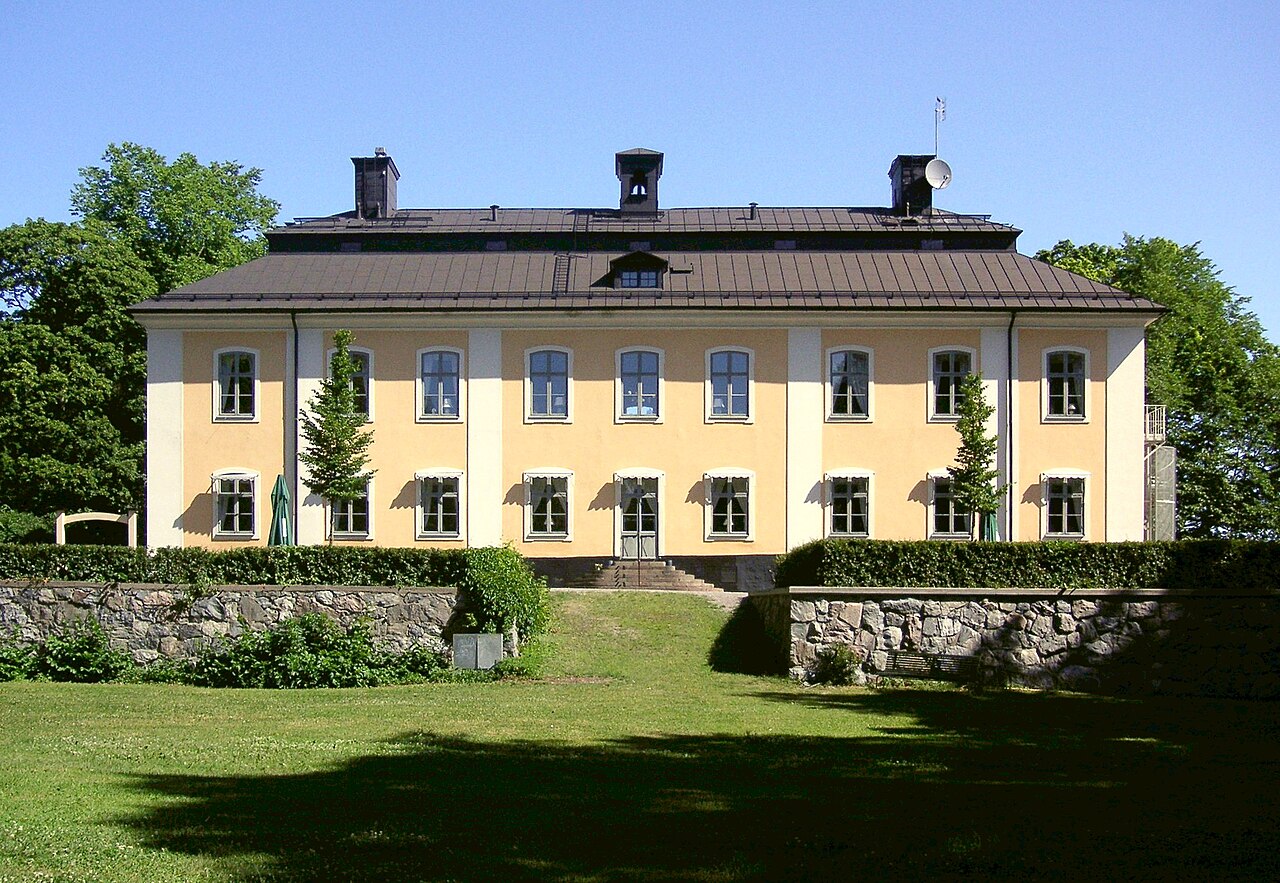
Ulvsunda castle is a notable example of Swedish Renaissance architecture, constructed between 1644 and 1647 by the distinguished Field Marshal Lennart Torstensson. Located in Bromma, Sweden, the castle originally served as a noble estate and has undergone several ownership and architectural transformations throughout its history.

Historical background and ownership

The estate was initially established by Lennart Torstensson, a prominent military leader during the Thirty Years' War, who built the castle as a symbol of his status and influence. The Torstensson family maintained ownership until 1727, after which the property changed hands among several noble families, including the Bielke, Gyllenkrook, Rudenschöld, and Ruuth families. Each family contributed to the estate's legacy, though the core Renaissance structure remained largely intact.

Architectural features and restoration

The castle's design reflects the typical characteristics of the Renaissance period in Sweden, featuring a symmetrical layout, robust stone walls, and classical decorative elements. In the early 19th century, specifically the 1830s, Baron von Essen acquired Ulvsunda and commissioned a significant restoration that shaped the castle's current appearance. This restoration introduced elements that blended the original Renaissance style with early 19th-century architectural tastes, preserving the castle’s historic charm while updating its functionality.

Structural elements

The castle is characterized by its sturdy masonry, rectangular floor plan, and modest towers that emphasize its defensive origins while serving residential purposes. The interiors were adapted over time to accommodate changing needs, including residential comfort and later hospitality functions.

Ulvsunda castle today

Currently, Ulvsunda castle operates as a hotel, restaurant, and conference centre, making it a cultural and social venue in Bromma. The castle's preserved architecture provides guests with an authentic historical atmosphere, while modern amenities support its role in hospitality and events. The surrounding grounds complement the castle’s stately presence, offering scenic views and a tranquil setting near Stockholm.

Significance and cultural heritage

Ulvsunda castle stands as a testament to Swedish Renaissance architecture and the historical evolution of noble estates in Sweden. Its connection to notable historical figures like Lennart Torstensson and the sequence of noble ownerships reflect Sweden's aristocratic and military history. The castle’s adaptation into a public venue ensures the preservation and appreciation of this heritage for future generations.

Frequently asked questions (FAQ)

What is the historical significance of Ulvsunda Castle?
Ulvsunda Castle, built in the 17th century, is a notable example of Swedish Baroque architecture. It has served various purposes over the centuries, including being a royal residence and a military headquarters, reflecting the rich history of Sweden.
When was Ulvsunda Castle constructed?
Ulvsunda Castle was constructed in the early 17th century, with its completion dating back to 1644. The castle has undergone several renovations since then, preserving its architectural heritage while adapting to contemporary needs.
Can I visit Ulvsunda Castle?
Yes, Ulvsunda Castle is open to visitors, but it is advisable to check the official website for specific visiting hours and any special events. Guided tours are often available to provide insight into its history and architecture.
What are the opening hours for Ulvsunda Castle?
The opening hours for Ulvsunda Castle can vary based on the season and special events. Typically, it is open to the public from late spring to early autumn, with exact times listed on their official website.
Is Ulvsunda Castle accessible for visitors with disabilities?
Yes, Ulvsunda Castle strives to be accessible to all visitors, including those with disabilities. There are facilities and accommodations in place to ensure a comfortable visit.
What is the best time to visit Ulvsunda Castle?
The best time to visit Ulvsunda Castle is during the late spring and summer months when the gardens are in full bloom and outdoor activities are plentiful. This period also offers a variety of special events and guided tours.
Are there nearby attractions to visit after Ulvsunda Castle?
Yes, there are several nearby attractions, including the scenic parks and lakes of Bromma. Visitors can also explore local museums and cultural sites that highlight the history of the area.
How much do tickets cost for Ulvsunda Castle?
Ticket prices for Ulvsunda Castle can vary depending on the type of tour and any special events. It is recommended to check the official website for the most current pricing and any available discounts.

Information

Lowland Castle

Sources & official resources

Verify the information above using these authoritative references.

Loading map...

Visitor reviews

No reviews yet. Been here? Write the first review and help other travelers!

Write the first review

Visited this castle? Share your experience

Your review helps other travelers and adds first-hand knowledge to our encyclopedia.
Write a review

(5/5)

0/2000 characters

Your review will be visible after admin approval

Nearby castles

2.3 km
Åkeshov Castle — Sweden castle

Åkeshov Castle

Stockholm, Sweden

Åkeshov Castle, located in Bromma, a borough of Stockholm, Sweden, is a notable example of a 17th-century Renaissance hill castle. Nestled within the Judarskogen nature reserve, the castle's setting combines natural beauty with historical significance. Originally part of Bromma socken, Åkeshov was incorporated into the City of Stockholm in 1916, marking a transition from rural estate to urban heritage site. Historical background and origins The estate that would become Åkeshov Castle dates back to the early 17th century, a period marked by significant architectural development in Sweden. The castle was constructed during the Renaissance period, reflecting the influence of European Renaissance styles that emphasized symmetry, proportion, and classical details. Åkeshov was originally built as a manor house and later expanded into a castle-like residence, serving as a symbol of status and power for its owners. Architectural features and style Åkeshov Castle exhibits key characteristics of Renaissance architecture, including a balanced and harmonious facade, rectangular floor plans, and ornamental details inspired by classical antiquity. The castle is situated on a slight elevation, qualifying it as a hill castle, which provided strategic advantages and aesthetic prominence. The building's exterior is marked by its orderly window arrangements and the use of traditional masonry techniques prevalent in 17th-century Sweden. Structure and layout The castle's layout includes a central main building flanked by wings, creating an enclosed courtyard that was typical of Renaissance manor houses. Defensive features are minimal, reflecting the transition from medieval fortifications to more comfortable noble residences. The castle's interior spaces were designed for both residential comfort and formal functions, with grand halls and chambers that accommodated social gatherings and administrative activities. Later history and current use Over the centuries, Åkeshov Castle underwent various modifications and restorations to preserve its structural integrity and adapt to changing needs. In recent times, the castle has been carefully reconstructed to maintain its historical character while providing modern amenities. Today, Åkeshov serves as a hotel and conference facility, attracting visitors who appreciate its blend of historical ambiance and contemporary comfort. Preservation and cultural significance The castle's location within the Judarskogen nature reserve enhances its appeal as a cultural landmark surrounded by natural beauty. Åkeshov's preservation reflects Sweden's commitment to maintaining its architectural heritage, offering insights into the lifestyle and aesthetics of the Swedish Renaissance nobility. The castle remains accessible to the public through its hospitality functions, allowing guests to experience a piece of Sweden's historical narrative firsthand. Visiting Åkeshov Castle Visitors to Åkeshov can enjoy the serene environment of the nature reserve alongside the castle's historic charm. The site is ideal for those interested in Renaissance architecture, Swedish history, and nature walks. While the castle operates primarily as a hotel and conference center, it occasionally hosts cultural events and guided tours, providing opportunities to explore its architectural and historical features in depth.

Renaissance (15th–17th c.)
Details
4.9 km

Drottningholm Castle - Stockholm

Stockholm County, Sweden

Drottningholm Castle, located on the island of Lovön in Lake Mälaren within Stockholm County, stands as one of Sweden's most significant royal residences and architectural treasures. Since 1981, it has served as the official residence of King Carl XVI Gustaf and Queen Silvia, symbolizing centuries of Swedish monarchy and cultural heritage. The castle's origins date back to the late 16th century, with its name first recorded in 1579 during the reign of King Johan III, who constructed a stone house for his queen, Katarina Jagellonica. Architectural evolution and royal patronage The present form of Drottningholm Castle was conceived in the 17th century under the initiative of Queen Hedvig Eleonora. The castle was extensively rebuilt and transformed into a grand palace between 1662 and approximately 1750. This ambitious project was guided by some of Sweden's most renowned architects, including Nicodemus Tessin the Elder, Nicodemus Tessin the Younger, and Carl Hårleman. Their work introduced a blend of Baroque and early Rococo architectural styles, which remain evident in the castle's elegant façades, grand halls, and intricate interior decorations. In 1777, the Swedish state acquired the property from Queen Lovisa Ulrika, the Queen of Denmark by birth, further cementing its status as a royal possession. Following this acquisition, King Gustav III was granted disposal rights over the castle, ensuring its continuous use by the Swedish royal family. Over the centuries, various monarchs have left their mark on Drottningholm, adapting the castle and its grounds to reflect changing tastes and fashions. Distinctive architectural features and estate components Drottningholm Castle is renowned not only for its main palace building but also for the ensemble of structures and landscaped areas that compose the estate. Key components include the Chinese Pavilion (China Slottet), an exquisite example of 18th-century European fascination with East Asian art and architecture. The Drottningholm Palace Theatre is another highlight, famous for its well-preserved 18th-century stage machinery and original Baroque interior, offering visitors a glimpse into historical theatrical productions. Other notable features within the castle grounds are the Gothic Tower (Götiska Tornet), the Little China pavilion, and the charming residential area known as Drottningholmsmalmen. The castle is surrounded by meticulously designed gardens combining a formal Baroque garden with an expansive English landscape park, showcasing the evolution of European garden design from strict geometrical patterns to naturalistic landscaping. UNESCO World Heritage status and cultural significance In 1991, Drottningholm Castle and its surrounding park were designated as a UNESCO World Heritage Site, marking it as Sweden's first entry on the prestigious list. The protected heritage area encompasses approximately 40 buildings, including the main palace, theater, pavilions, and various ancillary structures. This recognition underscores the castle's outstanding universal value as a well-preserved example of European royal architecture and landscape design. The World Heritage designation also covers extensive parklands north and west of Ekerövägen, ensuring the preservation of the castle's historic setting. Many of the buildings within the estate are also classified as state building memorials, emphasizing their architectural and historical importance. Current status, management, and public access Owned by the Swedish state, Drottningholm Castle is managed by the State Property Agency, while the Standing Committee administers the King's disposal rights, balancing public access with royal privacy. The castle and its grounds attract around 700,000 visitors annually, drawn by the rich history, architectural splendor, and cultural events hosted on site. While most of the castle park and buildings are open to the public, certain areas remain private for the royal family’s use. Visitors can explore the palace interiors, the theater, the Chinese Pavilion, and the extensive gardens, experiencing firsthand the grandeur of Sweden's royal heritage. The site also hosts theatrical performances and cultural exhibitions, further enhancing its role as a vibrant cultural landmark. Historical context and royal influence Drottningholm Castle reflects the evolution of Swedish royal architecture and court life from the Renaissance through the Baroque and Rococo periods into modern times. Its continuous use as a royal residence has allowed it to preserve an authentic atmosphere rarely found in European palaces. The involvement of prominent architects like the Tessins and Hårleman ensured that the castle incorporated contemporary artistic and architectural innovations, making it a showcase of Swedish craftsmanship and royal ambition. The castle's gardens also mirror changing landscape aesthetics, transitioning from formal French-style parterres to the more naturalistic English park style, illustrating broader European trends in garden design. This blend of styles enhances the castle's visual appeal and historical depth.

Late Medieval (14th–15th c.)
Details
5.2 km

Vanadislunden Water Reservoir

Stockholm, Sweden

The Vanadislunden water reservoir is a remarkable example of early 20th-century functional architecture disguised with a historicist castle-like appearance, located in the heart of Stockholm, Sweden. Despite its resemblance to a medieval fortress, this structure serves a vital modern utility purpose as a large water reservoir that maintains water pressure for the surrounding urban area. The reservoir is situated in the Stockholms lan region and stands as a unique blend of engineering and architectural aesthetics. Constructed between 1913 and 1918, the reservoir was designed by the Swedish architect Gustaf Améen. It was built atop an earlier reservoir dating back to the 1870s, which had served the city but required modernization to meet growing demands. The design intentionally mimics a castle, featuring four towers and a glazed tile roof, which contribute to its distinctive silhouette amid the urban landscape. This historicist approach was popular in the early 20th century, blending utility with romantic architectural elements to create civic structures that were both functional and visually engaging. The reservoir's interior contains a large pool approximately 6 meters (19 feet) deep, capable of holding around 8,100 cubic meters of water. This pool is elevated on a series of massive concrete pillars, raising the water storage above the level of the old reservoir beneath. The elevation allows the water to reach a height of about 54 meters (177 feet) above sea level, which is crucial for maintaining adequate water pressure within the city's distribution pipes. Architecturally, the Vanadislunden reservoir is classified as a water castle due to its castle-like appearance combined with its function as a water storage facility. Its construction period places it in the post-medieval era, specifically the early 20th century, reflecting industrial advances alongside traditional stylistic elements. The structure remains well preserved, continuing to operate as an essential part of Stockholm's water infrastructure. Architectural design and stylistic features The reservoir's design is a distinctive example of historicism, incorporating castle motifs such as battlement-like parapets, four corner towers, and a steeply pitched glazed tile roof. These elements evoke the appearance of a medieval fortress, which was a deliberate aesthetic choice to integrate the industrial function into the urban fabric with an appealing and culturally resonant form. The use of glazed tiles on the roof not only adds to the visual charm but also provides durability against the Nordic climate. The four towers are symmetrically placed at each corner of the rectangular building, enhancing the fortress illusion. The walls are robust, constructed to support the heavy water tank inside, and the overall massing of the building conveys strength and permanence. The reservoir’s exterior blends seamlessly with the surrounding historic buildings of Stockholm, contributing to the cityscape without disrupting the architectural harmony. Historical context and construction By the early 20th century, Stockholm’s rapid urban growth necessitated improvements in its water supply system. The original reservoir built in the 1870s was insufficient to meet the increasing demand and pressure requirements. The decision to construct a new reservoir atop the old one allowed for continuity of service while upgrading capacity and technology. Architect Gustaf Améen’s design reflected a trend in municipal architecture to combine utility with aesthetic appeal. The castle-like form was not only decorative but also symbolic, representing stability and security in public infrastructure. Construction took place over five years, from 1913 to 1918, a period that included the challenges of World War I, which may have influenced material availability and labor. Engineering and functionality The reservoir holds approximately 8,100 cubic meters of water in a pool 6 meters deep. This volume is significant for maintaining consistent water pressure across the neighborhood, especially important given Stockholm’s varied topography. The water is stored at an elevation of 54 meters above sea level, achieved by supporting the tank on large concrete pillars. This height ensures gravitational pressure sufficient for distribution without excessive reliance on pumps. The structure’s engineering reflects early 20th-century advances in reinforced concrete, allowing for large open interior spaces to accommodate the water tank. The robust construction ensures the reservoir’s longevity and safety, critical for a facility that serves a dense urban population. Current status and cultural significance Today, the Vanadislunden water reservoir remains a vital part of Stockholm’s water supply system, demonstrating the successful integration of infrastructure and architectural heritage. It is well preserved and continues to function effectively, a testament to the foresight of its designers and builders. The reservoir is also appreciated as a cultural landmark, admired for its unique blend of industrial purpose and romantic historicism. It stands as an example of how functional urban structures can be designed with aesthetic consideration, contributing to the city’s identity and heritage. Visiting and accessibility While the Vanadislunden water reservoir is primarily a utility building and not generally open to the public, its exterior can be viewed and appreciated from the surrounding streets and parks. Its castle-like appearance makes it a point of interest for architecture enthusiasts and visitors exploring Stockholm’s historic neighborhoods.

Details

