Uhrovec Castle Ruins
The Uhrovec castle ruins stand prominently on a steep hill in the Bánovce nad Bebravou District of Slovakia. Dating back to the 13th century, this hill castle was once among the most valuable fortresses in the region. Its strategic location atop a rocky ridge allowed it to serve as a formidable defensive stronghold through centuries marked by political turmoil and shifting noble ownership. The estate was notably linked to the influential Zay family in the 16th century, a noble lineage originally from Croatia, who played a significant role in the castle's later history and Renaissance-era modifications.
The earliest documented mention of Uhrovec Castle dates to 1258, situating it firmly in the High Medieval period of castle construction in Central Europe. Built in the aftermath of the devastating Mongol invasions of the 1240s, the castle was part of a broader wave of fortification efforts intended to secure the kingdom's borders and internal stability. Initially constructed by Hungarian nobility, the castle's first recorded owner was Peter, son of Bašo, a local governor (župan) of Trenčín, who appears in documents from 1295.
Historical context and ownership
Early history and political struggles
The castle first appears in written records as Castrum Ugrog in 1295. That year, Peter transferred ownership to Matthew Csák, one of the most powerful magnates in the region, in exchange for lands in Tekov. However, documents from 1297 suggest that this transfer was made under duress, reflecting the intense political coercion and power struggles characteristic of the era. After Matthew Csák’s death in 1321, the castle reverted to royal control under King Charles Robert of Hungary.
Later medieval period and notable owners
In the late 14th century, the castle gained further prominence when Emperor Sigismund of Luxembourg granted it to Stibor of Stiboricz, a leading Hungarian magnate and the Voivode of Transylvania, in 1388 or 1389. This transfer underscored the castle's strategic importance within the shifting political landscape of Central Europe. During the 15th and 16th centuries, ownership changed hands multiple times, including the Pongrác family from the Liptov region, who expanded the castle's defenses and reportedly used its dungeons for illicit counterfeiting operations.
Renaissance transformations and the Zay family era
Around 1540, the castle was pawned by King Ferdinand I to Peter Szilágyi. After Peter's death, his widow Brigida inherited the estate and oversaw significant Renaissance-style renovations. These included the construction of a fortified lower castle section equipped with round towers adapted for artillery defense, reflecting evolving military technologies of the time. Following legal disputes, the castle was officially granted to Francis Zay in 1547. The Zay family held the castle for several centuries, although by the early 17th century, they had moved to a more comfortable manor house, relegating Uhrovec Castle to a primarily defensive and economic role.
Architectural features and construction phases
Original roman and gothic elements
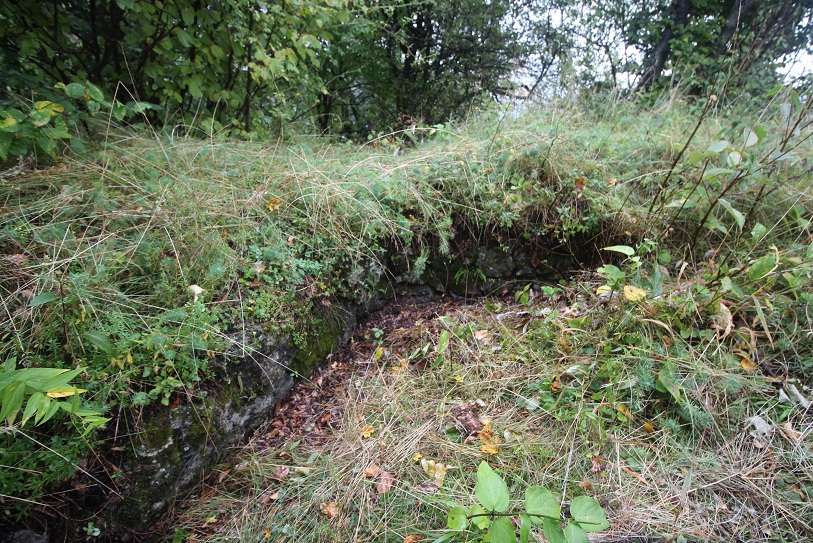
Uhrovec Castle was originally constructed on a natural rocky ridge, arranged around a triangular courtyard. The earliest sections, dating from the mid-13th century, exhibit Romanesque architectural features characterized by thick stone walls and robust defensive structures. Access to the courtyard was controlled through a gate topped by a defensive tower. The castle housed a large palace that dominated the complex and included a small chapel at the far end of the rocky outcrop. Despite later architectural modifications, much of the original Romanesque defensive wall layout remains visible in the ruins today.
In the 14th century, additions by Stibor of Stiboricz introduced Gothic architectural elements, including a palace on the northwestern side of the courtyard. These enhancements reflected the castle's continued importance and adaptation to contemporary styles and defensive needs.
Renaissance additions and artillery fortifications
The 16th-century expansions under the Zay family introduced a fortified lower courtyard designed to accommodate artillery defenses. This section featured two round towers capable of mounting firearms, a significant advancement in castle fortifications responding to the advent of gunpowder weaponry. Access to this lower courtyard was via a stone bridge spanning a defensive ditch, enhancing the castle's security and control over its approaches. Economic buildings were also situated within this lower section, indicating the castle's role in regional administration and resource management.
Decline, destruction, and preservation efforts
Gradual abandonment and damage
By the 18th century, Uhrovec Castle had been largely abandoned as a noble residence. The Zay family relocated to a more modern manor, leaving the castle to serve primarily defensive and economic functions. Over time, the structure fell into disrepair, exacerbated by natural weathering and erosion. A significant fire in June 1848 caused extensive damage, and the castle was never rebuilt. Its remote location spared it from damage during the Ottoman incursions and the kuruc uprisings, but it nonetheless deteriorated steadily.
20th and 21st-century conservation
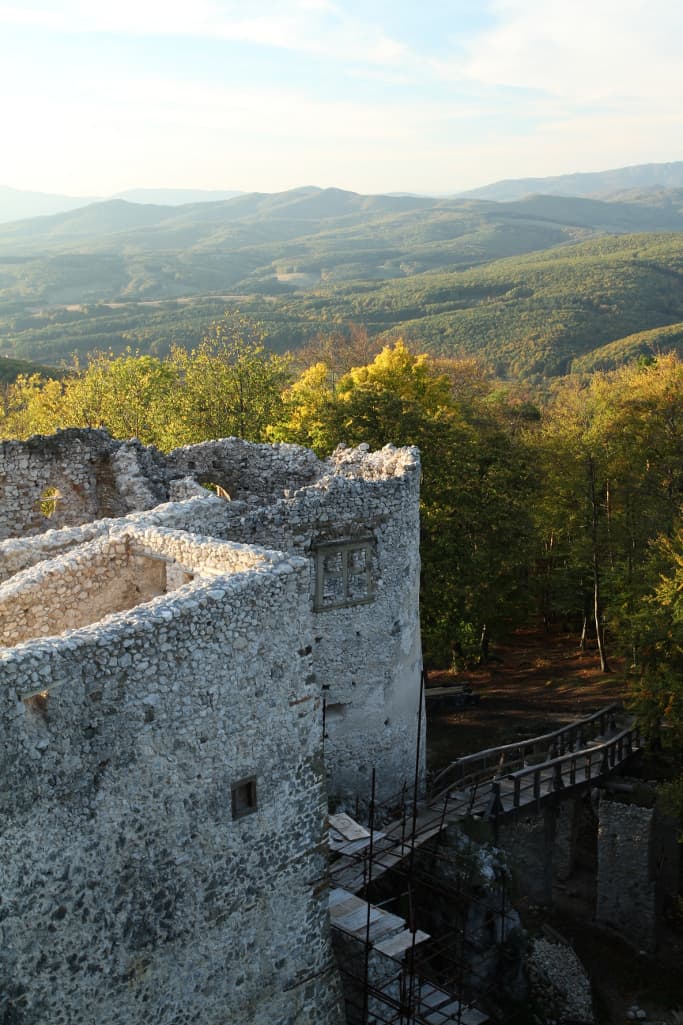
Photographs from around 1870 show the castle ruins lacking roofs, floors, and windows, yet detailed drawings from the late 19th century reveal interior features such as an altar table, crypt entrance, and a polygonal Renaissance pulpit within the chapel. These elements disappeared by the mid-20th century due to ongoing decay. Significant portions of the walls have collapsed over the centuries, including notable losses recorded as recently as 2004.
Today, the ruins are preserved and maintained by a dedicated civic association that focuses on conservation efforts. The site remains a valuable cultural and historical monument, offering insight into medieval and Renaissance castle architecture in Slovakia. Visitors can explore the visible remains, which continue to narrate the story of a mountain fortress that adapted through centuries of noble ownership and military evolution.
Visitor information and cultural significance
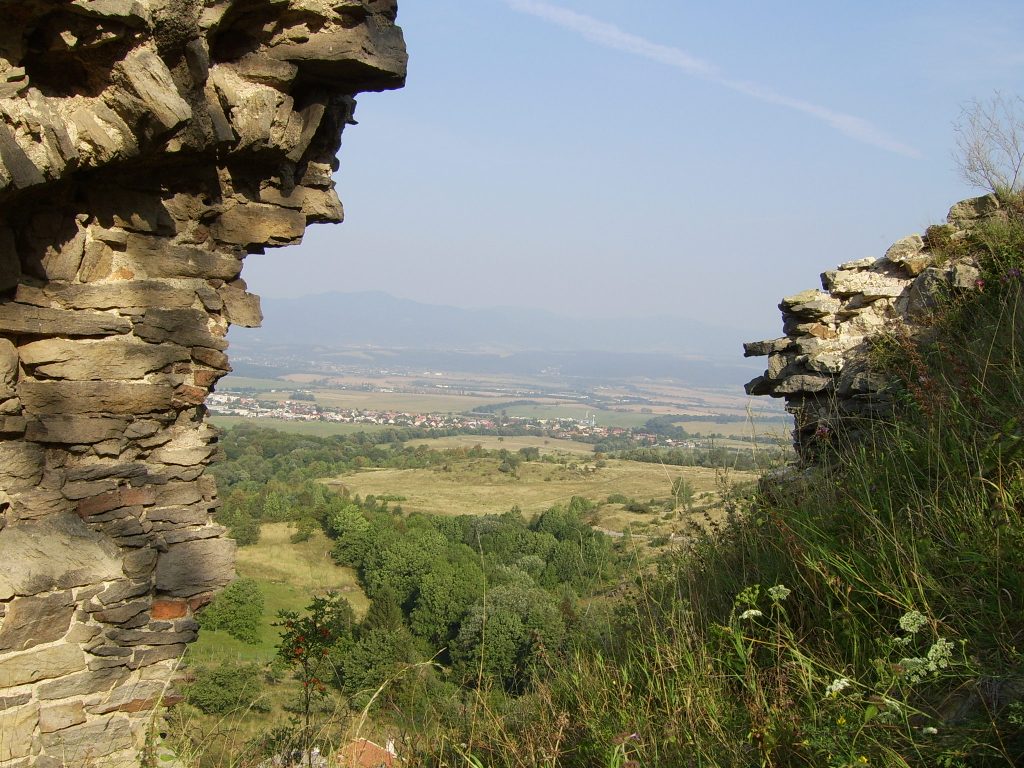
Uhrovec Castle is accessible to visitors interested in medieval history and castle architecture. Its location on a steep hill provides panoramic views of the surrounding landscape, enhancing its appeal as a heritage site. The castle's layered history—from its Romanesque origins through Gothic and Renaissance transformations—makes it a compelling destination for those studying Central European fortifications and noble estates.
Preservation efforts ensure that the ruins remain stable and safe for exploration, with ongoing projects aimed at preventing further deterioration. The castle's story reflects broader themes of political power, architectural adaptation, and regional defense strategies that shaped Slovakia's historical landscape.
Frequently asked questions (FAQ)
- How do I get to Uhrovec Castle Ruins?
- Uhrovec Castle Ruins are located in the Bánovce nad Bebravou District of Slovakia, easily accessible by car or public transport. The nearest town is Uhrovec, where you can find parking and then walk to the ruins, which are situated on a hill offering scenic views of the surrounding landscape.
- What is the historical significance of Uhrovec Castle?
- Uhrovec Castle, believed to have been constructed in the 13th century, played a strategic role in the defense against invasions and served as a residence for various noble families. The ruins today reflect its historical importance as a fortress in the region, contributing to the cultural heritage of Slovakia.
- When was Uhrovec Castle built?
- The construction of Uhrovec Castle is estimated to have begun in the 13th century, with significant modifications made in subsequent centuries. The castle was an important stronghold until its decline in the 17th century, leading to its eventual abandonment.
- Can I visit Uhrovec Castle Ruins?
- Yes, visitors are welcome to explore the Uhrovec Castle Ruins. The site is open to the public, allowing you to wander through the remnants of the castle and enjoy the historical ambiance and picturesque views of the surrounding countryside.
- Why is Uhrovec Castle worth visiting?
- Uhrovec Castle is worth visiting for its rich history and stunning views from its elevated position. The picturesque ruins provide a glimpse into Slovakia's medieval past, making it a great destination for history enthusiasts and nature lovers alike.
- Is it possible to access the ruins by public transport?
- While there is limited public transport directly to the castle, you can take a bus or train to the nearby town of Uhrovec. From there, it's a short walk to the castle ruins, making it accessible for visitors without a car.
- What are the opening hours for Uhrovec Castle Ruins?
- Uhrovec Castle Ruins are generally open year-round, but specific opening hours may vary depending on the season. It is advisable to check local resources or visitor information for the most accurate and up-to-date details before planning your visit.
- What is the best time to visit Uhrovec Castle?
- The best time to visit Uhrovec Castle is during the spring and autumn months when the weather is mild, and the surrounding nature is at its most beautiful. These seasons also offer fewer crowds, allowing for a more enjoyable experience exploring the ruins.
- Are there any nearby attractions to visit?
- Yes, nearby attractions include the picturesque town of Bánovce nad Bebravou and other historical sites in the region. Exploring the local area can enhance your visit, providing a fuller experience of Slovak culture and history.
- What are the ticket prices for visiting the ruins?
- Visiting Uhrovec Castle Ruins is typically free of charge, allowing everyone to enjoy the historical site without a ticket fee. However, it is advisable to check for any potential guided tour options or events that may have associated costs.
Photo gallery

Information
Website
Visit websiteSources & official resources
Verify the information above using these authoritative references.
Loading map...
Visitor reviews
No reviews yet. Been here? Write the first review and help other travelers!
Write the first reviewVisited this castle? Share your experience
Your review helps other travelers and adds first-hand knowledge to our encyclopedia.