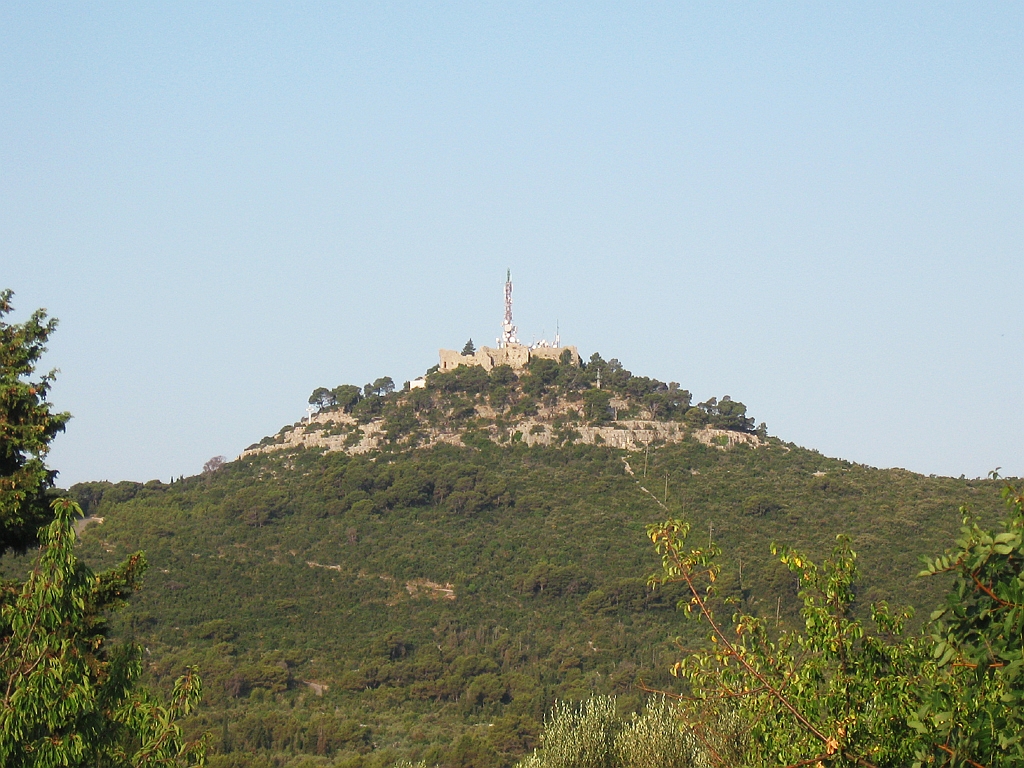
Tureta Fortress
The Byzantine fortress of Tureta is situated on one of the Kornati Islands in Croatia, dating back to the 6th century AD. This early medieval fortress was strategically constructed during a period when the Adriatic Sea was vulnerable to piracy and invasions, serving primarily as a military outpost to secure and control maritime navigation in this crucial part of the Mediterranean.
Historical context and strategic importance
During the early medieval period, the Adriatic Sea was a critical maritime corridor for trade and military movements. The Kornati archipelago, with its numerous islands and islets, provided natural vantage points for monitoring naval traffic. The Tureta fortress was likely established as part of the Byzantine Empire's efforts to maintain control over these waters and protect against incursions by various groups, including Slavs and Avars, who threatened coastal settlements and sea routes.
The fortress's location on the Kornati Islands allowed it to oversee key sailing lanes, making it an essential element in the network of coastal defenses. Its presence contributed to the security of maritime commerce and the safety of coastal communities during a turbulent era marked by frequent conflicts and shifting powers.
Architectural features and construction
Tureta fortress is characterized by its early Byzantine military architecture. Although much of the structure now lies in ruins, archaeological studies reveal that it was built using local stone with thick defensive walls designed to withstand attacks. The fortress likely included a watchtower or keep to provide elevated observation points over the surrounding sea and islands.
The design reflects typical Byzantine fortification principles of the 6th century, emphasizing strong defensive capabilities combined with strategic placement. The walls were probably reinforced with battlements and featured narrow openings for archers or artillery, allowing defenders to repel attackers effectively.
Layout and defensive elements
The fortress layout was compact, optimized for defense rather than comfort, with enclosed courtyards and limited access points to control movement within the structure. The use of natural terrain enhanced its defensive position, making direct assaults difficult. Its proximity to the sea also enabled supply and communication by boat, critical for sustaining the garrison during sieges.
Role in regional history
While specific historical records about Tureta fortress are limited, its existence aligns with the Byzantine strategy of fortifying coastal areas against rising threats in the Adriatic region. The fortress likely played a role in monitoring and deterring pirate activity and served as a relay point for messages and military coordination between other fortifications along the Croatian coast.
Over time, as political control shifted and maritime threats evolved, the fortress's military significance diminished. However, it remains an important archaeological and cultural site, offering insights into Byzantine military engineering and the geopolitical dynamics of the Adriatic Sea during the early medieval era.
Current condition and preservation
Today, Tureta fortress stands in a state of ruins, with remnants of its defensive walls and foundations visible. The site is accessible to visitors interested in history and archaeology, although it lacks extensive restoration. Its remote island location contributes to its preservation as a relatively undisturbed example of early Byzantine fortifications.
Efforts to study and protect the fortress focus on archaeological research and maintaining the site's integrity against natural erosion and human impact. Tureta remains a significant cultural landmark within the Kornati Islands, reflecting the region's complex historical layers.
Frequently asked questions (FAQ)
- What is the historical significance of Tureta fortress?
- Tureta fortress was a Byzantine military stronghold built in the 6th century to secure maritime routes in the Adriatic Sea and protect against piracy and invasions.
- Can visitors access Tureta fortress today?
- Yes, visitors can access the ruins of Tureta fortress on the Kornati Islands, although the site is largely unrestored and offers a raw archaeological experience.
- What architectural features are notable at Tureta fortress?
- The fortress features thick defensive walls typical of early Byzantine military architecture, with remnants of watchtowers and battlements adapted to the rugged island terrain.
- Why was Tureta fortress built on the Kornati Islands?
- Its location allowed control over key Adriatic sailing routes, providing strategic surveillance and defense against maritime threats in the early medieval period.
- Is there any restoration work ongoing at Tureta fortress?
- Currently, Tureta fortress remains in ruins with no major restoration projects underway, focusing instead on archaeological preservation and research.
Information
Loading map...
Visitor reviews
No reviews yet. Been here? Write the first review and help other travelers!
Write the first reviewVisited this castle? Share your experience
Your review helps other travelers and adds first-hand knowledge to our encyclopedia.