Trausnitz Castle and Wunderkammer

Trausnitz Castle and Wunderkammer in Landshut
Landshut, Bayern, Germany
High Medieval (11th–13th c.)
Well Preserved

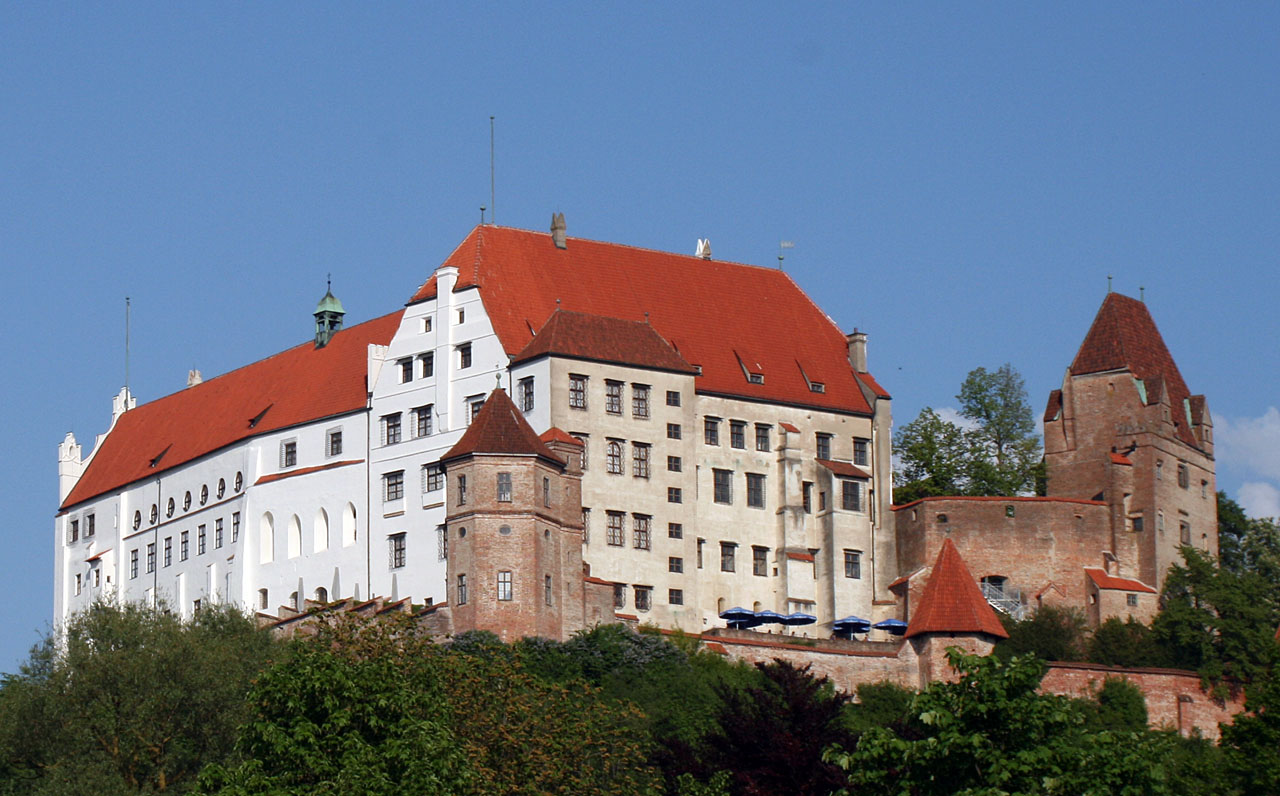
Trausnitz Castle, located in Landshut, Bavaria, is a remarkable example of medieval and Renaissance architecture with a rich history dating back to 1204. Originally built as a fortress and residence for the dukes of Lower Bavaria, it evolved into a significant political and cultural center in the region. The castle's strategic hilltop location allowed it to serve as both a defensive stronghold and a prestigious seat of power.

Historical significance and political role

From 1255 to 1503, Trausnitz Castle was the primary residence and administrative center for the dukes of Lower Bavaria. During this period, it played a crucial role in regional governance and was a hub for the flourishing Staufen culture. The castle hosted numerous important guests, including nobility, artists, and scholars, making it a vibrant cultural venue in medieval Bavaria.

Following the political unification of Bavarian states, the castle retained its cultural importance. It became a favored site for festivals, celebrations, and artistic patronage, reflecting the evolving tastes and influences of the Renaissance period.

Architectural evolution and artistic heritage

Over the centuries, Trausnitz Castle underwent multiple reconstructions and expansions. Its architecture showcases a blend of medieval fortifications and Renaissance aesthetics. Notably, the castle was adorned with colorful frescoes and paintings inspired by Italian Renaissance art, emphasizing its role as a cultural beacon.

One of the castle's most distinctive features is the Fools' Staircase, a unique staircase decorated with life-sized figures from the Italian Commedia dell’arte. This whimsical artwork depicts a man riding a donkey with another figure administering an enema to the animal, symbolizing the folly and humor appreciated during the Renaissance.

The Italian Extension of the palace houses exquisitely preserved cabinets featuring intricate stucco decorations on ceilings and walls, showcasing the high craftsmanship and artistic influences of the period.

The 1691 fire and subsequent restoration

In 1691, a devastating fire severely damaged much of the castle, destroying many of its original Renaissance frescoes and architectural elements. Despite this loss, restoration efforts rebuilt the palace, preserving some of its unique decorations and structural features.

Although many frescoes were lost, the surviving artworks and architectural details continue to offer valuable insights into the castle's historical and cultural legacy. The restoration maintained the castle's status as a significant heritage site and tourist attraction in Bavaria.

Current status and visitor experience

Today, Trausnitz Castle stands as a well-preserved monument reflecting centuries of Bavarian history and art. Visitors can explore its historic halls, admire the surviving Renaissance decorations, and learn about the castle's role in the region's political and cultural development.

The castle's location in Landshut makes it accessible for tourists interested in medieval architecture, Renaissance art, and Bavarian heritage. Its unique blend of defensive structures and artistic embellishments provides a comprehensive experience of a historic European castle.

Frequently asked questions (FAQ)

What are the opening hours of Trausnitz Castle?
Trausnitz Castle is open to visitors from 9 AM to 6 PM during the summer months and from 9 AM to 5 PM in the winter. It is advisable to check the official website for any changes to the schedule or special holiday hours. Plan your visit accordingly to make the most of your exploration.
Is Trausnitz Castle accessible for visitors with mobility impairments?
While Trausnitz Castle has made efforts to accommodate visitors with mobility challenges, some areas may be difficult to access due to the castle's historic architecture and terrain. It is recommended to contact the visitor center in advance for detailed information on accessibility options available during your visit.
When was Trausnitz Castle built?
Trausnitz Castle was originally constructed in the 13th century, serving as a residence for the Dukes of Bavaria. Its rich history is reflected in the architectural styles that evolved over the centuries, making it a fascinating site to explore for history enthusiasts.
Can I purchase tickets online for Trausnitz Castle?
Yes, tickets for Trausnitz Castle can be purchased online through the official website. Buying tickets in advance is highly recommended, especially during peak tourist season, to avoid long queues and ensure your entry at your preferred time.
What is the historical significance of Trausnitz Castle?
Trausnitz Castle played a pivotal role in the political and cultural landscape of Bavaria during the Middle Ages. It served not only as a residence but also as a strategic stronghold, reflecting the power of the Bavarian dukes and their influence in the region.
What are the best nearby attractions to visit along with Trausnitz Castle?
Nearby attractions include the picturesque Landshut Old Town, the St. Martin's Church with its iconic tower, and the Landshut Wedding Museum. These sites offer additional insights into the rich history and culture of the region, making them perfect companions to your visit to the castle.
Why should I visit the Wunderkammer at Trausnitz Castle?
The Wunderkammer, or Cabinet of Curiosities, at Trausnitz Castle showcases a unique collection of artifacts and exhibits that highlight the eclectic interests of historical collectors. It provides an intriguing glimpse into the past and enhances your understanding of the cultural context of the era.
What is the best time to visit Trausnitz Castle?
The best time to visit Trausnitz Castle is during the late spring and early autumn when the weather is pleasant and ideal for exploring the outdoor areas. Additionally, consider visiting during weekdays to avoid larger crowds and enjoy a more serene experience.

Information

Hill Castle

Sources & official resources

Verify the information above using these authoritative references.

Loading map...

Visitor reviews

No reviews yet. Been here? Write the first review and help other travelers!

Write the first review

Visited this castle? Share your experience

Your review helps other travelers and adds first-hand knowledge to our encyclopedia.
Write a review

(5/5)

0/2000 characters

Your review will be visible after admin approval

Nearby castles

0.6 km
Trausnitz Castle — Germany castle

Trausnitz Castle

Landshut, Germany

Trausnitz Castle stands prominently above the historic center of Landshut, Germany, embodying centuries of Bavarian political power, cultural development, and architectural evolution. Founded in 1204 by Duke Ludwig I, this hill castle served as the principal residence of the Wittelsbach dynasty for the duchy of Lower Bavaria from 1255 to 1503 and later became the seat of the hereditary rulers of the entire Bavarian territory. Its strategic location atop a hill not only provided defensive advantages but also symbolized the authority and prestige of its occupants. The castle's origins trace back even further to prehistoric times, with archaeological evidence revealing fortifications from the Urnfield culture. Around 1150, a wooden watchtower known as Landeshuata occupied the site, giving the city of Landshut its name. The transition to a stone fortress began in the early 13th century, with the castle largely completed by 1235. It quickly emerged as a political and cultural center, hosting Emperor Frederick II and renowned Minnesänger such as Tannhäuser and Walther von der Vogelweide. Medieval origins and the wittelsbach residence Following the division of Bavaria in 1255, Trausnitz Castle became the ducal residence for Lower Bavaria. The castle's medieval core includes the original curtain walls, the palas (main residential building), and the bergfried or main tower known as the Wittelsbacher Turm. The St. George Chapel, a late-Romanesque structure with 13th-century sculptures, highlights the castle's religious and artistic significance during this period. The Old Dürnitz or Knights' Hall, a two-nave vaulted hall measuring approximately 245 square meters, served as a ceremonial and residential space and remains in use today for banquets and exhibitions. The 15th century brought significant expansions under Dukes Ludwig IX and George the Rich, including the construction of the Princes' Building and the New Knights' Hall. The curtain walls were heightened and extended, and impressive towers were added, reinforcing both the castle's defense and its status as a princely residence. The landshut wedding and cultural prominence One of the castle's most enduring legacies is the Landshut Wedding, a lavish celebration originally held in 1475 by Duke Ludwig the Rich to mark the marriage of his son Georg to Hedwig, daughter of the Polish king. This event is reenacted every four years, drawing visitors worldwide and showcasing medieval pageantry and traditions. Renaissance transformation and artistic flowering In the early 16th century, Duke Ludwig X initiated a redesign of the castle interiors, blending late Gothic and emerging Renaissance styles. Although few original elements from this renovation survive, the period marked a shift towards more comfortable and stylistically sophisticated living spaces. Between 1568 and 1579, Prince Wilhelm V, born at Trausnitz in 1548, fostered a vibrant cultural environment at the castle. He gathered artists, musicians, and comedians, elevating the court's artistic profile. Architect and painter Friedrich Sustris played a pivotal role, introducing arcaded galleries with flat pilasters and elaborate Florentine Mannerist wall paintings. These included the famous "Narrentreppe" or Staircase of Fools, adorned with frescoes depicting scenes from the Italian Commedia dell'arte by Alessandro Paduano. During this Renaissance phase, the castle also housed Bavaria's first court brewery, established in 1573, which produced dark beer until 1590. The Söller terrace tower, known from 1493, was enhanced with decorative wooden ceilings and music platforms, exemplifying the blend of fortification and courtly leisure. Later history, decline, and restoration The castle's military significance was underscored during the Thirty Years' War when, in 1634, Swedish forces besieged Landshut and breached the eastern walls of Trausnitz. The entry point is commemorated by the Swedish Gate. Following this turbulent period, the castle's role shifted towards more utilitarian functions. In the 18th century, Trausnitz served as barracks, a prison for aristocratic detainees, and briefly as a manufactory for wool and silk goods. The early 19th century saw its use as a military hospital and a cholera hospital from 1831. King Ludwig II prepared guest accommodations in the castle's second floor during the late 19th century, though these were never used. The Fürstenbau wing suffered a devastating fire on October 21, 1961, which destroyed many Renaissance frescoes, furnishings, and King Ludwig II's apartments. However, the Narrentreppe and St. George Chapel survived. Subsequent restoration efforts have preserved the castle's historic fabric and adapted it for modern use. Museum collections and cultural significance Today, Trausnitz Castle houses the Chamber of Art and Curiosities in the former Ladies' Apartments, showcasing the Wittelsbach dukes' extensive collections of art, natural specimens, and exotic artifacts. This museum is a branch of the Bavarian National Museum and reflects the Renaissance passion for collecting and knowledge. The castle's medieval halls, including the vaulted Old Knight's Hall and the castle chapel with its winged altarpieces, provide visitors with a glimpse into its storied past. The Renaissance is represented through the vaulted cabinets, panelled rooms, and the famous Fools' Staircase. The tour concludes with panoramic views of Landshut from the tower terrace, emphasizing the castle's commanding position over the city. Architectural features and layout Trausnitz Castle is a complex ensemble combining medieval fortifications and Renaissance modifications. The main castle or Hauptburg occupies the southwestern hilltop edge, featuring the bergfried (Wittelsbacher Turm), multiple residential wings, gates, and chapels arranged around inner courtyards. The oldest surviving structures exhibit the Cistercian Gothic style with sturdy stone construction. The 15th-century expansions added the White Hall (Weißer Saal), a large festive hall, though it was never fully completed. The Renaissance period introduced three-story arcaded galleries and Italianate loggias, blending defensive and aesthetic functions. The Damenstock, or Ladies' Wing, contains the Art and Curiosities Chamber museum, while the outer ward (zwinger) surrounds the castle with defensive walls and towers. The Outer Courtyard (Vorburg) once housed agricultural buildings but was damaged during the 1634 siege and is now an open meadow known as the "Swedish Meadow". One notable feature is the Fürstentreppe or Princes' Staircase, a brick-built sloped path reinforced to allow horses to ascend from the old town to the castle's outer courtyard, highlighting the practical considerations of castle logistics. Grounds and surrounding landscape The castle is surrounded by forested areas and the Hofgarten, a former palace garden redesigned in the late 18th century in the Neoclassical style. Opened to the public in 1837, the garden offers a landscaped setting adjoining the castle's outer defenses, providing visitors with a serene environment to complement their historical exploration.

High Medieval (11th–13th c.)
Details
9.4 km

Kronwinkl Castle

Eching, Germany

Kronwinkl Castle, located in Eching, Germany, is a historic fortress originally constructed in the 12th century during the High Medieval period. This castle has served as the ancestral home of the Preysing family for centuries, reflecting a continuous lineage of noble residence and stewardship. Its origins as a medieval stronghold are evident in its foundational structures, which have been preserved and adapted over time. Architectural evolution and residential buildings The castle's residential buildings primarily date from the 16th and 17th centuries, showcasing architectural developments from the Renaissance into the early Baroque era. These later constructions were integrated into the original medieval fabric, transforming Kronwinkl Castle from a purely defensive fortress into a more comfortable noble residence. The buildings from this period often feature characteristic elements such as steeply pitched roofs, ornate gables, and large windows, which contrast with the more austere medieval fortifications. Medieval foundations and defensive features The initial 12th-century construction would have included typical High Medieval defensive elements such as thick stone walls, narrow slit windows for archers, and possibly a keep or tower serving as a last line of defense. While much of the castle's military function was diminished with the later residential expansions, traces of these original fortifications remain, providing insight into the castle's strategic importance in the region during the Middle Ages. Surrounding landscape and gardens Kronwinkl Castle is surrounded by an English-style garden, a landscape feature that became popular in Europe during the 18th century. This garden style emphasizes naturalistic design with sweeping lawns, informal tree groupings, and winding paths, contrasting with the formal, geometric gardens typical of earlier periods. The garden complements the castle's historical ambiance, offering visitors a serene and picturesque environment that enhances the site's cultural value. Historical significance and ownership The Preysing family, one of the oldest noble families in Bavaria, has maintained ownership of Kronwinkl Castle since its construction. Their long-term stewardship has ensured the preservation of the castle's architectural heritage and its role as a symbol of regional nobility. The family's history is intertwined with the castle's evolution, reflecting broader social and political changes in Bavaria over the centuries. Current condition and access Kronwinkl Castle remains well-preserved, with much of its historical architecture intact. While the castle is primarily a private residence, its gardens and certain areas may be accessible to visitors during special events or by arrangement. The preservation efforts have focused on maintaining the castle's authentic character while accommodating modern needs. Architectural style and classification The castle's core reflects High Medieval architecture, with later additions showing influences from the Renaissance and early Baroque styles. It is classified as a lowland castle given its location in the relatively flat terrain of the Eching area, rather than on a hill or rock outcrop. This classification highlights its strategic placement for controlling surrounding lands and trade routes rather than elevated defense.

High Medieval (11th–13th c.)
Details
11.8 km

Bruckberg Castle

Bruckberg, Germany

Bruckberg Castle is a historic fortress located in Bruckberg, Bavaria, Germany. Constructed in the 11th century during the High Medieval period, the castle was originally established by the counts of Moosburg-Roning-Rottenburg, a noble family influential in the region. Its strategic position underscored its importance in medieval territorial defense and control. Medieval origins and architectural features The castle's initial construction reflects typical High Medieval fortification techniques, likely featuring robust stone walls, a central keep or donjon, and defensive elements such as battlements and a moat or natural barriers. While specific architectural details from the original build are scarce, the castle's longevity suggests a design focused on both defense and residence. Layout and structure As a hill castle, Bruckberg Castle was positioned to take advantage of elevated terrain, providing extensive views of the surrounding landscape and early warning against approaching enemies. The castle complex would have included a courtyard, residential quarters, storage facilities, and possibly a chapel, common in noble residences of the era. Historical events and damage Throughout its history, Bruckberg Castle endured significant challenges. It suffered near destruction at the hands of the Swedish army during the Thirty Years' War (1618–1648), a conflict that devastated much of Germany. This military action severely damaged the castle's fortifications and residential buildings. Later, in 1770, the castle was again damaged by fire, further impacting its structure and leading to partial ruin. These events mark the castle's decline from a fortified noble residence to a more modest state. Ownership and current status Today, Bruckberg Castle remains privately owned. Its current condition reflects the historical damage it sustained, with parts of the castle preserved or restored to maintain its heritage. The private ownership limits public access, but the castle remains a significant cultural landmark within the region. Cultural and regional significance Bruckberg Castle stands as a testament to the medieval history of Bavaria and the noble families that shaped the area's development. Its endurance through centuries of conflict highlights the shifting political and military landscape of southern Germany. The castle contributes to the region's cultural identity and serves as a point of interest for historians and enthusiasts of medieval architecture.

High Medieval (11th–13th c.)
Details

