Tourbillon Castle
Tourbillon Castle is a striking high medieval hill castle perched on a rocky spire overlooking the historic city of Sion in the Valais region of Switzerland. Constructed between 1290 and 1308, it served as the principal residence and fortress of the powerful bishops of Sion during the late 13th and 14th centuries. Though now a ruined monument, the castle remains a potent symbol of ecclesiastical authority and medieval military architecture in the region.
The castle was originally commissioned by Bishop Boniface de Challant, a member of the influential Challant family, whose lineage traced back to the Viscounts of Aosta. Following his death in 1308, construction was likely completed by his successor, Aymon II de Châtillon. The site was strategically chosen atop a natural plateau rising approximately 180 meters above Sion, providing commanding views and formidable defense against attackers.
Architectural design and fortifications
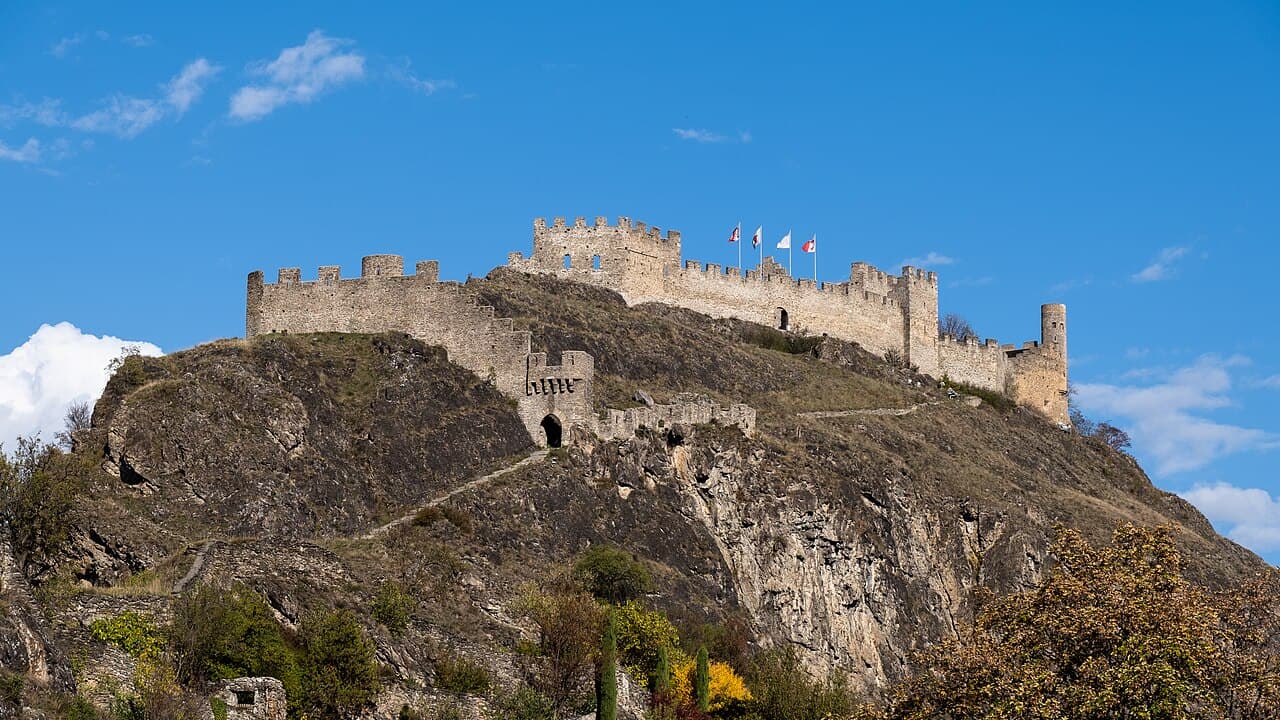
Tourbillon Castle's layout takes full advantage of the elongated rocky plateau, roughly 200 meters long and 50 meters wide, composed of sedimentary rocks such as marly phyllites and calcareous shales. The castle is enclosed by a robust ring wall following the irregular contours of the spire, featuring crenellated battlements and defensive elements typical of the high medieval period.
Access to the castle is gained via steep stairs winding around the hill, leading to a fortified gatehouse on the southern side, which was once protected by a machicolated gallery allowing defenders to drop projectiles on attackers. Adjacent to the western entrance stands a pentagonal fortified building, while a semi-circular watchtower is integrated into the northern curtain wall.
The castle's keep is a rectangular tower centrally located on a rocky prominence. Originally built in the 13th century, it underwent significant modifications in the 15th century, including the addition of an upper floor and relocation of the main entrance from north to south. The keep is internally divided into two main sections: the bishop's private chambers to the east and a large reception hall to the west, featuring expansive arched windows reminiscent of those at Chillon Castle.
Castle chapel and religious features
One of the castle's most remarkable features is its 15th-century chapel, dedicated to Saint George, located in the southeastern corner of the complex. The chapel consists of two bays: a nave with a wooden ceiling replaced later by a vaulted stone roof, and a choir area supported by Gothic ogival arches and decorated with two tori resting on columns.
The chapel's south wall originally contained a single circular oculus window, later supplemented by three additional openings, shifting its symmetry. The adjoining sacristy includes lancet windows and a stone basin known as a piscina used for ritual washing, underscoring the chapel's liturgical function. Despite the devastating fire of 1788, many of the chapel's Gothic frescoes remain visible, depicting biblical scenes such as the Annunciation, Crucifixion, and Saint George slaying the dragon, alongside images of saints including Saint Sebastian and Saint Catherine.
Historical significance and events
Tourbillon Castle was more than a residence; it was a center of both secular and ecclesiastical power in the Valais. Throughout its history, it was the focal point of political conflicts and military engagements, particularly involving the bishops of Sion and local noble families such as the de la Tour and Raron clans.
In 1352, during a revolt against Bishop Guichard Tavel, rebels led by Peter de la Tour attacked Sion, burning the town and unsuccessfully besieging the castle. The castle's strategic importance was further underscored when the Prince-Bishop acquired Majorie Castle in 1373 and moved his primary residence there, though Tourbillon remained a summer residence and symbol of authority.
The castle endured multiple sieges and changes of control, including a notable capture by rebels in 1384 and destruction during the Raron affair in 1417, a local civil war that forced Bishop Wilhelm V of Raron to flee. Restoration efforts in the mid-15th century under Bishop Guillaume VI of Raron repaired the damage and reinforced the castle's role as the diocese's administrative center.
By the 18th century, however, military advances and changing political landscapes reduced the castle's defensive relevance. On May 24, 1788, a massive fire originating near the nearby Notre-Dame cathedral engulfed Tourbillon, destroying its wooden structures, roofs, and interiors. The bishop's plans to rebuild were halted by the revolutionary upheavals sweeping Europe.
Preservation and archaeological findings
Following its destruction, the castle fell into ruin, with stones repurposed for local construction. In the 19th and 20th centuries, preservation efforts began to stabilize and restore the remaining walls and towers. Excavations in 1994 revealed evidence of prehistoric occupation, including Neolithic dwellings dating back to the 5th millennium BCE, highlighting the site's long-standing strategic importance.
Despite earlier assumptions, no confirmed Roman structures have been identified; what were once thought to be Roman foundations are now understood to be medieval. Restoration of the chapel has been a focus since 2009, preserving its valuable frescoes and architectural details for future generations.
Today, Tourbillon Castle stands as a carefully conserved ruin, accessible to visitors who can explore its steep stairways, fortified walls, and the evocative chapel. It remains a significant cultural landmark, reflecting the rich medieval heritage and ecclesiastical history of the Valais region.
Visitor experience and access
Visitors to Tourbillon Castle can ascend the steep stairs that wind around the hill to reach the castle ruins. The site offers panoramic views of Sion and the surrounding alpine landscape. The castle's ring walls, watchtowers, and chapel provide a tangible connection to medieval life and architecture.
The castle's location on a rocky spire means access requires some physical effort, but the reward is an immersive experience into the region's history and stunning vistas. The preserved Gothic frescoes in the chapel are a highlight, offering insight into medieval religious art and symbolism.
Nearby historical sites
Near Tourbillon Castle lies the All Saints Chapel, a small Romanesque-Gothic building from the 14th century, situated between two hills. Below the castle, the medieval old town of Sion features the Witches Tower, the last preserved tower of the city's ancient fortifications, adding to the area's rich historical tapestry.
Frequently asked questions (FAQ)
- What is the historical significance of Tourbillon Castle?
- Tourbillon Castle, built in the late 13th century, is an important landmark in Sion, Switzerland. It served as a fortress for the Counts of Sion and played a crucial role in the region's defense during the Middle Ages.
- When was Tourbillon Castle constructed?
- Tourbillon Castle was constructed around 1270 and has since stood as a testament to the architectural styles and military needs of the time. Its strategic location on a rocky outcrop offers stunning views of the surrounding valley.
- What are the opening hours for Tourbillon Castle?
- Tourbillon Castle is typically open to visitors from April to October, with varying hours depending on the season. It is advisable to check the official website for the most current hours before planning your visit.
- Can I access Tourbillon Castle with limited mobility?
- Access to Tourbillon Castle can be challenging due to its location on a hill and the uneven terrain leading up to it. Visitors with limited mobility may want to consider alternative attractions or check for accessibility options in advance.
- Is it possible to take guided tours of Tourbillon Castle?
- Yes, guided tours are often available for visitors, providing insights into the castle's rich history and architectural features. These tours typically enhance the experience, allowing guests to learn more about the castle's significance.
- What is the best time to visit Tourbillon Castle?
- The best time to visit Tourbillon Castle is during the spring and early fall when the weather is pleasant, and the surrounding landscapes are vibrant. This timing also allows visitors to enjoy the panoramic views without the summer crowds.
- How much are the ticket prices for Tourbillon Castle?
- Ticket prices for Tourbillon Castle are generally affordable, with discounts available for students and seniors. It is recommended to check the official website for the latest pricing and any special promotions.
- What nearby attractions should I consider visiting?
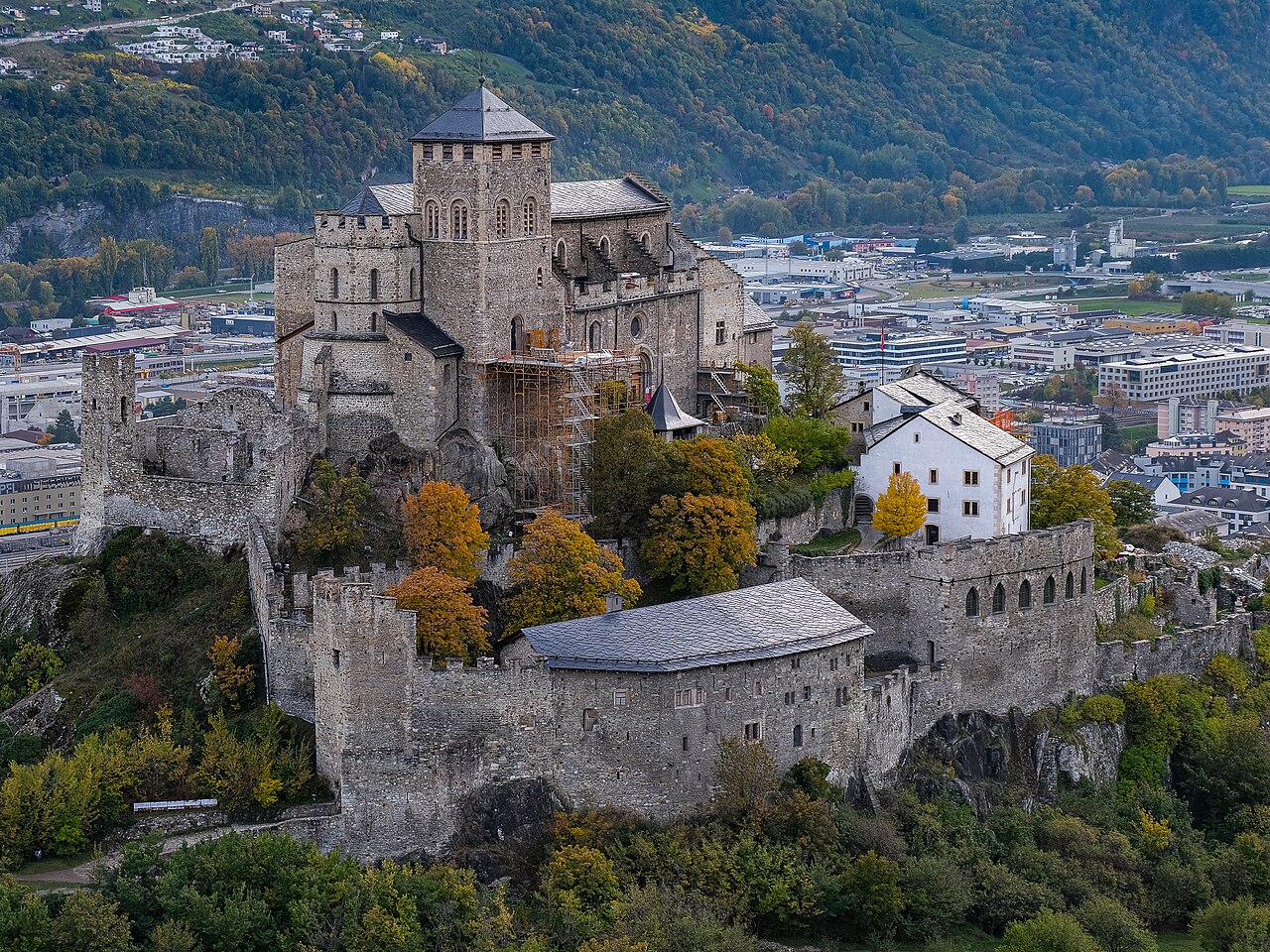
- While at Tourbillon Castle, visitors can also explore the Valère Basilica, which is located nearby and boasts stunning architecture and historical significance. Additionally, the charming town of Sion offers various shops, restaurants, and cultural experiences.
Photo gallery

Information
Website
Visit websiteSources & official resources
Verify the information above using these authoritative references.
Loading map...
Visitor reviews
No reviews yet. Been here? Write the first review and help other travelers!
Write the first reviewVisited this castle? Share your experience
Your review helps other travelers and adds first-hand knowledge to our encyclopedia.