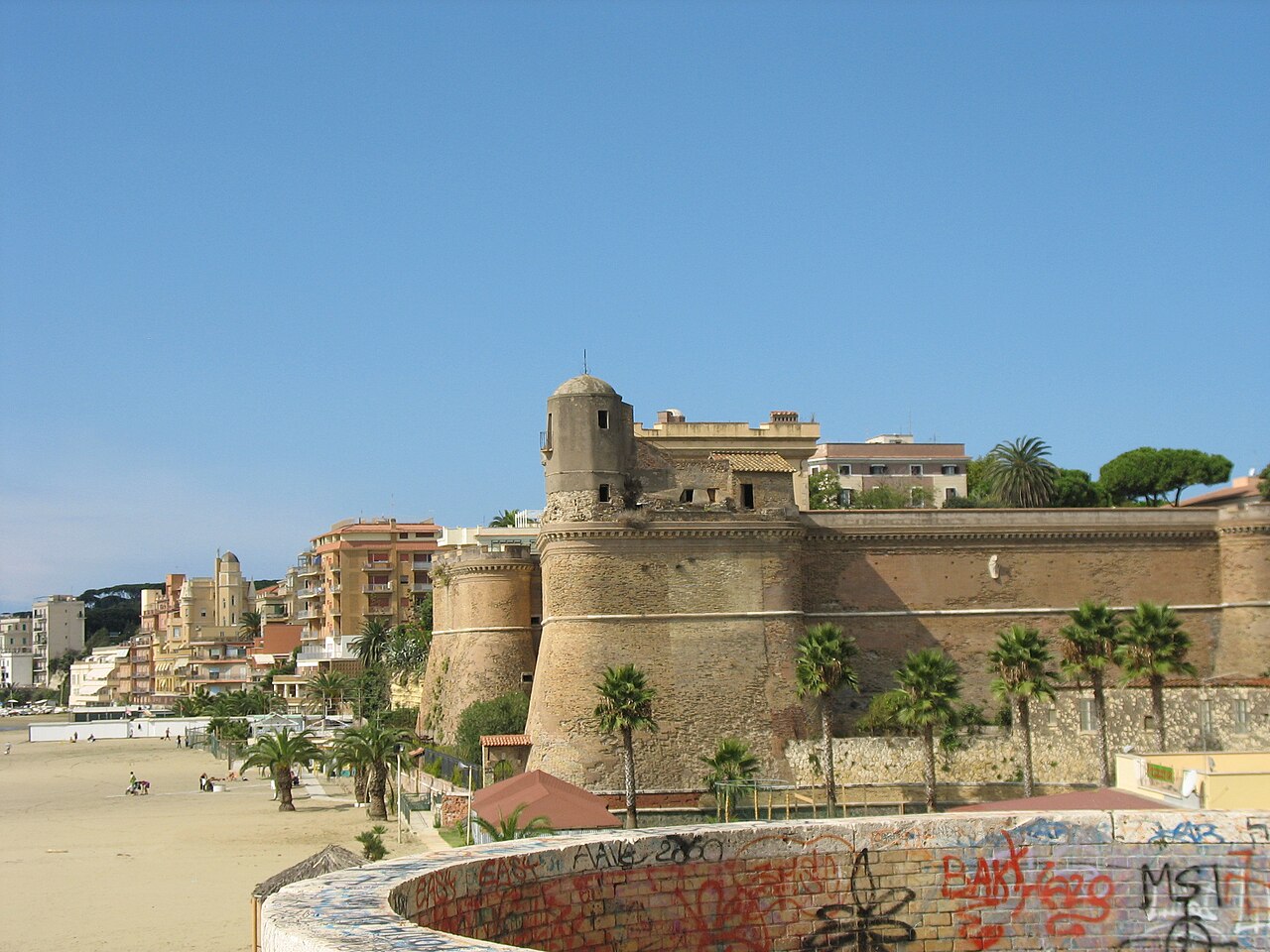
Torre Astura
Torre Astura stands as a remarkable example of a medieval bastioned fortress located along the picturesque coastline of Lazio, Italy. Its strategic position near the mouth of the Astura River made it a critical defensive site during the turbulent Middle Ages, a period marked by frequent Saracen raids that threatened the coastal settlements. This fortress is among the best-preserved of the so-called "Saracen towers" constructed to guard the region's shores.
The origins of Torre Astura trace back to the 12th century, a time when the powerful Counts of Tusculum held dominion over the area. The castle's initial construction was likely influenced by the need to protect the fertile lands and control access to the river, which was vital for trade and military movements. Later, ownership passed to the influential Frangipane family, who further fortified the structure to withstand both land and sea attacks.
Architectural features and defensive design
The fortress is characterized by its robust bastioned walls, a defensive innovation that allowed defenders to cover adjacent walls with flanking fire, enhancing protection against siege engines and infantry assaults. The stone masonry exhibits a blend of medieval construction techniques, with thick walls punctuated by narrow windows and embrasures designed for archers and later firearms.
Torre Astura also includes a prominent keep or central tower, which served as the last line of defense and a residence for the lord or commanding officer. Surrounding the keep are curtain walls and a series of battlements that provided vantage points for surveillance and defense. The fortress's proximity to the coast meant it was also equipped with facilities to monitor and repel naval threats.
Historical significance and notable events
The castle's history is deeply intertwined with the political and military struggles of medieval Italy. After the Counts of Tusculum, the Frangipane family controlled Torre Astura, using it as a stronghold in their regional power struggles. The fortress gained particular historical prominence during the late 13th century when it became the refuge of Conradin of Hohenstaufen, the last heir of the Hohenstaufen dynasty.
Following his defeat at the Battle of Tagliacozzo in 1268, Conradin sought sanctuary within Torre Astura under the protection of the Frangipane. However, this refuge was short-lived; the Frangipane betrayed Conradin, handing him over to Charles of Anjou. Conradin was subsequently executed, marking the end of the Hohenstaufen line and a significant turning point in Italian medieval history.
Towers, moats, and surrounding landscape
The fortress is surrounded by remnants of a moat, which would have been filled with water from the nearby river to hinder attackers. The design reflects the typical medieval military architecture adapted to coastal environments, combining natural and man-made defenses. The surrounding landscape includes marshlands and riverine features that further enhanced the castle's defensibility.
Several smaller watchtowers and outposts were likely part of the broader defensive network along the Lazio coast, designed to provide early warning of Saracen raids. Torre Astura remains one of the few surviving examples that illustrate this coastal defense system.
Cultural heritage and preservation status
Today, Torre Astura is recognized for its well-preserved condition, offering valuable insights into medieval military architecture and the historical dynamics of coastal defense in Italy. The fortress is a significant cultural heritage site within the Lazio region, attracting historians, architects, and tourists interested in medieval fortifications and Italian history.
Efforts to maintain and restore the structure have ensured that key architectural elements remain intact, allowing visitors to experience the imposing presence of this bastioned fortress and understand its role in the medieval landscape.
Visiting torre astura
Visitors to Torre Astura can explore the fortress grounds and appreciate the strategic location that made it a formidable defensive site. The site is accessible from nearby towns in Lazio and is often included in cultural tours focusing on medieval history and architecture. While facilities may be limited, the natural beauty of the surrounding area complements the historical significance of the fortress.
Given its coastal position, the best time to visit is during the warmer months when the weather allows for comfortable exploration of the outdoor areas and nearby natural reserves.
Frequently asked questions (FAQ)
- What is the historical significance of Torre Astura?
- Torre Astura is historically significant as a medieval bastioned fortress that served as a refuge for Conradin of Hohenstaufen after his defeat in 1268. Its association with the Counts of Tusculum and the Frangipane family highlights its role in regional power struggles during the Middle Ages.
- How can I visit Torre Astura?
- Torre Astura is accessible from towns in the Lazio region and is often included in medieval history tours. Visitors should plan to visit during warmer months for the best experience exploring the outdoor fortress grounds.
- What architectural features define Torre Astura?
- Torre Astura features robust bastioned walls, a central keep, curtain walls, battlements, and remnants of a moat. These elements reflect its design as a coastal bastioned fortress built to defend against Saracen raids and other medieval threats.
- Why was Torre Astura built along the Lazio coast?
- The fortress was built to defend the Lazio coastline from Saracen raids and to control access to the Astura River, which was vital for trade and military movements during the Middle Ages.
Information
Loading map...
Visitor reviews
No reviews yet. Been here? Write the first review and help other travelers!
Write the first reviewVisited this castle? Share your experience
Your review helps other travelers and adds first-hand knowledge to our encyclopedia.