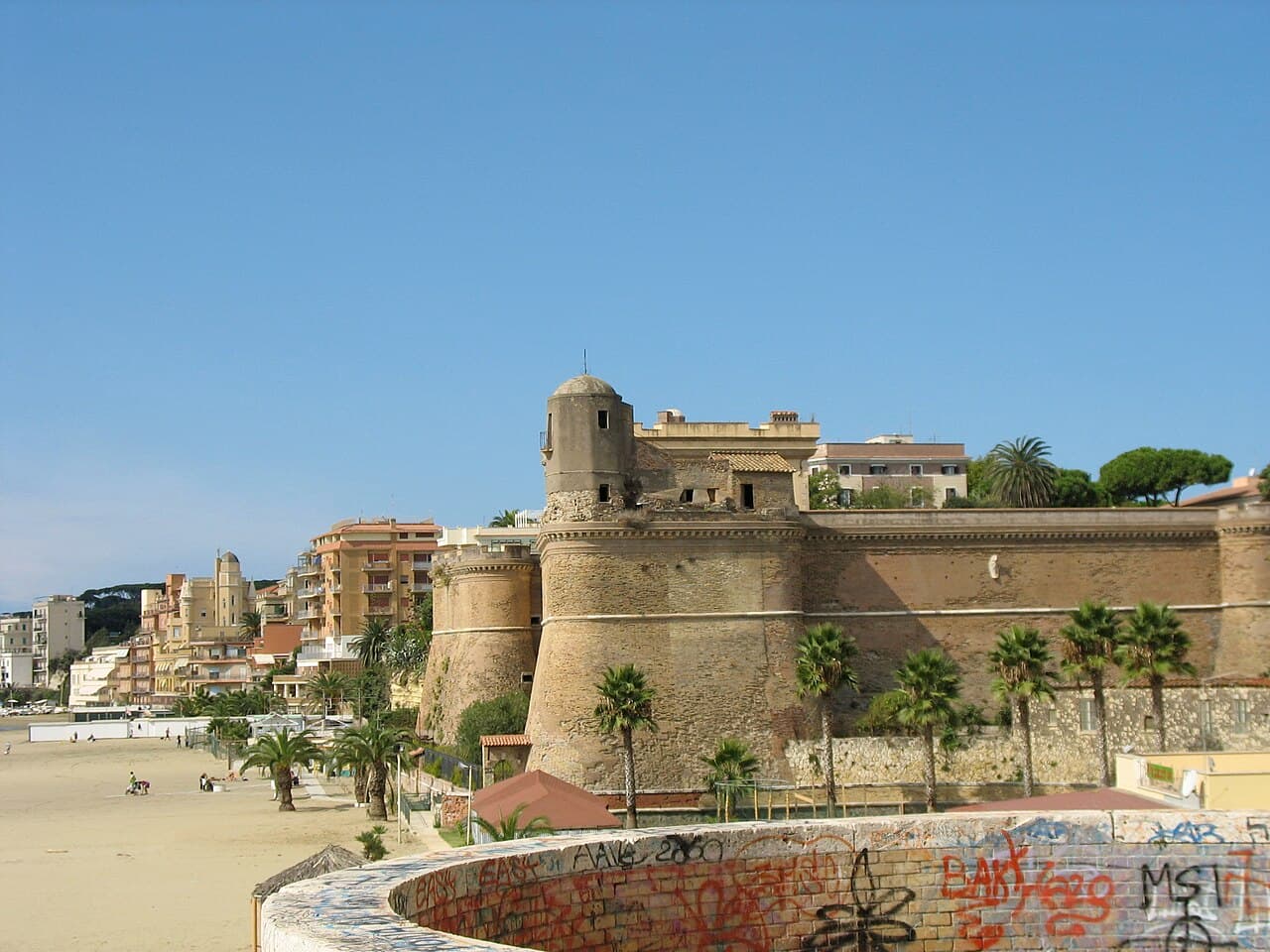
Forte Sangallo
Forte Sangallo, also known as the Fortezza di Nettuno, is a distinguished example of Renaissance military architecture located on the Tyrrhenian Sea coast in the historic town of Nettuno, south of Rome. Constructed in the 16th century, this bastioned fortress was designed to serve both as a defensive stronghold and a symbol of papal power in the region. Its strategic position overlooking the sea allowed it to protect the coastline from naval threats and pirate incursions during a period marked by frequent maritime conflicts.
Historical context and construction
The fortress was commissioned by Pope Alexander VI and designed by the renowned military architect Antonio da Sangallo the Elder, from whom the fortress derives its name. The construction began in the early 1500s, reflecting the Renaissance emphasis on geometric precision, symmetry, and functionality in military structures. The design incorporated the latest advancements in fortification techniques, including angled bastions that allowed defenders to cover adjacent walls with crossfire, a significant improvement over medieval fortifications.
Forte Sangallo was part of a broader papal strategy to strengthen coastal defenses around the Lazio region and secure the approaches to Rome from sea-based threats. The fortress replaced earlier medieval defenses and was integrated into the urban fabric of Nettuno, which itself has a medieval core characterized by narrow streets and small squares.
Architectural features and design
The fortress exemplifies the bastioned fortress typology typical of the Renaissance period. Its star-shaped layout with angular bastions maximizes defensive coverage and minimizes blind spots. The thick stone walls and earthworks were designed to absorb cannon fire, which was becoming increasingly prevalent in warfare of the time.
The entrance is marked by a robust gatehouse fortified with additional defensive elements such as a drawbridge and portcullis. Inside, the fortress contains barracks, armories, and storage facilities arranged around a central courtyard. The design also includes casemates—vaulted chambers within the walls used to house troops and artillery safely.
The fortress's location near the sea not only provided strategic military advantage but also offered commanding views of the surrounding landscape, which was crucial for early warning of approaching enemies.
Role in regional defense and history
Throughout the 16th and 17th centuries, Forte Sangallo played a key role in the defense of the Roman coastline. It was part of a network of fortifications that included other coastal strongholds designed to protect the Papal States from Ottoman naval incursions and Barbary pirate raids. The fortress helped secure safe passage for merchant vessels and maintained papal authority in the area.
While the fortress never saw major battles, its presence was a deterrent to potential aggressors. Over time, as military technology evolved and the threat of piracy diminished, the fortress's military importance declined.
Preservation and current status
Today, Forte Sangallo is well preserved and stands as a prominent historical monument in Nettuno. The fortress is integrated with the town's medieval quarter, which features narrow streets and charming squares, attracting tourists interested in both military history and Renaissance architecture.
The site is accessible to visitors and often hosts cultural events, exhibitions, and guided tours that highlight its architectural features and historical significance. Its preservation allows for an immersive experience of Renaissance military engineering and coastal defense strategies.
Architectural significance and legacy
Forte Sangallo is an important example of how Renaissance architects adapted traditional medieval fortifications to meet the challenges posed by gunpowder artillery. The fortress reflects the transition from high medieval castles to modern bastioned fortresses, emphasizing angled bastions, low thick walls, and integrated artillery positions.
Its design influenced later fortifications in Italy and beyond, showcasing the innovative military architectural principles developed during the Renaissance. The fortress remains a valuable resource for the study of Renaissance military architecture and the history of coastal defense in the Mediterranean.
Photo gallery

Information
Current owner
Municipality of Nettuno
Loading map...
Visitor reviews
No reviews yet. Been here? Write the first review and help other travelers!
Write the first reviewVisited this castle? Share your experience
Your review helps other travelers and adds first-hand knowledge to our encyclopedia.



