Toffen Castle
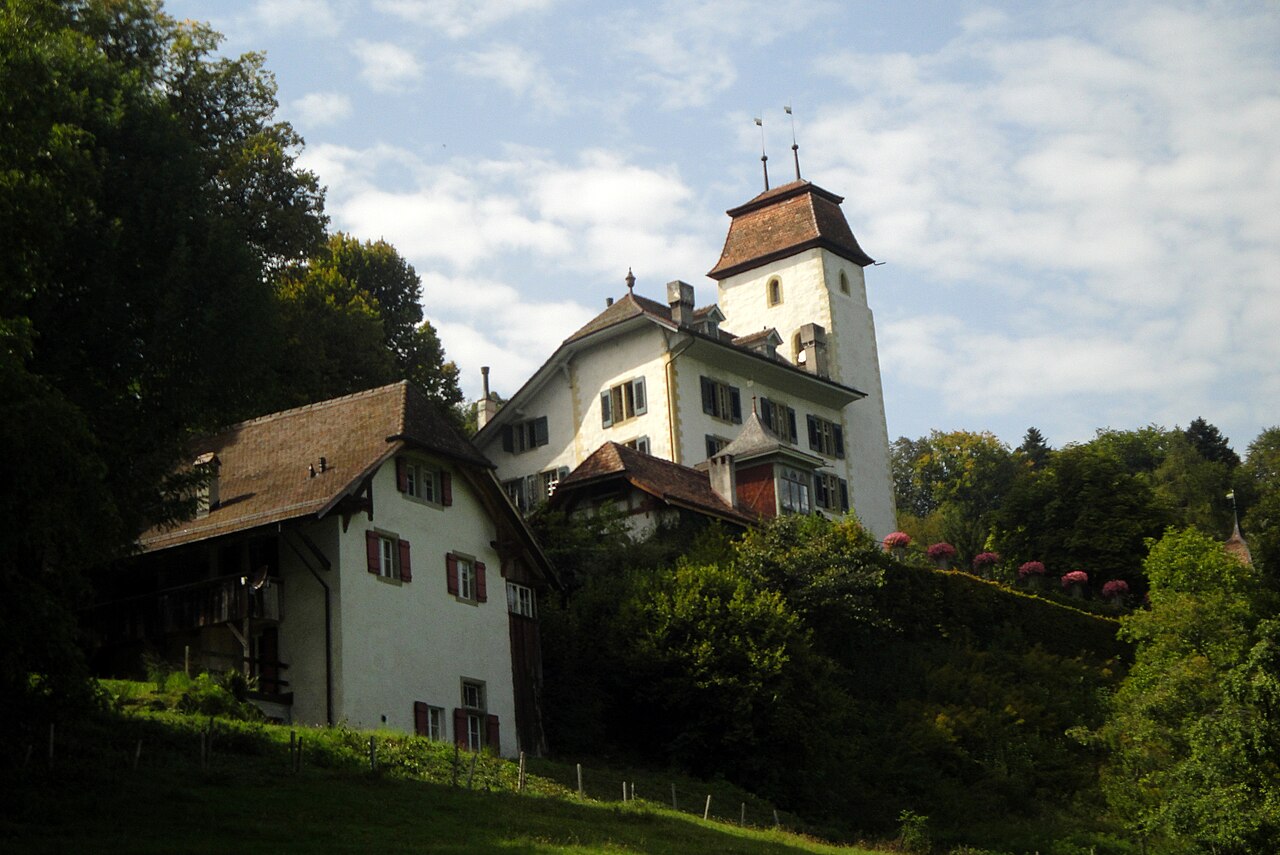
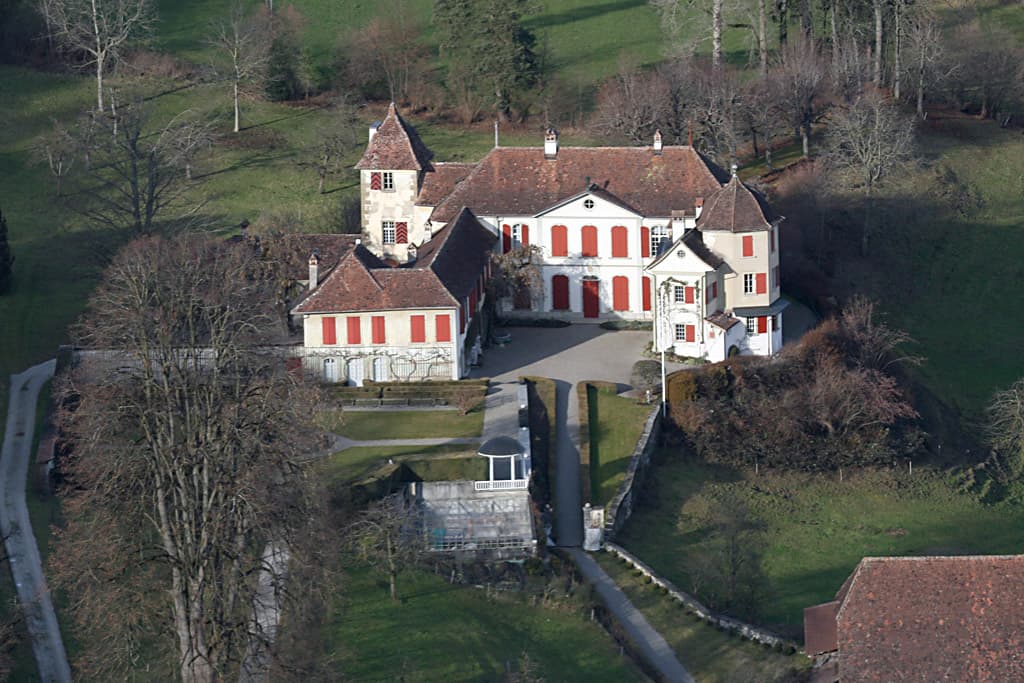
Toffen Castle is a prominent Baroque country estate located in the village of Toffen, in the Canton of Bern, Switzerland. Its history spans several centuries, with origins tracing back to the early 14th century. The castle is recognized as a Swiss heritage site of national significance, reflecting its cultural and architectural importance in the region.
Early history and ownership transitions
The earliest recorded mention of Toffen Castle dates to 19 May 1306, when Johann von Bremgarten relinquished his estates, including Toffen and Bremgarten Castles, to his uncles Heinrich and Ulrich von Bremgarten. This marks the castle's documented existence in the medieval period, though the exact construction date remains unknown.
In 1323, the castle was acquired by Peter von Gysenstein, a Bernese patrician, who gained the Zwing und Bann rights over the villagers of Toffen, granting him judicial and administrative authority. The castle then passed through inheritance to Johann Senn von Münsingen via Gysenstein's daughter.
By 1352, Ulrich "Keseli" von Toffen, a local nobleman, purchased part of the estate and completed the acquisition three years later, establishing his family’s control for nearly a century. This period cemented the castle's role as a noble residence and local power center.
Renaissance transformation under bartholomew may
The castle changed hands several times before being bought in 1507 by Bartholomew May (1446-1531). He is traditionally credited with bringing the first bears to Bern's famous Bärengraben or Bear Pit after the Battle of Novara. Bartholomew May undertook significant renovations, transforming the medieval fortress into a late Gothic country manor house. This shift reflected broader architectural trends and the castle’s evolving residential function.
Renaissance and baroque renovations by the knobloch and von werdt families
In 1610, the estate was sold to Loys (Elogius) Knobloch, who initiated interior renovations with skilled carpenters and artists from the Alsace region. The Bretzelistube, a notable room within the castle, retains rich Renaissance-style carvings and paintings by the Bernese artist Joseph Werner, highlighting the artistic patronage of the period.
Following familial ties through marriage, Abraham von Werdt became the lord of Toffen after the death of Loys Knobloch in 1642. The von Werdt family maintained ownership for nine generations, intertwining their legacy deeply with the castle’s history.
Between 1671 and 1673, Johann Georg von Wendt undertook a major reconstruction, converting the castle into a Baroque manor. This extensive renovation involved removing an entire story from the main building, replacing the roof, and demolishing the old curtain wall and gatehouse. An elegant garden was laid out in place of the former courtyard, and a western wing with a grand dining hall was added. The Bernese landscape painter Albrecht Kauw was commissioned to create four paintings depicting the castle and its lands in each cardinal direction, emphasizing the estate's grandeur.
18th-century expansions and the impact of political change
Around 1750, Georg Samuel von Werdt expanded and renovated the castle further, continuing the Baroque style enhancements. However, the political landscape shifted dramatically with the 1798 French invasion and the establishment of the Helvetic Republic. The von Werdt family, like many noble owners, lost their medieval rights to govern and judge the villagers of Toffen, though they retained ownership of the castle itself.
Architectural features and artistic heritage
Toffen Castle exemplifies the Baroque architectural style with its elegant manor house design, formal gardens, and richly decorated interiors. The Bretzelistube remains a highlight, showcasing intricate Renaissance carvings and historic Bernese paintings. The castle’s layout reflects the transition from a fortified medieval stronghold to a comfortable noble residence emphasizing style and status.
The removal of defensive structures such as the curtain wall and gatehouse during the 17th-century renovations illustrates this shift. The addition of a grand dining hall and landscaped gardens aligns with Baroque ideals of grandeur and leisure.
Current status and cultural significance
Today, Toffen Castle remains in private ownership, held by the descendants of the von May and von Werdt families, symbolizing a continuous lineage that spans over 700 years. Its designation as a Swiss heritage site of national significance underscores its importance as a cultural monument and architectural treasure in the Bernese region.
The castle is a valuable example of how noble estates evolved over centuries in Switzerland, adapting to changing political, social, and artistic influences while preserving elements of their medieval origins and Renaissance and Baroque transformations.
Frequently asked questions (FAQ)
- What are the visiting hours for Toffen Castle?
- Toffen Castle is privately owned and generally not open to the public for regular tours. Visitors should check local tourism resources for any special events or open days.
- What is the architectural style of Toffen Castle?
- Toffen Castle primarily exhibits Baroque architectural style, with Renaissance elements visible in its interior decoration, particularly in the Bretzelistube room.
- When was Toffen Castle originally built?
- The exact construction date of Toffen Castle is unknown, but it was first mentioned in records in 1306 and underwent major reconstruction in 1671-73.
- Can I visit the gardens of Toffen Castle?
- The formal Baroque gardens were established during the 17th-century renovations, but as the castle is privately owned, public access to the gardens is limited and typically restricted.
- Who were some notable owners of Toffen Castle?
- Notable owners include Johann von Bremgarten, Peter von Gysenstein, Bartholomew May, Loys Knobloch, and the von Werdt family, who held the castle for nine generations.
Photo gallery

Information
Current owner
Private owner
Loading map...
Visitor reviews
No reviews yet. Been here? Write the first review and help other travelers!
Write the first reviewVisited this castle? Share your experience
Your review helps other travelers and adds first-hand knowledge to our encyclopedia.