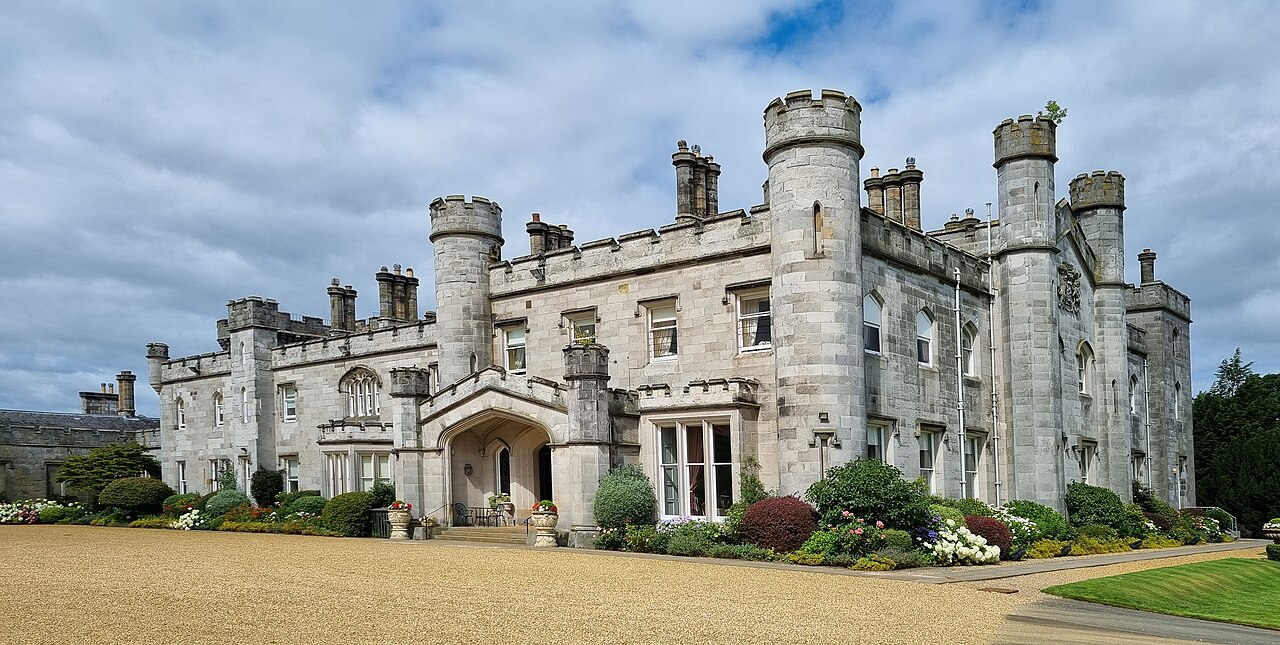
The Black Castle
The Black Castle of South Queensferry stands as a striking example of early 17th-century Scottish domestic architecture, located in the historic village of South Queensferry, near Edinburgh. This Category A listed building is notable not for grand turrets or defensive features typical of castles, but rather for its unique blend of residential design and a dark, intriguing past that reflects the turbulent history of the region during the Early Modern period.
Constructed in 1626 from robust sandstone, the Black Castle was originally the residence of William Lowrie, a prosperous coal merchant, and his wife Marion Speddie. The house’s architecture is characterized by its solid, somewhat austere façade, with the upper floor featuring three sets of windows adorned with intricate carvings and scrollwork, highlighting the craftsmanship of the period. Above the dormer windows, the eaves bear the date 1626 alongside the initials of Lowrie and Speddie, marking the building’s origins and the personal imprint of its founders.
Architectural features and style
The Black Castle is a distinctive example of a 17th-century Scottish townhouse rather than a fortified castle. Its construction in sandstone gives it a dark, almost foreboding appearance, which likely contributed to its evocative name. Unlike traditional castles with battlements and defensive walls, this building emphasizes domestic comfort and status, evident in its detailed window carvings and the quality of its masonry.
The building’s design includes a steeply pitched roof with dormer windows, which was typical for the period, allowing light into the upper floors. The absence of defensive features such as turrets or a moat indicates its primary function as a residence rather than a fortress. The style can be broadly classified within the Late Renaissance architectural period in Scotland, reflecting the transition from fortified medieval structures to more comfortable and stylistically refined homes.
Historical context and dark legacy
The Black Castle’s history is deeply intertwined with the witch hunts of the 1640s, a grim chapter in Scottish history marked by paranoia and persecution. The Lowrie family was tragically involved in these events, which have contributed to the building’s sinister reputation. Court records from 1643 reveal that James Lowrie, brother of William, had his wife Marion Little and another woman named Marion Stein accused of witchcraft.
They were charged with conspiring to cast a spell to create a storm that would sink William’s ship and endanger all aboard. Following their conviction on April 6, 1643, both women were executed by burning at the stake in the nearby township of Ferrymuir. This tragic episode reflects the widespread fear and superstition that gripped Scotland during the mid-17th century and has left an enduring mark on the legacy of the Black Castle.
Location and cultural significance
Situated along the main avenue of South Queensferry, the Black Castle occupies a prominent place in the village’s architectural heritage. South Queensferry itself is a historic seaport town on the Firth of Forth, known for its proximity to the iconic Forth Bridge and its rich maritime history. The Black Castle contributes to the village’s character, standing as a reminder of both the prosperity of its original owner and the darker episodes of local history.
Today, the building is recognized not only for its architectural merit but also as a cultural landmark that encapsulates the complex social and historical narratives of 17th-century Scotland. Its Category A listing underscores its importance as a protected heritage site, ensuring its preservation for future generations to explore and understand.
Preservation and current status
The Black Castle remains well preserved, maintaining much of its original structure and detailing. Its status as a Category A listed building provides it with legal protection and highlights its significance within Scotland’s built heritage. While it lacks the grandeur of a traditional fortress, its historical and architectural value makes it a subject of interest for historians, architects, and visitors alike.
Visitors to South Queensferry can appreciate the Black Castle’s unique presence in the village streetscape and reflect on the stories embedded in its walls. The building stands as a testament to the evolution of Scottish domestic architecture and the enduring impact of historical events on local communities.
Legacy of the witch trials and folklore
The association of the Black Castle with the witch trials adds a layer of folklore and mystery to its history. The tragic fate of Marion Little and Marion Stein during the 1640s witch hunts is a poignant reminder of the dangers of superstition and injustice. This dark chapter has inspired local legends and contributed to the building’s evocative name, the Black Castle, which suggests a place shadowed by ominous events.
Such stories have helped to preserve the memory of the building beyond its architectural significance, making it a focal point for those interested in Scotland’s social history and the complex interplay between belief, law, and community in the Early Modern period.
Frequently asked questions (FAQ)
- What is The Black Castle known for?
- The Black Castle, located in South Queensferry, is renowned for its stunning medieval architecture and rich history dating back to the 14th century. It has played a significant role in Scotland's turbulent past, particularly during the Wars of Scottish Independence. Visitors can explore its impressive stone structures and learn about its historical significance through informative displays.
- When was The Black Castle built?
- The Black Castle was constructed in the late 14th century, primarily as a defensive fortress. Over the centuries, it has undergone various renovations and restorations, reflecting the architectural styles of different periods. Today, it stands as a testament to Scotland's medieval heritage and offers insight into the architectural advancements of the time.
- Can I visit The Black Castle?
- Yes, The Black Castle is open to visitors year-round, allowing guests to experience its historical and architectural marvels. Guided tours are available, providing in-depth information about the castle's history and significance. Ensure to check the official website for any special events or closures before your visit.
- What are the opening hours for The Black Castle?
- The Black Castle typically opens at 10 AM and closes at 5 PM, though hours may vary depending on the season and special events. It is advisable to verify the current hours on the castle's official website prior to your visit. Arriving early can also help you avoid crowds and fully enjoy the site.
- Is The Black Castle accessible for visitors with disabilities?
- The Black Castle strives to accommodate all visitors, including those with disabilities. While some areas may have limited access due to the historic nature of the site, staff are available to assist and provide information on accessible routes. It is recommended to contact the castle directly for specific inquiries regarding accessibility options.
- What is the best time to visit The Black Castle?
- The best time to visit The Black Castle is during the spring and early autumn months when the weather is generally mild and pleasant. These seasons also offer vibrant natural scenery that enhances the castle's picturesque surroundings. Additionally, visiting during weekdays can help you avoid weekend crowds.
- Are there any nearby attractions to The Black Castle?
- Yes, The Black Castle is located near several other attractions, including the famous Forth Bridge and the scenic waterfront of South Queensferry. Visitors can also explore the charming village, which offers shops and restaurants. Combining these attractions with your castle visit can make for an enjoyable day out.
- What are the ticket prices for The Black Castle?
- Ticket prices for The Black Castle vary by age group and type of admission. Typically, adults can expect to pay around £10, while children and seniors may receive discounts. Family tickets are also available for those visiting with children, making it an affordable outing for everyone.
Information
Website
Visit websiteSources & official resources
Verify the information above using these authoritative references.
Loading map...
Visitor reviews
No reviews yet. Been here? Write the first review and help other travelers!
Write the first reviewVisited this castle? Share your experience
Your review helps other travelers and adds first-hand knowledge to our encyclopedia.