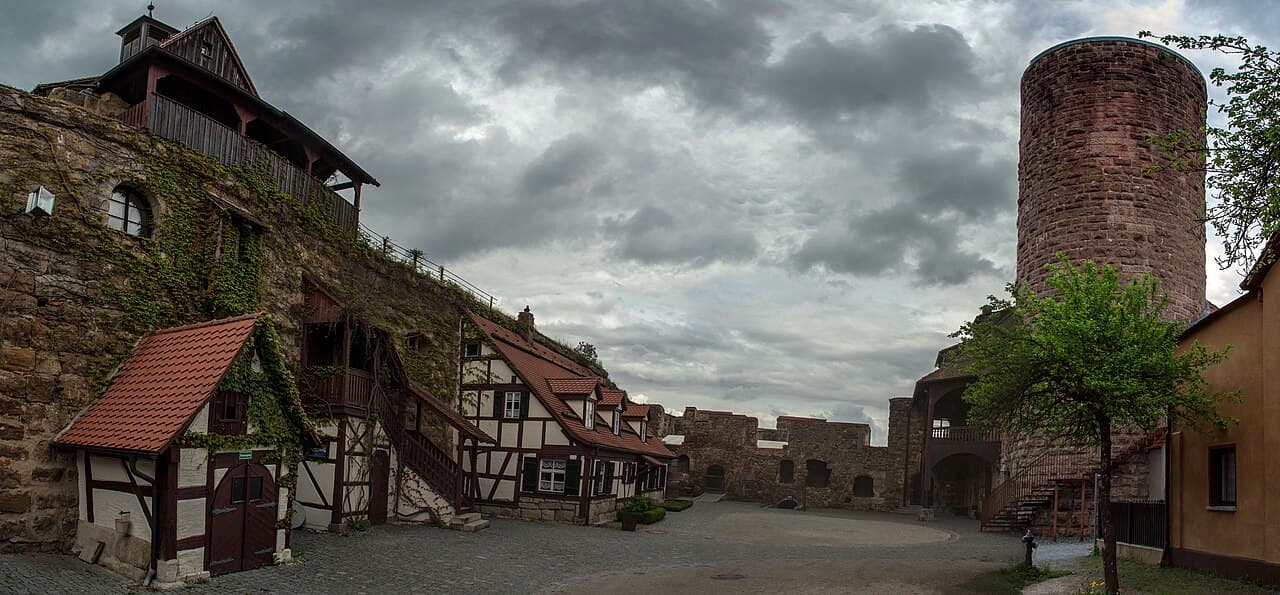
Thann Castle — Germany castle

Thann Castle

Thann Castle: high medieval archaeological ruins in Germany
High Medieval (11th–13th c.)
Ruins

Thann Castle is a notable example of a high medieval hill castle located in Germany. Constructed in the 12th century, it served as a strategic fortification during the medieval period. Today, the castle exists as archaeological ruins, offering valuable insight into medieval defensive architecture and regional history.

Historical background and significance

The origins of Thann Castle date back to the high medieval period, a time when castles were essential for territorial control and defense. Built in the 12th century, it was likely commissioned by local nobility or feudal lords to assert dominance over the surrounding landscape and protect trade routes. The castle's location on elevated terrain classified it as a hill castle, offering natural defense advantages.

Throughout the medieval era, the castle would have played a role in regional conflicts and governance, although detailed historical records specific to Thann Castle are limited. Its ruins today reflect the typical architectural features of high medieval fortifications, including remnants of curtain walls, defensive towers, and gate structures.

Architectural features and layout

The surviving remains of Thann Castle reveal a compact fortress designed primarily for defense. The castle's stone curtain walls once enclosed the inner courtyard, protecting the residential and administrative buildings within. Portions of these walls remain, showcasing the masonry techniques of the period.

Evidence of towers at key points suggests that the castle had lookout and defensive positions to monitor the surrounding area. The entrance would have been fortified with a gatehouse, possibly equipped with a portcullis and defensive mechanisms common in 12th-century castles.

Although much of the superstructure has not survived, archaeological studies indicate the presence of living quarters, storage rooms, and possibly a chapel within the castle grounds. The layout reflects the functional needs of a medieval fortress balancing defense with habitation.

Current condition and archaeological importance

Today, Thann Castle stands as ruins, with significant portions of its walls and foundations exposed. The site has been subject to archaeological investigation, which has helped document its construction phases and usage over time. These findings contribute to understanding the development of medieval fortifications in Germany.

The castle's ruins are accessible to visitors interested in medieval history and archaeology. While the remains are fragmentary, they provide a tangible connection to the region's feudal past and the architectural practices of the 12th century.

Visiting Thann Castle

Visitors to Thann Castle can explore the ruins and surrounding landscape, which offers panoramic views typical of hill castles. The site is an open-air archaeological location, ideal for those interested in medieval architecture and history. Facilities may be limited due to the castle's ruinous state, so visitors should prepare accordingly.

Legacy and cultural context

Thann Castle represents the widespread phenomenon of medieval fortification construction in Germany during the high medieval period. Although now in ruins, it reflects the strategic importance of castles in feudal society for defense, administration, and control of territories.

The site contributes to the cultural heritage of the region, illustrating the architectural and historical evolution of medieval castles. Its preservation as an archaeological site allows ongoing study and appreciation of medieval military architecture.

Frequently asked questions (FAQ)

How do I get to Thann Castle?
Thann Castle is located in the picturesque region of Germany, easily accessible by car or public transport. The nearest train station is approximately 10 kilometers away, and local buses frequently run to the castle. Consider utilizing GPS for the best routes, and enjoy the scenic drive through the countryside.
What is the historical significance of Thann Castle?
Thann Castle dates back to the 12th century and played a crucial role in the defense of the region during various conflicts. It was strategically positioned to oversee trade routes and protect the surrounding lands. Today, it stands as a testament to medieval architecture and the turbulent history of the area.
When was Thann Castle built?
Thann Castle was constructed in the early 12th century, with significant modifications made in the following centuries. Originally built as a stronghold, it has undergone various renovations that reflect the architectural styles of different eras. Its long-standing history makes it a fascinating site for visitors interested in medieval heritage.
Can I visit Thann Castle year-round?
Yes, Thann Castle is open to visitors throughout the year, although opening hours may vary by season. It is advisable to check the official website or contact the visitor center for the most current information regarding opening times. Visiting during the warmer months can enhance your experience with beautiful views and events.
Why is Thann Castle a popular tourist attraction?
Thann Castle is popular due to its rich history, stunning architecture, and breathtaking views of the surrounding landscape. Visitors are captivated by the castle's medieval charm and the opportunities for exploration and photography. Additionally, the site often hosts cultural events, making it a vibrant destination for all ages.
Is it possible to explore the interior of Thann Castle?
Yes, visitors can explore the interior of Thann Castle during designated opening hours. Guided tours are available, providing insights into the castle's history, architecture, and stories of its former inhabitants. This immersive experience allows guests to appreciate the craftsmanship and historical significance of the castle.
What are the ticket prices for Thann Castle?
Ticket prices for Thann Castle are generally affordable, with discounts available for students and seniors. Children under a certain age may be admitted for free. It’s best to check the official website for the latest pricing and any special offers or group rates.
What is the best time to visit Thann Castle?
The best time to visit Thann Castle is during the spring and early autumn months when the weather is mild and the surrounding nature is in full bloom. These seasons also offer fewer crowds, allowing for a more enjoyable experience. Special events and festivals often take place during this time, enhancing your visit.
Are there any nearby attractions to Thann Castle?
Yes, there are several nearby attractions, including beautiful hiking trails and other historical sites. The charming town of Thann offers quaint shops and local dining options. Visitors can also explore nearby forests and parks, making it an ideal spot for a full day of adventure.

Photo gallery

Thann Castle
Click to view

Photo by Derzno•CC BY 3.0

1 photo • Click any image to view in full screen

Information

Archaeological Site / Ruins

Loading map...

Visitor reviews

No reviews yet. Been here? Write the first review and help other travelers!

Write the first review

Visited this castle? Share your experience

Your review helps other travelers and adds first-hand knowledge to our encyclopedia.

Write a review

(5/5)

0/2000 characters

Your review will be visible after admin approval

Nearby castles

5.3 km

Petzsches Schloss

Schwarzenbruck, Germany

Petzsches Schloss stands as a remarkable example of a historic Renaissance manor located in the municipality of Schwarzenbruck, Germany. Its origins trace back to the late 16th century, with architectural elements reflecting the region’s evolving styles and social history under German influence. The manor’s layered history and well-preserved structures make it a significant cultural monument in Bavaria. Early history and medieval origins The site of Petzsches Schloss has a documented history extending back to the early 15th century. In 1425, King Sigismund granted permission to Hans von Lochheim to rebuild an older fortress at this strategic location. This medieval reconstruction incorporated defensive features typical of the period, including a moat and an outer fortified enclosure known as a Zwinger. These elements were designed to protect the inhabitants from military threats, reflecting the turbulent nature of the era. Ownership and transformations in the 16th and 17th centuries By the early 16th century, the castle came under the ownership of the Imperial City of Nuremberg, which purchased the property in 1502 from the ruling Margraves. During this time, Petzsches Schloss functioned as an administrative center for the city until 1561. However, the castle sustained significant damage during the Second Margrave War, particularly following the conflicts of 1552, necessitating extensive restoration. After the war, in 1561, the property was transferred to Sigmund Pfinzing, whose family undertook substantial repairs and enhancements to the manor’s main building. The estate subsequently passed through several notable families. During the Thirty Years’ War in the early 17th century, the Schmidmayer family, then owners of the estate, hosted King Gustav Adolf of Sweden, a prominent military leader of the period. Later ownership and 18th-century developments Between 1691 and 1693, the castle briefly belonged to Margrave Christian Heinrich of Brandenburg-Bayreuth. In 1714, the Scheurl family acquired the estate and maintained ownership for approximately four generations, significantly shaping the manor’s character during the 18th century. In 1851, the Petz family purchased the manor and established a family foundation in 1876 to oversee its management and preservation. Remarkably, Petzsches Schloss survived the structural challenges of World War II without damage, although the interior furnishings suffered from wartime looting, a loss documented in the post-war period. Architectural features and layout The manor is a three-winged residence primarily constructed of sandstone ashlar, showcasing building techniques and styles prevalent in the Nuremberg region from the late Renaissance through the Baroque period. The main structure rises to three stories, topped with a gabled roof featuring dormer windows and cross-gables. Flanking this central building are narrower two-story wings and rectangular three-story towers capped with distinctive pyramid-shaped roofs. Together, these elements form a closed courtyard at the heart of the complex. The entire estate is encircled by a water-filled moat sustained by a natural spring, serving both defensive and symbolic functions. Surrounding the courtyard is an 18th-century sandstone ashlar wall with rounded tops and reinforced by rectangular pillars adorned with decorative elements, emphasizing the manor’s privacy and security. Chapel and freemasons lodge Within the complex lies a historic private chapel, reflecting the religious practices of the manor’s residents. Nearby stands an early 19th-century building that served as a Freemasons lodge, indicating the presence and influence of this fraternal organization within the estate’s history. Economic courtyard and ancillary buildings The estate’s economic courtyard contains various functional buildings primarily dating from the 18th and early 19th centuries. Most are modest, single-story houses and barns combining sandstone ashlar with timber framing. Notable buildings include house number 6 (built in 1798), houses 7 and 8 (completed in 1800), and house number 3 (erected in 1861). A particularly distinctive two-story house features a steep gabled roof with a sandstone ground floor and an upper timber-framed level. This building is notable for its bell tower topped with a tent-shaped roof and an eastern timber-framed cross-gable, both dating from the 18th century. Adjacent is a barn from around 1730, constructed of sandstone ashlar with a steep roof and timber-framed gables containing small dormer windows, illustrating agricultural construction techniques of the period. Cultural significance and preservation Petzsches Schloss represents a complex architectural and historical ensemble that evolved over several centuries. It combines elements of residential grandeur with agricultural and social functions, reflecting the changing needs and tastes of its various owners. Today, it is recognized and protected as a cultural monument by the Bavarian State Office for Monument Preservation, ensuring the survival of its multifaceted historical fabric for future generations. The manor’s preservation allows visitors and scholars to explore a tangible link to the region’s Renaissance and Baroque architectural heritage, as well as its rich history of noble ownership, military events, and social evolution. The combination of defensive features, elegant residential spaces, and functional outbuildings provides a comprehensive picture of a German manor’s development from the medieval period through the 19th century.

Renaissance (15th–17th c.)
Details
14.4 km

Wolfstein Castle

Neumarkt in der Oberpfalz, Germany

Wolfstein Castle is a significant example of a high medieval hill castle located in Neumarkt in der Oberpfalz, Germany. Its origins trace back to the mid-12th century, as confirmed by archaeological excavations, although the precise details of its initial construction and early history remain somewhat obscure. The castle's strategic position atop a hill provided defensive advantages typical of medieval fortifications, overseeing the surrounding landscape and controlling important regional routes. Early history and noble lineage The earliest written record mentioning the castle dates from 1283, when Gottfried von Sulzbürg adopted the name von Wolfenstein, establishing a noble family line associated with the castle. This change signifies the castle's importance as a seat of local power and influence during the high medieval period. The Wolfenstein family held the castle and its surrounding lands for several generations, playing a role in the region's feudal structure. Architectural features and layout Wolfstein Castle was constructed primarily as a hill castle, utilizing the natural topography for defense. While much of the original structure is now in ruins, archaeological investigations have revealed elements of its stone curtain walls and foundations of towers and residential buildings. The castle likely included a keep (donjon) serving as the last line of defense and residence for the lord. Defensive features would have included battlements, a gatehouse, and possibly a moat or ditch adapted to the hillside setting. Historical events and decline Wolfstein Castle's prominence declined significantly after the War of the Succession of Landshut in 1504, during which it sustained damage. Following this conflict, the castle was abandoned and gradually fell into disrepair. The death of Hans von Wolfenstein in 1462 without heirs led to the castle passing into the possession of the Bohemian (Czech) crown, marking a shift in ownership and political significance. Modern preservation and archaeological work In the late 20th century, particularly during the 1990s, Wolfstein Castle underwent extensive archaeological excavations and renovations to stabilize and preserve the ruins. These efforts have ensured that the castle remains in a well-preserved condition today, allowing visitors to explore the site and appreciate its historical and architectural significance. The restoration work focused on maintaining the integrity of the remaining structures while providing safe access for educational and touristic purposes. Cultural and regional significance Wolfstein Castle is an important cultural landmark in the Neumarkt region, reflecting the medieval history and feudal heritage of Bavaria. Its ruins offer insights into the defensive architecture and noble residences of the 12th to 16th centuries. The castle's connection to regional noble families and its role during key historical conflicts contribute to its value as a heritage site. Visiting wolfstein castle Today, Wolfstein Castle is accessible to the public as a historical ruin. Visitors can explore the remnants of the castle's walls, towers, and courtyards while enjoying panoramic views of the surrounding landscape. The site is a popular destination for those interested in medieval architecture, archaeology, and Bavarian history. Informational signage and guided tours may be available to enhance the visitor experience.

High Medieval (11th–13th c.)
Details
16.7 km

Henfenfeld Castle

Henfenfeld, Germany

Henfenfeld Castle, also known as Pfinzing Castle, stands as a remarkable example of a hill castle (Höhenburg) in the municipality of Henfenfeld, Germany. Constructed around 1200 during the High Medieval period, it was originally the seat of the ministerial family von Henfenfeld. The castle’s strategic elevated location provided defensive advantages characteristic of hill castles, and its architectural evolution reflects centuries of regional history and changing ownership. Early history and medieval ownership The castle was first established by the von Henfenfeld family, a ministerial dynasty serving regional lords. During the turbulent late 14th and early 15th centuries, the property changed hands multiple times, illustrating the complex political landscape of Middle Franconia. From 1405 to 1530, the castle was held by the Herren von Egloffstein, a noble family with significant regional influence. In 1530, the castle was acquired by Martin I Pfinzing, a member of a prominent Nuremberg patrician family. This transfer marked the beginning of the castle’s association with the Pfinzing family, after whom it is occasionally named. The Pfinzings were influential in the region and maintained the estate for over two centuries. Destruction and reconstruction in the 16th century The castle suffered major damage during the Second Margraviate War in 1553, when margravial troops set fire to it amid conflict involving Hans von Egloffstein, who opposed the Pfinzing claim to Henfenfeld. Despite this destruction, the castle was rebuilt and largely retains its 16th-century architectural character today. Following reconstruction, the Pfinzing family established a family foundation (Vorschickung) to manage the estate, ensuring its control remained within the family until the extinction of the main branch in 1764. Subsequently, ownership passed to relatives from the Haller von Hallerstein family, indicating the importance of familial ties in property succession. 19th-century renovations and garden transformation In 1817, the estate was purchased by Karl Benedikt Schwarz, a Nuremberg merchant ennobled by the Bavarian king. The Schwarz family held the castle for 135 years, during which they undertook extensive renovations between 1826 and 1838. These works updated the castle’s buildings and transformed the former Baroque garden into a landscape garden reflecting early 19th-century tastes. The new garden emphasized naturalistic plantings and flowing lines, replacing the previous formal geometric Baroque style. This transformation aligned Henfenfeld Castle with contemporary horticultural trends and contributed to its cultural significance as a heritage site. 20th-century uses and ownership changes Throughout the 20th century, Henfenfeld Castle’s function shifted multiple times. In the 1920s, the upper floor operated as a catering business, while from 1929, parts of the castle were leased to the NS-Lehrerbund for training purposes. By 1939, the site served as a camp for female members of the Reich Labor Service. After World War II, the castle was acquired by the Deutsche Bundesbahn in 1952. It housed a federal railway school until 1983, when it returned to private ownership. Between 1989 and 1995, the castle was used as a transition camp for ethnic German immigrants, reflecting its ongoing adaptation to social needs. Current status and cultural use Today, Henfenfeld Castle is privately owned by Denette Whitter, who operates an opera academy and hosts cultural events on the premises. A catering business on the ground floor serves visitors, blending hospitality with heritage tourism. The castle remains well preserved, retaining much of its late 16th-century architectural form alongside the early 19th-century landscaped park. Architectural features and preservation The castle’s layout includes an irregular courtyard (Innenhof) that reflects its medieval origins and subsequent expansions. The main buildings, including the palas (residential hall), defensive walls, and ancillary structures, exhibit solid masonry construction typical of the period. Despite renovations and adaptations, the core medieval fabric has been conserved without major structural loss. The adjoining landscape garden is an important element of the estate’s heritage, showcasing early 19th-century garden art that replaced the earlier Baroque style. This park is valued for its cultural and historic significance in the region. Historical significance and heritage value Henfenfeld Castle exemplifies the evolution of a High Medieval hill castle through periods of conflict, ownership changes, and architectural transformation. Its survival through war, reconstruction, and modernization offers insights into regional history and noble lineage dynamics in Franconia. The castle’s integration of medieval architecture with 19th-century landscape design highlights the adaptive reuse of noble estates over centuries. Its continued use for cultural purposes today underscores its role as a living heritage site, contributing to the cultural fabric of Henfenfeld and the wider region.

High Medieval (11th–13th c.)
Details

