Tek Kale Castle — Turkey castle

Tek Kale Castle

Tek Kale Castle near Tekkale village, Artvin
Near D050, Artvin, Turkey
Early Medieval (5th–10th c.)
Partially Preserved

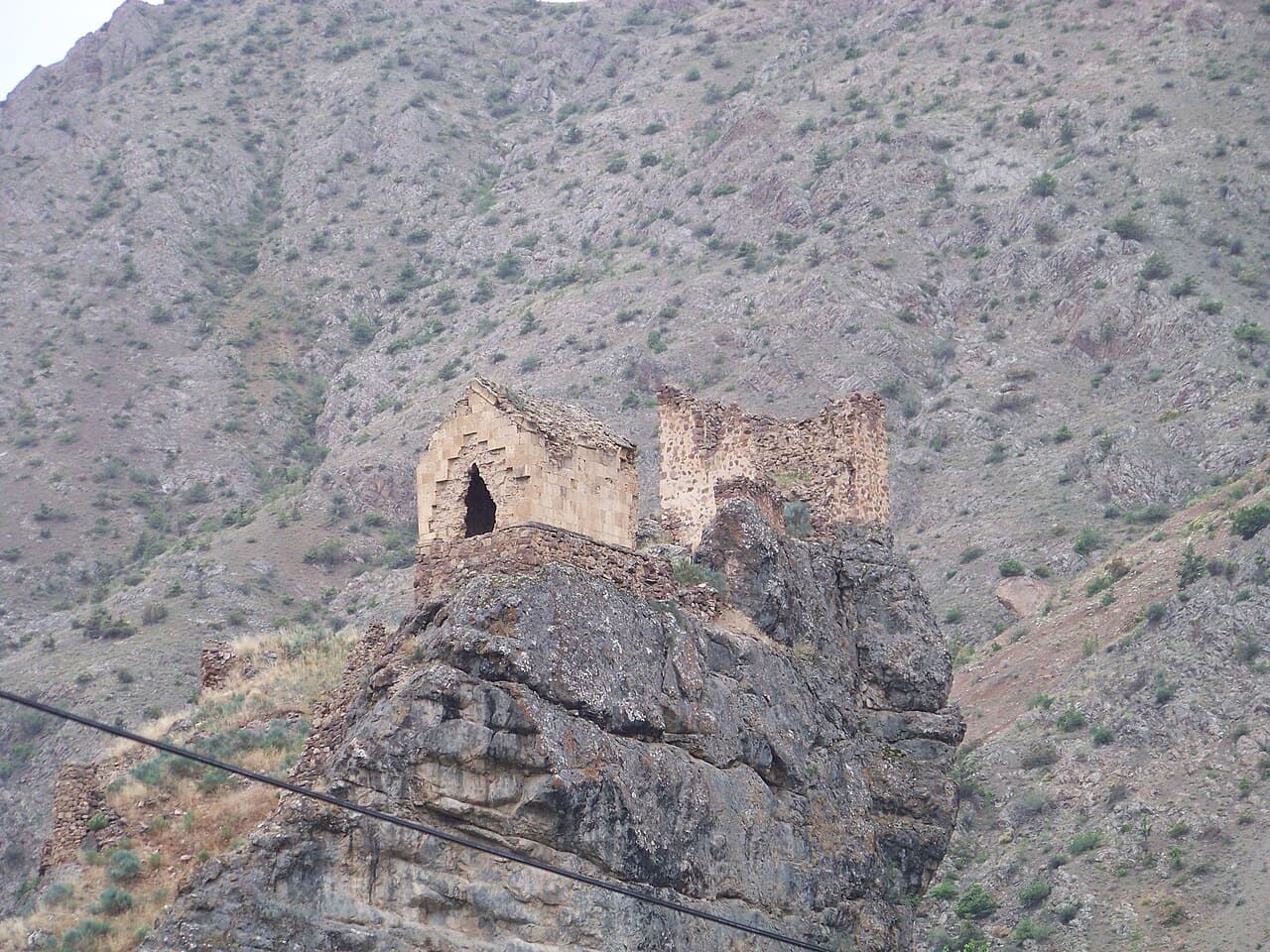
Tek Kale Castle, also known locally as Tek Kale Kalesi or Tekkale Kalesi, and sometimes referred to as Dört Kilise Kalesi, is a historic fortress perched on a prominent rock formation in the village of Tekkale, within the province of Artvin in northeastern Turkey. This hill castle stands strategically overlooking the Çoruh valley, controlling the northern approach to the village and serving as a defensive stronghold in the region during the early medieval period.

The castle was constructed primarily from rubble masonry in the 9th to 10th centuries, a time when the area was part of the historic Georgian region known as Tao. This region was notable for its complex political and military history, with various noble families vying for control. Tek Kale Castle was the seat of the Kavkasidze family, a prominent Georgian noble lineage that played a significant role in the local governance and defense.

Architectural features and layout

Tek Kale Castle is uniquely situated on a large, steep rock outcrop, which naturally enhances its defensive capabilities. The castle's remains are primarily found on the western and southern parts of the rock summit, where several towers and sections of curtain walls still stand. These remnants indicate a well-fortified complex designed to maximize the natural topography for protection.

The northern side of the rock has largely lost its fortifications, with only a small chapel surviving. This chapel suggests the presence of religious or ceremonial functions within the castle complex, a common feature in medieval fortifications that served both military and administrative roles.

The original entrance to the castle is believed to have been on the western side of the rock. However, this part of the structure has not survived, likely due to natural erosion and human activity over the centuries. The steepness of the rock and the positioning of the entrance would have made the castle difficult to assault, enhancing its defensive strength.

Historical context and significance

During the early medieval period, Tek Kale Castle was part of the broader geopolitical landscape of the Georgian Tao region, which was a frontier zone between various empires and kingdoms. The castle's role as the seat of the Kavkasidze family indicates its importance as a local power center and military bastion.

The region experienced frequent conflicts and shifting allegiances, and castles like Tek Kale were vital for controlling trade routes and defending against invasions. The rugged terrain and strategic location of Tek Kale Castle made it a key point of defense and administration in the area.

Current condition and preservation challenges

As of 2023, Tek Kale Castle faces significant preservation challenges. The site has become increasingly inaccessible due to the rising waters of the Yusufeli Dam reservoir, which is slowly submerging the lower parts of the castle rock. This modern development threatens the survival of the remaining structures and complicates efforts for archaeological study and conservation.

The castle is currently in a state of partial ruin, with many original features lost to time and environmental factors. The remaining towers, walls, and chapel offer valuable insights into medieval fortification techniques and the historical landscape of the Tao region.

Visiting Tek Kale Castle

Access to Tek Kale Castle is difficult due to its steep location and the impact of the reservoir. Visitors interested in the castle should be aware of limited accessibility and the lack of developed tourist facilities. The site remains an important cultural and historical landmark for the Artvin province and offers a glimpse into the medieval history of northeastern Turkey.

Despite its challenges, Tek Kale Castle continues to attract historians, archaeologists, and castle enthusiasts who seek to understand the region's past and the architectural ingenuity of early medieval fortresses.

Frequently asked questions (FAQ)

What is the historical significance of Tek Kale Castle?
Tek Kale Castle, located near the D050 highway in Turkey, has a rich history dating back to the Byzantine era. It served as a strategic military fortress, offering protection and surveillance over the surrounding region. Its historical importance lies in its role in various conflicts and its architectural features that reflect the styles of different periods.
When was Tek Kale Castle built?
Tek Kale Castle was originally constructed in the 6th century during the Byzantine Empire. Over the centuries, it has undergone several renovations and expansions, particularly during the Seljuk and Ottoman periods. This long history adds layers of cultural significance to the castle.
Can I visit Tek Kale Castle?
Yes, Tek Kale Castle is open to visitors throughout the year. It is advisable to check local guidelines and any potential restrictions before your visit. The castle offers a unique glimpse into the past and is a great spot for photography and exploration.
What are the opening hours for Tek Kale Castle?
Tek Kale Castle is typically open from 9 AM to 6 PM, but hours may vary seasonally. It is recommended to check the official tourism website or local resources for the most current opening times before planning your visit. This ensures you have ample time to explore the castle and its surroundings.
Is it possible to access Tek Kale Castle by public transport?
Yes, Tek Kale Castle can be accessed via public transport options available along the D050 highway. Local buses and taxis frequently service the area, making it convenient for visitors without a personal vehicle. Always check the latest transport schedules for the best travel options.
What is the best time to visit Tek Kale Castle?
The best time to visit Tek Kale Castle is during the spring and fall when the weather is mild and pleasant. These seasons provide ideal conditions for exploring the castle and enjoying the stunning views from its towers. Summer can be quite hot, while winter may bring cold temperatures.
Are there any nearby attractions to explore after visiting Tek Kale Castle?
Yes, there are several nearby attractions to enjoy after visiting Tek Kale Castle, including ancient ruins and beautiful natural landscapes. The region is rich in historical sites, and you can also find local markets and cafes to experience Turkish culture. Planning a full day of exploration can enhance your visit.
What are the ticket prices for Tek Kale Castle?
Ticket prices for Tek Kale Castle are generally affordable, with discounts available for students and seniors. As prices may change, it is advisable to check official tourism sources for the most accurate and updated information before your visit. This way, you can plan your budget accordingly.

Photo gallery

Tek Kale Castle
Click to view

Photo by Jaba1977•Attribution

1 photo • Click any image to view in full screen

Information

Hill Castle

Loading map...

Visitor reviews

No reviews yet. Been here? Write the first review and help other travelers!

Write the first review

Visited this castle? Share your experience

Your review helps other travelers and adds first-hand knowledge to our encyclopedia.
Write a review

(5/5)

0/2000 characters

Your review will be visible after admin approval

Nearby castles

5.3 km
Peterek Castle — Turkey castle

Peterek Castle

Near D050, Turkey

Peterek Castle, also known locally as Peterek Kalesi or Çevreli Kalesi, is a medieval fortress situated on a prominent rocky outcrop above the village of Çevreli in the Artvin province of northeastern Turkey. This hill castle commands a strategic position overlooking the northern shore of the Çoruh River, a vital waterway that historically served as a conduit for trade and military movements in the region. The exact date of Peterek Castle's construction remains uncertain, but it is generally attributed to the medieval period and linked to the Bagratid dynasty, a prominent Georgian royal house that exerted influence over parts of the Caucasus and northeastern Anatolia during the Middle Ages. The castle was originally known as Pert-Egrek, a name that gradually evolved into Peterek, before the adjacent village was renamed Çevreli. Architectural features and construction Built primarily from rubble masonry, Peterek Castle exhibits typical characteristics of medieval fortifications in the region. The use of locally sourced stone rubble bound with mortar provided a robust and economical construction method suited to the rugged terrain. The castle's walls are mostly intact on the western, northern, and southern sides, while the eastern walls have suffered partial collapse or erosion over time. One of the most distinctive architectural details visible on the castle's exterior is a horizontal wooden beam embedded within the stonework of an outer wall. This feature is unusual and not widely documented, though a similar construction element has been noted at Tortum Castle nearby. The purpose of this beam remains unclear but may have served structural or defensive functions, such as reinforcing the masonry or supporting wooden hoardings or scaffolding. Historical significance and strategic location Peterek Castle was historically one of the largest and most important fortresses in the Çoruh valley, a region that has seen numerous cultural and political changes due to its position at the crossroads of Anatolia and the Caucasus. The castle's elevated position provided commanding views of the surrounding landscape, allowing defenders to monitor and control movement along the river and nearby routes. The castle's association with the Bagratid dynasty ties it to a broader historical context of medieval Georgian and Armenian influence in the area. The Bagratids were known for constructing numerous fortresses and churches, contributing to the architectural and cultural heritage of the region. Access and current condition Today, Peterek Castle is freely accessible to visitors, though reaching it can be challenging due to the lack of clearly marked paths. Local villagers have traditionally assisted travelers in finding the route to the castle, which remains a point of interest for history enthusiasts and hikers. The castle's preservation status is generally good, with most exterior walls still standing, except for the eastern side which has deteriorated. Its location on a rocky hill has helped protect it from extensive damage, but concerns exist regarding the impact of modern development projects, particularly the construction of the Yusufeli Dam reservoir. This dam, currently under construction downstream, may affect the surrounding environment and potentially the castle's accessibility and preservation. Peterek Castle in the context of regional heritage As a medieval hill castle in the Artvin region, Peterek Castle contributes to the understanding of the area's historical defensive networks and settlement patterns. It exemplifies the architectural styles and military strategies employed by the Bagratid rulers and their successors in controlling key transit corridors. Despite limited detailed historical records, the castle remains an important cultural landmark. Its rugged construction, strategic siting, and enduring presence offer valuable insights into the medieval history of northeastern Turkey and the broader Caucasus frontier.

Details
16.9 km

Köprügören Castle

Near D050, Turkey

Köprügören Castle, also known locally as Köprügören Kalesi or Osnak Kalesi, is a medieval fortress situated on a rocky outcrop above the village of Köprügören in the Çoruh River valley, within the province of Artvin, Turkey. The name Osnak refers to the historical name of the village, linking the castle to the local heritage and geographic identity of the region. Historical context and construction The castle's origins are not well documented, but architectural analysis suggests it was constructed during the Middle Ages, likely between the 12th and 15th centuries. This dating is supported by the use of rubble masonry in its walls, a common building technique in medieval fortifications in this part of Anatolia. The strategic location on a rock above the river valley would have provided defensive advantages, overseeing the surrounding terrain and controlling movement along the valley. Architectural features and layout Köprügören Castle's design includes a prominent square keep positioned on a separate rock formation, which served as the main defensive stronghold and residence. The keep's elevated position would have allowed defenders to monitor and repel attackers effectively. Adjacent to the keep was a bailey located on a neighboring rock, which likely housed auxiliary buildings and provided additional defensive layers. Unfortunately, the bailey has not survived, with no visible remains today, limiting detailed understanding of its full extent and function. Defensive elements and terrain The castle's placement on rocky terrain naturally enhanced its defensibility. Access to the keep involves a steep and slippery path, indicative of the challenging approach designed to deter invaders. The surrounding landscape, including the nearby Çoruh River, would have contributed to the castle's defensive strategy by restricting access routes and providing natural barriers. Relationship to nearby fortifications and environmental threats Köprügören Castle is located downstream from the nearby Yokuşlu Castle, another medieval fortress in the region. The proximity of these castles suggests a network of fortifications that may have been used to control and protect the valley corridor. However, Köprügören Castle is considered less spectacular and more vulnerable due to its current condition and location. One of the significant concerns for Köprügören Castle is the impact of the Yusufeli Dam project. The dam's reservoir is expected to flood areas downstream, potentially affecting the castle site. This environmental threat poses risks to the preservation of the castle's remains and the surrounding archaeological landscape. Current condition and accessibility Today, Köprügören Castle is in a state of ruins, with only the square keep partially preserved. The bailey has disappeared over time, leaving little trace. The site is freely accessible to visitors, though the path to the keep is steep and can be slippery, requiring caution. The castle does not offer extensive visitor facilities, and its remote location means it is less frequented compared to more prominent castles in Turkey. Cultural significance and preservation challenges While Köprügören Castle lacks extensive historical records, it remains an important cultural landmark within the Artvin province, reflecting the medieval military architecture of the region. Its preservation is challenged by natural erosion, limited conservation efforts, and the looming threat of flooding due to the dam construction. Efforts to document and protect such lesser-known castles are vital for understanding the broader historical landscape of northeastern Turkey.

High Medieval (11th–13th c.)
Details
18.1 km

Yokuşlu Castle

Near D050, Turkey

Yokuşlu Castle, also known locally as Yokuşlu Kalesi or Nihah Kalesi, is a medieval fortress situated near the river Çoruh in the province of Artvin, Turkey. The castle occupies a strategic position overlooking the valley, providing commanding views of the surrounding terrain. Despite its relatively obscure historical record, the castle's remains reveal significant architectural features characteristic of medieval fortifications in the region. The castle's name, Nihah, is derived from the old name of the nearby village, which today lies approximately 9 kilometers to the south in the mountainous area. This geographic separation between the castle and the village is unusual, suggesting that the castle may have functioned primarily as a military outpost or watchtower rather than a residential stronghold. Historical context and significance Although detailed historical documentation of Yokuşlu Castle is scarce, it is generally accepted that the castle was constructed during the Middle Ages, a period marked by frequent territorial conflicts in northeastern Anatolia. This region was historically contested by various local principalities and empires, including the Georgian kingdoms and the Seljuk Turks, making fortifications like Yokuşlu essential for defense and control of trade routes along the Çoruh river. The castle likely served as a defensive stronghold to monitor movements along the river valley and protect the surrounding lands from incursions. Its placement near the river would have also facilitated communication and supply lines in the rugged terrain of Artvin province. Architectural features The surviving structures of Yokuşlu Castle are primarily concentrated on the eastern side, where the remains of thick defensive walls are still visible. These walls incorporate a prominent gate that would have served as the main entrance to the fortress. The gate's construction suggests a design intended to control access and withstand attacks. Adjacent to the gate stands a square keep, a typical feature of medieval castles used as a last refuge during sieges and as a lookout point. The keep's robust masonry and elevated position would have provided defenders with a vantage point to observe approaching enemies and coordinate defensive efforts. The castle's overall layout, while partially ruined, reflects the typical medieval military architecture adapted to the mountainous landscape. The use of natural topography for defense, combined with man-made fortifications, exemplifies strategic planning to maximize protection with limited resources. Construction materials and techniques The castle was constructed using locally sourced stone, which was common in the region due to the abundance of durable rock formations. The masonry work visible today indicates the use of rough-cut stones set in mortar, a technique consistent with medieval fortifications in Anatolia. The walls' thickness and the keep's solid construction demonstrate an emphasis on durability and defense. Current condition and accessibility Today, Yokuşlu Castle remains in a state of partial preservation, with most of the surviving elements located on the eastern side. The rest of the fortress has succumbed to the effects of time and natural erosion, leaving only fragments of walls and foundations. The site is freely accessible to visitors, although there is no established path from the nearby main road, making the approach somewhat challenging. Visitors should be prepared for a rugged hike through uneven terrain to reach the castle ruins. There is concern about the future impact of the Yusufeli Dam reservoir, currently under construction downstream, which could potentially affect the site due to rising water levels. Preservation efforts and archaeological surveys may be necessary to document and protect the castle before any flooding occurs. Visitor tips and nearby attractions Those interested in exploring Yokuşlu Castle should plan their visit during the warmer months when the weather is more favorable for hiking. Due to the lack of facilities at the site, visitors should bring adequate water, sturdy footwear, and navigation aids. The surrounding region of Artvin offers rich natural beauty and cultural heritage, including other medieval fortifications, traditional villages, and the scenic Çoruh river valley. Exploring these sites can provide a broader understanding of the area's historical and geographical significance.

Late Medieval (14th–15th c.)
Details

