Köprügören Castle
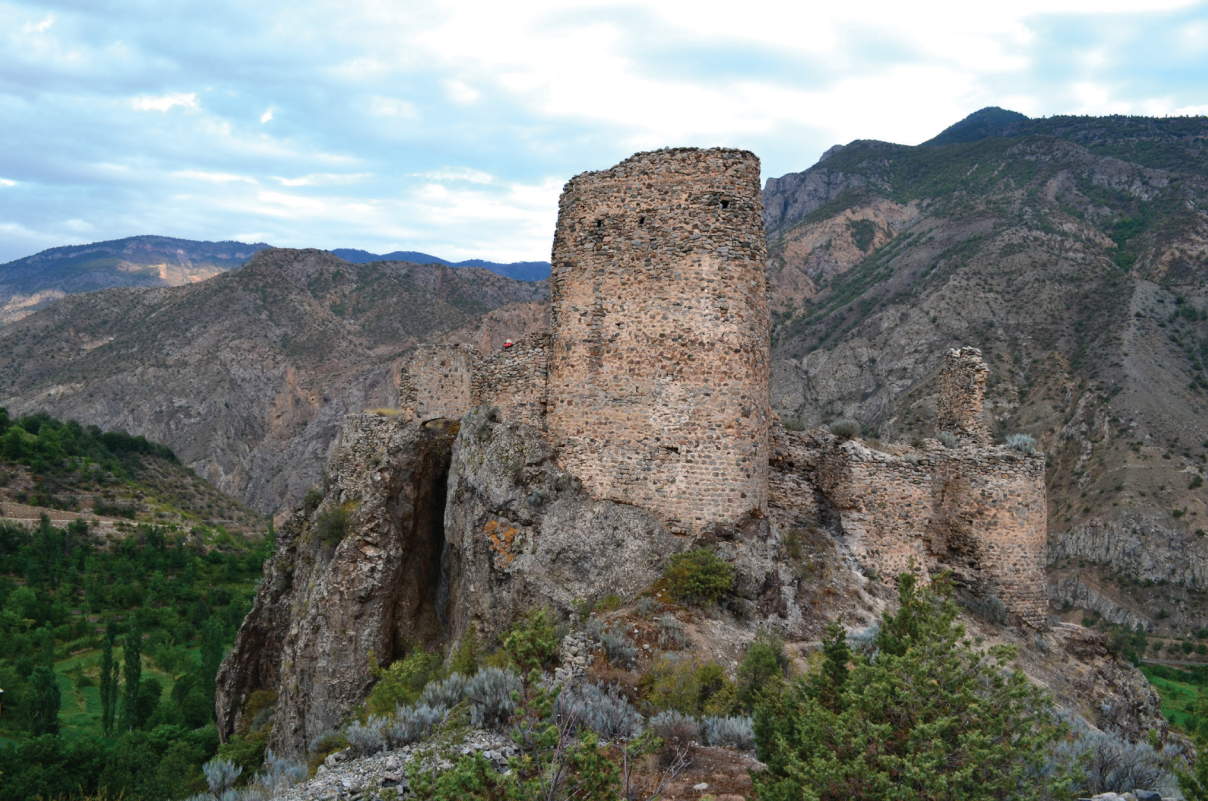
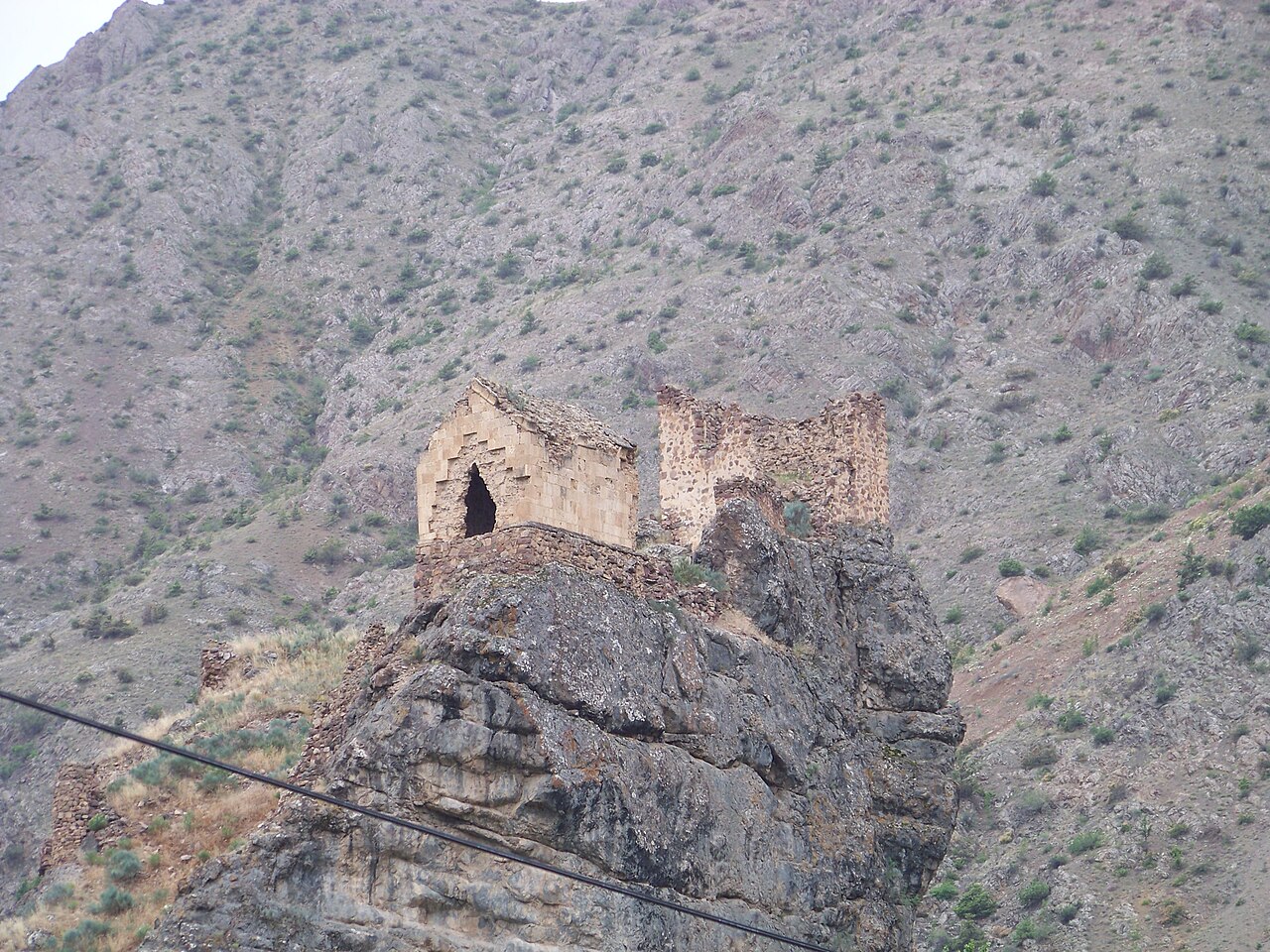
Köprügören Castle, also known locally as Köprügören Kalesi or Osnak Kalesi, is a medieval fortress situated on a rocky outcrop above the village of Köprügören in the Çoruh River valley, within the province of Artvin, Turkey. The name Osnak refers to the historical name of the village, linking the castle to the local heritage and geographic identity of the region.
Historical context and construction
The castle's origins are not well documented, but architectural analysis suggests it was constructed during the Middle Ages, likely between the 12th and 15th centuries. This dating is supported by the use of rubble masonry in its walls, a common building technique in medieval fortifications in this part of Anatolia. The strategic location on a rock above the river valley would have provided defensive advantages, overseeing the surrounding terrain and controlling movement along the valley.
Architectural features and layout
Köprügören Castle's design includes a prominent square keep positioned on a separate rock formation, which served as the main defensive stronghold and residence. The keep's elevated position would have allowed defenders to monitor and repel attackers effectively. Adjacent to the keep was a bailey located on a neighboring rock, which likely housed auxiliary buildings and provided additional defensive layers. Unfortunately, the bailey has not survived, with no visible remains today, limiting detailed understanding of its full extent and function.
Defensive elements and terrain
The castle's placement on rocky terrain naturally enhanced its defensibility. Access to the keep involves a steep and slippery path, indicative of the challenging approach designed to deter invaders. The surrounding landscape, including the nearby Çoruh River, would have contributed to the castle's defensive strategy by restricting access routes and providing natural barriers.
Relationship to nearby fortifications and environmental threats
Köprügören Castle is located downstream from the nearby Yokuşlu Castle, another medieval fortress in the region. The proximity of these castles suggests a network of fortifications that may have been used to control and protect the valley corridor. However, Köprügören Castle is considered less spectacular and more vulnerable due to its current condition and location.
One of the significant concerns for Köprügören Castle is the impact of the Yusufeli Dam project. The dam's reservoir is expected to flood areas downstream, potentially affecting the castle site. This environmental threat poses risks to the preservation of the castle's remains and the surrounding archaeological landscape.
Current condition and accessibility
Today, Köprügören Castle is in a state of ruins, with only the square keep partially preserved. The bailey has disappeared over time, leaving little trace. The site is freely accessible to visitors, though the path to the keep is steep and can be slippery, requiring caution. The castle does not offer extensive visitor facilities, and its remote location means it is less frequented compared to more prominent castles in Turkey.
Cultural significance and preservation challenges
While Köprügören Castle lacks extensive historical records, it remains an important cultural landmark within the Artvin province, reflecting the medieval military architecture of the region. Its preservation is challenged by natural erosion, limited conservation efforts, and the looming threat of flooding due to the dam construction. Efforts to document and protect such lesser-known castles are vital for understanding the broader historical landscape of northeastern Turkey.
Frequently asked questions (FAQ)
- How do I access Köprügören Castle?
- Köprügören Castle is accessible by a path from the village of Köprügören. The route includes a steep and slippery section leading up to the square keep, so visitors should wear appropriate footwear and exercise caution.
- What is the historical significance of Köprügören Castle?
- Köprügören Castle represents medieval military architecture in the Artvin region. Though little documented, it likely served as a defensive stronghold controlling the Çoruh River valley during the Middle Ages.
- Is Köprügören Castle affected by modern developments?
- Yes, the castle is at risk due to the Yusufeli Dam reservoir project, which threatens to flood areas downstream, potentially impacting the castle site and surrounding archaeological remains.
- Can I visit the bailey of Köprügören Castle?
- The bailey of Köprügören Castle no longer has visible remains, so visitors can only explore the area where it once stood, near the square keep on a separate rock.
- What architectural features remain at Köprügören Castle?
- The most prominent surviving feature is the square keep built on a separate rock. The walls are constructed with rubble masonry typical of medieval fortifications in the region.
Information
Loading map...
Visitor reviews
No reviews yet. Been here? Write the first review and help other travelers!
Write the first reviewVisited this castle? Share your experience
Your review helps other travelers and adds first-hand knowledge to our encyclopedia.