Tavelli Tower
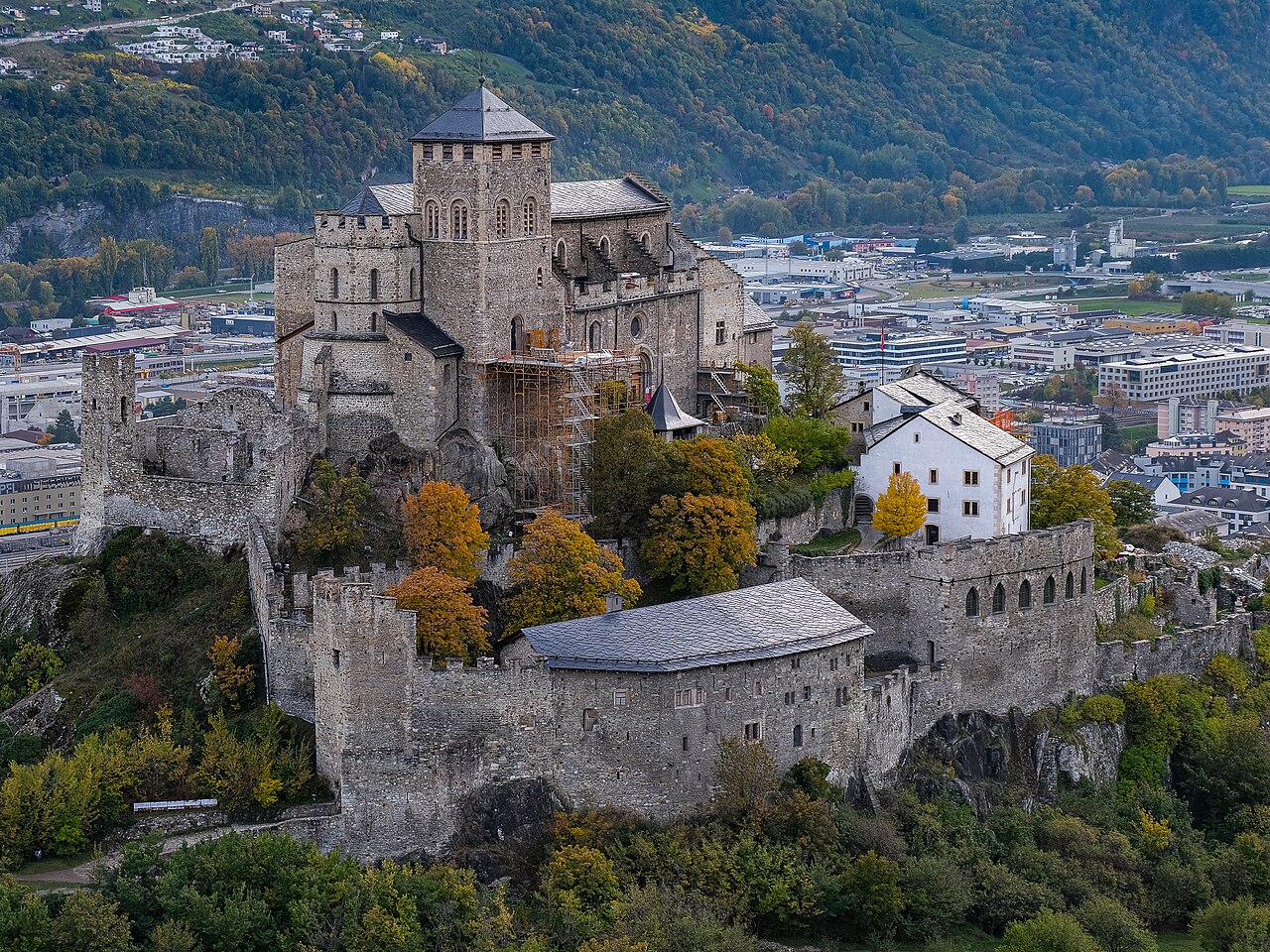
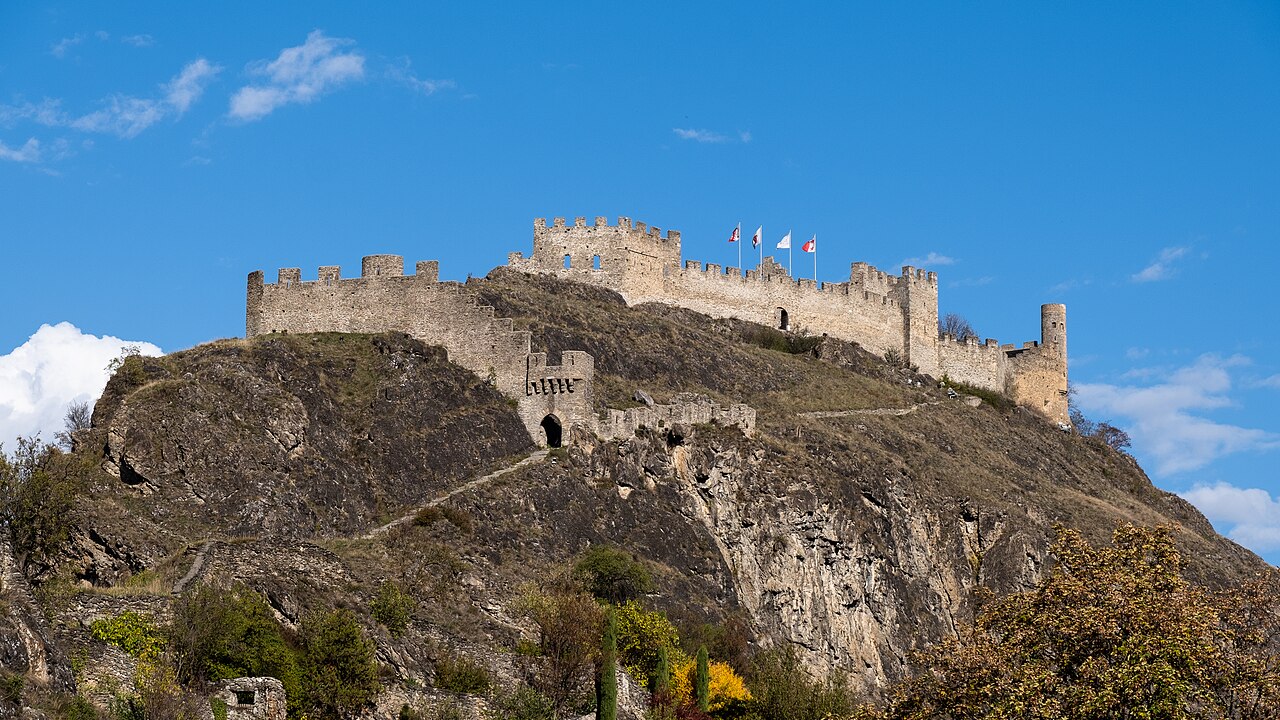
The Tavelli Tower stands as a significant relic of medieval fortification in the canton of Valais, Switzerland. Perched on a glacial moraine promontory at approximately 1,200 meters above sea level, the castle overlooks the Borgne river, commanding a strategic vantage point that was essential for defense and regional control during the Middle Ages. Its ruins today offer a unique glimpse into the architectural and feudal history of the area, marked notably by its rare octagonal tower and the remains of a complex defensive layout.
Constructed during the Middle Ages, the Tavelli Tower was originally established by local noble families who played pivotal roles in the governance and security of the region. The earliest documentary evidence dates back to 1328, revealing the castle's association with the religious chapter of Sion and highlighting its defensive features, including a substantial ditch. This record underscores the castle's dual function as both a military stronghold and an administrative center.
Architectural features and layout
The octagonal tower
The most remarkable architectural element of the Tavelli Tower is its octagonal tower, an uncommon design choice in medieval fortifications. Dating from the 12th century, this tower stands as a contemporary to the more typical cylindrical keeps found in the region but distinguishes itself with eight equal sides, each approximately 3.65 meters long. The tower's walls are impressively thick, measuring around 1.33 meters, constructed to withstand sieges and attacks.
Internally, the tower was divided into three floors, each marked by distinct masonry changes. The ground floor, nearly 5 meters high, included ceiling beams indicative of its use for storage or as a guard post. Above this, the first floor measured about 2.2 meters in height, with a second floor of similar dimensions partially preserved. Originally, the tower was crowned with a crenellated battlement platform, elevating its height to nearly 11.5 meters, although today the standing walls reach about 8.2 meters.
Castle grounds and defensive structures
The castle's layout centers on an oval plateau roughly 130 meters long and 100 meters wide. This plateau is naturally fortified by a broad ditch cut between the promontory and the adjacent mountain, enhancing its defensive capabilities. Access to the castle was tightly controlled via a path that skirted the octagonal tower, ensuring that any approach could be monitored and defended effectively.
The eastern section of the plateau likely housed the main defensive stronghold or keep, possibly the residence of the de la Tour family. This area rises about 25 meters above the octagonal tower and features large erratic boulders and terraced vine cultivation. Substantial retaining walls support the ridge, stabilizing the steep slopes that descend towards the Borgne river and protecting the site from landslides, which remain a geological concern to this day.
Historical significance and ownership
The Tavelli Tower played a crucial role in the local administration and defense during the medieval period. The d’Ayent Tavelli family controlled the western entrance and used the castle’s prisons to detain those who failed to pay taxes or committed offenses, reflecting the castle's judicial and fiscal importance. The eastern keep, associated with the de la Tour family, suggests a division of power or alliance between noble houses within the castle complex.
Ownership of the castle transitioned to the Chevron-Villette family by the late 15th century, likely through marriage or political alliance. By this time, the castle was already in decline, suffering from neglect and damage sustained during military conflicts.
Conflicts and decline
The castle endured significant damage during two major conflicts in the late 14th century. Around 1376, it was possibly partially destroyed during an uprising against the de la Tour family, reflecting the turbulent feudal struggles of the region. Further damage occurred in 1385 amid warfare involving Amédée, Count of Savoy, and local communes, as chronicled by a nearby priest. These events contributed heavily to the castle's abandonment and eventual ruin.
Following its desertion, the ruins of Tavelli Tower became a quarry for building materials, a common fate for many medieval castles no longer in use. Stones were removed for construction projects in the surrounding areas, accelerating the deterioration of the site.
Conservation and present condition
Despite centuries of neglect, the Tavelli Tower remains a visible and evocative symbol of medieval heritage in Valais. The site is classified as ruins, with the octagonal tower standing as the most prominent surviving structure. The surrounding landscape, including wooded slopes and vineyard terraces, has gradually reclaimed parts of the castle, blending nature with history.
In the late 20th century, the municipality of Vex initiated conservation efforts to stabilize the remaining walls. These included repointing the masonry to protect against the harsh Alpine freeze-thaw cycles, which pose ongoing threats to the stonework. These preservation measures have helped maintain the tower as a cultural landmark and educational resource, allowing visitors to connect with the region's medieval past.
Geological challenges
The castle's location on a glacial moraine promontory presents ongoing geological challenges. The southeast face of the site experiences significant instability, with active landslides threatening the integrity of the cliffs and retaining walls. Conservation efforts must continuously address these natural hazards to ensure the site's survival for future generations.
Visiting tavelli tower today
Today, the ruins of Tavelli Tower attract visitors interested in medieval history, architecture, and Alpine landscapes. The site offers a compelling combination of natural beauty and historical intrigue, with the octagonal tower serving as a focal point for exploration and study. Visitors can appreciate the castle's strategic position and architectural uniqueness while enjoying panoramic views of the Borgne river valley.
While the castle is in ruins, the preserved walls and defensive features provide valuable insights into medieval fortification techniques and noble life in the Valais region. Interpretive signage and local guides enhance the visitor experience, making Tavelli Tower a meaningful destination for cultural tourism.
Frequently asked questions (FAQ)
- How do I get to Tavelli Tower?
- Tavelli Tower is located in Vex, Switzerland, easily accessible by car or public transport. The nearest train station is in Sion, and from there you can take a bus or taxi to reach the castle. Walking from the village of Vex provides a scenic route for those who enjoy hiking.
- What is the historical significance of Tavelli Tower?
- Tavelli Tower dates back to the 12th century and played a crucial role in the region's defense during the medieval period. It served as a lookout point and a stronghold for local nobility. Today, it stands as a symbol of the rich history and heritage of the Valais region.
- When was Tavelli Tower built?
- Tavelli Tower was constructed in the early 12th century, making it one of the oldest structures in the area. Its strategic location was chosen for its defensive advantages and panoramic views of the surrounding landscape. Over the centuries, it has undergone various restorations to preserve its historical integrity.
- Can I enter Tavelli Tower?
- Yes, visitors are welcome to explore Tavelli Tower, with guided tours available to enhance the experience. The interior features artifacts and displays that provide insights into its history and architecture. Ensure to check the opening hours before your visit, as they may vary seasonally.
- Why is the architecture of Tavelli Tower unique?
- The architecture of Tavelli Tower is characterized by its robust stone walls and distinctive round shape, typical of medieval defensive structures. Its design reflects the military needs of the time while also incorporating elements of local craftsmanship. The tower's strategic height offers stunning views of the surrounding mountains and valleys.
- Is it possible to visit Tavelli Tower year-round?
- Tavelli Tower is generally open to visitors from spring through autumn, with limited access during winter months due to weather conditions. It's advisable to check the official website for specific opening dates and any seasonal events. Be prepared for potential closures during harsh weather, as safety is a priority.
- What are the ticket prices for Tavelli Tower?
- Tickets for Tavelli Tower are reasonably priced, typically around CHF 5 for adults and CHF 3 for children. Family passes and group discounts may also be available. It's best to purchase tickets on-site, as cash is often preferred, but check for any updates regarding online booking options.
- What is the best time to visit Tavelli Tower?
- The best time to visit Tavelli Tower is during the late spring and early autumn when the weather is mild and ideal for exploring the outdoor surroundings. This period also coincides with various local festivals, providing an opportunity to experience the culture. Early mornings or late afternoons are often less crowded, allowing for a more tranquil visit.
- What are some nearby attractions to Tavelli Tower?
- Nearby attractions include the charming village of Vex, which offers picturesque views and local dining options. The stunning landscapes of the Valais region are also perfect for hiking and outdoor activities. Additionally, the famous ski resorts of Nendaz and Verbier are just a short drive away, making it a great stop for both summer and winter visitors.
Information
Website
Visit websiteSources & official resources
Verify the information above using these authoritative references.
Loading map...
Visitor reviews
No reviews yet. Been here? Write the first review and help other travelers!
Write the first reviewVisited this castle? Share your experience
Your review helps other travelers and adds first-hand knowledge to our encyclopedia.