Suliszowice
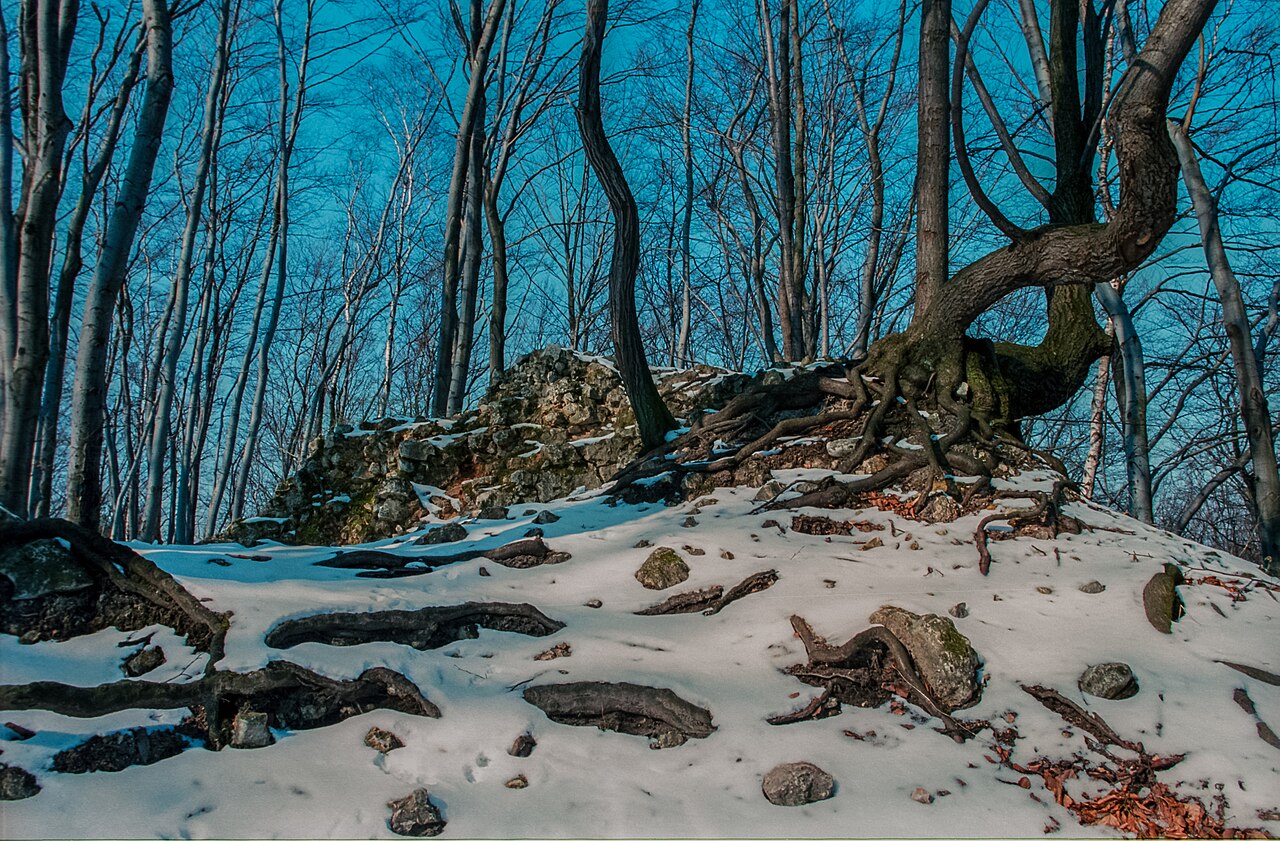
Suliszowice Castle is a notable example of a late medieval hill castle located in Suliszowice, Poland. Perched atop a solitary limestone rock rising east of the village, the castle's remains offer a glimpse into the defensive strategies employed during the 14th century under the reign of King Casimir III the Great.
The strategic importance and historical context
Constructed likely towards the end of the 14th century, Suliszowice Castle was part of a broader initiative by King Casimir III to fortify the western border of the Kingdom of Poland. This defensive line was designed to protect against incursions from the hostile Silesian princes, who controlled territories west of the kingdom. The castle was probably commissioned by the local village vogt (wójt) of Suliszowice, representing royal authority in this frontier region.
The castle's role as a royal guard post suggests it was a critical element in the border defense network, although the absence of extensive historical records implies it may have been in use for a relatively short period before being abandoned.
Architectural layout and features
Upper castle
The castle was divided into two principal sections. The upper castle was situated on a small plateau atop the limestone rock. It was enclosed by a robust curtain wall made of broken stone masonry with a thickness reaching up to two meters. This strong fortification would have provided a secure refuge and vantage point for defenders.
Lower castle
At the base of the rock, on the eastern side, lay the lower castle. This area was protected by an earthen rampart and a moat, which would have served as additional defensive measures. The courtyard within the lower castle likely contained economic buildings such as stables, workshops, or storage facilities necessary for sustaining the castle's garrison.
Current condition and archaeological remains
Today, the only visible remnants of Suliszowice Castle are a fragment of the upper castle's wall, approximately 20 meters in length, standing atop the limestone rock. Additionally, traces of the earthworks and the moat at the rock's base remain discernible, providing valuable archaeological evidence of the castle's original defensive structures.
The scarcity of written documentation and the limited physical remains suggest that the castle was abandoned relatively early in its history, possibly due to changing political or military circumstances that rendered its position less critical.
Significance in Polish medieval fortifications
Suliszowice Castle exemplifies the type of smaller, strategically placed fortifications used in the late medieval period to secure important border areas. Its construction atop a natural limestone outcrop highlights the medieval practice of utilizing natural terrain for defense. The castle's design reflects typical features of hill castles from this era, including strong stone walls, division into upper and lower baileys, and earthwork defenses.
Although now a ruin, Suliszowice Castle remains a significant cultural heritage site, illustrating the military and administrative efforts of the Polish kingdom in the 14th century to maintain territorial integrity against external threats.
Frequently asked questions (FAQ)
- What is the historical significance of Suliszowice Castle?
- Suliszowice Castle was part of King Casimir III the Great's defensive line protecting Poland's western border in the 14th century. It served as a royal guard post against Silesian princes.
- Can visitors see the remains of Suliszowice Castle today?
- Yes, visitors can see a 20-meter-long fragment of the upper castle wall atop the limestone rock, as well as earthworks and moat remnants at the base.
- How was Suliszowice Castle constructed?
- The castle featured an upper section with thick stone walls up to two meters thick, and a lower section protected by earth ramparts and a moat, typical of hill castles of the late medieval period.
- Why was Suliszowice Castle abandoned?
- The lack of historical records and limited remains suggest it was used for a short time and abandoned, possibly due to shifting political or military needs.
- Is Suliszowice Castle accessible to the public?
- While the castle is in ruins, the site is accessible for visitors interested in medieval architecture and Polish history, though facilities may be limited.
Information
Loading map...
Visitor reviews
No reviews yet. Been here? Write the first review and help other travelers!
Write the first reviewVisited this castle? Share your experience
Your review helps other travelers and adds first-hand knowledge to our encyclopedia.